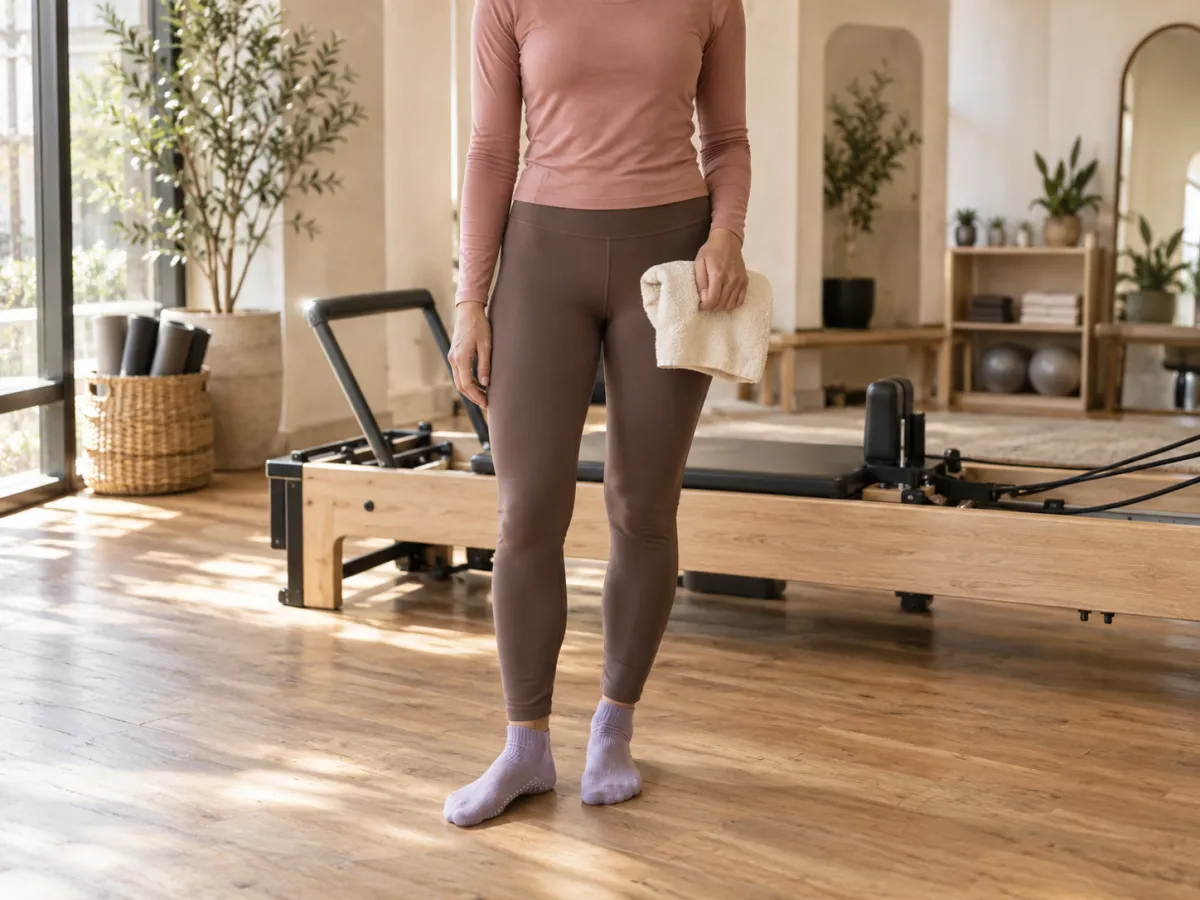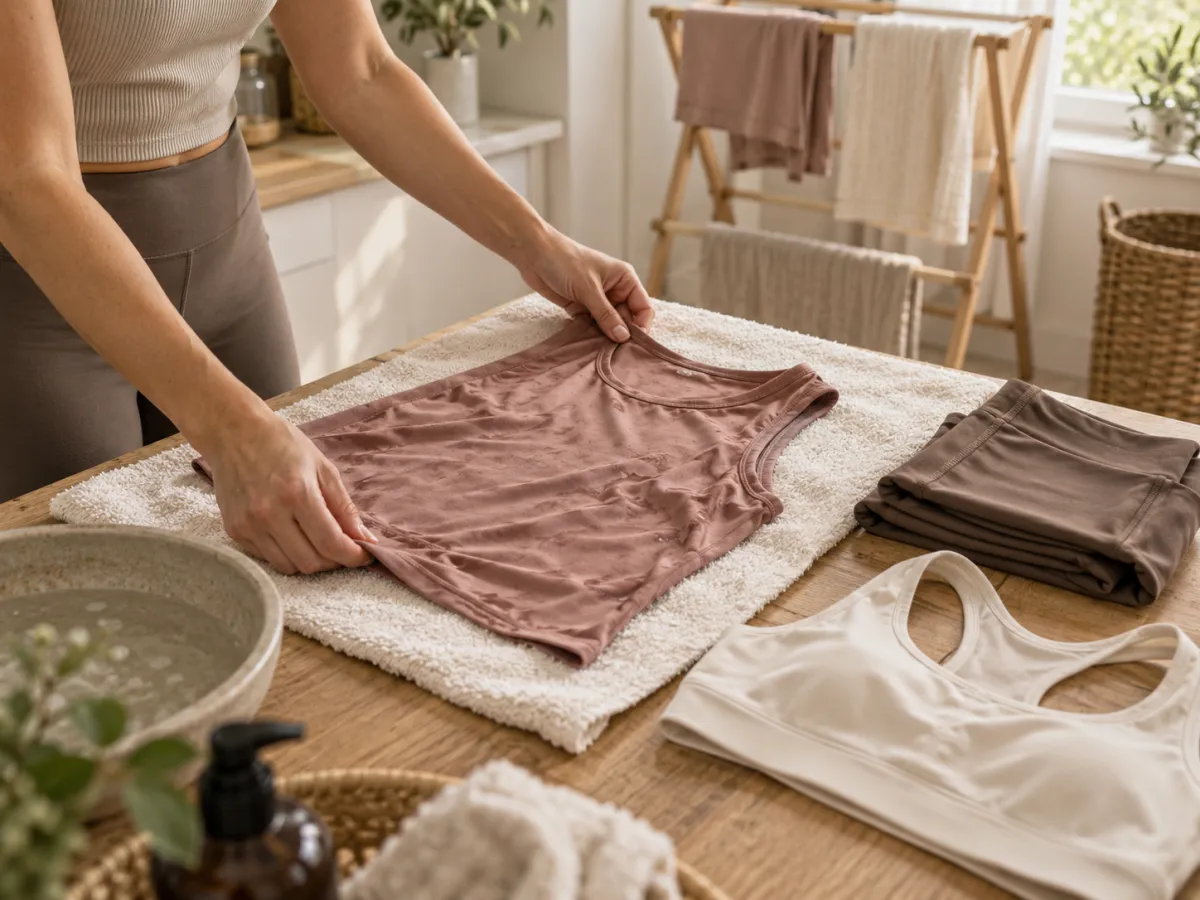
Nothing ages a favorite pair of studio bottoms faster than fuzzy fiber balls forming along the inner thigh or waistband after a few weeks of Reformer and mat work. Practitioners researching how to stop leggings and shorts from pilling or looking for a safe way to remove pilling from workout shorts are dealing with a specific textile mechanism: microscopic broken filaments tangling together under repetitive friction, heat, and chemical residue. Protecting your activewear requires pairing the right silhouette and seam construction with an elastomer-safe laundry and maintenance routine.
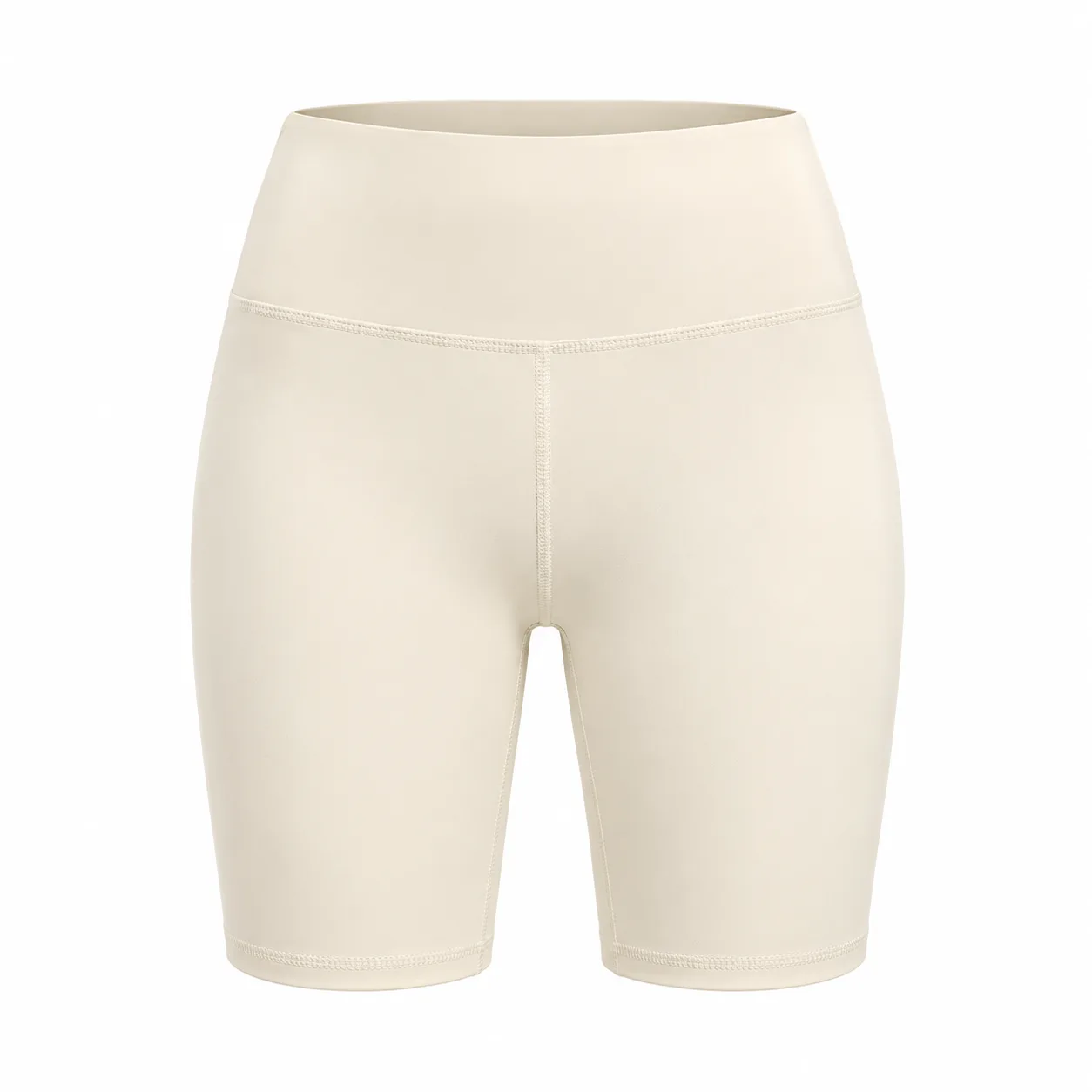
According to the PilatesFits catalog listing, the Pilates Shorts collection provides shorts for mat work and studio sessions across multiple lengths and silhouettes.
Below, we explain the four mechanical and chemical stressors that degrade Pilates knits, provide a five-row care and longevity comparison matrix, walk through a step-by-step washing protocol, and outline safe de-pilling and replacement rules.
| Degradation Factor | How It Damages Pilates Shorts | High-Risk Habit to Avoid | Longevity & Anti-Pilling Protocol |
|---|---|---|---|
| Inner-Seam Mechanical Abrasion | Repetitive adductor contact and Magic Circle squeezes fray surface fibers | Wearing over-stretched shorts or washing with rough denim, towels, and Velcro | Choose true-to-size flatlock silhouettes and wash inside out in a fine mesh garment bag |
| Thermal Elastane Fatigue | Dryer heat and hot wash water weaken spandex/elastane recoil | Tumble-drying on medium/high heat or hanging over direct radiators | Wash in cold water and lay flat or hang to air-dry in a shaded, ventilated room |
| Surfactant & Softener Coating | Silicone softeners and optical brighteners leave a waxy film that traps sweat salts | Pouring liquid fabric softener, scent boosters, or chlorine bleach into the wash | Use a small dose of mild, enzyme-free liquid detergent formulated for technical knits |
| Dried Sweat Salt Crystallization | Perspiration salts stiffen nylon filaments and increase inter-fiber friction | Leaving damp studio shorts balled up inside a sealed gym bag overnight | Air out damp gear immediately after class and rinse or wash within 24 hours |
| Aggressive Surface De-Pilling | Pressing a dull razor or stiff brush into stretched knit snags structural yarns | Shaving stretched fabric on the leg or pulling pills off by hand | Lay garment flat without tension and glide a guarded fabric shaver lightly over surface fuzz |
What Degrades Pilates Shorts: Sweat, Heat, Detergents & UV Exposure
Understanding how to stop leggings and shorts from pilling starts with recognizing how synthetic performance knits behave under stress. Studio shorts combine smooth structural yarns (typically nylon or polyester) with elastic recovery filaments (elastane/spandex). Pilling and premature bagging occur when four everyday factors converge:
- Friction combined with dried sweat crystals: During Hundred, narrow-stance Footwork, and Adductor Pulses, the inner thighs glide against each other hundreds of times per class. If dried salt crystals from previous sweat sessions remain trapped in the knit, they act like fine sandpaper along the inner seam.
- Thermal breakdown of elastane filaments: Elastane is highly sensitive to heat. Hot wash cycles and heated tumble dryers cause microscopic fractures in the elastic core, leading to slack leg openings that shift, bunch, and rub together more aggressively during movement.
- Detergent buildup and fabric softeners: Conventional fabric softeners coat fibers in hydrophobic silicones. Instead of making technical shorts softer over time, that film locks in body oils, reduces breathability, and weakens seam recovery.
- Direct UV exposure during drying: Hanging dark or pastel activewear in direct midday sunlight oxidizes synthetic dyes and embrittles elastane polymers, accelerating surface fuzzing.
Step-by-Step Cleaning and Sanitization Protocol for How To Stop Leggings And Shorts From Pilling
When caring for pieces from the PilatesFits Pilates Shorts collection alongside studio tops from the PilatesFits Pilates Tops collection, follow this four-step cleaning protocol after every studio or home session:
1. Post-Class Air-Out and Pre-Rinse
Never leave damp shorts compressed at the bottom of a tote bag. Hang them over a ventilated rack as soon as you get home, or run a quick cold-water rinse in the sink to flush out salt and skin oils if laundry day is more than a day away.
2. Turn Inside Out and Isolate in a Mesh Wash Bag
Turn every pair of Pilates shorts inside out so the outer face is shielded from drum friction while water flushes the inner gusset and waistband. Place them inside a fine-weave mesh laundry bag, and wash only with smooth synthetic activewear—never with cotton hoodies, terrycloth towels, jeans, or Velcro straps.
3. Cold Gentle Wash With Minimal Liquid Detergent
Select the cold water setting and the gentle or delicate cycle with a low spin speed. Measure half the standard cap of a mild, fragrance-free or sport-specific liquid detergent. Skip powdered detergents (which can leave undissolved abrasive granules), bleach, and all liquid fabric softeners or dryer sheets.
4. Flat Air-Drying Away From Heat
Remove your shorts promptly at the end of the cycle, gently reshape the waistband and leg hems by hand, and lay them flat on a mesh drying rack or drape them over a smooth bar out of direct sunlight. Never wring the fabric or use a heated machine dryer.
Storage, Inspection, and Replacement Signs for Remove Pilling From Workout Shorts
If surface fuzz has already appeared on a pair in your rotation, knowing how to remove pilling from workout shorts safely—and when to retire worn gear—protects both your wardrobe and your studio confidence:
- Safe de-pilling technique: Lay freshly washed, completely dry shorts flat on a hard, smooth ironing board or table without stretching the knit. Using a battery-operated fabric shaver with a protective guard set to a medium clearance height, glide the head in light, circular strokes over the inner-thigh seam. Never pull pills off with your fingers, which stretches and snaps adjacent intact loops.
- Breathable folded storage: Fold clean, dry shorts loosely in a drawer rather than hanging them from tight metal clips that indent the waistband elastic.
- Three signs it is time to replace: Retire studio shorts when (1) holding the rear panel up to a bright light reveals shiny, translucent elastane “grin-through” during a stretch test, (2) the leg hem remains wavy or flared after cold washing and no longer anchors on your thigh during Tabletop, or (3) flatlock inner-seam threads have frayed through the structural stitch line.
Frequently Asked Questions
How do you choose Pilates shorts or biker shorts that do not ride up or pill at the inner seam during workouts?
Pilates shorts for mat and studio sessions should be chosen by length and silhouette to avoid riding up at the crotch or pilling along the inner seam during repetitive leg work and washing. Select a gusseted silhouette with flatlock inner seams that anchors below the widest curve of your thigh, and wash them inside out in a mesh bag using cold water and zero fabric softeners.
What is the safest way to handle how to stop leggings and shorts from pilling without damaging the material?
The safest way to master how to stop leggings and shorts from pilling is prevention first: turn shorts inside out, place them in a mesh laundry bag away from cotton towels or zippers, wash in cold water with a mild liquid detergent and no softeners, and air-dry flat. If surface pills form, use a guarded electric fabric shaver on unstretched, dry fabric rather than a bare razor blade.
How often should you perform maintenance for remove pilling from workout shorts?
Wash your shorts after every one to two Pilates sessions to prevent sweat salts from abrading the inner seam, and perform a gentle fabric-shaver touch-up to remove pilling from workout shorts only occasionally—at most once every four to six weeks—so you do not thin the underlying knit.
Make it part of your practice
Explore the deep cocoa high-waist pilates leggings and check its product details before choosing your studio essentials.
View this piece