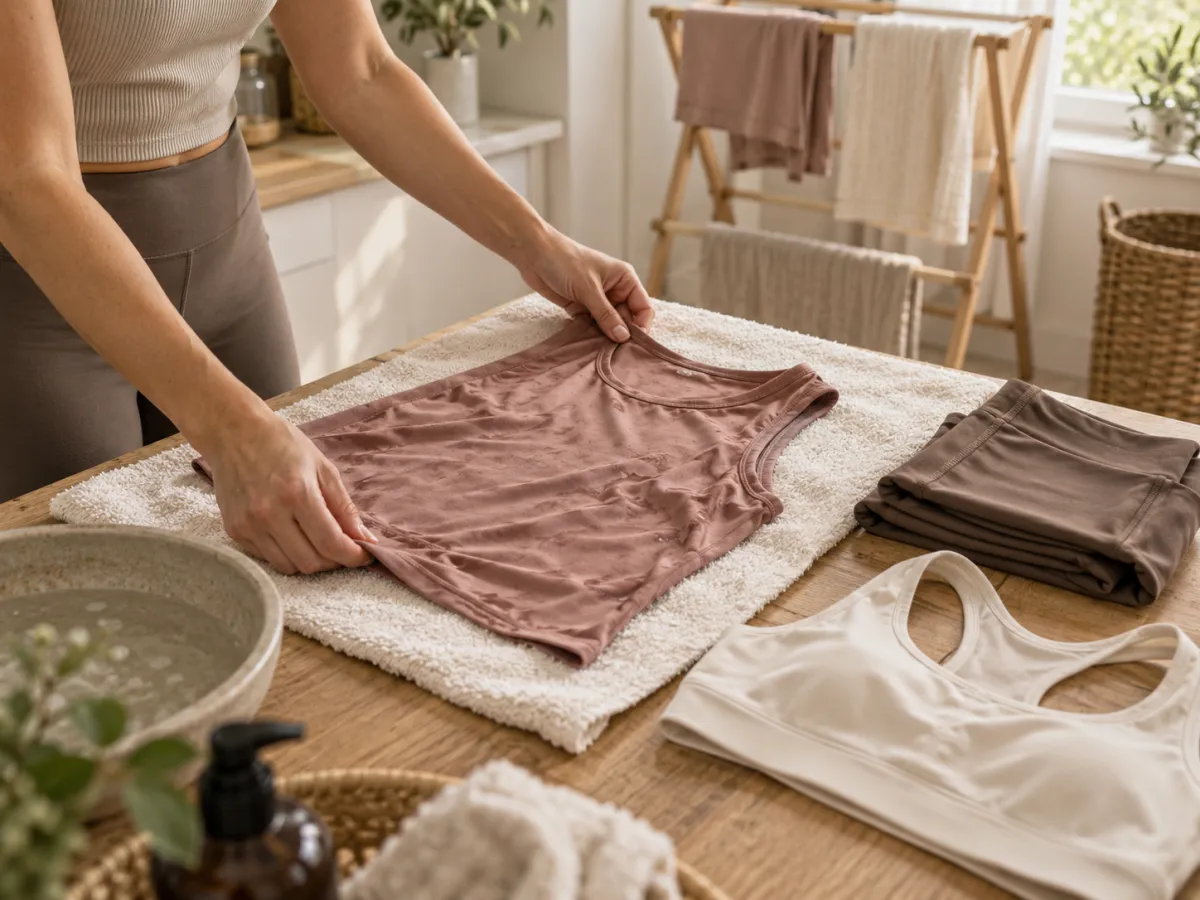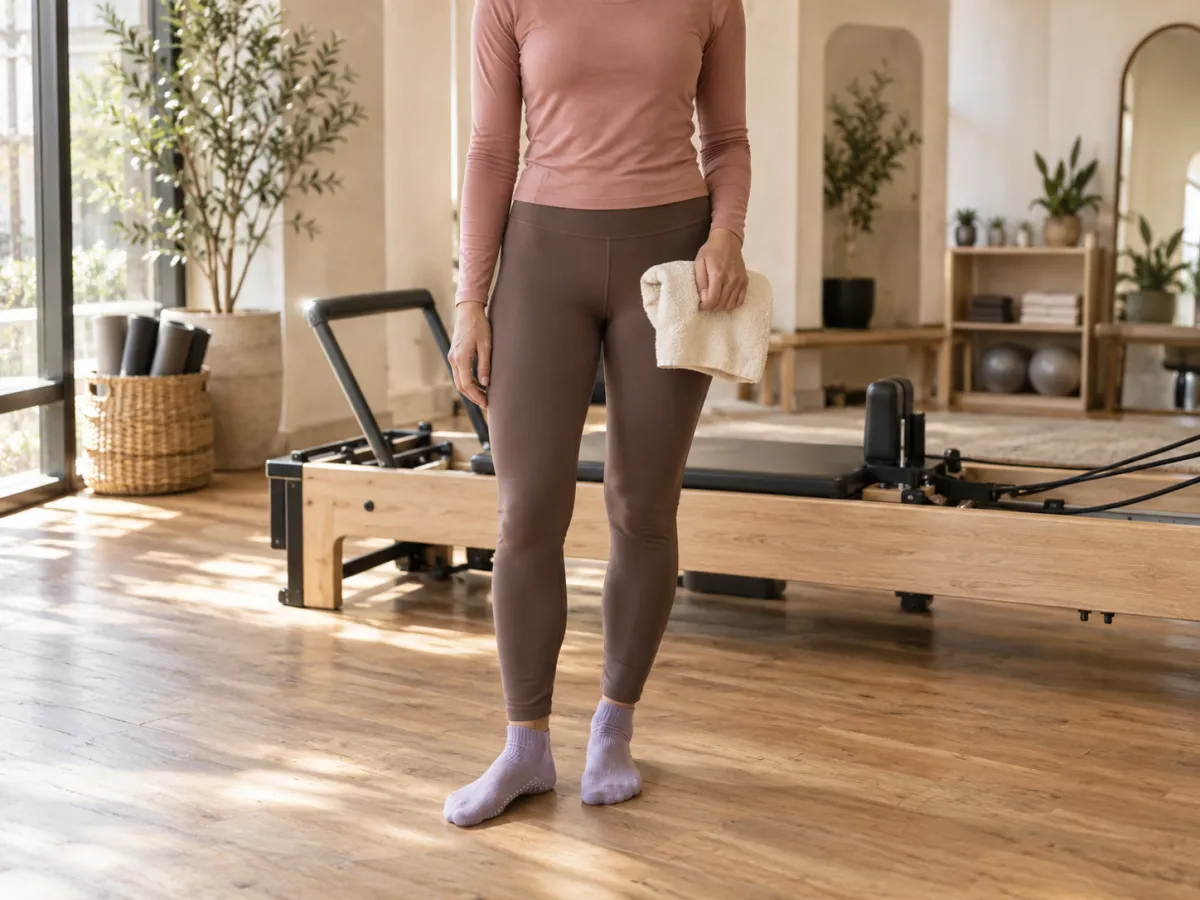
Layering a pilates wrap top over a supportive studio base layer—and structuring a ballet wrap top pilates floor sequence around slow eccentric control and tactile ribcage feedback—lets you bring the precision of a studio Reformer session onto your home mat without pretending a sweater-knit layer is a spring-loaded machine. While a wrap top cannot generate mechanical carriage resistance on its own, its crossover waist ties and close-fitting sleeves act as a wearable alignment gauge around your lower ribs and scapulae while your base tank or bra-style top provides actual bust security.
According to the PilatesFits catalog listing, the Pilates Tops collection includes fitted tanks and bra-style tops for studio workouts.
By pairing a fitted base top from the PilatesFits Pilates Tops collection with a crossover wrap layer and high-rise bottoms from the PilatesFits Pilates Leggings collection, you can transition smoothly from cool-room warm-ups to Reformer-inspired floor flows at home.
How Pilates Wrap Top Translates Reformer Mechanics to the Floor
A studio Reformer uses adjustable springs, a gliding carriage, and shoulder blocks to guide your torso through controlled eccentric resistance. When you practice at home in a pilates wrap top layered over a fitted studio tank or bra-style top, you translate those machine cues to the floor through three mechanical mechanisms.
Crossover Waist Tie Feedback for Lateral Costal Breathing
On a Reformer, the flat carriage bed and footbar load immediately reveal when your lower ribs flare off the mat. During an at-home ballet wrap top pilates session, wrapping the crossover fabric band snugly around your lower costal arch—and knotting it at the side hip—creates a continuous physical ribbon around your diaphragm. As you inhale laterally into the sides and back of your ribcage, you feel the wrap band expand evenly; as you exhale and knit your front ribs together, the tie confirms whether your core stays engaged without abdominal doming.
Base-Layer Compression vs Outer Wrap Warmth
A critical mechanical boundary separates an outer wrap layer from a primary support top. Wrap tops provide shoulder warmth during early-morning mat warm-ups and unobstructed arm reach during Swan or Mermaid, but they do not contain an internal shelf bra. Community activewear reviewers emphasize that fitted studio tanks and bra-style tops keep the torso secure during mat and Reformer inversions—while also noting that compressed studio tanks often run small, so sizing up in your base tank ensures comfortable rib expansion beneath your wrap layer.
Side-Hip Knot Placement for Supine Spine Articulation
Just as a studio Reformer carriage requires a hardware-free back panel during Short Spine or Roll Over, floor mat rolling demands a completely smooth thoracic and lumbar surface. Always bring the ties of a pilates wrap top around to the lateral hip crease rather than tying a bow over the sacrum or mid-back, preserving clean vertebra-by-vertebra articulation.
| Studio Reformer Element | At-Home Floor & Apparel Translation | Role of Pilates Wrap Top & Base Tank | Alignment Cue to Monitor | Honest Mechanical Boundary |
|---|---|---|---|---|
| Carriage Spring Eccentric Tension | Slow four-count lowering phase on the floor mat | Crossover waist band gives tactile feedback against rib flaring as legs lower | Keep front ribs softly knitted against the wrap band | Apparel provides proprioceptive feedback only, not external spring load |
| Shoulder Block Scapular Reference | Supine mat contact with V-neck collarbone visibility | Open crossover V-neckline lets you check clavicle width in a mirror | Keep shoulders wide and away from the ears during arm circles | Requires active upper-back engagement without padded blocks |
| Footwork Warm-Up Thermal Regulation | Supine bridged marching and double-leg presses on the mat | Long wrap sleeves warm the shoulder joints; remove wrap once core heat builds | Maintain neutral pelvis with fitted base tank anchored at the waist | Remove outer wrap layer if room temperature rises during peak planks |
| Kneeling Arm Series (Chest Expansion) | Tall kneeling torso press with light hand weights or towel tension | Fitted base tank holds bust secure; wrap sleeves track elbow-to-rib alignment | Draw shoulder blades down the back without overarching the lumbar spine | Size up in compressed base tanks if ribcage feels constricted |
| Short Box & Spine Stretch Articulation | Seated C-curve roll-backs and forward reaches on the floor | Side-knotted wrap tie stays completely clear of the spinous processes | Articulate one vertebra at a time into the mat | Never tie wrap knots directly behind the lumbar spine |
Step-by-Step Ballet Wrap Top Pilates Sequence: Core, Glutes & Spinal Articulation
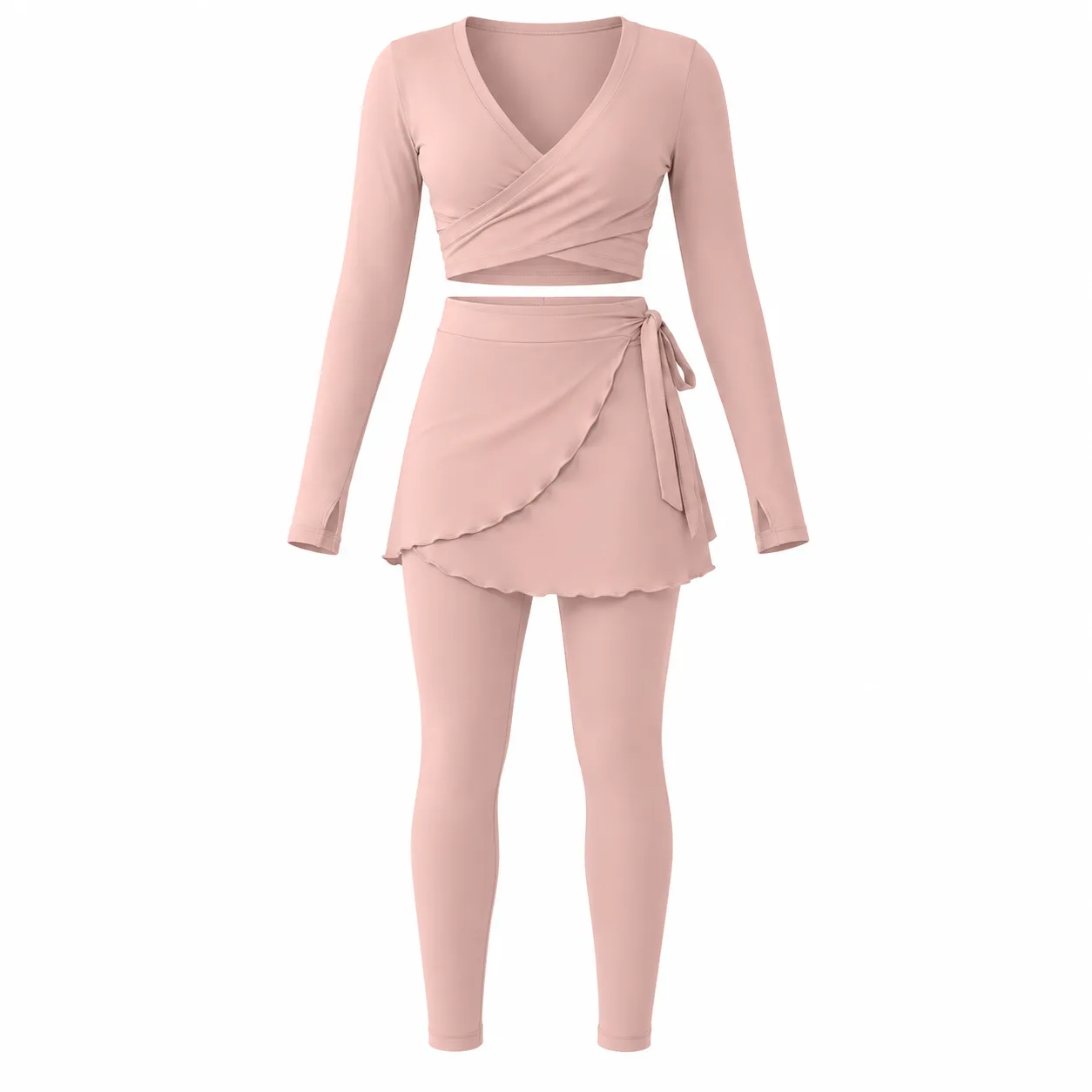
Perform this four-part Reformer-inspired floor sequence wearing a ballet wrap top pilates layering setup (a fitted tank or bra-style base top underneath a side-tied crossover wrap):
- Lateral Breathing & Rib-Tie Calibration: Sit cross-legged or lie supine with knees bent. Place your palms lightly over the side-knotted waist band of your pilates wrap top. Inhale through the nose for four counts, expanding your ribcage outward into the fabric band without lifting your shoulders; exhale through pursed lips for six counts, drawing your navel gently toward your spine.
- Supine Footwork Bridge & Marching Flow: Press through your heels to articulate your spine off the mat into a shoulder-to-knee bridge, replicating Reformer Footwork hip extension. Keeping your pelvis level and your base tank smooth against your torso, alternate lifting one foot an inch off the mat for six slow marches per side, then roll down vertebra by vertebra.
- Hundred & Double-Leg Stretch With V-Neck Collarbone Check: Curl your head and thoracic spine up to the tips of your shoulder blades. Glance at the crossover V-neck of your wrap top to confirm your chin is a fist-width from your sternum and your collarbones remain broad. Pump the arms vigorously for ten full breath cycles, then transition into five slow repetitions of Double-Leg Stretch.
- Kneeling Chest Expansion & Mermaid Side Bend: Come to tall kneeling (or seated Z-sit) to mirror Reformer Kneeling Arm Work. Reach both arms straight back past your hips while pressing the crown of your head tall, feeling the long sleeves of your wrap top track cleanly along your triceps, then flow into lateral Mermaid side stretches to open the intercostal muscles.
Setup Boundaries and Progression Rules Without a Studio Machine
To keep your at-home sessions safe and progressive without studio apparatus:
- Anchor Your Base Layer First: Always put on a fitted studio tank or bra-style top from the PilatesFits Pilates Tops collection before tying your wrap layer—and remember community reviewer guidance that compressed studio tanks can run small and may require sizing up.
- Pair With High-Rise, Non-Slip Bottoms: Match your top layers with contoured high-waisted leggings from the PilatesFits Pilates Leggings collection so the wrap tie sits smoothly over a flat waistband without bunching.
- Progress via Tempo and Lever Length: Once basic bent-knee floor work feels easy, extend your legs to a longer diagonal lever and slow your eccentric lowering phase rather than rushing repetitions.
Scope Boundaries and Fit Limitations
Keep two clear boundaries in mind when planning your wardrobe and home workouts:
- Cross-Discipline Search & Aesthetic Scope: Search interest around
ballet wrap topandpilates wrap topspans barre, classical dance, and Pilates studio fashion; in a functional Pilates practice, a wrap top is a warm-up and alignment layer rather than a standalone sports bra or a mechanical substitute for Reformer springs. - Cut and Compression Sizing Differences: Sizing varies across studio top silhouettes—relaxed crossover wraps drape softly over the shoulders, whereas compressed base tanks hug the torso tightly and often require sizing up after checking chest and ribcage measurements.
Frequently Asked Questions
Can pilates wrap top replace a studio Reformer workout at home?
A pilates wrap top is a studio layering garment rather than a piece of resistance equipment, so it cannot replace the mechanical spring load of a Reformer carriage. However, wearing a side-tied wrap top over a supportive fitted tank or bra-style top gives you clear tactile feedback around your ribcage and shoulders as you replicate Reformer-inspired slow eccentric mat sequences at home.
How do you structure a balanced ballet wrap top pilates routine for core and lower body?
Start your ballet wrap top pilates floor routine with lateral breathing against the crossover waist band and supine bridged Footwork marches while keeping the wrap layer on for joint warmth. As you build heat during Hundred, Double-Leg Stretch, and kneeling chest expansion, rely on your fitted base tank or bra-style top for core visibility and bust support—and always tie the wrap knot at your side hip so your spine rolls smoothly on the mat.
How do fitted Pilates tank tops, bra-style tops, and wrap tops compare for studio support and sizing?
Pilates studio tops include fitted tanks and bra-style tops that stay secure during mat and Reformer movements, though reviewers caution that compressed studio tanks can run small and may require sizing up. Wrap tops work best as a removable outer warm-up layer worn over those fitted base pieces.
Make it part of your practice
Explore the ivory asymmetric wrap studio top and check its product details before choosing your studio essentials.
View this piece