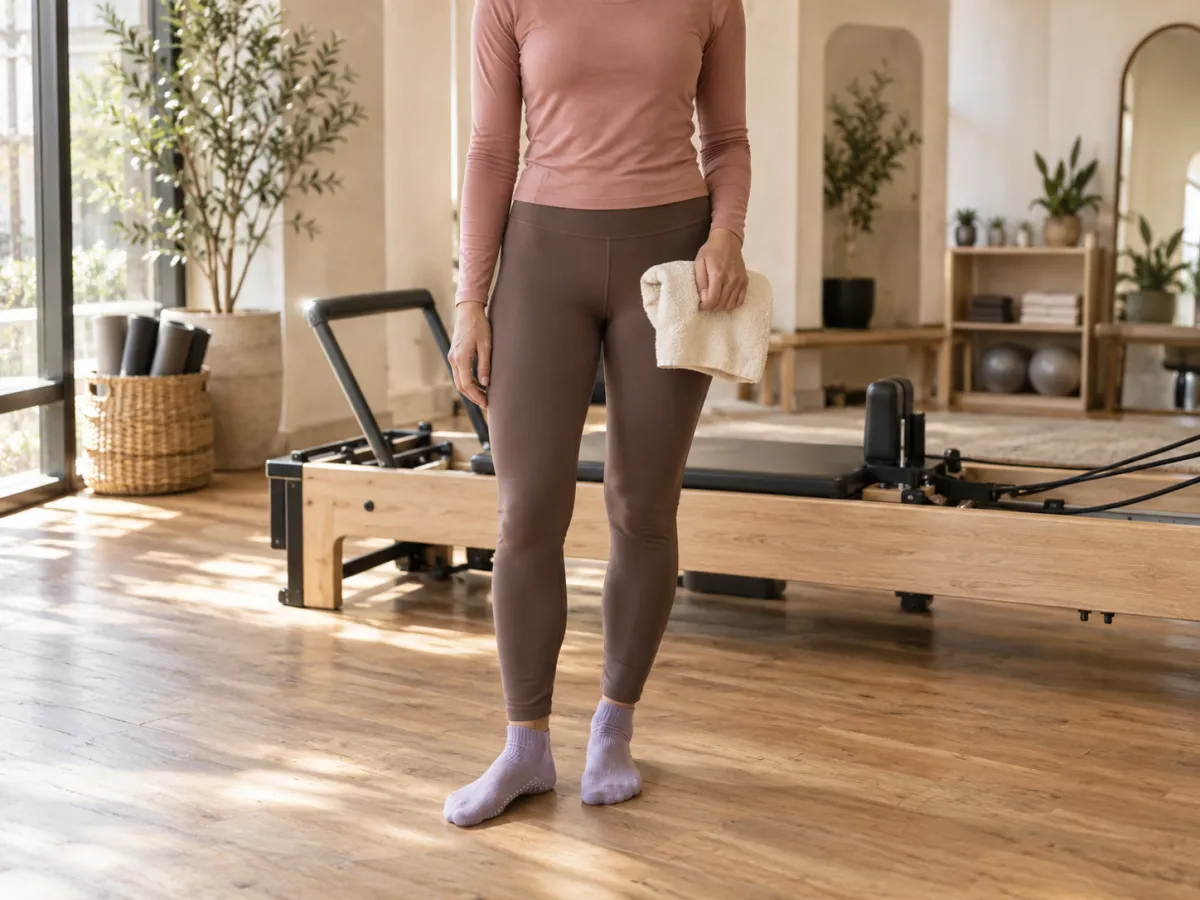
Understanding how to wash activewear sets is the single most effective way to preserve the contoured compression, waistband recovery, and matte surface finish of your studio wardrobe. When washing spandex workout clothes, standard household laundry habits—like warm water cycles, heavy liquid detergents, fabric softeners, and heated tumble drying—slowly break down the synthetic elastomer filaments that give Pilates tops and leggings their four-way rebound. Once those elastane polymers lose their snap, high-rise waistbands begin to roll during Roll Ups, knee panels bag out after Footwork, and lighter colored knits become more prone to showing moisture and seam stress.
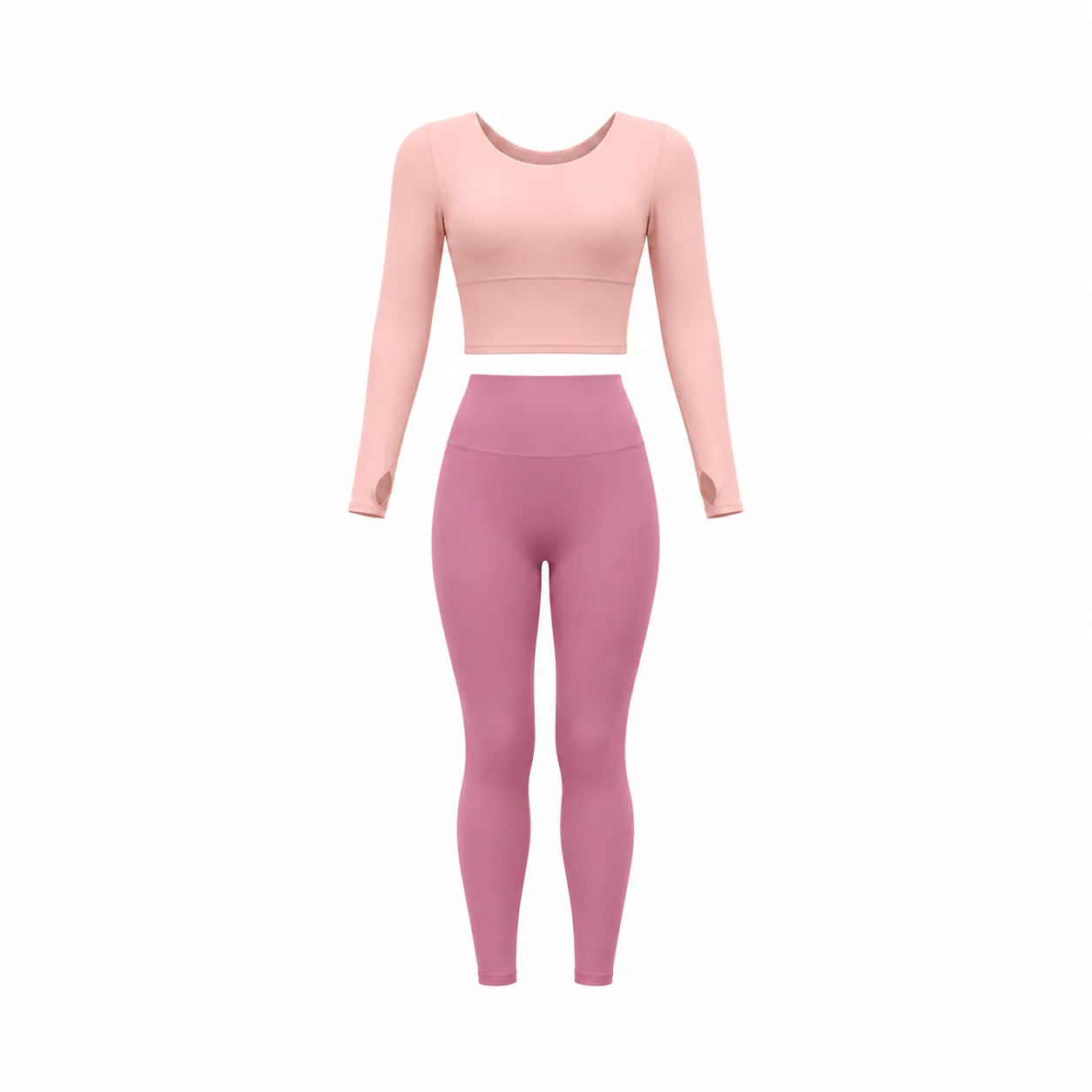
According to the PilatesFits catalog listing, the Pilates Sets collection offers coordinated top-and-bottom matching Pilates clothing sets for studio sessions.
What Degrades Pilates Sets: Sweat, Heat, Detergents & UV Exposure
Performance Pilates apparel relies on tightly knitted synthetic yarns blended with elastic spandex or elastane fibers that stretch and recoil across hundreds of spinal articulations and hip extensions. When evaluating how to wash activewear sets, it helps to understand the four specific chemical and mechanical stressors that shorten garment lifespan:
| Degradation Factor | Textile & Elastomer Impact | Visible Sign on Your Pilates Set | Prevention Rule for Washing Spandex Workout Clothes |
|---|---|---|---|
| High Water & Dryer Heat | Thermal stress softens and fractures delicate elastane filaments inside the knit | Waistband loses rebound, ankle cuffs flare, and shiny white elastomer threads poke through seams | Wash exclusively in cold water and air-dry flat or on a padded drying rack away from radiators |
| Fabric Softeners & Optical Brighteners | Silicone and waxy conditioning agents coat hydrophobic fibers and trap body oils inside the knit | Persistent damp odor after warming up and reduced moisture-wicking speed on lighter shades | Skip liquid softeners and dryer sheets completely; use a clean-rinsing sport or mild liquid detergent |
| Mechanical Drum Friction & Hardware Snags | Zippers, Velcro straps, and heavy denim abrade soft brushed or circular-knit surfaces | Surface pilling along the inner thighs, hip bones, and underbust band | Turn both pieces inside out and seal each garment inside a fine-mesh laundry bag before washing |
| Trapped Salt, Sebum & Studio Oils | Lactic acid, sweat salts, and Reformer vinyl cleaners oxidize elastic polymers when left damp in a gym bag | Stiffened underarm or gusset zones and uneven color fading on pastel or bright dye lots | Air out damp sets immediately after class and rinse or wash promptly rather than leaving them bundled |
When comparing the best pilates sets for reformer longevity, remember that coordinated tops and bottoms experience identical studio conditions but different friction zones—your top absorbs upper-back carriage contact and underbust perspiration, while your bottoms endure repeated hip flexion and inner-thigh contact. A foundational pilates sets guide principle is to always launder both pieces of a matching set together using the same cold, gentle cycle so the top and bottoms maintain identical shade depth and fabric hand-feel over time.
Step-by-Step Cleaning and Sanitization Protocol for How To Wash Activewear Sets
Follow this five-step material-care protocol whenever you are washing spandex workout clothes after mat or Reformer sessions:
- Pre-Rinse and Air Out Immediately Post-Class: Never leave a damp Pilates set rolled inside a closed tote bag. Hang the top and bottoms over a shower rod or breathable rack to evaporate surface moisture until you are ready to run a wash load, or give sweat-heavy zones a quick cold-water pre-rinse.
- Turn Inside Out and Separate by Shade: Flip both the top and leggings inside out so the interior surfaces—where sebum, deodorant residue, and sweat salts accumulate—receive direct water flow while the exterior finish stays protected from drum friction. Separate dark shades (black, navy, espresso) from lighter pastel sets to prevent dye transfer.
- Bag and Select a Cold Delicate Cycle: Place your coordinated set into a zippered mesh garment bag. Wash on a cold, delicate or hand-wash cycle with a low spin speed, and never overload the drum with heavy bath towels or jeans.
- Dose Mild Detergent Sparingly: Use a measured small dose of mild, enzyme-free or activewear-formulated liquid detergent. Excess soap fails to rinse out of dense compression knits, leaving a stiff residue that attracts lint and accelerates odor buildup.
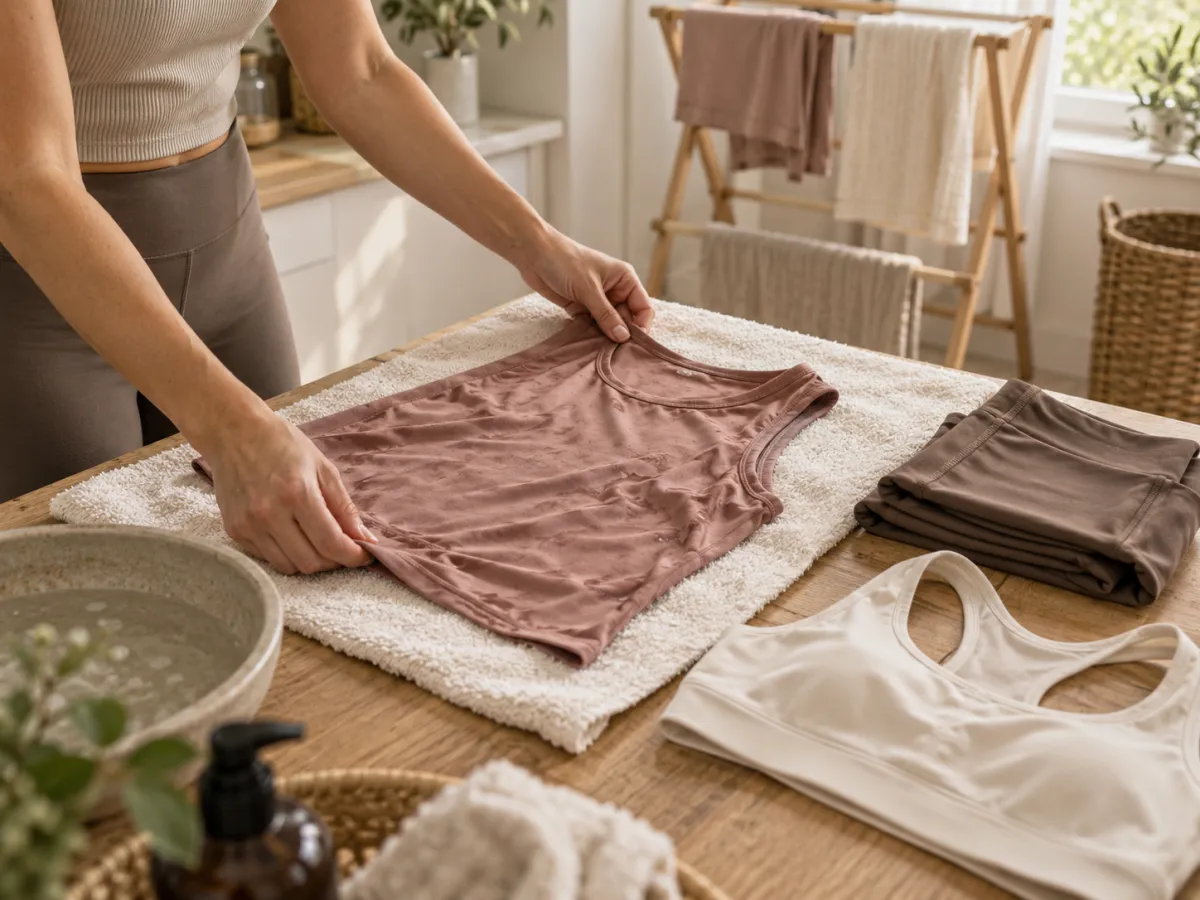
- Reshape and Air-Dry Flat in the Shade: Gently press excess water out with a clean towel—never wring or twist spandex knits. Lay the top and bottoms flat on a mesh drying rack away from direct sunlight, which can fade dye pigments and brittle synthetic elastomers.
To explore coordinated studio outfits crafted for movement and durability, browse our Pilates Sets collection or pair your favorite tops with high-recovery bottoms from our Pilates Leggings collection. For help choosing the right fabric weight and compression level before your first wash, read our Pilates Workout Set Buying Guide.
Storage, Inspection, and Replacement Signs for Washing Spandex Workout Clothes
Apply these four practical pilates sets tips between laundry days to keep your coordinated studio outfits performing like new:
- Fold Flat Instead of Hanging by Straps: Hanging heavy compression leggings or knit tops from thin wire hangers stretches out shoulder straps and waistbands over time. Fold your dry matching sets flat in a breathable drawer so the elastic fibers rest in a neutral, unstretched state.
- Inspect High-Tension Seams and Gussets Monthly: Hold the seat, knees, and underbust band up to natural light to check for thinning knit zones or tiny white broken elastane fibers (often called “grinning”).
- Perform the Waistband Rebound Check: Stretch the top edge of the waistband gently between your hands and release it. A healthy spandex blend snaps back smoothly without rippling or staying elongated.
- Recognize Replacement Signals Early: When a set no longer recovers its shape after a cold wash and flat dry, or when thinned fabric compromises opacity during deep squats and Reformer Pike transitions, retire that set to casual lounging and rotate a fresh studio set into your weekly schedule.
Frequently Asked Questions
What should shoppers check when choosing a matching Pilates set for compression, color sweat visibility, and low-impact comfort?
When choosing a coordinated Pilates matching set, shoppers pair a matching top and bottoms and check compression support as well as whether sweat seeps visibly through lighter colored fabrics compared to darker shades. Preserving that compression support and surface finish requires cold-water washing and air-drying so the elastane fibers do not weaken or thin out.
What is the safest way to handle how to wash activewear sets without damaging the material?
The safest method is turning both pieces inside out, placing them in a fine-mesh laundry bag, washing on a cold delicate cycle with a small amount of mild liquid detergent (zero fabric softener or bleach), and air-drying flat away from direct heat and sunlight.
How often should you perform maintenance for washing spandex workout clothes?
Wash your spandex Pilates set after every sweaty studio or Reformer class so salt crystals and body oils do not sit in the elastic fibers. If you wear a set for a brief, low-sweat home mobility session, air it out thoroughly on a drying rack before deciding whether it needs a full cold-water wash.
Make it part of your practice
Explore the mocha cross-back pilates legging set and check its product details before choosing your studio essentials.
View this piece