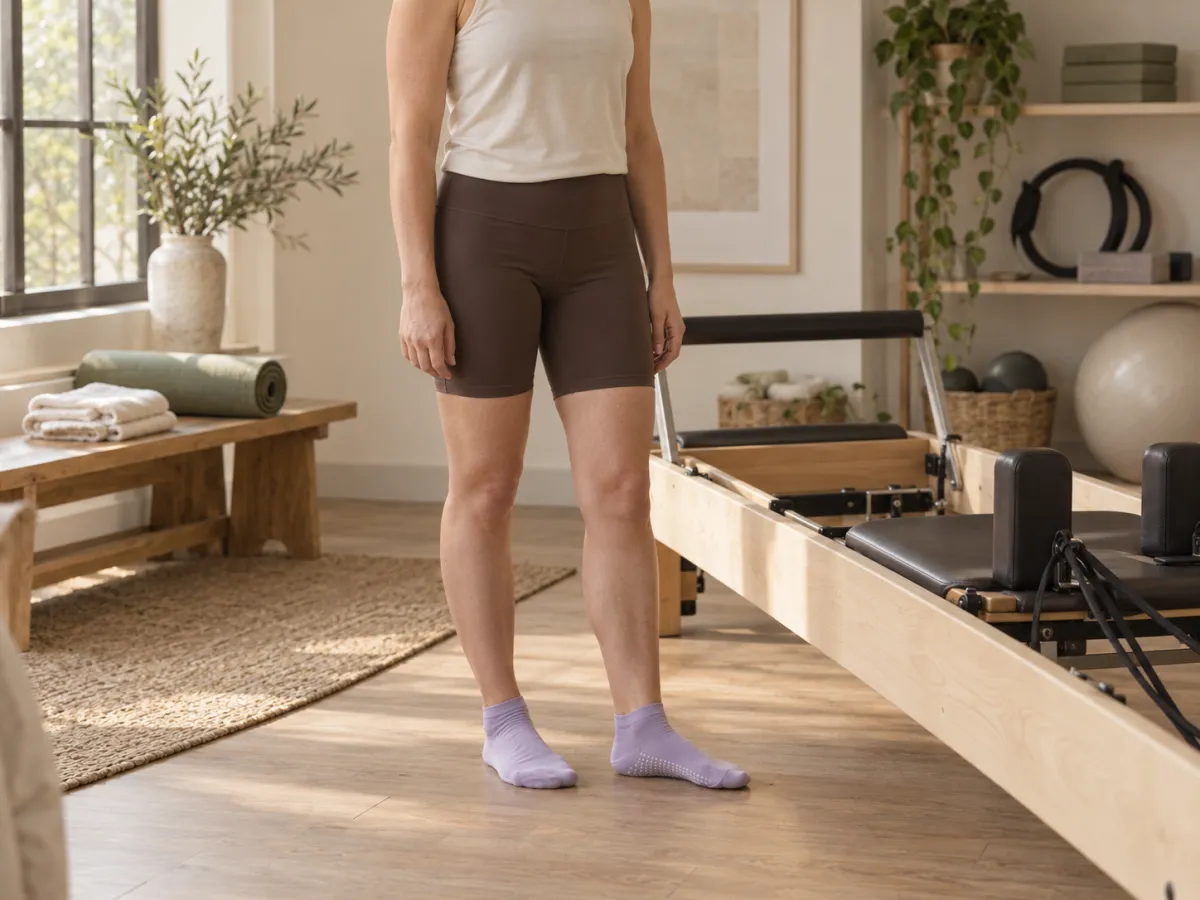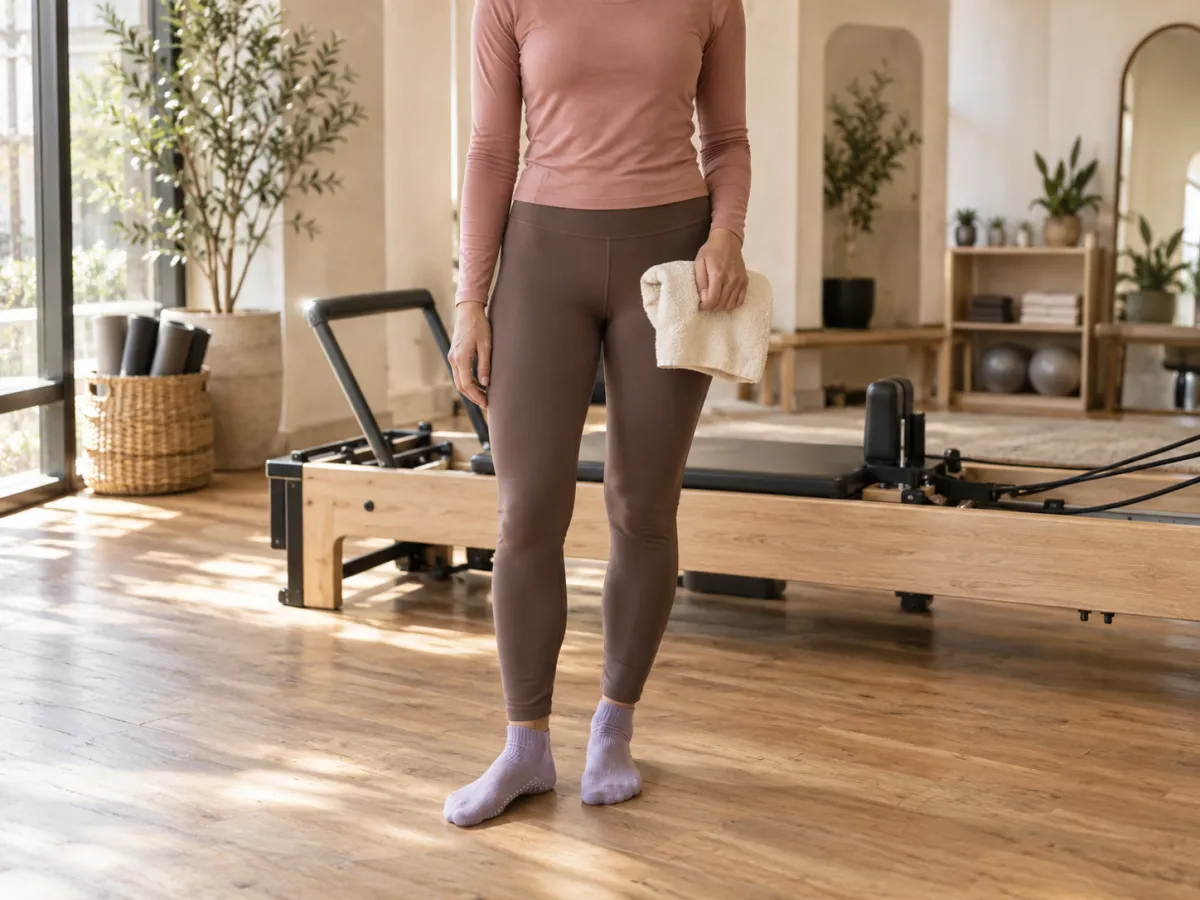
Figuring out what to wear to first pilates class is less about dressing for a studio dress code and more about giving your instructor clear visual access to your spine, pelvis, and shoulder blades while preventing mid-exercise distractions. A well-chosen first time pilates outfit moves like a second skin during supine imprinting, quadruped knee hovers, and inverted roll-overs so you never have to tug at a riding hem or adjust a twisting waistband while learning foundational breathing and core engagement cues.
According to the PilatesFits catalog listing, the Pilates Outfits collection features coordinated tops, leggings, and studio layers for assembling a Pilates look.
The Biomechanics Behind What To Wear To First Pilates Class
In your first mat or Reformer session, your instructor watches three bony landmarks to keep your joints safe: the anterior superior iliac spines (front hip points) for neutral versus imprinted pelvis, the inferior angles of the scapulae for shoulder stability, and the ribcage margin for lateral thoracic breathing. When beginners wear oversized gym t-shirts or baggy joggers, excess fabric drapes over the lumbar curve and pools around the hip crease, hiding anterior pelvic tilt or rib flaring until discomfort sets in.
Selecting coordinated, body-skimming pieces from the PilatesFits pilates outfits collection or pairing separates from the Pilates Sets collection solves three biomechanical friction points right away:
- Unobstructed Lumbo-Pelvic Cueing: High-waisted, contour-hugging leggings allow both you and your teacher to see immediately whether your tailbone is curling off the mat during bridging or whether one hip hikes during single-leg circles.
- 360-Degree Ribcage Expansion: Lateral breathing requires the lower ribs to widen sideways and backward into the mat or carriage. A soft, second-skin top or medium-support longline bra follows rib excursion without binding the diaphragm the way rigid, overly compressive shapewear bands can.
- Zero Hardware Interference on Supine Surfaces: Metal zippers on the back of a top, thick hoodie seams, and bulky drawstring knots create focal pressure points against the spinous processes when rolling through the spine on a mat or sliding on a Reformer carriage.
Common First Time Pilates Outfit Mistakes vs Biomechanical Fixes
Use this troubleshooting matrix as a practical pilates outfits guide to diagnose why everyday gym clothes often cause form compensations—and how to adjust your first time pilates outfit before stepping onto the mat or Reformer:
| Beginner Outfit Mistake | What Happens During Movement | Form & Alignment Compensation | Biomechanical Outfit Fix |
|---|---|---|---|
| Baggy Cotton Gym T-Shirt | Hem slides toward the neck during pelvic curls, roll-ups, and downward dog transitions | Beginner tenses the neck and lifts the head to hold the shirt down with the chin | Switch to a hip-hugging tank or fitted long-line top that stays anchored over the ribcage |
| Loose Running Shorts Without Liner | Wide leg openings gape open during supine leg lowers, frog presses, and tabletop holds | Practitioner pinches inner thighs together prematurely to guard coverage instead of working from the hip socket | Choose high-waisted leggings or fitted mid-thigh biker shorts with a stay-put hem band |
| Thick Back Zippers or Drawstring Knots | Hard plastic or metal presses directly into thoracic or sacral vertebrae during supine work | Spine shifts slightly off-center or skips segments during articulated bridging to avoid the pressure spot | Wear flat-seamed, hardware-free waistbands and smooth-backed tops |
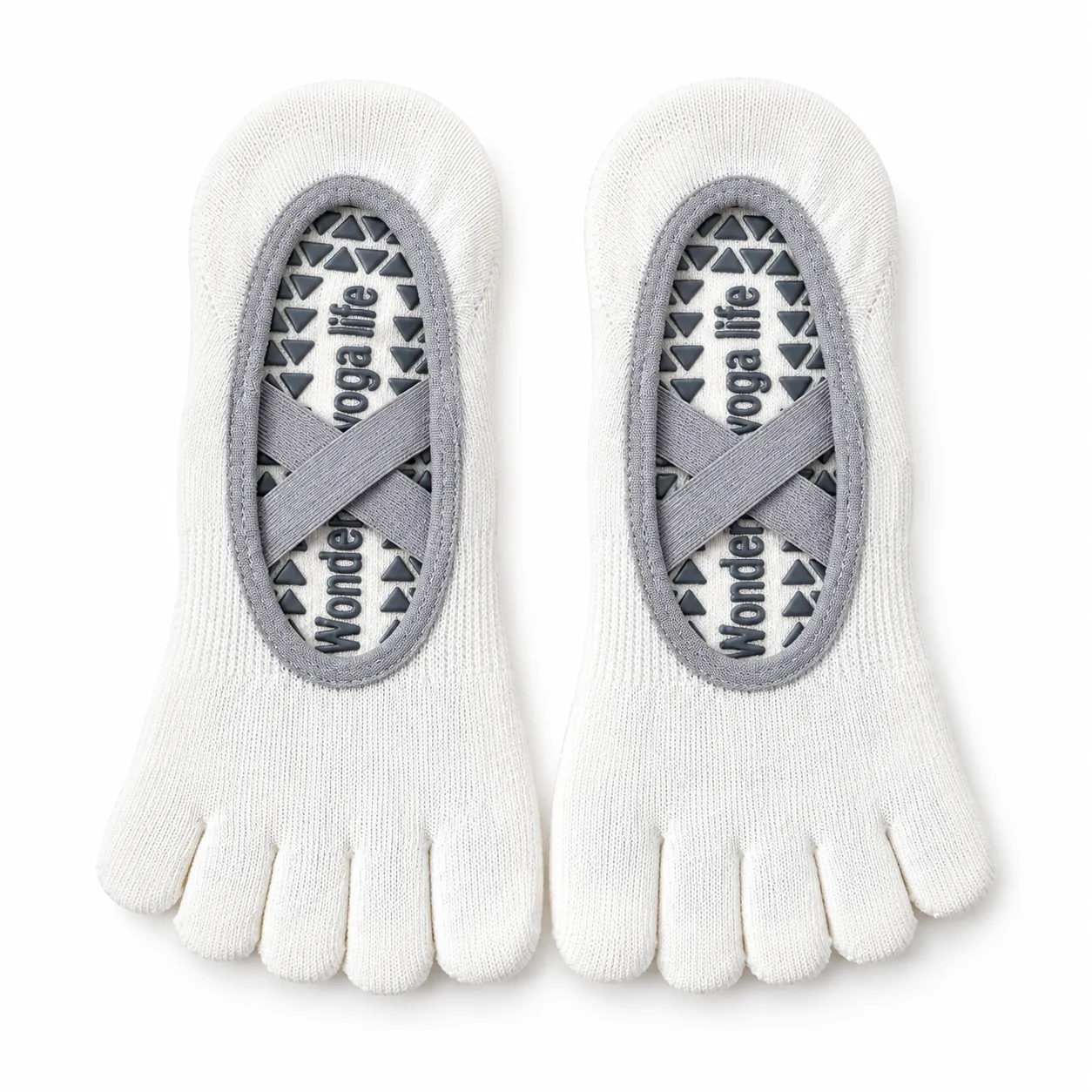
| Bare Feet or Regular Athletic Socks on Reformer | Forefoot or heel skids across the metal footbar or vinyl carriage platform under spring load | Toes claw and calves over-recruit to stop slipping, pulling alignment out of the knee and hip | Pair your outfit with dedicated full-sole grip socks for reliable shear traction |
| Skipping a Removable Warm-Up Layer | Cold superficial muscles feel stiff during initial breathing, imprinting, and shoulder mobilization | Shoulders creep up toward the ears in cool air-conditioned studios during the first ten minutes | Start in a slim, easy-off studio wrap or cropped layer that peels off once core temperature rises |
Understanding these interactions clarifies what separates the best pilates outfits for reformer and mat beginners from general cardio gear: running clothes are engineered for vertical impact and airflow, whereas Pilates apparel must perform horizontal, supine, and inverted across full joint ranges.
Step-by-Step Pre-Class Self-Check for Beginners
Before leaving home for your intro session, run through these four at-home pilates outfits tips to confirm your clothing will support clean movement mechanics from warm-up to cooldown:
- Step 1: Perform the Supine Imprint & Rib-Breath Check: Lie on your living room floor with knees bent and feet flat. Take a deep inhale into the sides and back of your ribs, then exhale to gently tip your pelvis into a flat-back imprint. Verify that your waistband lies completely flat against your sacrum and does not pinch your lower abdomen.
- Step 2: Run the Tabletop & Single-Leg Circle Test: Float both shins to tabletop and sweep one leg across the midline and down. Watch your waistband and inner-thigh seams—nothing should roll down at the navel or twist around the knee joint.
- Step 3: Check Overhead Scapular Clearance: Reach both arms straight up toward the ceiling and then overhead toward the floor behind you without letting your ribs pop off the mat. Your top straps should glide smoothly without digging into your upper traps or sliding off your shoulders.
- Step 4: Pack Grip Socks and Remove Hand Jewelry: Even if your first session is a mat class, tuck a pair of grip socks into your bag in case the studio uses Reformers, Towers, or Wunda Chairs; see our guide on why you need grip socks for Pilates for studio footwear rules, and slip off rings or bracelets that could snag loops or scratch upholstery.
Frequently Asked Questions
What should I wear to my first Pilates class so the instructor can check my form?
Choose a form-fitting, stretchy top paired with high-waisted leggings or fitted biker shorts that have a flat, hardware-free waistband, plus grip socks for studio hygiene and apparatus traction. This silhouette lets your instructor clearly see your hip, ribcage, and shoulder alignment without loose fabric riding up during roll-downs or bridges.
How does a first time pilates outfit differ between mat Pilates and Reformer Pilates?
Both formats benefit from soft, second-skin fabrics and flat waistbands that feel comfortable when lying on your back, but Reformer Pilates adds moving springs, straps, and a sliding carriage—making fitted ankles, zero dangling drawstrings, and non-slip grip socks essential so clothing never catches on hardware.
What should you wear to a Pilates or Reformer Pilates class for comfortable movement and clear alignment checks?
For Pilates and Reformer classes, practitioners pair coordinated tops and leggings with easy warm-up layers, favoring soft second-skin fabrics built for low-impact mat, Reformer, and Lagree movement.
Make it part of your practice
Explore the mocha cross-back pilates legging set and check its product details before choosing your studio essentials.
View this piece