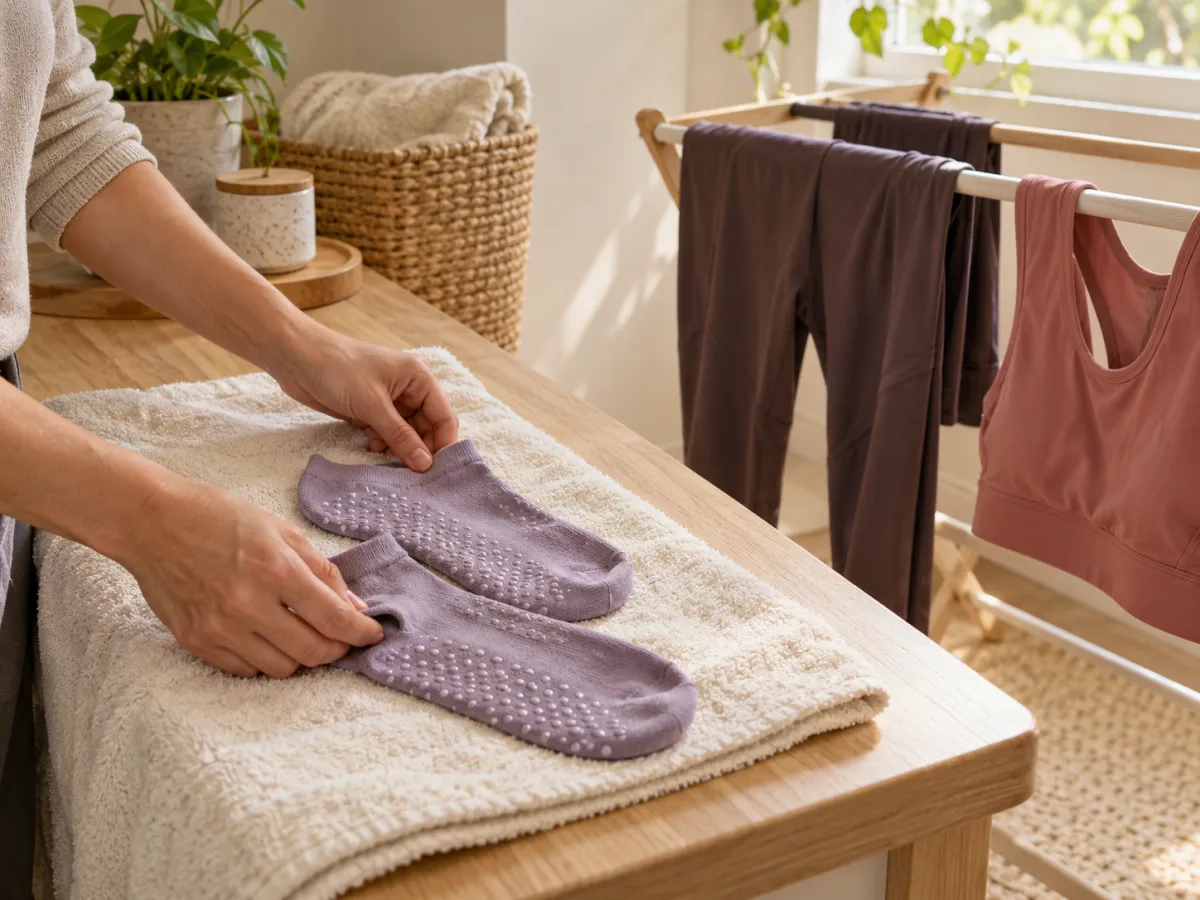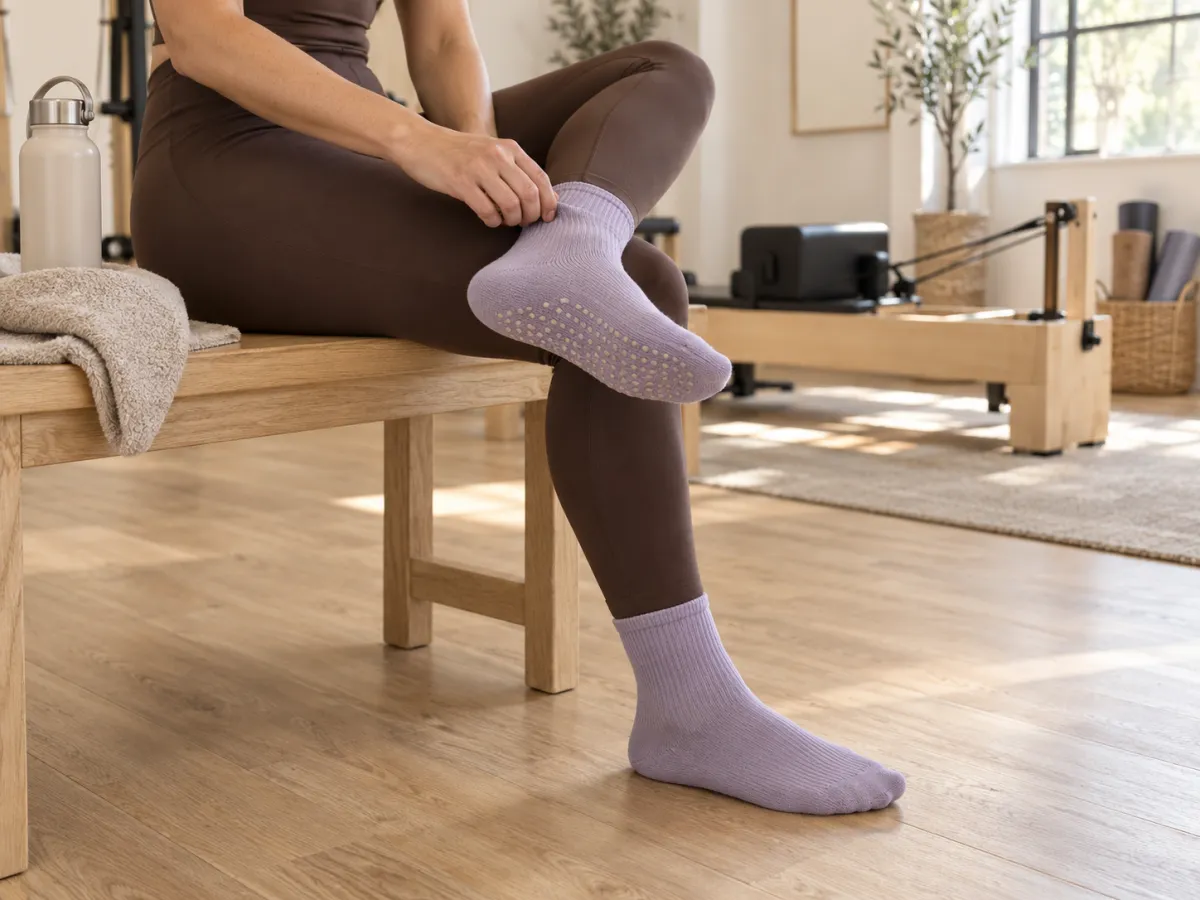
Evaluating mary jane pilates socks and ballet style pilates grip socks comes down to how dorsal cutout geometry, elastic instep straps, and heel-pocket depth control foot slip inside the sock during studio work. Low-profile socks with an open top of the foot keep skin cooler during warm mat flows and barre relevés, yet a poorly anchored instep strap allows the footbed to twist when your forefoot pushes laterally against a Reformer platform or shoulder block. Experienced practitioners also pair their low-profile grip socks with slip-on slides or Crocs when walking to and from class rather than forcing rubberized grip soles into tight street sneakers.
According to the PilatesFits catalog listing, the Pilates Socks collection covers grip socks for mat, reformer, and barre sessions in full-toe, open-toe, and crew styles.
Key Specifications to Compare When Shopping for Mary Jane Pilates Socks
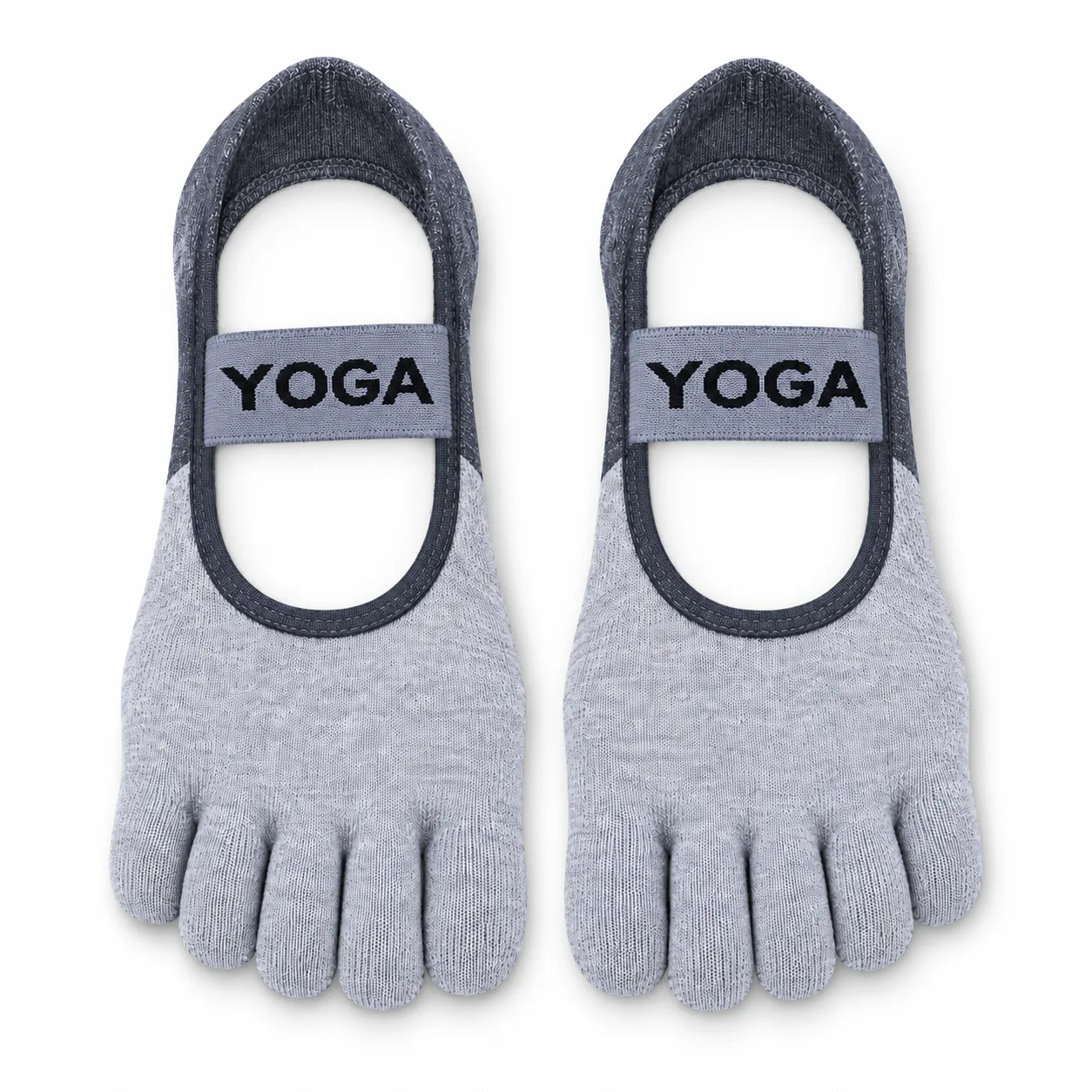
Unlike crew or standard ankle silhouettes that rely on a full tubular knit over the talus, mary jane pilates socks remove fabric across the dorsal arch and replace it with one or two elastic bridge straps. When browsing the PilatesFits pilates socks collection alongside studio props like a non-slip pilates towel, inspect four structural details that determine whether a pair stays locked onto your foot under spring load:
- Instep Strap Tension & Placement: A true Mary Jane single strap crosses directly over the navicular and cuneiform bones, whereas ballet style pilates grip socks often use criss-cross elastic bands that distribute tension across a wider mid-arch zone. The strap should lie flat without digging into the extensor tendons when you flex your ankle on the footbar.
- Heel Tab & Deep Y-Stitched Pocket: Because dorsal cutouts reduce upper fabric tension, the heel cup must feature a contoured Y-stitch and a slightly raised Achilles tab so the back of the sock never slides under your calcaneus during supine leg lowers.
- Forefoot & Heel Tread Continuity: Look for outsole grip placement that extends from the posterior edge of the heel pad through the lateral fifth metatarsal and across the big-toe joint. This continuous traction path supports smooth weight transfer from heel-contact footwork to high-half-toe relevé.
- Collar Binding Elasticity: The perimeter binding around the dorsal cutout should stretch smoothly over high insteps while rebounding snugly around narrow heels so there is zero fabric bunching under Reformer foot straps.
Mary Jane Pilates Socks vs Ballet Style Pilates Grip Socks: Side-by-Side Comparison Matrix
Use this specification breakdown as a practical pilates socks guide to compare single-strap Mary Jane cuts, criss-cross ballet silhouettes, and traditional enclosed styles across studio apparatus and mat formats:
| Specification & Feature | Mary Jane Pilates Socks (Single Strap) | Ballet Style Pilates Grip Socks (Criss-Cross) | Full-Toe Enclosed Low-Cut Socks | Open-Toe Cutout Grip Socks | Crew Pilates Grip Socks |
|---|---|---|---|---|---|
| Dorsal Upper Geometry | Open dorsal window with a single horizontal instep strap | Deep V-throat cutout stabilized by dual criss-cross straps | Full knit upper covering the entire instep to the ankle bone | Open dorsal window with individual exposed toe openings | Full knit upper extending above the ankle malleoli |
| Midfoot Torsional Lock | Moderate-to-high for standard arches; easy one-step entry | High rotational stability across narrow and high-arch feet | High uniform compression around the entire midfoot | High forefoot grounding with direct toe-pad floor contact | Maximum collar and ankle lock under heavy Reformer straps |
| Thermal Ventilation | High top-of-foot airflow during warm mat and barre classes | High airflow with balanced strap contact over the arch | Moderate warmth suited for air-conditioned Reformer studios | Maximum ventilation across both toes and dorsal arch | Warmest coverage for cool studio floors and morning sessions |
| Best Apparatus Match | Mat flows, barre sequences, light-to-moderate Reformer footwork | Reformer carriage lunges, barre center work, Tower exercises | All-around Reformer, Chair, and studio mat circuits | Standing balance drills, mat articulation, barefoot-style cues | Reformer feet-in-straps, jumpboard, and lower-shin protection |
| Commute & Layering Habit | Slip into slides or Crocs before stepping outside the studio | Wear with open-back slides so criss-cross straps stay flat | Pair with slip-on slides to keep outsole treads dust-free | Slip on slides between locker room and studio floor | Pull cuff over leggings and step into slides for transit |
Understanding these structural differences clarifies what makes the best pilates socks for reformer versus barre or mat sessions: when your feet are in heavy Reformer loops, criss-cross ballet straps or full-coverage uppers prevent the hardware or fabric loop from catching on an exposed cutout edge.
Step-by-Step Selection Checklist for Studio and Home Practitioners
Before adding a pair of mary jane pilates socks or ballet style pilates grip socks to your rotation, run through these four pre-purchase and fit-check pilates socks tips:
- Step 1: Match Cutout Depth to Your Arch Profile: If you have a high instep, test whether a single Mary Jane strap presses uncomfortably at full ankle dorsiflexion; criss-cross ballet straps or full-toe cuts from the PilatesFits pilates socks collection often contour more evenly across elevated arches.
- Step 2: Perform the Unilateral Relevé Twist Test: Stand on one foot in your grip socks, rise onto the ball of your foot, and pivot your heel five degrees inward and outward. The sole tread should stay fixed to the floor while the upper binding holds your skin without rotating.
- Step 3: Check Hardware & Strap Clearance: If your weekly schedule includes feet-in-straps Reformer sequences or Tower push-through bar drills, verify that the Reformer loop sits comfortably across the elastic strap rather than pinching bare skin at the edge of the cutout.
- Step 4: Pair with a Studio Towel & Commute Slides: Keep a dedicated pilates towel in your bag for carriage head-pad hygiene, and always wear slip-on slides or Crocs on the walk to class so hallway dust never dulls the plantar grip surface.
Strappy cutout socks have more exposed binding than enclosed styles, so wash them inside out in a mesh bag; our guide on how to wash grip socks covers the full routine.
Frequently Asked Questions
What specifications matter most when comparing mary jane pilates socks?
Focus on elastic instep strap placement over the mid-arch, a deep Y-stitched heel pocket with a raised Achilles tab that prevents heel slip, snug perimeter binding around the dorsal cutout, and continuous outsole traction from the heel pad through the metatarsal heads.
How does mary jane pilates socks compare to ballet style pilates grip socks for regular Pilates sessions?
Mary jane pilates socks use a single horizontal strap across an open dorsal cutout for quick slip-on ventilation in mat and barre classes, whereas ballet style pilates grip socks typically use dual criss-cross straps that provide stronger torsional midfoot lock during lateral Reformer lunges and standing splits.
Do you need grip socks for Pilates, and how do full-toe, open-toe, and crew grip socks compare for Reformer vs mat classes?
Grip socks provide reliable sole traction for mat, Reformer, and barre sessions; full-toe silhouettes enclose the entire foot for Reformer strap comfort, open-toe styles allow direct toe-to-mat tactile feedback, and crew cuts shield the ankle and lower shin.
Make it part of your practice
Explore the ivory cross-strap five-toe grip socks and check its product details before choosing your studio essentials.
View this piece