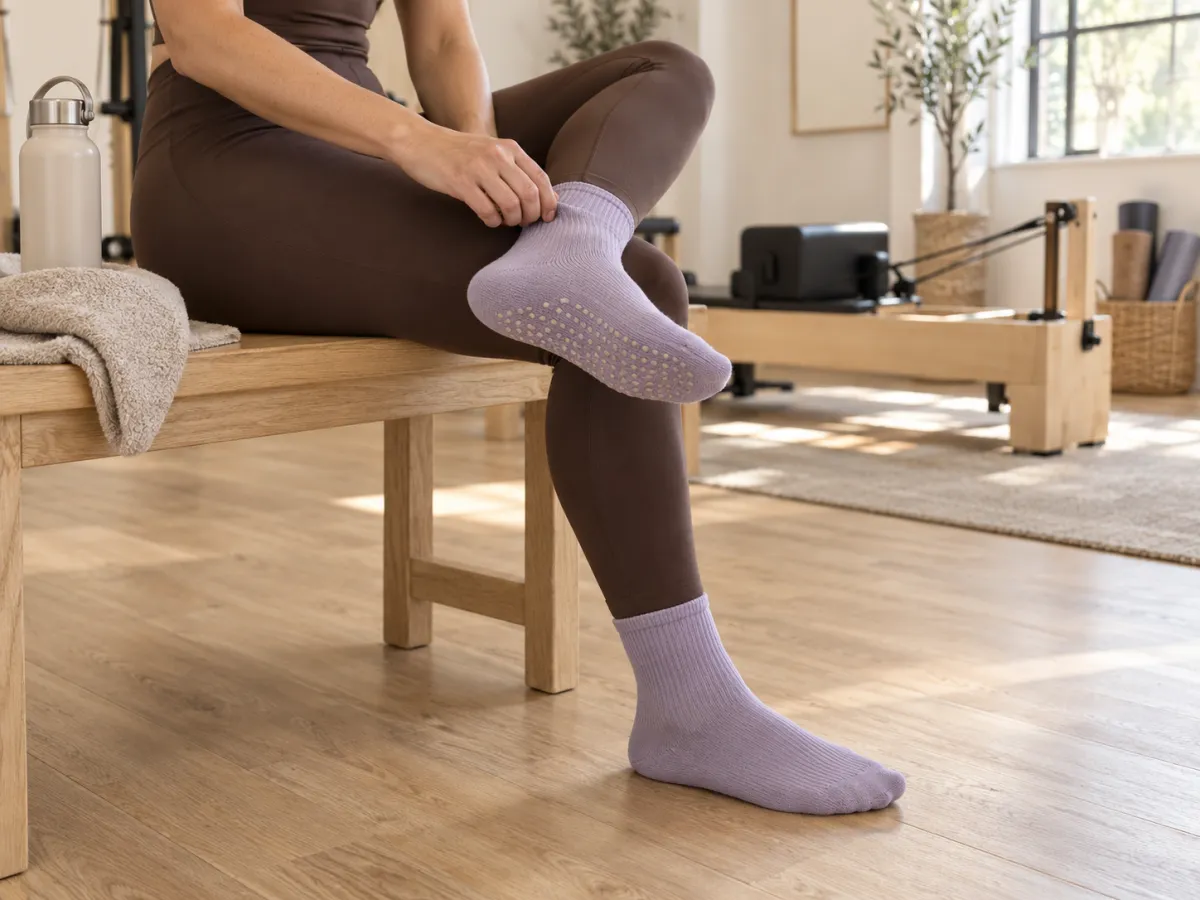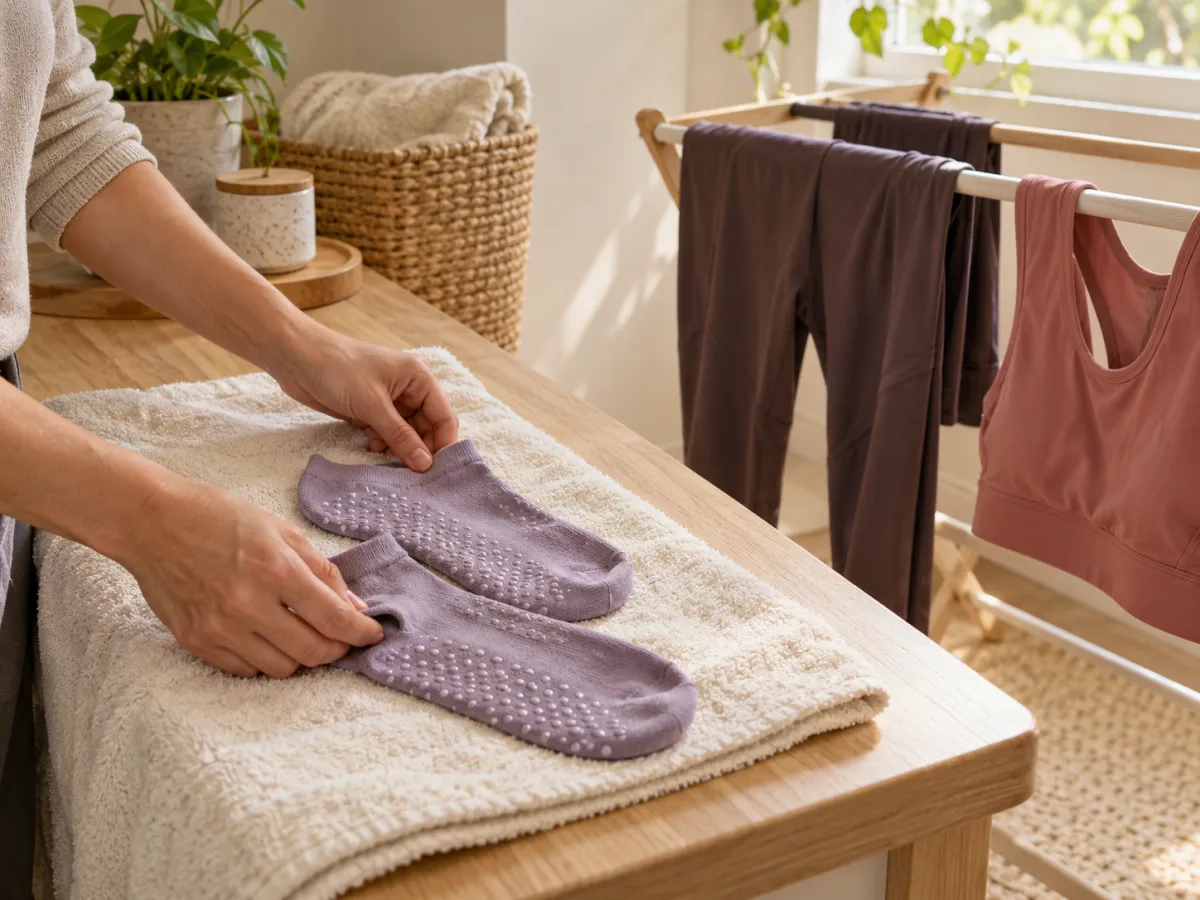
If you are searching how to wash grip socks, the short answer is: turn them inside out, wash cool on a gentle cycle with a small dose of plain detergent, skip fabric softener and dryer sheets, and air-dry them flat or hanging away from direct heat. The longer answer matters because washing pilates grip socks the wrong way does not just shorten their life—it quietly removes the one thing you bought them for, the tacky sole that keeps your feet planted on a Reformer footbar or a mat.
According to the PilatesFits catalog listing, the Pilates Socks collection covers grip socks for mat, reformer, and barre sessions in full-toe, open-toe, and crew styles.
This guide explains what actually wears grip socks out, gives a repeatable wash-and-dry routine, and shows how to tell when a pair has reached the end of its useful life. Because fibre blends and sole compounds differ between brands and styles, always treat the care label on your specific pair as the final word.
What Degrades Pilates Socks: Sweat, Heat, Detergents & UV Exposure
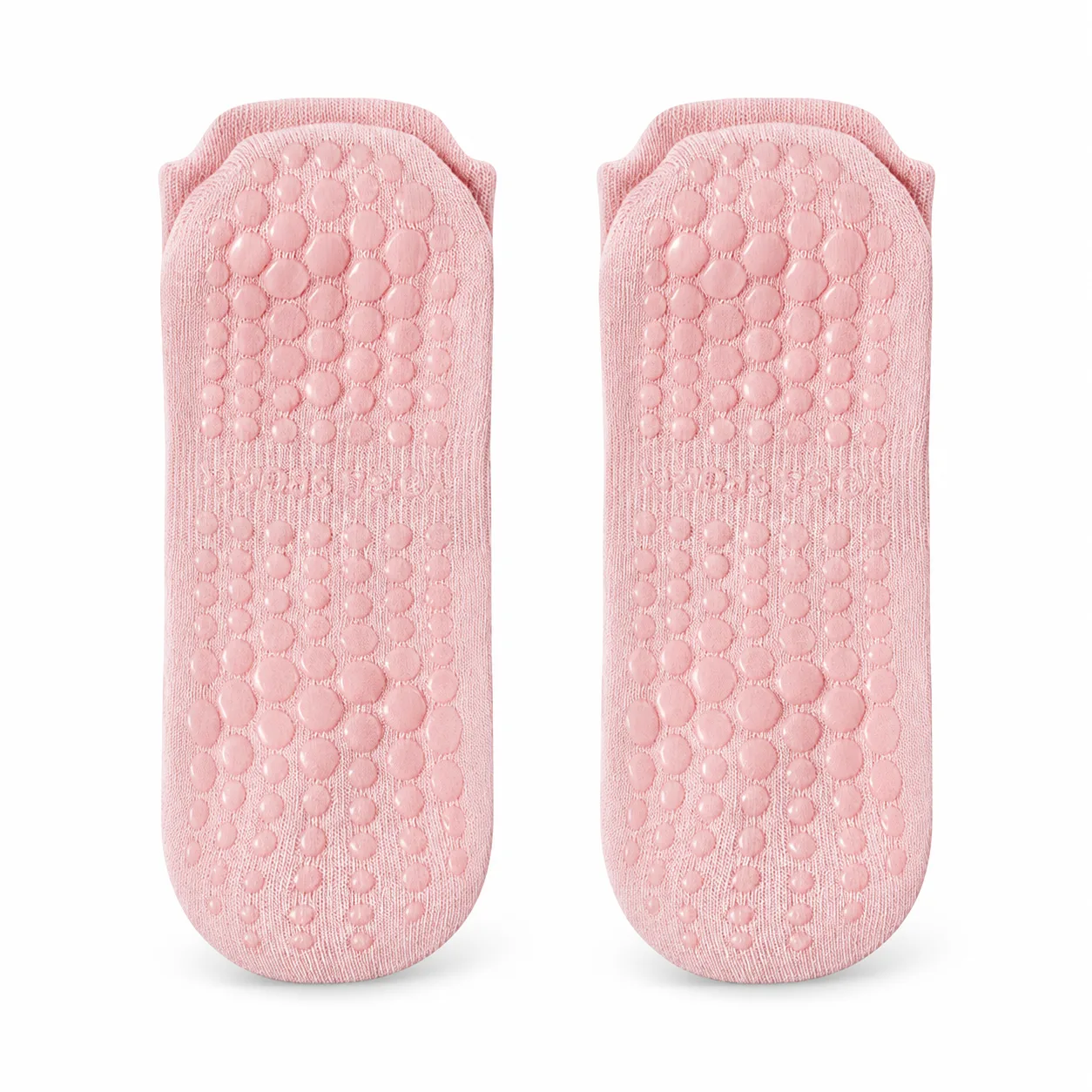
A grip sock is two materials doing two different jobs: a stretchy knit that holds the foot, and a printed or moulded grip pattern on the sole that creates friction. Each fails in its own way.
| Damage Source | What It Does to the Knit | What It Does to the Grip Sole | Practical Prevention |
|---|---|---|---|
| Dried sweat and skin oils | Stiffens fibres and holds odour in the arch and toe box | Leaves a slick film that makes the sole feel less tacky | Rinse or wash after every class rather than re-wearing |
| High heat (hot wash, tumble dryer, radiator) | Relaxes elastic yarns so the arch band and cuff loosen | Can soften, crack, or peel printed grip dots over time | Wash cool and air-dry away from direct heat |
| Fabric softener and dryer sheets | Coats fibres with a waxy residue that traps odour | Leaves a slippery layer on the grip pattern | Leave them out of the load entirely |
| Bleach and harsh stain removers | Weakens elastic and fades colours | May dry out or discolour the sole compound | Use a mild detergent; spot-treat gently |
| Abrasion (street shoes, rough floors, zips in the wash) | Pills and thins the knit at heel and toe | Grinds down the edges of grip dots | Wear slides over socks to class; wash inside out in a mesh bag |
| Prolonged sunlight while drying | Fades dyes and can weaken some synthetic fibres | Can make some sole materials brittle with repeated exposure | Dry in shade or indoors |
The common thread is that grip socks fail from the outside in: the sole surface gets contaminated or worn first, and the elastic structure loosens second. A good routine targets both.
Step-by-Step Cleaning and Sanitization Protocol for How To Wash Grip Socks
Use this routine for most cotton-blend and synthetic-blend grip socks. If your pair’s label says hand wash only, follow the hand-wash variation.
- Shake out and pre-check. Knock out lint and grit, and look for any lifting grip dots. Loose dots will snag and tear in a machine, so hand wash those pairs.
- Turn the socks inside out. This puts the grip sole on the inside, where it is protected from rubbing against other clothes and the drum.
- Bag them. Put socks in a mesh laundry bag, and keep them away from jeans, towels with zips, and anything with hook-and-loop fasteners.
- Wash cool and gentle. Choose a cold or cool setting and a delicate or gentle cycle. Cool water still removes sweat effectively when paired with detergent and agitation.
- Use a small amount of plain detergent. Too much detergent leaves residue on the sole. Skip fabric softener, scent boosters, and bleach.
- Add an extra rinse if you can. A second rinse clears any leftover detergent film from the grip pattern.
- Air-dry, never tumble-dry. Reshape the socks, then hang them by the cuff or lay them flat, sole side up, in a ventilated spot out of direct sun and away from radiators.
Hand-wash variation: Fill a basin with cool water and a teaspoon of mild detergent, soak the socks inside out for 10–15 minutes, gently squeeze (do not wring), rinse twice in clean water, press out water in a towel, and air-dry as above.
Odour reset: If a pair still smells after washing, soak it inside out for about 30 minutes in cool water with a splash of white vinegar, rinse well, then wash normally. Vinegar is a common home remedy for odour; test it on one pair first if the colour is bright.
Restoring tackiness: When the sole feels slick even though it looks intact, the cause is usually residue rather than wear. A gentle hand wash with a little dish soap on the sole, followed by a thorough rinse, often brings the grip back.
Storage, Inspection, and Replacement Signs for Washing Pilates Grip Socks
How you treat grip socks between washes matters as much as the wash itself.
- Never leave them balled up in a gym bag. Damp socks in a closed bag breed odour. Hang them to dry as soon as you get home, even if you will not wash them until later that day.
- Store flat or loosely paired. Folding the cuff tightly over the foot for weeks can stretch the elastic. Lay pairs flat or pair them loosely in a drawer.
- Keep a rotation. If you take three or more classes a week, owning several pairs means each one is fully dry before its next wear and wears more slowly.
- Protect the soles on the way to class. Many studio regulars wear slip-on slides or Crocs over their grip socks on the walk in, rather than forcing grip soles into regular shoes, which keeps grit and shoe-lining friction off the grip pattern.
Use this quick inspection before class to decide whether to keep, repair, or replace a pair:
| Check | Keep Using | Time to Replace |
|---|---|---|
| Sole grip feel on a smooth floor | Feels tacky after a clean wash | Still slides even after a residue-clearing wash |
| Grip dot condition | Edges intact, minor fading only | Dots peeling, cracked, or worn smooth under the ball of the foot |
| Heel and toe knit | Even thickness, light pilling | Thin spots or holes forming |
| Arch band and cuff | Snug and springs back | Bags, twists, or slides down during class |
| Odour | Gone after washing | Returns immediately even after a vinegar soak |
Worn grip is a safety issue on moving apparatus, so replace a pair once the sole stops gripping reliably rather than trying to squeeze out extra weeks.
When it is time for a fresh pair, browse the Pilates Socks collection, and add a washable carriage cover from the Pilates Towel collection to cut down on sweat reaching your gear. If you are still choosing a style, our grip sock spec comparison guide explains how the different cuts compare.
Frequently Asked Questions
What is the safest way to handle how to wash grip socks without damaging the material?
Turn the socks inside out, place them in a mesh bag, and wash cool on a gentle cycle with a small amount of mild detergent. Leave out fabric softener, dryer sheets, and bleach, then air-dry away from direct heat and sunlight. If the care label on your pair says something different, follow the label.
How often should you perform maintenance for washing pilates grip socks?
Wash grip socks after every session, because dried sweat both causes odour and dulls the grip. Inspect the soles and elastic every few washes, give slick soles a residue-clearing hand wash when needed, and replace a pair once the grip stops holding on smooth surfaces.
Do you need grip socks for Pilates, and how do full-toe, open-toe, and crew grip socks compare for Reformer vs mat classes?
Most Reformer studios expect grip socks for traction and hygiene, and many people wear them for mat work too. Full-toe, open-toe, and crew styles all provide sole traction; from a care point of view they wash the same way, though crew styles have more elastic in the cuff to protect from heat, and open-toe styles have exposed edges that benefit from a mesh bag.
Make it part of your practice
Explore the lavender crew pilates grip socks and check its product details before choosing your studio essentials.
View this piece