


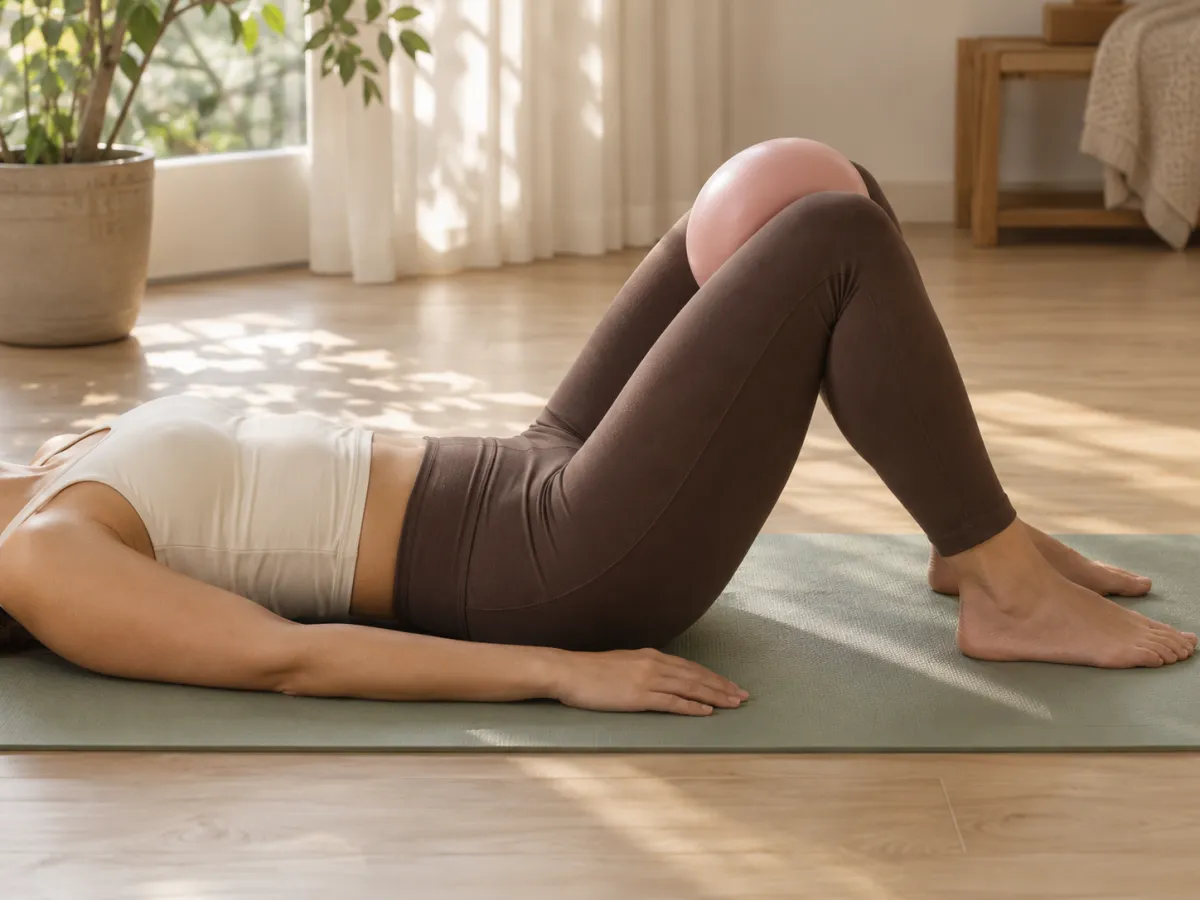
Adding a small exercise ball for core training should deepen transverse abdominis recruitment and quiet overactive hip flexors, yet many practitioners finish a pilates ball ab workout with a gripping lower back or strained neck. The difference between superficial bracing and genuine deep-core stabilization lies in how the ball’s diameter, inflation compliance, and placement alter pelvic leverage and ribcage mechanics. When you understand the joint vectors created by an inflatable fulcrum, you can diagnose slippage and compensation patterns immediately.
According to the PilatesFits catalog listing, the Pilates Balls collection features small Pilates exercise balls selected by size and inflation level for studio or home routines.
The Biomechanics Behind a Small Exercise Ball For Core in Mat and Reformer Movements
Whether wedged between the knees on a moving Reformer carriage or tucked beneath the pelvis on a floor mat, a small exercise ball for core work changes muscle recruitment through three anatomical pathways:
- Adductor-to-Pelvic-Floor Fascial Continuity: The inner-thigh adductors share myofascial connections with the pelvic floor and deep internal obliques. Gently compressing a properly sized ball between the medial knees pre-activates the deep abdominal cylinder before spinal flexion or leg loading even begins.
- Unstable Sacral Fulcrum and Shear Reduction: Placing a softly inflated ball beneath the flat of the sacrum elevates the pelvis slightly above the mat. Unlike a rigid foam block, the shifting air chamber forces the left and right internal obliques and multifidi to co-contract continuously to keep the anterior superior iliac spines level.
- Thoracic Extension Lever and Rib-to-Hip Connection: Supporting the mid-thoracic spine over a yielding ball places the rectus abdominis and external obliques at a slight mechanical stretch during the eccentric phase of an abdominal curl, recruiting deeper motor units while keeping the cervical spine out of forward-head shear.
- Activation Versus Heavy Overload: Experienced studio practitioners note that undersized kit balls provide neuromuscular activation and proprioceptive cueing rather than heavy progressive resistance.
Biomechanical Diagnostic Matrix for a Pilates Ball Ab Workout
Use this diagnostic matrix to identify and correct common alignment breakdowns during a pilates ball ab workout:
| Exercise Position | Common Compensation Pattern | Root Mechanical Cause | Tactile & Alignment Fix | Target Muscle Restored |
|---|---|---|---|---|
| Supine Sacral Toe Taps | Lower back arches sharply off the ball as the heel lowers | Ball is over-inflated or placed under the lumbar curve instead of the flat sacrum | Deflate to a soft squish and shift the ball lower toward the tailbone | Deep transverse abdominis and eccentric iliopsoas control |
| Thoracic Arc Chest Lift | Anterior neck muscles strain and chin juts toward the ceiling | Pulling on the base of the skull while leaving the lower ribs flared upward | Soften the breastbone down into the ball on the exhale before lifting the head | Upper rectus abdominis, internal obliques, and deep neck flexors |
| Hundred with Ankle Squeeze | Superficial hip flexors cramp and ball slips upward | Clenching the ball with rectus femoris and internal hip rotation | Soften knee crease slightly and press inward from the upper inner thighs | Medial adductor line and lower abdominal wall |
| Articulating Shoulder Bridge | Knees splay outward or knock inward excessively | Using an undersized kit ball that fails to match neutral hip-socket width | Select a studio-proportioned ball that keeps femurs parallel under gentle pressure | Posterior chain, gluteal fold, and pelvic floor synergy |
| Prone Forearm Plank on Ball | Scapulae wing and lumbar spine sags toward the floor | Collapsing into shoulder joints without active serratus anterior protraction | Press forearms down and slightly forward into the ball while drawing ribs to hips | Serratus anterior, anterior core sling, and deep spinal stabilizers |
Common Mistakes With a Pilates Ball Ab Workout and How to Fix Each One
Even seasoned students sabotage their pilates ball ab workout when setup errors go unnoticed. Address these core form mistakes using a properly fitted prop from the PilatesFits Pilates Balls collection:
- Mistake One — Over-Inflating the Ball for Spinal Wedge Drills: A taut, fully inflated ball acts like a hard pivot point that pushes the lumbar spine into anterior tilt and rib flare. The Fix: Release air until your thumb can indent the shell effortlessly. A compliant surface molds around the sacrum or scapulae, increasing contact area and allowing smooth segmental flexion.
- Mistake Two — Crushing the Ball to Chase Heavy Resistance: Squeezing a mini ball with maximum force recruits superficial hip flexors and jaw tension without adding true strength overload. The Fix: Treat the ball squeeze as a steady, moderate midline pulse timed to your exhalation. When your program calls for firmer spring-like resistance, alternate your ball drills with a PilatesFits Pilates Ring rather than over-clenching an inflatable prop.
- Mistake Three — Placing the Sacral Ball Under the Waistline: Positioning the ball beneath the lumbar vertebrae forces the psoas to tug directly on the lower spine during leg extensions. The Fix: Slide the ball down until the bony triangle of your sacrum rests squarely on the center of the dome, leaving your lower back free to lengthen into a neutral or slightly imprinted curve.
Self-Check Alignment Protocol Before Your Next Session
Run through this rapid pre-session verification protocol before starting your small exercise ball for core sequence:
- Verify Sacral Neutrality: When lying supine with your pelvis on the ball, place your palms on your hip bones and pubic bone. That triangle should remain level with the mat ceiling—neither tucked sharply toward your nose nor tipped away toward your feet.
- Test Ribcage Closure on Exhale: Inhale wide into the lateral ribs; exhale and verify that your bottom front ribs knit inward and downward without your shoulders rounding forward.
- Confirm Parallel Femur Tracking: When holding the ball between your knees or ankles, glance down to confirm your kneecaps point straight ahead rather than twisting inward.
Frequently Asked Questions
How does a 9-inch mini Pilates ball work for core and inner-thigh activation compared to undersized kit balls?
Small Pilates exercise balls are selected by size and inflation level for studio or home routines; practitioners note that undersized kit balls mainly provide muscle activation rather than heavy progressive resistance. A studio-sized ball bridges the natural distance between the knees so the adductors and deep abdominal wall fire together without forcing knock-kneed joint compensation.
What is the most common mistake people make with a small exercise ball for core?
The most frequent error is using an over-inflated ball beneath the lower back or sacrum, which pitches the pelvis into an anterior tilt and shifts load from the transverse abdominis into the lumbar extensors and hip flexors. Partially deflating the ball restores a stable, yielding cradle for the pelvis.
How does a pilates ball ab workout affect alignment and muscle activation in Pilates?
A well-aligned pilates ball ab workout uses gentle midline compression and controlled instability to recruit the deep core cylinder—linking the pelvic floor, adductors, and obliques—before superficial global muscles take over.
Make it part of your practice
Explore the pink fine-texture pilates ball and check its product details before choosing your studio essentials.
View this piece