


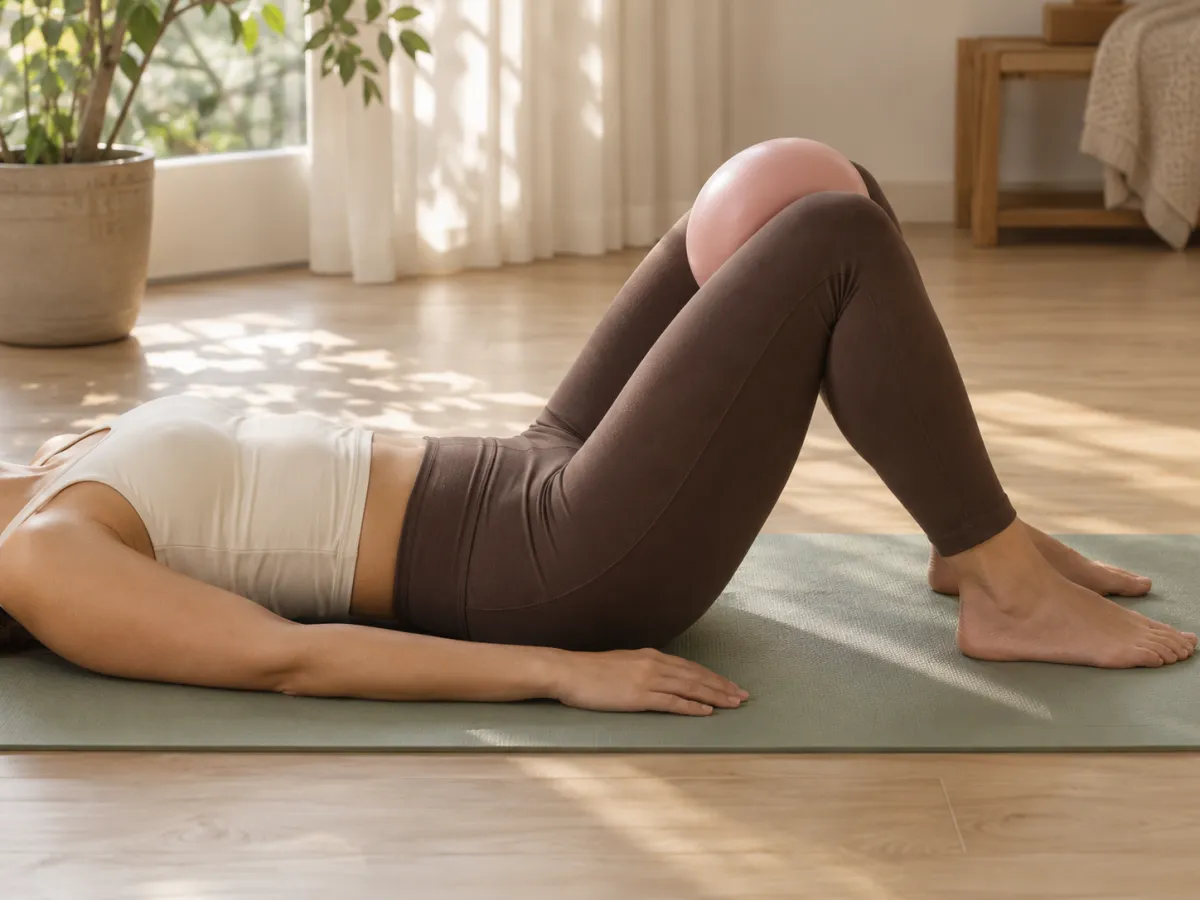
Maintaining an anti burst mini exercise ball and knowing how to clean pvc exercise ball surfaces properly ensures your studio prop retains its supple surface tack, internal air pressure, and gentle rebound under sacral or adductor compression. Unlike heavy weights or rigid apparatus, a flexible mini Pilates ball relies on plasticized elastomer walls and an air-tight valve plug to deliver neuromuscular activation during pelvic curls, supine abdominal series, and inner-thigh squeezes. When body oils, harsh chemical wipes, or radiant heat strip the outer finish, the shell can turn sticky, lose its matte grip against leggings, or develop micro-creases around the valve stem.
According to the PilatesFits catalog listing, the Pilates Balls collection features small Pilates exercise balls selected by size and inflation level for studio or home routines.
What Degrades Pilates Ball: Sweat, Heat, Detergents & UV Exposure
Understanding what breaks down a flexible anti burst mini exercise ball is the first step in mastering how to clean pvc exercise ball equipment without shortening its studio lifespan:
- Alcohol, Bleach, and Solvent-Based Gym Wipes: High-concentration isopropyl alcohol, bleach sprays, and citrus degreasers extract the plasticizers that keep PVC and soft elastomer walls pliable. Over time, repeated solvent wiping leaves the surface brittle or tacky to the touch.
- Skin Oils, Sunscreen, and Floor Grit: Sebum, body lotions, and microscopic floor dust adhere to the matte texture of a mini ball during supine sacral support and chest lifts. If left unwashed, oil buildup causes the ball to slip out from between the knees or ankles during isometric squeezes.
- Direct Sunlight and Car-Trunk Heat: Leaving an inflated ball near a sunny window, radiator, or inside a hot vehicle causes internal air expansion while accelerating UV oxidation of the outer shell, permanently stretching the ball’s equator.
- Abrasive Surfaces and Over-Inflation Stress: Inflating a small Pilates ball until it feels rock-hard or pressing it against rough concrete or Velcro straps stresses the seam and valve plug, reducing its ability to cushion the spine and cue deep core activation.
| Cleaning or Storage Factor | Safe Studio Practice for Mini Pilates Balls | Common Mistake to Avoid | Material & Biomechanical Impact |
|---|---|---|---|
| Daily Post-Session Wipe | Damp microfiber cloth with lukewarm water and a drop of mild dish soap | High-alcohol antibacterial wipes or bleach sprays | Preserves matte surface tack so the ball stays anchored between knees |
| Deep Sanitization Rinse | Gentle hand wash around valve plug followed by a clean-water wipe | Submerging an unplugged ball or using abrasive scrubbing pads | Prevents water from entering the internal chamber and avoids micro-scratches |
| Drying Environment | Air-dry flat on a clean studio towel in shaded room-temperature air | Placing near space heaters, hair dryers, or direct window sunlight | Protects elastomer elasticity and prevents uneven thermal expansion |
| Inflation Level Management | Inflate to a soft, yielding squish specified for your routine | Over-inflating until rigid or leaving valve plug loosely seated | Enables ergonomic sacral molding and controlled adductor activation |
| Long-Term Travel & Storage | Store partially deflated or away from sharp props in a cool cubby | Wedging tightly against metal buckles, rings, or rough Velcro straps | Prevents permanent surface indentations and valve-neck fatigue |
To select a studio-ready mini ball or refresh your home prop kit, browse the PilatesFits Pilates Balls collection and pair your ball work with a complementary PilatesFits Pilates ring for balanced isometric training.
Step-by-Step Cleaning and Sanitization Protocol for Anti Burst Mini Exercise Ball
Follow this four-step routine whenever you practice how to clean pvc exercise ball gear after mat or Reformer sessions:
- Verify the Valve Plug Is Fully Seated: Before introducing any moisture, press the air stopper firmly flush into the valve collar so soapy water cannot seep inside the hollow chamber of your anti burst mini exercise ball.
- Wipe with Mild Soap and Lukewarm Water: Dampen a soft microfiber cloth in lukewarm water mixed with a small drop of mild, non-abrasive liquid soap. Wipe the entire sphere in circular motions, paying extra attention to the textured grip zones and the crease around the valve plug.
- Rinse Residue with a Clean Damp Cloth: Dried soap film makes a Pilates ball slippery against studio leggings and grip socks. Wipe the surface a second time with a cloth dampened only with fresh water to remove all surfactant residue.
- Towel-Blot and Air-Dry Away from Heat: Pat the ball dry with a clean studio towel and let it rest at room temperature away from direct sunlight before returning it to your Pilates bag or storage rack.
Storage, Inspection, and Replacement Signs for How To Clean Pvc Exercise Ball
Even when you follow best practices for how to clean pvc exercise ball props, routine inspection keeps your spine and joints supported:
- Match Inflation Level to Activation Needs: Practitioners choose small Pilates balls by size and inflation level for targeted muscle activation rather than heavy progressive resistance. If the ball feels too firm under your tailbone during pelvic curls, release a small breath of air so it molds comfortably to your sacrum.
- Inspect for Surface Tackiness, Pitting, or Valve Leaks: Before bridging or placing body weight onto the ball, check the equator line and valve collar. If the surface remains permanently sticky after a mild soap wash, shows chalky UV fading, or loses air pressure during a single class, retire and replace the ball.
- Deflate Slightly for Air Travel or Tight Bag Packing: When packing your anti burst mini exercise ball into a studio tote, remove the plug and release part of the air volume so the elastomer walls relax without creasing sharply.
Frequently Asked Questions
How does a 9-inch mini Pilates ball work for core and inner-thigh activation compared to undersized kit balls?
Small Pilates exercise balls are selected by size and inflation level for studio or home routines, while practitioners note that undersized kit balls mainly provide muscle activation rather than heavy progressive resistance. Keeping the ball properly inflated and clean ensures reliable grip and tactile feedback during inner-thigh squeezes and core curls.
What is the safest way to handle anti burst mini exercise ball without damaging the material?
The safest way to handle an anti burst mini exercise ball is to keep the valve plug sealed during cleaning, wipe the shell with lukewarm water and mild soap on a soft microfiber cloth, avoid harsh alcohol or bleach solvents, and store the ball away from direct sunlight, heaters, and sharp hardware.
How often should you perform maintenance for how to clean pvc exercise ball?
For how to clean pvc exercise ball maintenance, give the ball a quick damp microfiber wipe after every home or studio workout to remove sweat and skin oils, and perform a thorough mild-soap wash and valve inspection once a week.
Make it part of your practice
Explore the pink fine-texture pilates ball and check its product details before choosing your studio essentials.
View this piece