


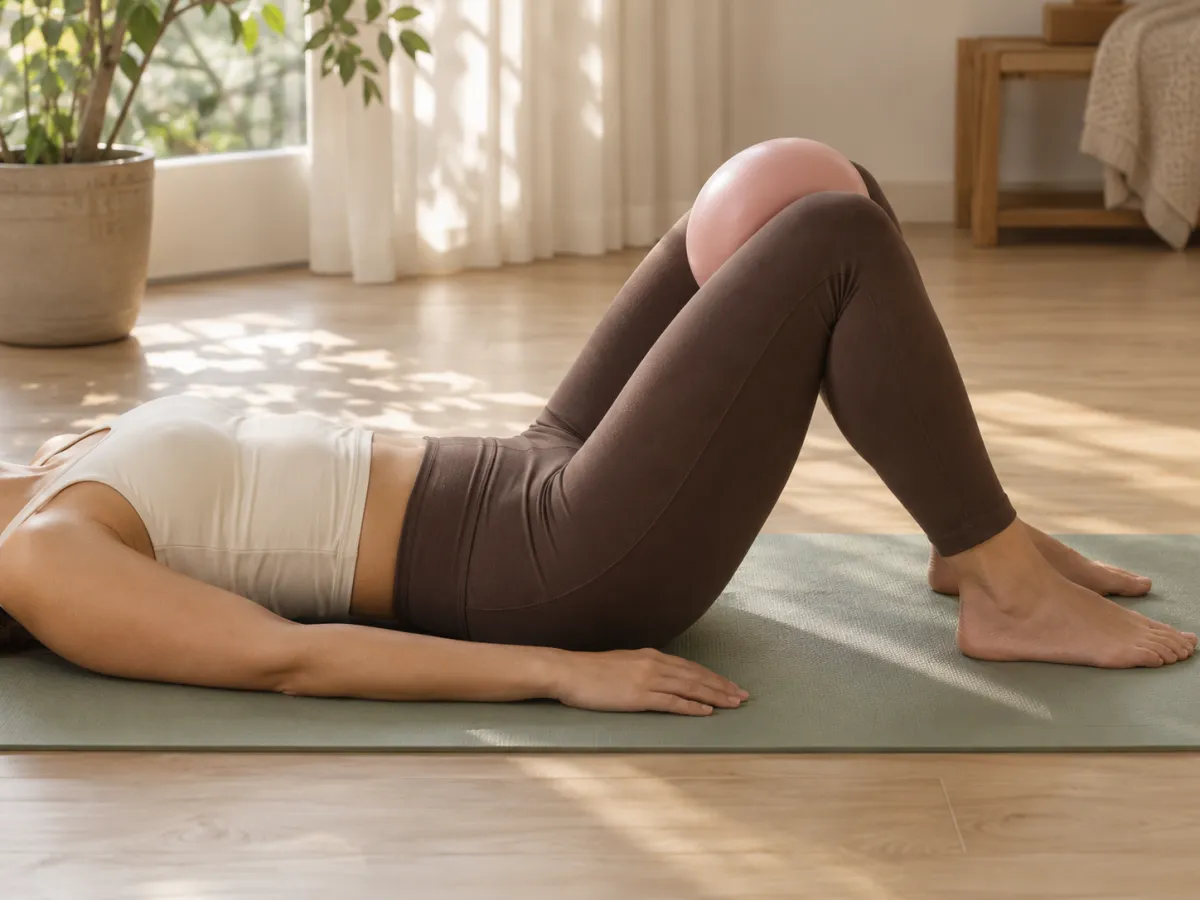
Translating studio apparatus precision to a living room mat starts with understanding how pilates ball exercises recreate unstable proprioceptive feedback, midline adductor connection, and controlled spinal articulation. While an inflatable prop cannot duplicate heavy metal carriage springs, a thoughtfully sequenced mini stability ball workout reproduces the Reformer’s signature demand for pelvic stillness, eccentric abdominal braking, and rib-to-hip organization. By varying ball placement and inflation compliance, you can turn standard floor drills into an apparatus-inspired flow.
According to the PilatesFits catalog listing, the Pilates Balls collection features small Pilates exercise balls selected by size and inflation level for studio or home routines.
How Pilates Ball Exercises Translate Reformer Mechanics to the Floor
On a studio Reformer, a rolling carriage and adjustable springs provide two distinct inputs: a moving surface that challenges core stability and external tension that guides limb tracking. When you practice pilates ball exercises on a mat, a partially deflated mini ball mimics the unstable surface component while supplying tactile midline feedback:
- Midline Adductor Cueing: Wedging the ball between the inner knees or ankles during supine footwork variations forces the medial thigh line to stay active, preventing the femurs from drifting apart just as shoulder blocks and footbar alignment demand in the studio.
- Unstable Sacral Fulcrum: Placing a softly inflated ball beneath the sacrum elevates the pelvis into a hovering support point. Any asymmetry in your left-to-right transverse abdominis recruitment immediately causes the pelvis to tip, mirroring the instant feedback of a floating Reformer carriage.
- Thoracic Extension Support: Draping the upper back over the ball during chest lifts and swan variations supports the scapulae and mid-thoracic spine, allowing deeper anterior abdominal lengthening without neck strain.
- Honest Mechanical Boundary: Community practitioners and instructors emphasize that undersized or standard mini balls excel at neuromuscular activation and alignment control rather than heavy progressive resistance.
Reformer Apparatus vs Mini Stability Ball Workout Translation Matrix
Use this comparison matrix to see how classic studio Reformer blocks translate into a floor-based mini stability ball workout:
| Studio Reformer Block | Mat Pilates Ball Exercise Equivalent | Ball Placement & Inflation | Primary Neuromuscular Target | Honest Mechanical Difference |
|---|---|---|---|---|
| Parallel Footwork on Footbar | Supine Articulating Shoulder Bridge with Squeeze | Between inner knees; soft-to-medium squish | Medial adductors, hamstrings, pelvic floor, and gluteal fold | Replaces horizontal spring extension with vertical gravity load and isometric adductor compression |
| Supine Arms in Straps & Toe Taps | Sacral-Supported Alternating Dead Bug | Beneath flat of sacrum; partially deflated | Deep transverse abdominis, iliopsoas eccentric control, and pelvic stability | Removes upper-body strap load while amplifying rotational and anterior pelvic tilt instability |
| Hundred on the Moving Carriage | Elevated-Ankle Hundred with Midline Pulse | Between inner ankles; firmer inflation | Upper and lower rectus abdominis, deep core stabilizers, and inner thighs | Substitutes spring-held leg tension with active lower-body compression against gravity |
| Short Box Round Back & Extension | Thoracic-Supported Chest Curl Over Arc | Between shoulder blades at mid-thoracic spine; soft inflation | Upper abdominal wall, deep neck flexors, and thoracic mobility | Provides a yielding fulcrum for spinal extension without foot-strap anchoring |
| Knee Stretches & Long Stretch | Prone Plank Knee Hover with Adductor Press | Between inner knees or beneath shins; firm inflation | Serratus anterior, anterior core sling, and hip flexor control | Trades sliding carriage momentum for multi-directional floor balance and isometric hold |
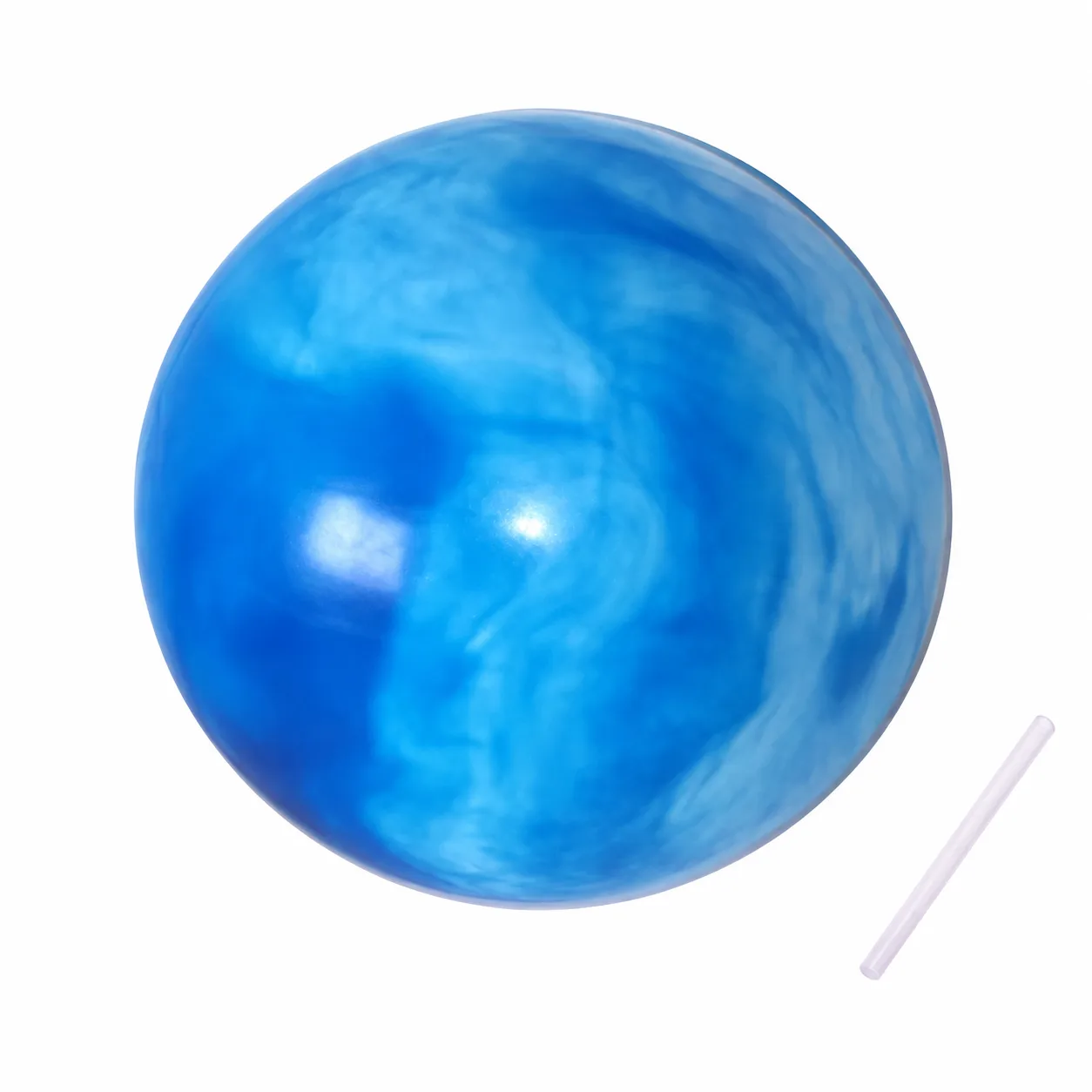
Step-by-Step Mini Stability Ball Workout Sequence: Core, Glutes & Spinal Articulation
Set up your mat with a prop from the PilatesFits Pilates Balls collection inflated to a yielding, marshmallow-like softness before moving through this studio-inspired sequence:
- Sacral-Hover Pelvic Clocks and Toe Taps: Lie supine with knees bent and place the partially deflated ball directly beneath your sacrum—never under the lumbar curve. Inhale to lengthen the tailbone; exhale to float both legs to tabletop. Slowly lower one heel toward the mat while keeping both hip bones level on the shifting ball, alternating sides with steady exhalations.
- Midline Adductor Articulating Bridges: Move the ball between your inner knees with feet planted hip-width apart. Exhale to gently compress the ball, tilt the pelvis posteriorly, and peel the spine off the mat bone by bone until a diagonal line forms from shoulders to knees. Hold at the top for an inhale while maintaining inward knee pressure, then articulate down slowly.
- Thoracic Arc Abdominal Curls: Position the ball beneath your mid-back at the base of the shoulder blades and interlace your fingers behind your skull. Inhale to drape your thoracic spine backward over the contour of the ball; exhale to slide your front ribs toward your pelvis, curling up without jutting the chin forward.
- Prone Swan Prep with Scapular Glide: Lie prone with your forearms resting on top of the ball ahead of your crown. Inhale to press the forearms lightly into the ball, drawing the shoulder blades down the back as you lift the breastbone into a long, supported thoracic extension.
Setup Boundaries and Progression Rules Without a Studio Machine
To keep your mini stability ball workout safe and progressive over time, apply these studio setup rules:
- Adjust Air Pressure for Every Position: A rock-hard ball placed under the pelvis or mid-back arches the lower spine and bruises spinous processes. Let out a small amount of air whenever using the prop as a spinal or sacral wedge, and re-inflate slightly when using it between the ankles.
- Pair Activation with External Resistance When Ready: Because small Pilates balls focus on neuromuscular activation rather than heavy external loading, combine your mat sequence with a PilatesFits Pilates Ring or resistance bands when you want stronger spring-like compression for the adductors and upper body.
- Anchor on a High-Traction Mat: Practice on a dense studio mat rather than a slick hardwood floor or plush carpet so the ball deforms predictably under bodyweight instead of rolling away mid-transition.
Frequently Asked Questions
How does a 9-inch mini Pilates ball work for core and inner-thigh activation compared to undersized kit balls?
Small Pilates exercise balls are selected by size and inflation level for studio or home routines; practitioners note that undersized kit balls mainly provide muscle activation rather than heavy progressive resistance. Choosing a properly proportioned ball that matches your neutral hip width ensures clean femur alignment during bridges, tabletop holds, and Reformer-inspired mat flows.
Can pilates ball exercises replace a studio Reformer workout at home?
While pilates ball exercises cannot replicate the heavy eccentric spring resistance of a studio Reformer carriage, they effectively reproduce the apparatus’s core instability, midline adductor engagement, and spinal articulation cues. Pairing a mini ball with resistance bands or a magic circle bridges the gap between activation and strength progression.
How do you structure a balanced mini stability ball workout routine for core and lower body?
Start with sacral-supported tabletop stabilization to wake up the deep transverse abdominis, transition to between-the-knees bridging for glute and inner-thigh integration, add thoracic-supported abdominal curls for anterior core work, and finish with prone thoracic extension to restore postural balance.
Make it part of your practice
Explore the pink fine-texture pilates ball and check its product details before choosing your studio essentials.
View this piece