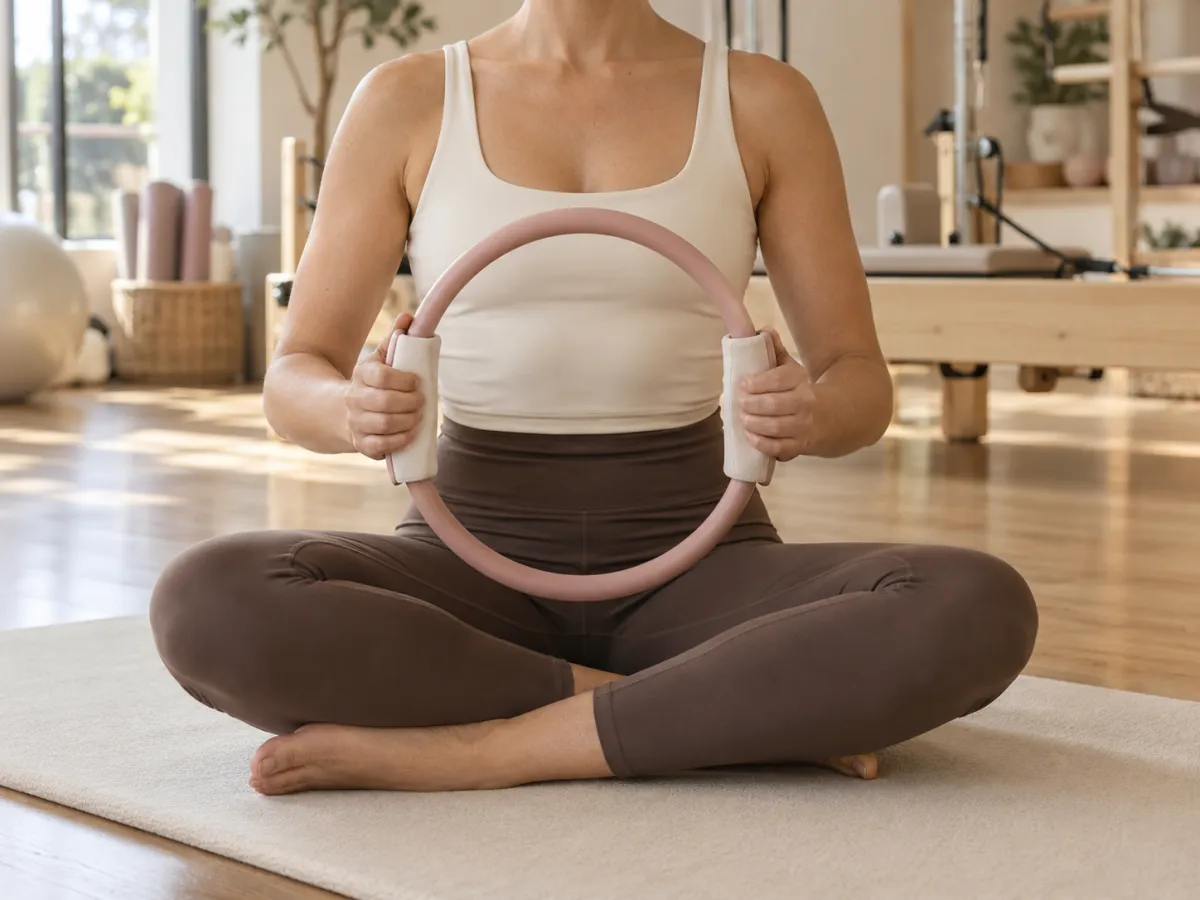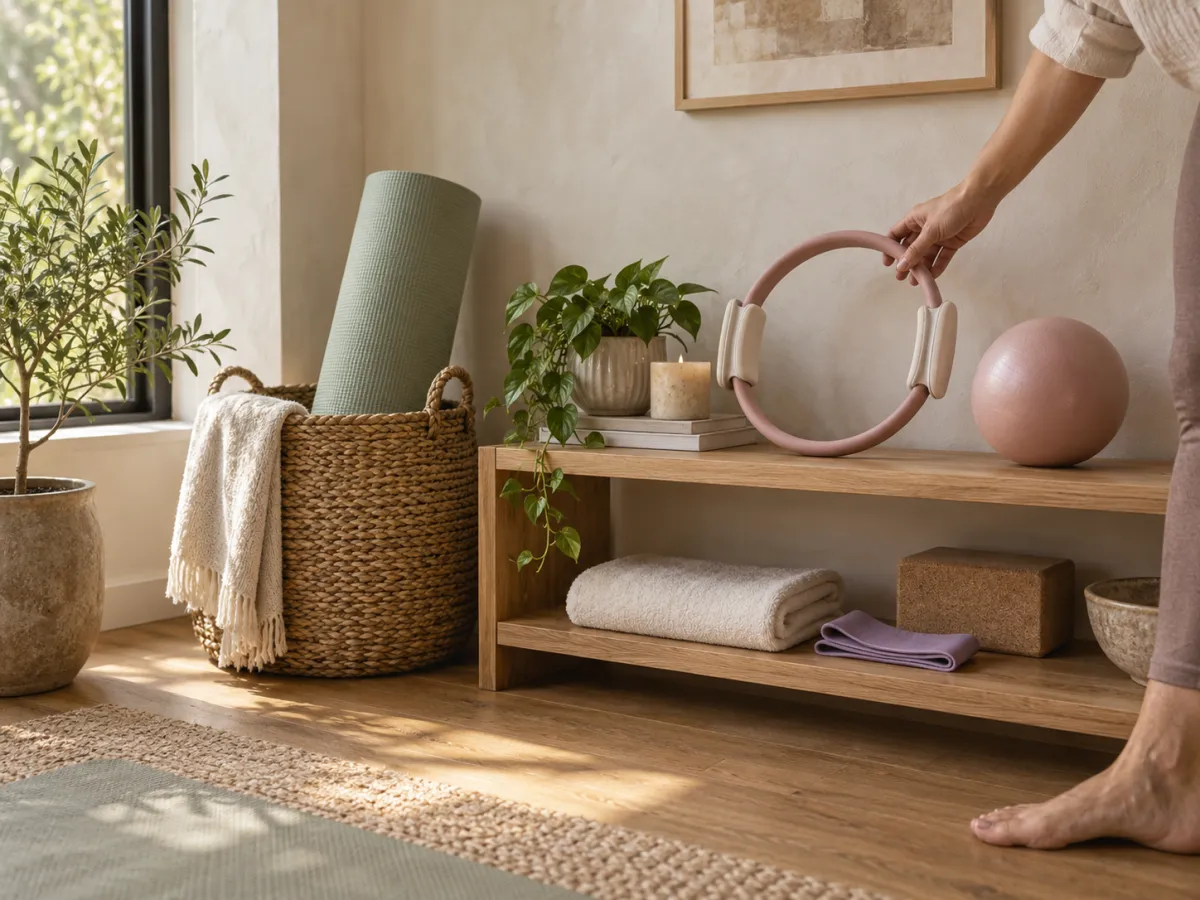
Assembling an at home pilates kit that genuinely challenges your core and lower body starts with understanding what a studio Reformer actually does—and how to translate those forces to the floor without overpromising machine equivalence. When shopping for a pilates starter kit, experienced instructors and practitioners advise skipping low-tension filler bundles in favor of tools that provide true progressive overload: multi-level mini bands, a heavy long loop band, dual-sided sliders, a fiberglass or spring-steel magic circle, an anti-burst mini ball, and a thick spine-support mat. By pairing low-friction floor glide with graded elastic tension and isometric compression, you can replicate the eccentric control, midline connection, and time under tension of Reformer-inspired sequences right in your living room.
According to the PilatesFits catalog listing, the Pilates Accessories collection spans balls, rings, resistance bands, sliders, detachable bars, mats, boards, bags, and towels.
How an At Home Pilates Kit Translates Reformer Mechanics to the Floor
A commercial studio Reformer combines three mechanical elements: a rolling carriage on low-friction aluminum rails, graduated steel coil springs, and anchored pulley straps or a footbar. While an at home pilates kit does not have a raised metal frame or 5-spring hookean carriage travel, each core prop in a well-chosen pilates starter kit maps to a specific biomechanical demand of studio work:
| Studio Reformer Element | At-Home Pilates Kit Equivalent | Biomechanical Translation | Honest Mechanical Boundary |
|---|---|---|---|
| Rolling Carriage on Rails | Dual-Sided Core Sliders on hardwood or carpet | Reduces surface friction so the supporting leg or core must control both the outward eccentric slide and the concentric return | Sliders move in 360 degrees across the floor without rail guides, requiring higher frontal-plane hip and shoulder stabilization |
| Long Straps & Pulley Ropes | Challenging Long Loop Band or Detachable Pilates Bar | Creates diagonal or horizontal elastic tension for supine leg lowers, seated rows, chest expansion, and arm arcs | Elastic band tension increases progressively toward end-range stretch rather than maintaining uniform coil spring resistance |
| Outer-Thigh Strap & Footbar Abduction | Multi-Level Fabric Mini Bands (Light / Medium / Heavy) | Delivers constant lateral abduction torque around the thighs or ankles during bridges, side-lying leg series, and standing scooter lunges | Short-loop range of motion; requires stepping up band thickness as glute medius strength adapts |
| Shoulder Blocks & Midline Adduction | Pilates Ring (Magic Circle) & 7–9 in Mini Ball | Provides immediate isometric compression feedback for inner thighs, pelvic floor co-contraction, and scapular stabilization | Isometric squeeze or unstable bolster support rather than dynamic weighted travel |
| Padded Carriage Bed | High-Density Pilates Mat (10 mm–15 mm) | Cushions spinous processes and knees during supine articulation and kneeling plank slides | Stationary floor base; does not move beneath the torso |
Step-by-Step Pilates Starter Kit Sequence: Core, Glutes & Spinal Articulation
You can run this five-move Reformer-inspired circuit in 25 to 30 minutes using a thick mat from the PilatesFits Pilates Mats collection and core props from the PilatesFits Pilates Accessories collection. Move on a slow four-count eccentric phase and a four-count return.
1. Supine “Feet in Straps” Lower & Lift (Long Loop Band + Mini Ball)
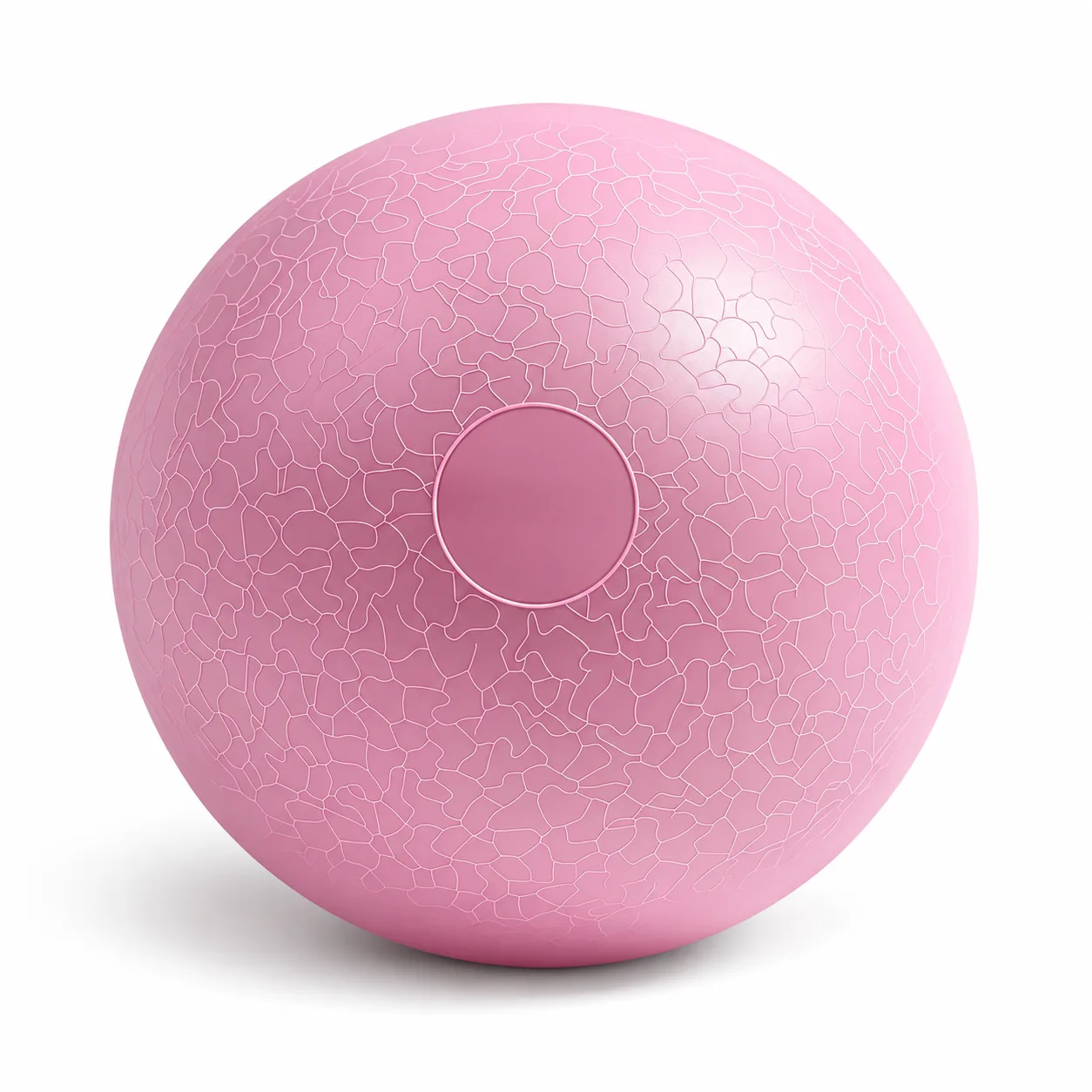
- Prop setup: Lie supine on your thick mat, place a 70%-inflated mini ball between your inner ankles, and loop a challenging long resistance band across the arches of both feet, holding the band ends with elbows anchored to the mat by your ribs.
- Execution (8–10 reps): Inhale to float both legs to a 75-degree tabletop extension while gently squeezing the mini ball to engage your adductors and deep transverse abdominis. Exhale to press your legs down toward a 45-degree angle against the band’s pull without letting your lumbar spine arch off the mat, then inhale to return with control.
- Reformer translation: Pairs midline adduction (mini ball) with long-lever hip extension resistance (long band), mimicking studio Lower and Lift work.
2. Bridging Hamstring Curl & Adductor Pulse (Core Sliders + Pilates Ring)
- Prop setup: Lie supine with knees bent, heels centered on dual-sided sliders off the bottom edge of your mat, and a Pilates ring positioned between your inner thighs just above the knees.
- Execution (8 reps + 8 pulses): Exhale to articulate your spine into a neutral shoulder bridge, compressing the Pilates ring by 15% to 20% to lock in medial hamstring and pelvic floor engagement. Maintaining hip height, inhale to slide both heels 8 to 12 inches away from your glutes, then exhale to drag the sliders back underneath your knees. Finish with eight controlled isometric ring squeezes at the top of the bridge.
3. Kneeling Carriage Saw & Ab Rollout (Core Sliders or Foldable Board)
- Prop setup: Kneel on the front edge of your mat (or on a foldable Pilates board kneeling pad) with forearms or hands resting on dual-sided sliders.
- Execution (6–8 slow reps): Set your pelvis in a slight posterior tuck with ribs knitted toward your hips. Inhale as you glide your hands forward 8 to 14 inches without letting your lower back sag; exhale to draw your lats and anterior core together to pull the sliders back under your shoulders.
4. Standing Scooter Lunge Sweep (Heavy Mini Band + Single Slider)
- Prop setup: Loop a medium or heavy fabric mini band just above both knees. Stand with your working stationary foot planted on the edge of your mat and your moving foot on a single slider disc.
- Execution (10–12 reps per leg): Hinge slightly at the hips into a quarter-squat on your standing leg. Inhale to glide the slider foot straight back into a long reverse lunge while keeping the front knee stacked directly over the second toe against the mini band’s pull; exhale to drive through your standing heel to draw the slider home.
5. Seated Rowing & Thoracic Extension Over the Mini Ball (Long Band + Mini Ball)
- Prop setup: Sit tall with legs extended, loop the long resistance band around the soles of your feet, and wedge the mini ball behind your mid-thoracic spine (or use the ball for supine thoracic extension curls afterward).
- Execution (10 reps): Exhale to draw your elbows wide and back against the band while lengthening the crown of your head toward the ceiling; inhale to release forward with protracted control.
Setup Boundaries and Progression Rules Without a Studio Machine
To keep your at home pilates kit effective past the first month, apply three mechanical progression rules:
- Avoid the “one-tension bundle” plateau: Many budget multi-item kits include a single thin latex ribbon and a light foam ring that stop challenging your glutes and back after three weeks. Always select graded multi-level mini bands (light, medium, heavy) and a high-resistance long loop band so you can increase mechanical load as your neuromuscular control improves.
- Choke up on band slack before adding speed: Unlike studio metal springs—which you adjust by hooking onto a heavier red or blue spring—you increase elastic band torque by gripping closer to the anchor point (your feet or a detachable bar) so the band begins under pre-stretch at the very start of each rep.
- Match slider faces to your floor substrate: Always place the smooth polymer face down on carpet and the EVA foam or felt side down on sealed hardwood or tile so jerky stick-slip friction never compromises your lumbar alignment.
Frequently Asked Questions
Which home Pilates accessories and props are worth buying first for an effective at-home Pilates setup?
For an effective at-home Pilates setup across accessories like balls, rings, resistance bands, sliders, bars, and mats, experienced practitioners recommend focusing on tools that allow progressive overload—such as multi-level mini bands, a challenging long loop band, sliders, a magic circle, a mini ball, and a thick mat—rather than low-resistance filler pieces.
Can an at home pilates kit replace a studio Reformer workout at home?
An at home pilates kit cannot duplicate the full-length rail travel, elevated carriage bed, or linear steel spring mechanics of a commercial Reformer, especially for heavy supine jumpboard or long-box sequences. However, combining dual-sided sliders, multi-level resistance bands, a Pilates ring, and a mini stability ball effectively replicates the eccentric core control, unilateral hip stabilization, and isometric midline work of a studio class at a fraction of the space and cost.
How do you structure a balanced pilates starter kit routine for core and lower body?
Alternate between axial core stability, posterior-chain hip extension, and unilateral sliding control: start with supine band-resisted leg lowers using a mini ball for midline activation, progress to slider hamstring bridges and standing banded scooter lunges, and finish with kneeling slider rollouts and seated band rows. Using a 4-second eccentric tempo across 8 to 12 controlled repetitions maximizes time under tension without a heavy machine.
Make it part of your practice
Explore the blush pilates ring with white pads and check its product details before choosing your studio essentials.
View this piece