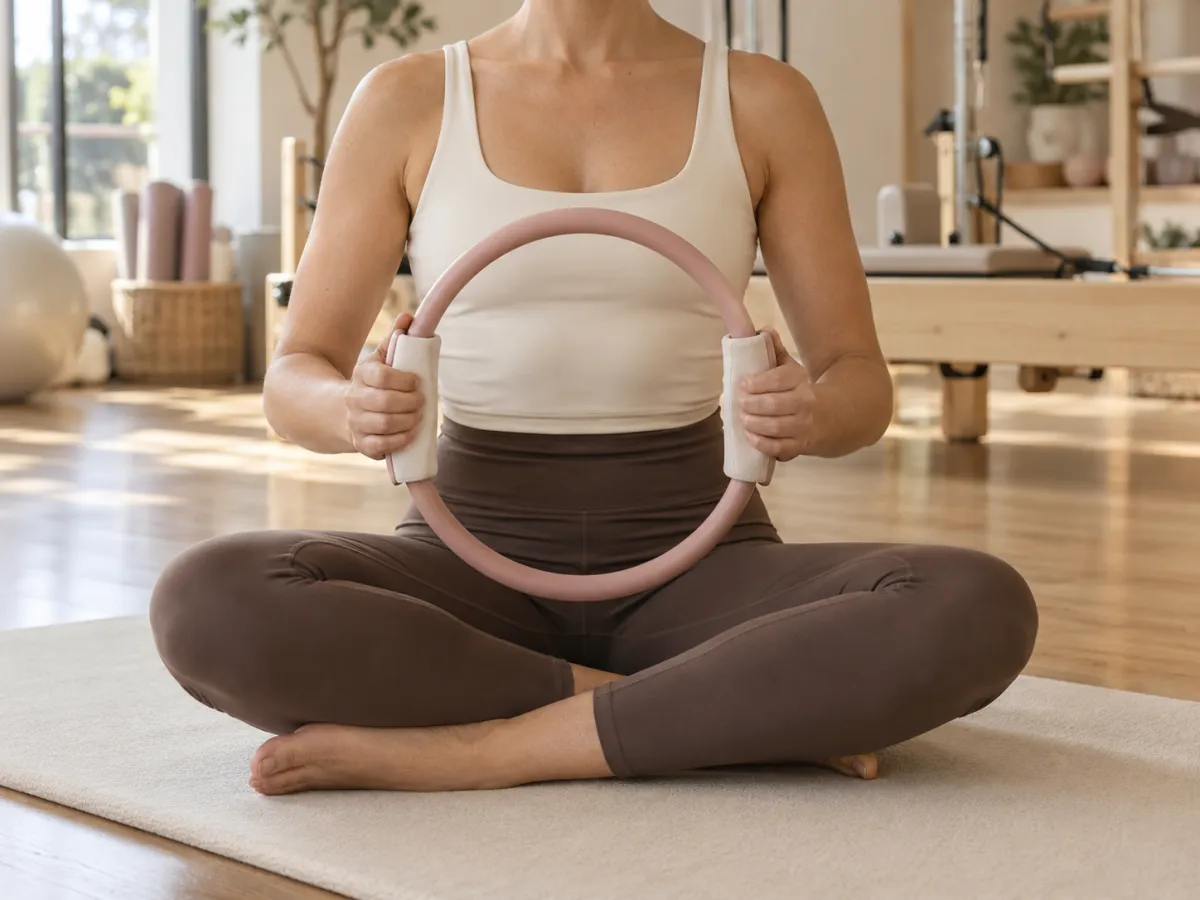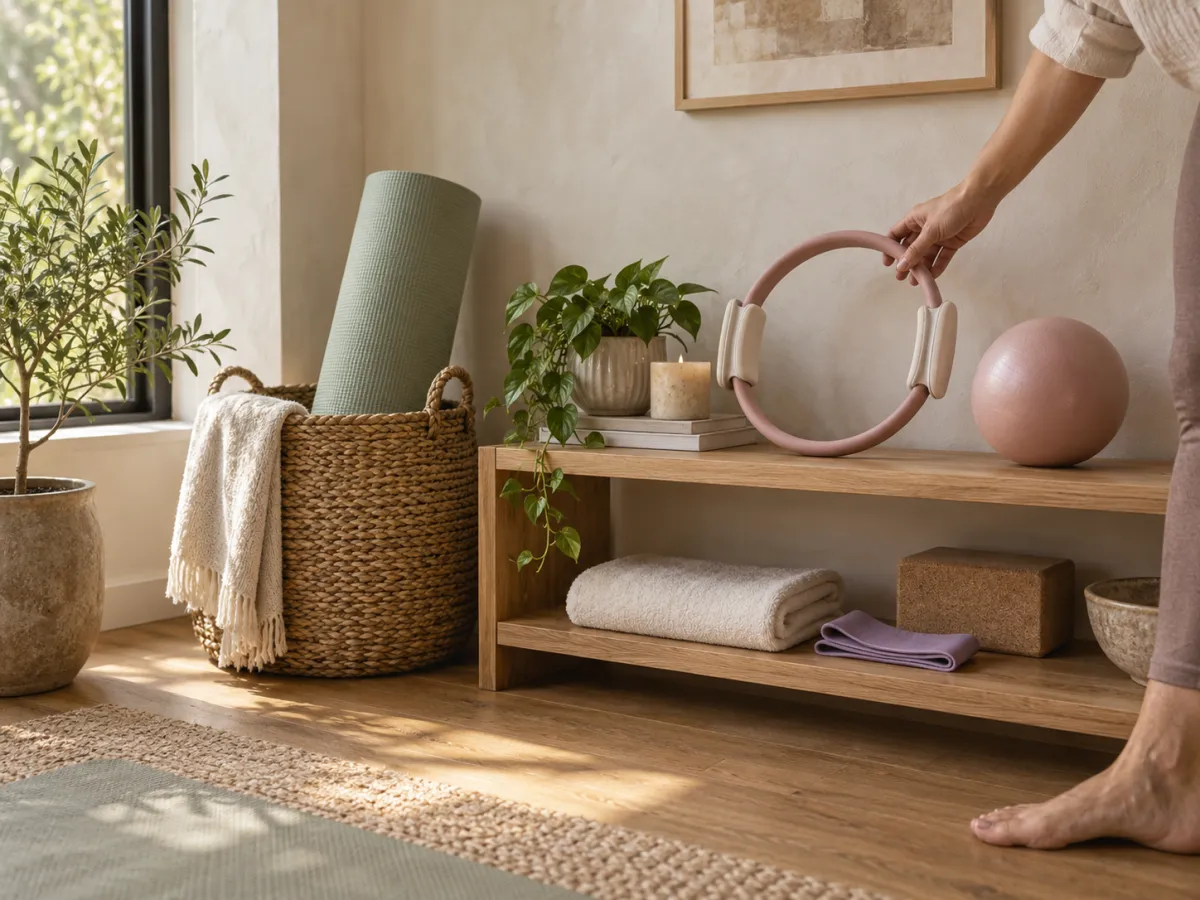
Designing a full body pilates workout with props transforms a standard mat session into a multi-planar, joint-friendly resistance workout that challenges deep core stabilizers, adductors, and scapular musculature simultaneously. By structuring a cohesive pilates ring ball and band routine around progressive overload—using multi-level mini bands, a challenging long loop band, sliders, a magic circle, a mini ball, and a supportive mat rather than low-resistance filler pieces—you can create studio-caliber tension curves right on your living room floor.
According to the PilatesFits catalog listing, the Pilates Accessories collection spans balls, rings, resistance bands, sliders, detachable bars, mats, boards, bags, and towels.
Below, we map out how each prop contributes a distinct mechanical vector, followed by a three-block full-body sequence and a week-over-week progression blueprint that avoids redundant equipment clutter.
| Prop Pairing Combination | Primary Mechanical Vector | Target Muscle Slings | Best Movement Block | Key Form Cue |
|---|---|---|---|---|
| Mini Stability Ball + Thick Mat | Unstable closed-chain fulcrum & thoracic support | Deep transverse abdominis, pelvic floor, and mid-back extensors | Block 1: Warm-Up & Core Activation | Keep ribs knitted softly toward hips as the ball shifts under your sacrum or mid-back |
| Pilates Ring (Magic Circle) + Mini Band | Opposing isometric adduction + abduction tension | Inner thighs (adductors), gluteus medius, and pelvic stabilizers | Block 2: Peak Control (Lower Body & Bridges) | Squeeze the ring evenly from the inner thighs while pressing knees outward against the band |
| Long Loop Resistance Band + Detachable Bar | Variable linear elastic resistance (Reformer simulation) | Lats, serratus anterior, hamstrings, and posterior oblique sling | Block 2: Peak Control (Rowing & Leg Press) | Maintain constant band tautness at the turnaround point without letting shoulders hike |
| Core Sliders + Mini Band | Low-friction eccentric lengthening under lateral load | Eccentric hip flexors, quadriceps, and anterior core | Block 2: Peak Control (Lunges & Pikes) | Control the outward slide for a slow count before drawing the carriage foot home |
| Long Loop Band + Grip Towel | Assisted myofascial decompression & active flexibility | Hamstrings, calves, hip rotators, and thoracic spine | Block 3: Decompression & Lengthening | Anchor the pelvis heavy into the mat while breathing into the posterior leg stretch |
How Full Body Pilates Workout With Props Fits Into a Complete Pilates Training System
A thoughtfully layered full body pilates workout with props works because each small apparatus solves a specific biomechanical limitation of bodyweight-only mat work. Gravity alone only loads your limbs vertically downward, whereas pairing items from the PilatesFits Pilates Accessories collection with a high-density base from the PilatesFits Pilates Mats collection introduces horizontal, rotational, and isometric vectors:
- Isometric midline feedback (Pilates Ring & Mini Ball): Placing a Magic Circle between the palms or inner thighs—or a deflated mini ball beneath the sacrum—gives your nervous system immediate tactile feedback. If one hip drops or one shoulder dominates, the ring tilts or the ball rolls, prompting instant neuromuscular correction.
- Variable elastic resistance (Mini Bands & Long Loop Bands): Unlike fixed dumbbells, elastic bands increase tension smoothly as you lengthen the lever. Pairing a heavy mini loop around the thighs with a long loop band anchored across the feet replicates the spring-loaded push-and-resist feel of studio Reformer straps.
- Friction reduction and lever extension (Sliders, Boards & Detachable Bars): Core sliders and compact boards remove floor friction so your stabilizing leg and anterior core must decelerate the moving limb eccentrically, while a detachable bar keeps bilateral upper-body pulls symmetrical.
- Supportive surface and studio-ready apparel: A thick closed-cell mat protects spinous processes during rolling sequences, while grip towels and form-fitting apparel prevent fabric snags on rubber bands and foam pads.
Progressive Sequence Combining Full Body Pilates Workout With Props and Pilates Ring Ball And Band Routine
Organize your pilates ring ball and band routine into three purposeful training blocks so your deep stabilizers fire before you load long-lever compound exercises:
Block 1: Warm-Up & Deep Core Activation
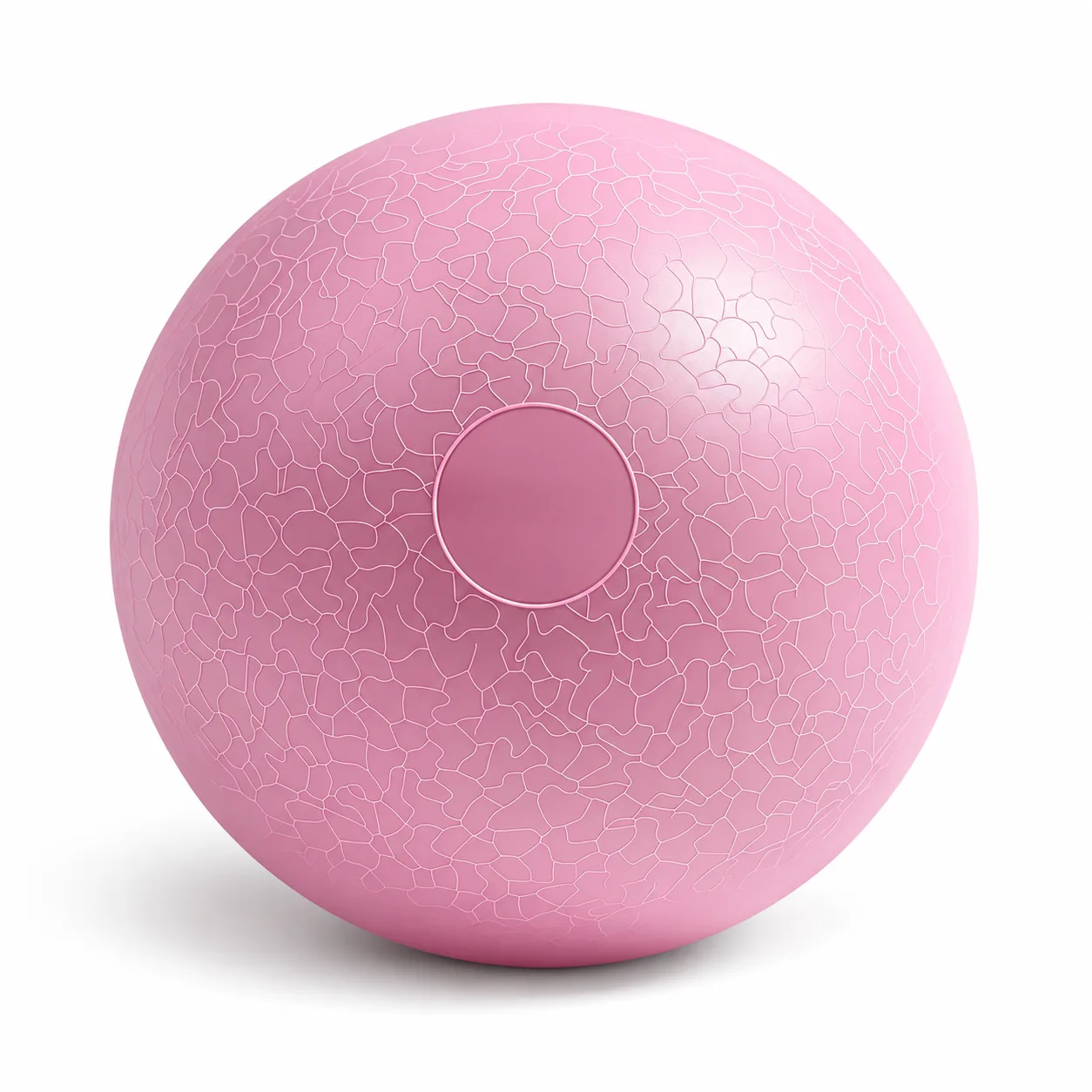
- Thoracic Over-Ball Breath & Ab Prep: Place a partially inflated mini stability ball between your shoulder blades while lying supine on your mat, holding the Pilates ring lightly toward the ceiling. Inhale to lengthen your upper back over the ball; exhale to nod the chin, float the ribs toward the pelvis, and apply a gentle pulse to the ring pads.
- Supine Toe Taps With Mini Band & Ring: Loop a light-to-medium mini band around your mid-feet with legs in tabletop and press the Pilates ring between your palms over your chest. Maintain steady pectoral tension on the ring as you alternate lowering one heel toward the mat against band resistance without overarching your lower back.
Block 2: Peak Full-Body Control & Multi-Prop Layering
- Dual-Vector Shoulder Bridge (Mini Band + Mini Ball): Place the mini band just above your knees and hold the mini ball between your inner thighs. Press through your heels to articulate into a bridge: press outward into the band on the lift, then squeeze inward on the ball at the top before melting the spine down vertebra by vertebra.
- Seated Rowing & Spine Twist (Long Loop Band): Sit tall with legs extended and loop a challenging long resistance band around the soles of your feet. Draw the elbows wide into a high row while maintaining a vertical pelvis, then rotate the ribcage right and left against diagonal band tension.
- Eccentric Slider Reverse Lunge With Ring Press: Stand with one foot on a floor slider and hold the Pilates ring at sternum height. As you glide the slider foot back into a deep lunge, press both palms into the ring to co-activate your anterior core and serratus anterior, then drive through the front heel to return to standing.
Block 3: Decompression & Active Mobility
- Supine Hamstring & IT-Band Strap Series: Lie flat on your mat and loop the long resistance band across one foot. Use the elastic support to guide your leg through slow supine leg circles and across-body stretches while keeping the opposite hip anchored heavy on the mat.
- Kneeling Mermaid Over the Mini Ball: Rest one hand on the mini stability ball beside your hip and roll the ball outward as you reach your top arm overhead, opening the lateral ribcage and quadratus lumborum after peak core work.
How to Progress Challenge Week Over Week Without Buying Redundant Gear
Many multi-piece starter bundles include ultra-light filler bands that stop challenging your muscles after a few weeks. To keep your full body pilates workout with props progressing week over week without cluttering your space, manipulate four mechanical variables using the same core kit:
- Upgrade band tension and pre-stretch distance: Step up from light to medium or heavy mini bands, or choke your grip closer to your feet on your long loop band so resistance engages at the very start of the movement arc.
- Lengthen the anatomical lever: Progress supine ring squeezes from bent-knee tabletop to a 45-degree extended leg position, increasing the torque demand on your lower abdominals without adding extra props.
- Slow the eccentric turnaround tempo: Count a deliberate four-second lowering or sliding phase and hold a two-second isometric pause at peak ring compression to maximize time under tension.
- Reduce base-of-support stability: Transition bridges and planks from flat feet on the mat to heels resting on sliders or a partially inflated mini ball, forcing your hamstrings and deep core to stabilize micro-oscillations.
Frequently Asked Questions
Which home Pilates accessories and props are worth buying first for an effective at-home Pilates setup?
For an effective at-home Pilates setup across accessories like balls, rings, resistance bands, sliders, bars, and mats, experienced practitioners recommend focusing on tools that allow progressive overload—such as multi-level mini bands, a challenging long loop band, sliders, a magic circle, a mini ball, and a thick mat—rather than low-resistance filler pieces.
How do you combine full body pilates workout with props with other Pilates props or outfits?
Layer props that target complementary force vectors—such as pairing a mini band around the outer thighs with a mini ball or Pilates ring between the knees—on top of a thick, non-slip mat. Wear form-fitting apparel without metal zippers or loose drawstrings so resistance bands glide smoothly along your legs and torso without snagging.
What is the best way to progress pilates ring ball and band routine once basic movements feel easy?
Increase challenge systematically by moving up to heavier multi-level resistance bands, choking up on long loop bands to eliminate slack, extending your leg or arm levers from tabletop to 45 degrees, and slowing your eccentric tempo with a two-second isometric hold at peak ring or ball compression.
Make it part of your practice
Explore the blush pilates ring with white pads and check its product details before choosing your studio essentials.
View this piece