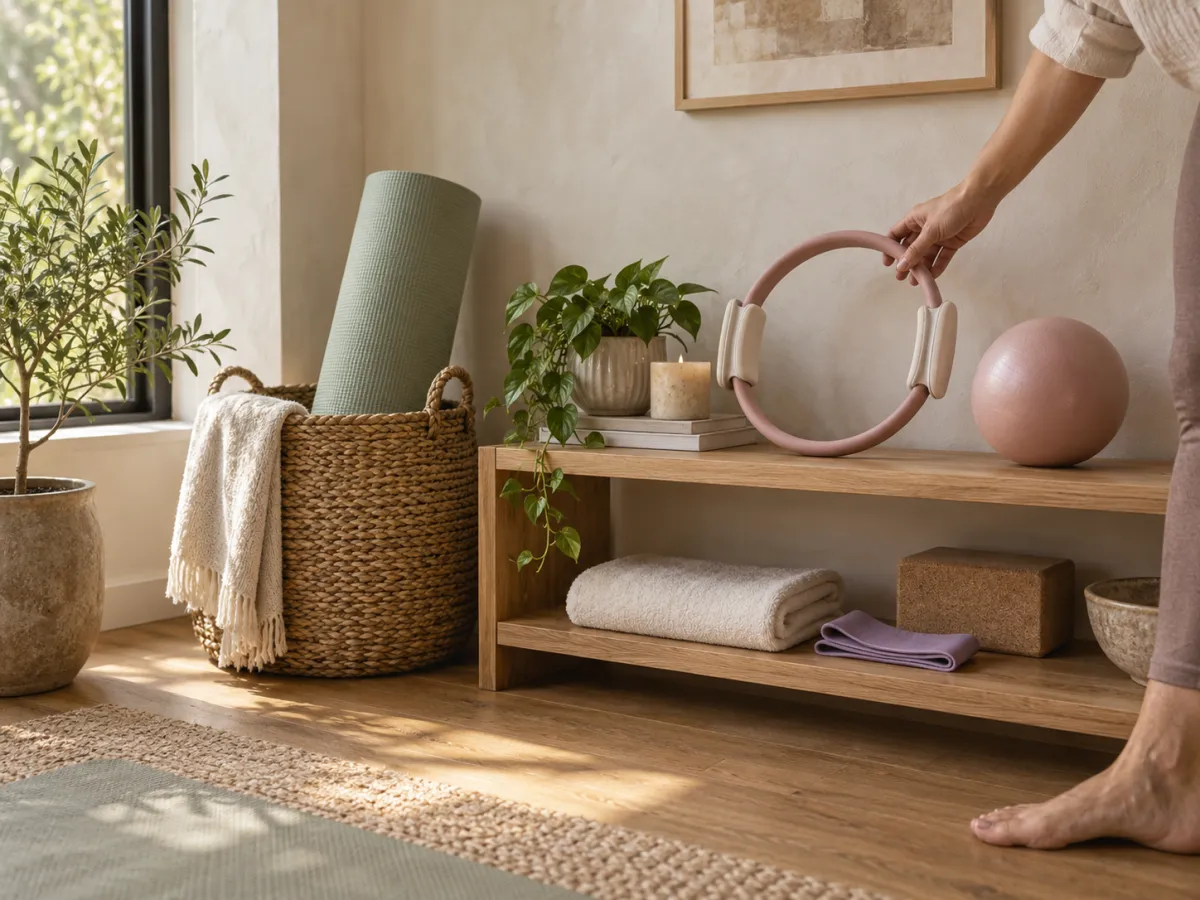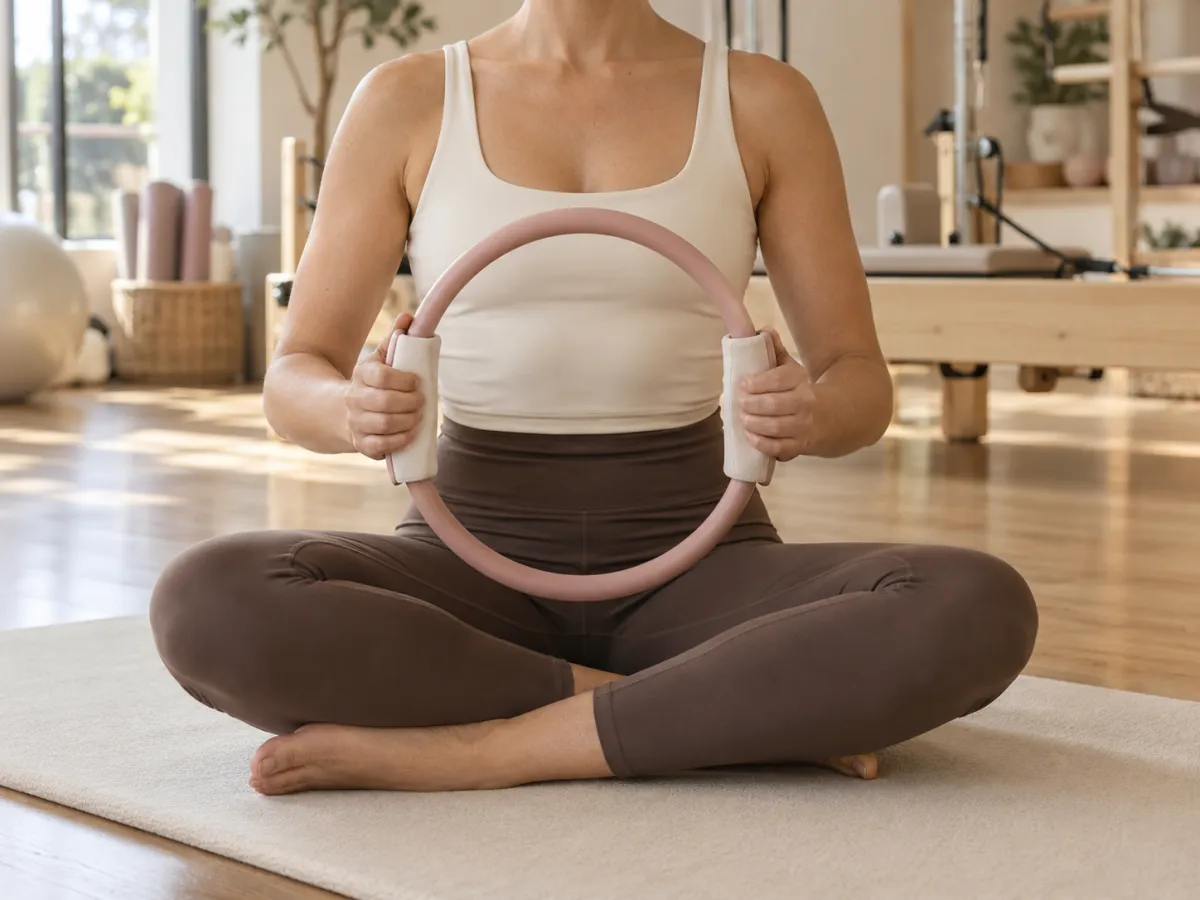
Deciding on a 14 inch vs 15 inch pilates ring comes down to how your pelvic width, shoulder girdle span, and Reformer carriage layout interact with the circle’s uncompressed arc before you apply force. A standard 14 inch pilates ring places your femurs and humeri closer to neutral anatomical alignment at initial contact, allowing you to generate inward adduction or outward abduction tension without bowing your knees out or winging your scapulae. By contrast, a wider ring span increases the starting distance between the dual pads, changing the mechanical lever arm during Supine Shoulder Bridge, Hundred, and Seated Chest Press.
According to the PilatesFits catalog listing, the Pilates Rings collection covers Pilates rings (magic circles) compared by diameter and handle style for targeted exercises.
Why Ring Diameter and Handle Geometry Matter in Motion
When you position a magic circle between your distal thighs just proximal to the medial femoral condyles, or hold the outer pads between the heels of your palms at sternum height, the ring’s resting diameter dictates your joint angle at the start of every isometric squeeze. In any pilates ring guide, practitioners quickly discover that an oversized ring forces narrower frames into excessive hip abduction or wide-elbow internal rotation before the spring loop even begins to deflect. Conversely, if a ring’s diameter is too compact for a broad-shouldered or wide-hipped practitioner, the legs or arms must cross past midline before meeting firm resistance.
| Sizing & Mechanical Parameter | Compact Standard Ring (14-Inch Class) | Extended Span Ring (15-Inch Class) | Biomechanical & Apparatus Impact |
|---|---|---|---|
| Neutral Hip-Width Alignment | Matches narrow-to-medium ASIS pelvic width without wide knee splay | Suits broader pelvic geometry or taller frames with longer femurs | Keeps patellae tracking over second toes during Supine Bridge squeezes |
| Sternum & Pectoral Press Angle | Aligns wrists and elbows closer to shoulder width in Chest Press | Requires wider elbow flare and broader humeral abduction at contact | Compact diameter reduces anterior deltoid strain for smaller frames |
| Outer-Thigh Abduction Setup | Snug fit when sliding ankles or knees inside the ring circumference | Easier entry and slightly wider starting stance inside the loop | Inner-pad contouring prevents peroneal nerve pinching at the outer shin |
| Reformer Headrest & Shoulder Block Clearance | Nests cleanly between standard carriage shoulder blocks when stowed | May overhang narrower home Reformer carriages or headrest tracks | Compact rings transition faster between Footwork and Short Box series |
| Travel & Gym Bag Portability | Fits diagonally inside standard studio totes and carry-on backpacks | Requires oversized gear bags or external mat-strap attachment | Smaller footprint simplifies commuting to boutique mat and apparatus classes |
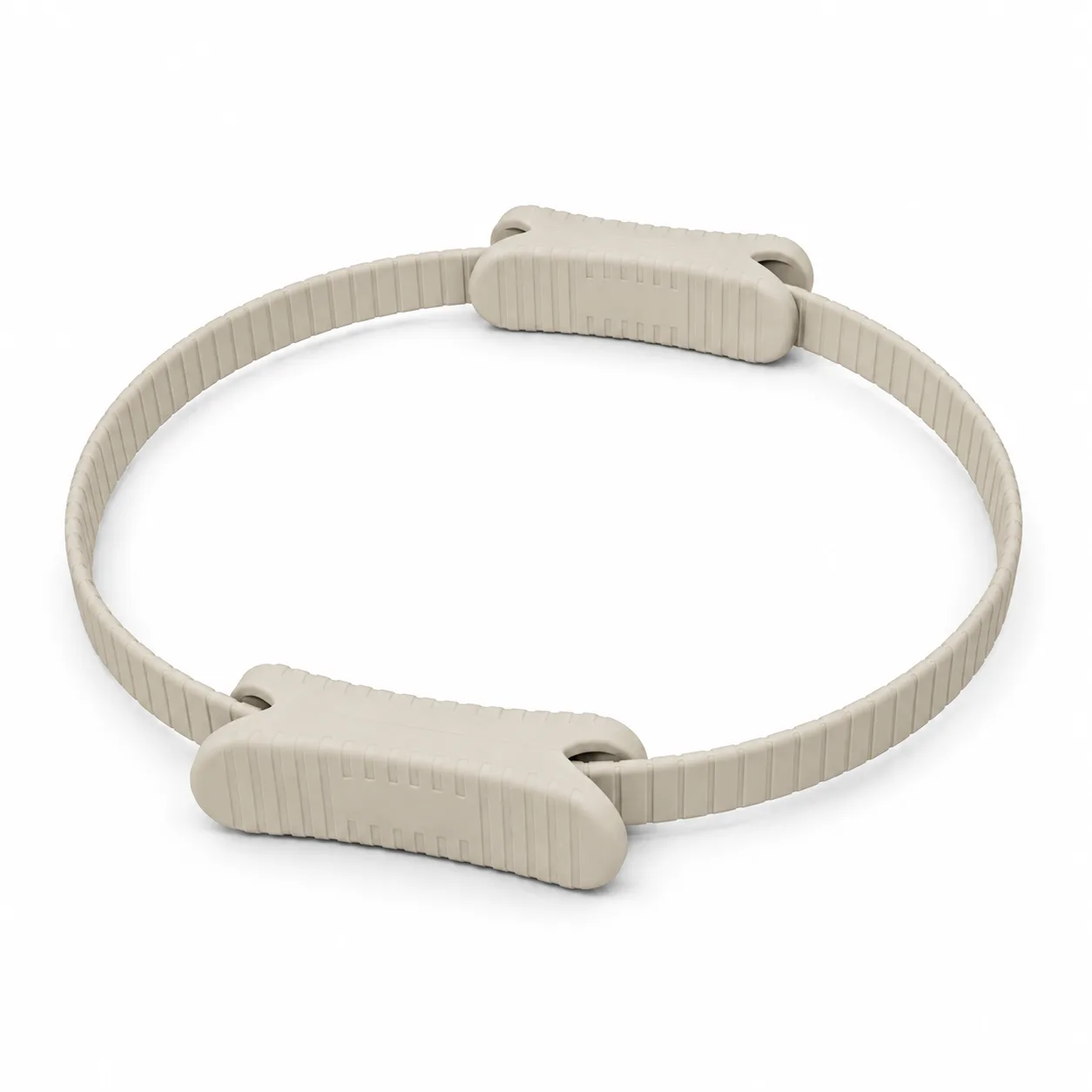
Beyond overall loop width, dual handle architecture determines whether the circle stays stable under sweat and rotational torque. Curved, ergonomic inner and outer crescent pads distribute pressure across the fleshy belly of the adductor magnus and gracilis rather than digging a narrow edge into the medial knee joint line. When comparing options for the best pilates ring for reformer and mat work, inspect how the inner pad mirrors the outer pad so you can switch seamlessly from bilateral adduction (squeezing inward) to bilateral abduction (pressing outward against the interior of the loop).
How to Match Ring Proportions to Your Body Type and Studio Routine
Applying practical pilates ring tips to your home or studio setup ensures the circle recruits your deep core stabilizers—transversus abdominis, pelvic floor, and multifidus—instead of triggering superficial hip flexor gripping or upper trapezius tension.
- Supine Pelvic & Adductor Alignment (Bridge & Hundred): Lie supine with knees bent and feet flat hip-distance apart. When you place a 14 inch pilates ring between your inner thighs just above the knees, your thighs should rest parallel or with only a slight outward angle. If your knees are pushed noticeably wider than your ankles before you press, the diameter is too wide for your pelvic structure.
- Upper-Body Scapular Organization (Standing or Seated Hug a Tree): Hold the outer pads with open palms and fingers extended—never white-knuckling the rim with flexed wrists. A ring diameter matched to your clavicular width lets you draw your shoulder blades flat against your ribcage while pulsing inward from the serratus anterior and pectoralis major.
- Outer-Thigh Abduction & Gluteus Medius Firing: Step both shins or thighs inside the ring so the inner foam pads rest against your lateral legs. Press outward until the circle ovals slightly while keeping your lumbar spine quiet on the mat. Dual-pad magic circles excel here because single-hinge plastic thigh squeezers cannot resist outward lateral expansion.
- Reformer Carriage & Studio Etiquette: In group Reformer classes, props must store safely beneath the frame or flat on the floor beside your carriage so they never roll under a moving wheel track. Always wipe down both the inner and outer crescent pads and the fiberglass or spring loop after class, and never stack heavy dumbbells on top of a stored ring.
To compare dual-pad magic circles designed for balanced inward and outward resistance, browse the Pilates Rings collection or pair your ring with a pliable inflatable prop from our Pilates Balls collection for days when your inner thighs or lumbar spine call for softer, multi-directional cushioning.
3-Step Fit Verification Test Before Your Next Class
Before taking a ring into a fast-paced mat flow or Reformer circuit, run this quick three-checkpoint verification test:
- The Parallel Knee Bridge Check: Set up in a supine bridge with the outer pads resting above your medial knees. Perform five slow three-second squeezes; if your big toes lift off the mat or your knees bow outward to hold the ring in place, adjust pad placement slightly higher on the thigh or select a more compact ring diameter.
- The Open-Palm Sternum Pulse Check: Hold the ring at chest height with elbows lifted wide and palms flat against the outer pads. Press inward slightly and hold for five breaths—your neck and upper traps should stay soft while warmth builds across your mid-back and chest.
- The Inner-Loop Abduction Check: Place both ankles inside the ring during supine tabletop or Hundred prep and press outward against the inner pads. Confirm the inner pads sit flush against your lateral shins without twisting or slipping off your ankles.
Frequently Asked Questions
How does a 14-inch Pilates magic circle ring compare to basic thigh squeezers for inner-thigh and full-body Pilates exercises?
A dual-pad Pilates magic circle provides symmetrical spring tension for both inward adduction and outward abduction across upper-body, core, and lower-body mat and Reformer sequences, whereas single-hinge V-shaped plastic thigh squeezers only compress in one direction and lack the circular geometry needed for ankle, overhead, and outward-press exercises.
Should beginners choose a 14 inch vs 15 inch pilates ring for home mat workouts?
Most beginners and petite-to-average stature practitioners find a 14 inch pilates ring easier to control because its resting diameter aligns naturally with standard hip and shoulder widths, preventing wide-knee compensation during bridges and tabletop core work. Taller practitioners or those with broader pelvic and shoulder spans may prefer the extra clearance of a wider loop.
Where on the legs should the Pilates ring pads sit to avoid knee pain?
Always position the padded handles just above or just below the knee joint—either on the muscular lower third of the inner/outer thigh or along the mid-to-lower shin above the ankle malleoli—so lateral compression loads the musculature rather than applying shear force directly across the knee joint capsule.
Make it part of your practice
Explore the blush pilates ring with white pads and check its product details before choosing your studio essentials.
View this piece