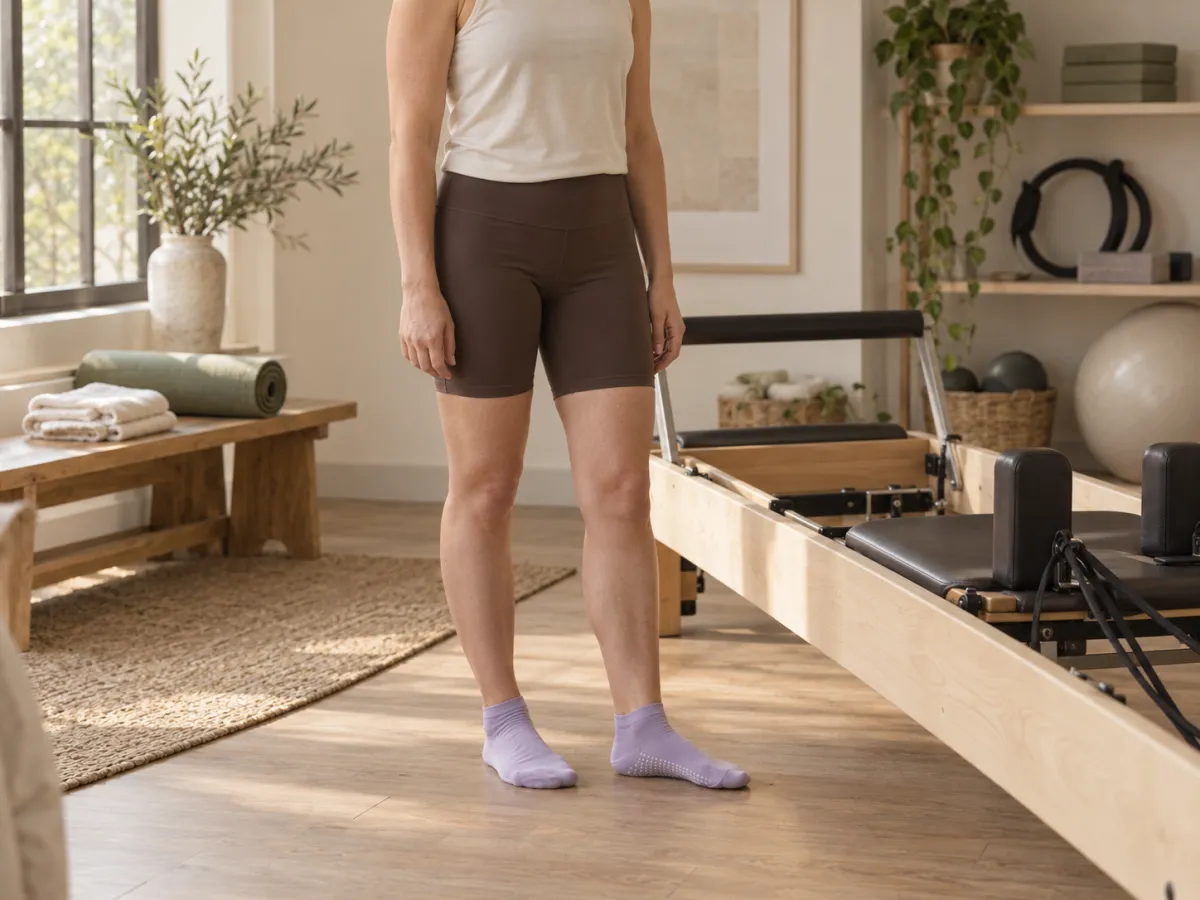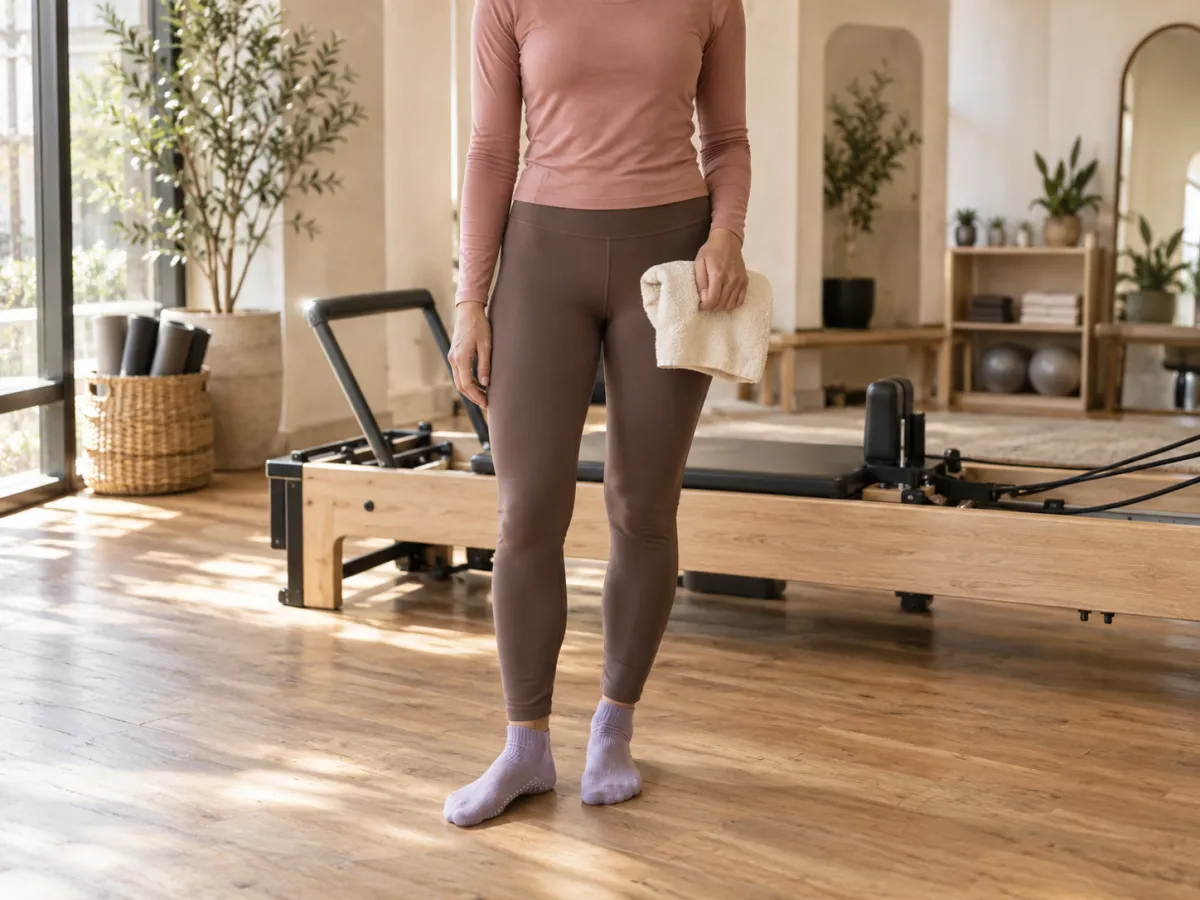
Navigating a club pilates dress code or a boutique pilates studio dress code goes beyond studio aesthetics—it is primarily an equipment safety and alignment visibility protocol. When you lie supine on a moving Reformer carriage, thread your feet into double loops, or transition into kneeling Springboard exercises, loose hems, metal zippers, and low-rise waistbands create immediate mechanical hazards. Properly fitted pilates outfits keep excess fabric away from open steel springs and pulley ropes while allowing your instructor to observe pelvic tilt, ribcage closure, and scapular tracking across every plane of movement.
According to the PilatesFits catalog listing, the Pilates Outfits collection features coordinated tops, leggings, and studio layers for assembling a Pilates look.
Why Garment Proportions and Hardware Clearance Matter on the Reformer
Every commercial pilates studio dress code is built around three physical interactions between your body and the apparatus: vinyl upholstery friction, spring well clearance, and inverted torso coverage. Unlike upright gym floor workouts where loose athletic shorts or boxy tees hang naturally, Reformer and Tower sessions place your pelvis in deep flexion, inversion, and lateral rotation.
| Studio Dress Code Element | Franchise & Boutique Standard | What to Avoid in Class | Mechanical & Alignment Reason |
|---|---|---|---|
| Legging & Short Silhouette | Form-fitting full-length, 7/8, or bike-short cuts | Loose running shorts without an inner liner | Prevents unintentional exposure during Feet in Straps, Frogs, and Short Spine |
| Top Proportions | Hip-hugging fitted tanks, bodysuits, or high-neck crops | Oversized boxy tees that flip over the face | Keeps the thoracic spine and lower ribcage visible during Hundred and Short Box |
| Garment Hardware | Flatlock seams and smooth elastic waistbands | Back-pocket zippers, metal toggles, or plastic snaps | Metal and hard plastic puncture or scratch upholstered Reformer carriages |
| Warm-Up Studio Layers | Close-fitting wrap tops, boleros, or cropped zip jackets | Long hoodies with dangling neck drawstrings | Drawstrings and loose sleeves can catch in open Reformer spring hooks |
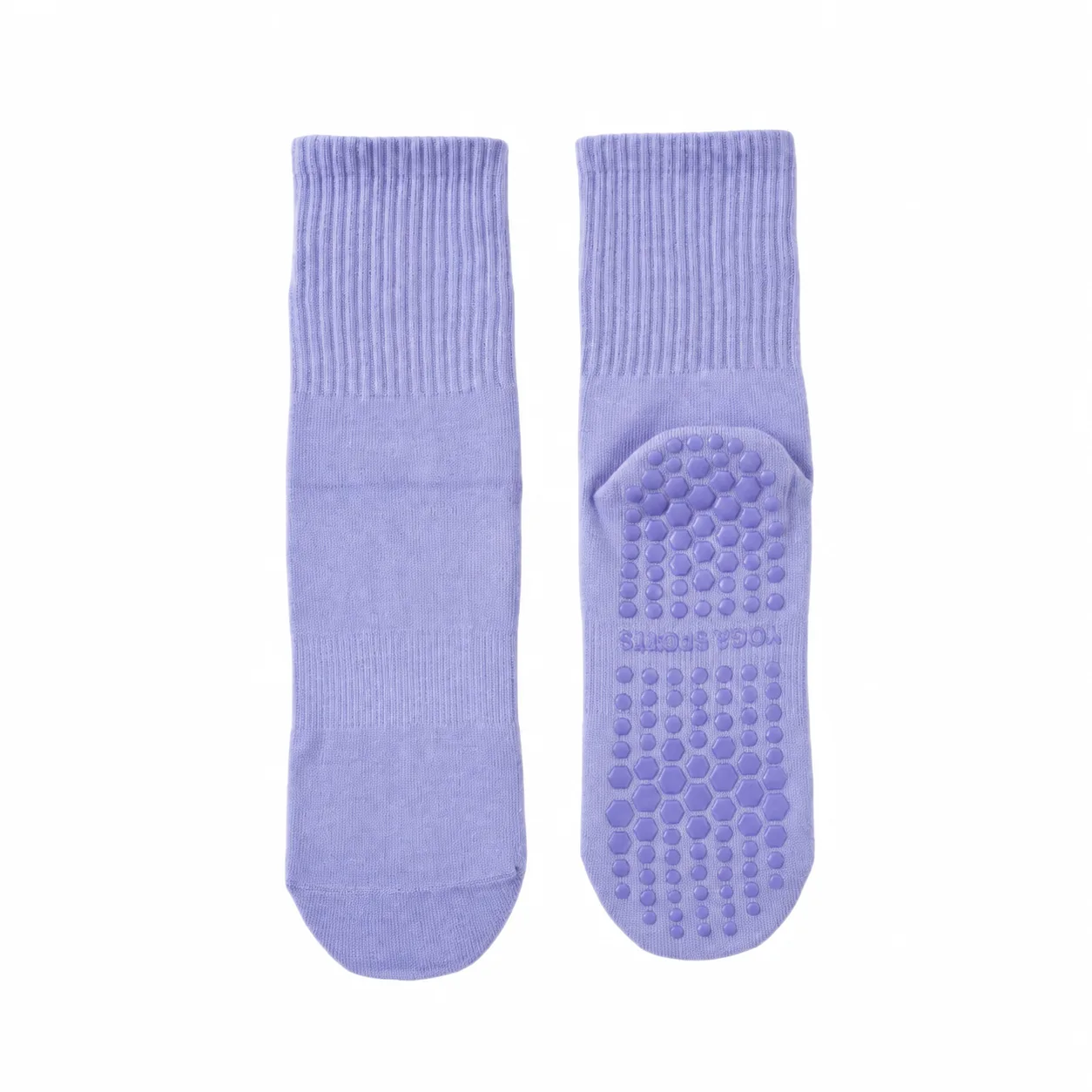
| Footwear & Hair | Silicone-sole grip socks and low-profile hair ties | Bare feet (in franchise studios) or bulky claw clips | Claw clips press into the occipital skull during supine headrest work |
When evaluating best pilates outfits for reformer sessions, pay close attention to torso-to-rise proportions. A high-rise legging waistband that terminates right at the natural waist (just above the navel) pairs cleanly with a cropped tank or longline bra without bunching when you hinge forward in Rowing or Spine Stretch Forward. If both the waistband and the top hem overlap heavily across the mid-abdomen, the double layer of elastane can roll downward during Seated Twist or Teaser prep.
Club Pilates Dress Code vs Independent Boutique Studio Rules
While each studio location sets its own specific house policies, understanding how national franchise standards compare with independent classical or contemporary studios helps you assemble a versatile pilates outfits guide wardrobe that works anywhere:
- Franchise Reformer Studios (Standardized Safety Rules): Multi-carriage studio franchises typically enforce strict rules requiring silicone grip socks from the moment you step onto the studio floor, form-fitting bottoms that cover the upper thigh without gaping during straddle stretches, and zero exposed zippers or metal rivets that could tear carriage vinyl.
- Classical & Contemporary Apparatus Studios: Private and small-group studios often emphasize clear anatomical lines so instructors can spot subtle lumbar extension, anterior pelvic tilt, or uneven hip hiking on the Wunda Chair and Cadillac. Second-skinmatte fabrics in solid tones make postural cueing faster and more accurate.
- Mat & Barre Hybrid Spaces: Studios focused on floor mats and standing barre sequences prioritize unrestricted hip abduction and shoulder flexion. Soft, second-skin fabrics with four-way stretch allow smooth transitions from kneeling Side Kick series to standing plank variations without tug-of-war adjustments at the knee or waistband.
- Fragrance, Jewelry & Studio Layer Etiquette: Most studio dress codes also ask practitioners to skip heavy perfumes, body oils, or lotions before class—body oils transfer onto shared vinyl carriages and make leather straps slippery for the next client—and to remove dangling rings, bracelets, and long necklaces that can snag on ropes or handles.
To put together a studio-ready wardrobe that transitions effortlessly from warm-up to advanced carriage work, explore our Pilates Outfits collection or browse pre-paired two-piece silhouettes in our Pilates Sets collection.
Pre-Class Mobility & Fit Checklist Before Stepping Onto the Carriage
Before wearing a new outfit to a 50-minute studio session, run through these practical pilates outfits tips at home to verify your sizing and coverage under dynamic load:
- The Supine Headrest & Hair Check: Lie flat on a firm floor mat with your knees bent. Confirm that the back of your sports bra and hair tie lie completely flat against the mat without hard clasps or bulky clips pushing your chin toward your chest.
- The Feet-in-Straps Inversion Test: Draw both knees into your chest and extend your legs toward the ceiling into a 45-degree straddle. Check that your legging waistband stays anchored at your iliac crest, your top hem does not slide over your throat, and the gusset seam feels smooth without pinching.
- The Spring-Clearance Layer Check: Reach both arms overhead and sweep them down to your hips as if pulling Reformer straps. Ensure your warm-up layer sleeves stay snug around your wrists and forearms without flaring out near the side rails.
Frequently Asked Questions
What should you wear to Pilates and Reformer Pilates classes so clothing stays in place without catching on equipment?
For Pilates and Reformer classes, practitioners pair coordinated tops and leggings with easy warm-up layers, favoring soft second-skin fabrics built for low-impact mat, Reformer, and Lagree movement. Choosing form-fitting silhouettes without dangling drawstrings, loose hems, or back zippers prevents fabric from snagging on Reformer springs and keeps your alignment visible while protecting studio upholstery.
How do I choose the right size or dimension for club pilates dress code?
Measure your natural waist at the narrowest point of your torso and your full hip circumference across the widest part of your glutes, then select the size that matches your hip measurement so the fabric never stretches sheer during deep squats or lunges. Between sizes, opt for a high-rise waistband with a contoured back yoke that hugs the lumbar curve without digging in during seated roll-downs.
What should I know about pilates studio dress code before attending a studio Pilates class?
Check your studio’s booking confirmation for specific grip sock and coverage rules, wear zipper-free activewear that stays in place during inverted leg series, tie long hair back with a flat elastic band rather than a hard plastic claw clip, and avoid applying body lotions or heavy fragrances right before stepping onto shared Reformer equipment.
Make it part of your practice
Explore the mocha cross-back pilates legging set and check its product details before choosing your studio essentials.
View this piece