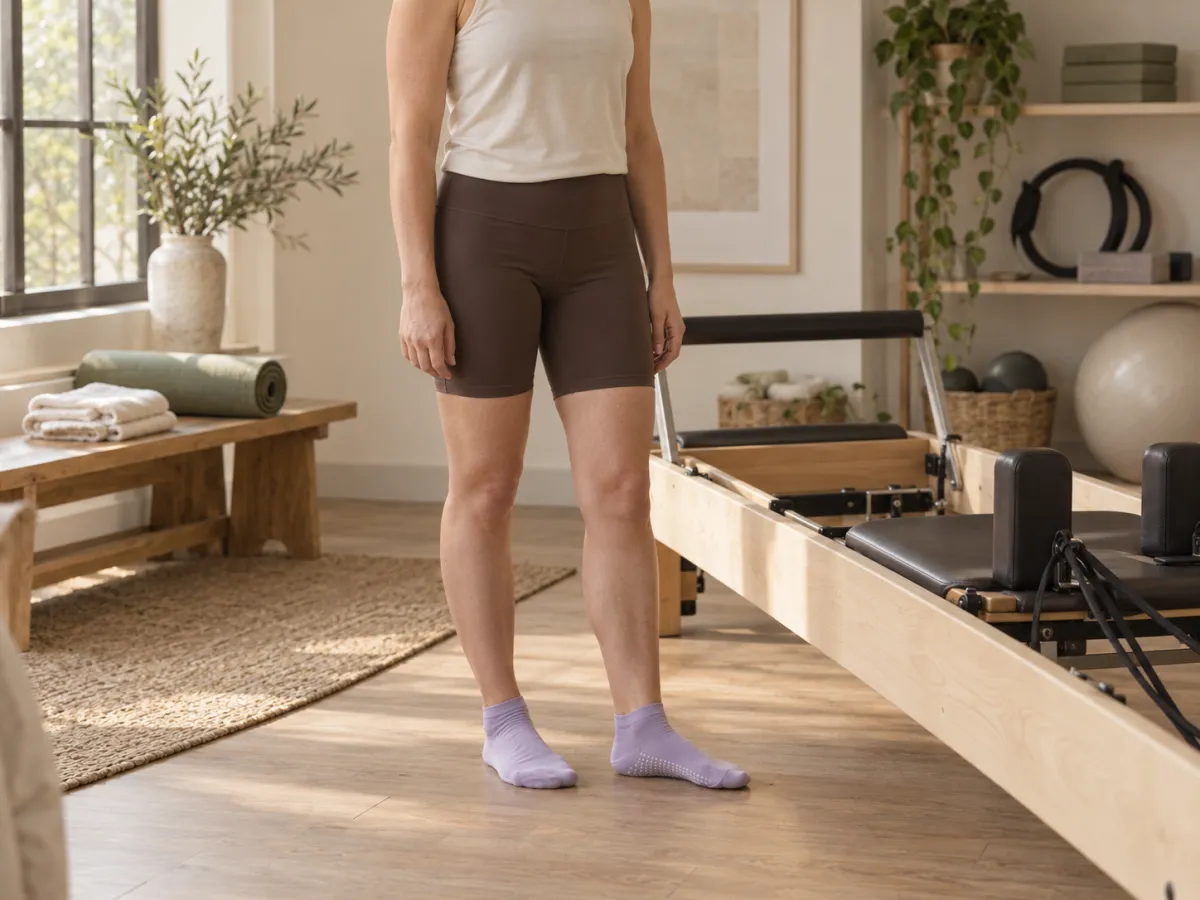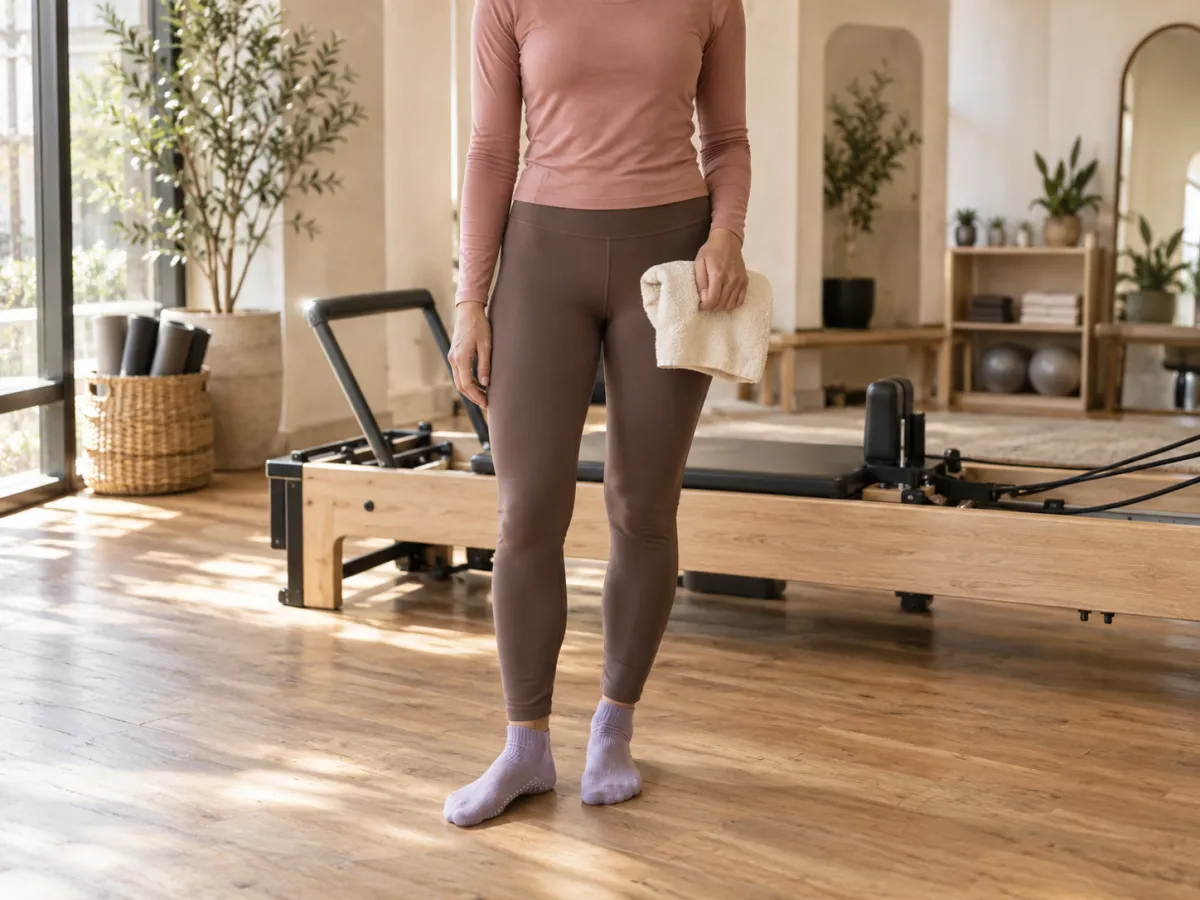
A good reformer pilates outfit is built around the machine, not just your body. When you are working out what to wear to reformer pilates, think about four things the Reformer adds that a mat class does not: a moving carriage you lie on, springs and ropes beside your hips, foot and hand straps, and a footbar you press against with your feet. The best outfit is fitted enough that nothing snags or slides, smooth enough on the back that you can lie on the carriage comfortably, and paired with grip socks.
According to the PilatesFits catalog listing, the Pilates Outfits collection features coordinated tops, leggings, and studio layers for assembling a Pilates look.
How Reformer Pilates Outfit Choices Follow the Machine’s Mechanics
Every part of the Reformer changes what works and what does not.
| Reformer Part | What It Does | Outfit Problem It Causes | What to Wear Instead |
|---|---|---|---|
| Moving carriage and headrest | You lie, kneel, and sit on it while it slides | Bulky hoods, back zips, and hair clips press into you | Smooth-backed tops; low ponytail or braid |
| Springs and ropes | Sit close to your hips and hands | Loose shirt hems and drawstrings can catch | Fitted or cropped tops; no dangling cords |
| Foot and hand straps | Loop around feet, ankles, or hands | Wide-leg pants twist into straps; rings and watches scratch | Leggings, 7/8 tights, or bike shorts; remove jewellery |
| Footbar | You press through it with heels, arches, or toes | Bare feet or regular socks slide | Grip socks with full-sole traction |
| Shoulder blocks | Brace your shoulders when lying supine | Thick straps or bra hardware dig in | Flat straps, soft bra tops, or racerback styles |
The honest limit here is simple: clothing does not change the resistance or the workout. It only removes distractions so you can focus on alignment and control. If you are trying a reformer-style workout at home without a machine, the same rules apply on a mat with bands or sliders, but no outfit will turn a floor session into a Reformer session.
Step-by-Step What To Wear To Reformer Pilates Check: Core, Glutes & Spinal Articulation
A typical Reformer class moves through recognisable series. Use them as a checklist to test your outfit at home before your first class, or to diagnose why something felt wrong last time.
- Footwork (lying on the carriage). Lie on your back on the floor with knees bent and press your feet into a wall. Check that your waistband stays flat and nothing on the back of your top digs into your spine.
- Bridging and hip work (glutes). Lift your hips into a bridge. Leggings should stay opaque and in place at the waist, and your top should not slide toward your chin.
- Feet in straps (leg circles, frogs). Lie down and draw circles with straight legs. Shorts should not ride up into the hip crease, and leggings should not bunch at the ankle where a strap would sit.
- Short spine and rolling (spinal articulation). Roll back with legs overhead. This is where loose tops fail most often; a fitted or tucked top stays put.
- Kneeling and standing work (core, balance). Kneel and then stand on one leg. Grip socks should hold, and nothing at the knee should bunch or slip.
If any step fails, fix that one garment first: usually it is a top that is too loose or shorts without a gripper hem.
For coordinated pieces that pass these checks, look through the Pilates Outfits collection and the Pilates Sets collection. For socks, our Reformer Pilates socks alignment guide explains how traction affects footwork.
Setup Boundaries and Progression Rules Without a Studio Machine
Many people own a foldable Reformer board or do reformer-inspired floor workouts at home. Your outfit can be more relaxed there, but a few rules still matter.
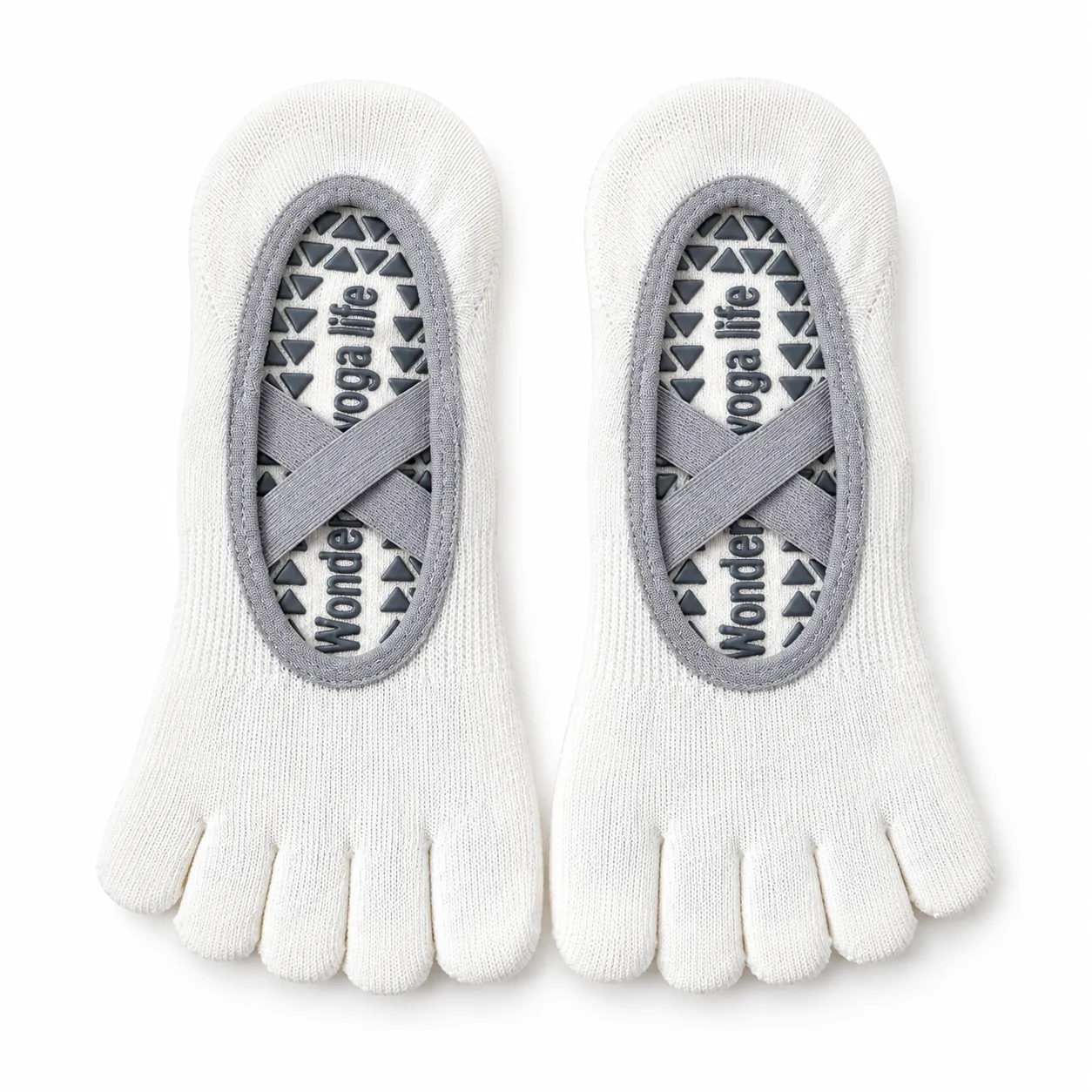
- Match socks to the surface. On a home machine or board, grip socks still help. On a clean mat, bare feet are fine for floor work.
- Keep it fitted if you use bands or straps. Resistance bands and loops catch loose fabric just like Reformer straps.
- Layer for the room, not the class. Home rooms vary in temperature. Start with a light layer and remove it once you are warm.
- Progress the workout, not the outfit. Adding springs, reps, or harder variations changes the challenge. Clothing only needs to stay out of the way.
Frequently Asked Questions
Can a reformer pilates outfit replace a studio Reformer workout at home?
No. An outfit only affects comfort and how freely you move; it does not add spring resistance or carriage movement. What the right outfit can do is make home reformer-style sessions on a board, bands, or sliders feel closer to class because nothing snags, slides, or distracts you.
How do you structure a balanced what to wear to reformer pilates routine for core and lower body?
Start with fitted leggings or bike shorts with gripper hems, add a smooth-backed fitted top, and finish with grip socks. Then test the outfit through the five class patterns: footwork, bridging, feet in straps, rolling, and kneeling or standing work.
What should you wear to a Pilates or Reformer Pilates class for comfortable movement and clear alignment checks?
Practitioners usually pair coordinated tops and leggings with an easy warm-up layer, and many favour soft, second-skin fabrics for low-impact mat, Reformer, and Lagree movement. For Reformer specifically, add grip socks and remove jewellery.
Make it part of your practice
Explore the mocha cross-back pilates legging set and check its product details before choosing your studio essentials.
View this piece