


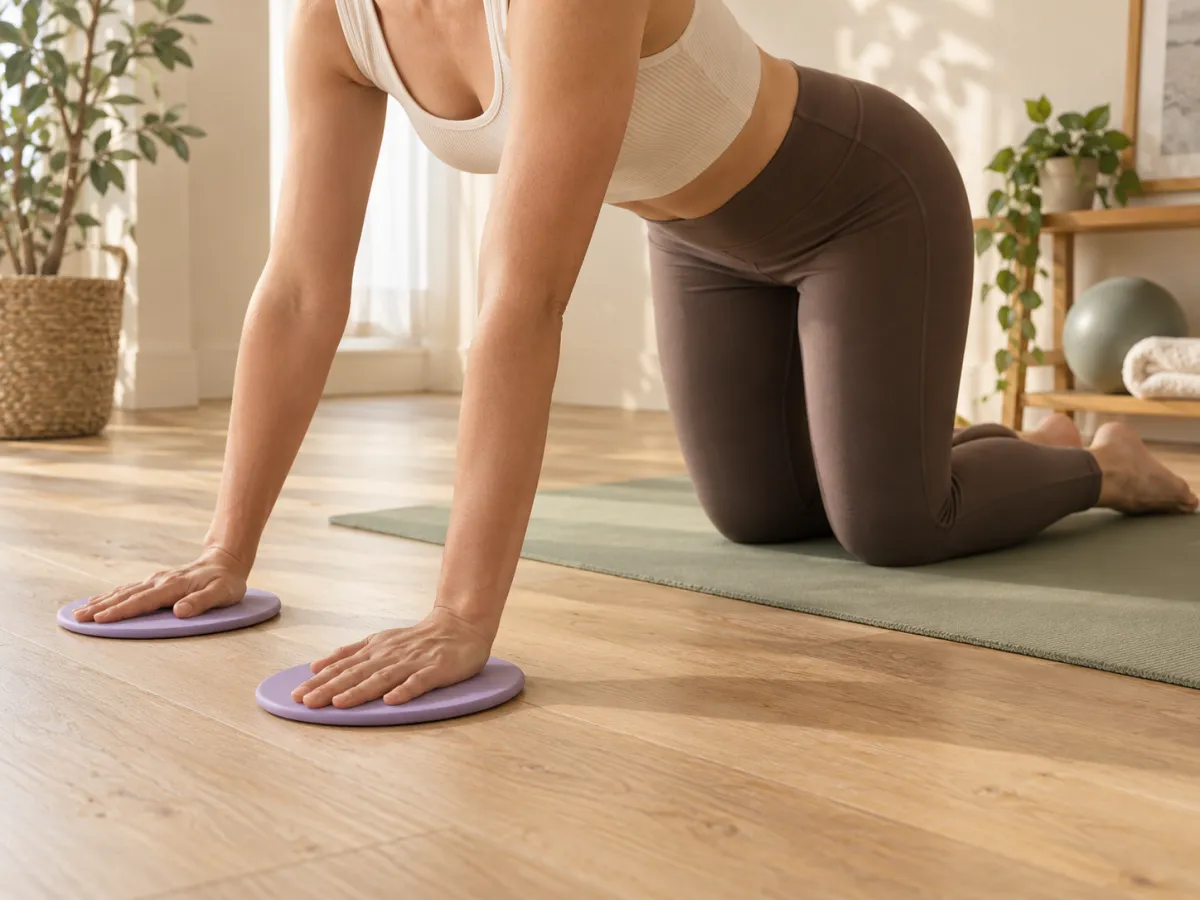
Designing an effective core sliders workout around targeted slider exercises for abs lets you bring the smooth, continuous instability of a studio carriage onto your living room floor. By reducing friction beneath your hands or feet, gliding discs require your transverse abdominis, obliques, and hamstrings to control both the outward extension and the inward return of every repetition.
According to the PilatesFits catalog listing, the Pilates Sliders collection features Pilates sliders and exercise sliding discs with surface compatibility and dimensions listed at launch.
How Core Sliders Workout Translates Reformer Mechanics to the Floor
A studio Reformer challenges the body through two simultaneous mechanisms: a rolling carriage that removes stable ground friction and adjustable metal springs that supply horizontal tensile resistance. When you step onto discs from the PilatesFits Pilates Sliders collection, you replicate the low-friction glide of the carriage using your own body weight and gravity.
- Friction Reduction vs. Spring Tension: Floor sliders do not generate mechanical spring resistance on their own. Instead, they challenge eccentric control as your limbs slide away from your center of mass.
- Adding Horizontal Load with Bands: Pairing your gliding discs with elastic loops or long bands from the PilatesFits Pilates Resistance Bands collection introduces progressive tensile pull alongside the low-friction floor glide.
- Continuous Time Under Tension: Because the disc can slide in any horizontal plane, your deep trunk stabilizers must prevent rotational drift as well as sagittal extension.
| Studio Reformer Movement | At-Home Core Sliders Workout Equivalent | Primary Muscular & Alignment Focus | Honest Mechanical Difference | Optional Band Progression |
|---|---|---|---|---|
| Long Stretch on Carriage | Plank Body Saw with Forefeet on Sliders | Transverse abdominis bracing and scapular protraction control | Relies on bodyweight lever lengthening rather than light spring return | Loop a resistance band around the ankles for abduction tension |
| Elephant / Down Stretch | Plank Pike to Inverted V on Gliding Discs | Lower abdominal flexion and eccentric hamstring lengthening | Floor gravity assists the downward phase; abs pull the legs inward | Anchor a long resistance band in front of the shins if extra load is needed |
| Knee Stretches (Round & Flat) | Quadruped Hover Knee Tucks on Sliders | Lumbopelvic dissociation and anterior core endurance | No shoulder blocks to brace against; wrists bear upper-body weight | Place a light loop band above the knees to cue hip alignment |
| Pelvic Lift / Bridge Leg Extension | Supine Bridge Hamstring Curl on Discs | Eccentric hamstring control and gluteal pelvic stabilization | High posterior-chain demand without elevated footbar angles | Hold a taut resistance band across the anterior hips |
| Snake / Twist Prep | Cross-Body Oblique Mountain Climber Glide | Internal and external oblique rotation with level shoulders | Smooth continuous floor arc instead of a single track rail | Perform at a slow four-second tempo to maximize oblique recruitment |
Step-by-Step Slider Exercises For Abs Sequence: Core, Glutes & Spinal Articulation
Perform this structured three-part floor sequence on a clean, compatible surface, focusing on slow transitions and quiet upper-body stacking.
1. Plank Body Saw and Controlled Pike
Start in a forearm or high-hand plank with the balls of both feet centered on your sliders. Inhale as you glide your body slightly backward by extending at the shoulders while keeping your ribs knitted toward your pelvis and your lumbar spine neutral. Exhale to draw your torso forward until your shoulders stack directly over your elbows or wrists, then transition smoothly into a controlled pike by drawing your navel upward and gliding your toes toward your hands.
2. Cross-Body Oblique Glide and Hover Knee Tuck
Lower into a quadruped hover with your knees lifted just above the mat and your toes resting on the discs. Exhale as you glide one knee diagonally toward the opposite elbow, rotating through your mid-thoracic ribs while keeping equal weight across both palms. Return slowly to your hover position before alternating sides, maintaining a long cervical spine and wide collarbones throughout the set.
3. Supine Hamstring Bridge Curl
Lie supine with your knees bent, neutral pelvis lifted into a shoulder bridge, and both heels centered on your sliding discs. Inhale as you slowly slide your heels away from your glutes, extending your knees only as far as you can maintain level anterior hip bones and active gluteal support. Exhale to press down through your heels and curl the discs smoothly back underneath your knees before articulating your spine down onto the mat.
Setup Boundaries and Progression Rules Without a Studio Machine
To keep your home core sliders workout safe and effective week after week, observe these setup and progression boundaries:
- Verify Surface Compatibility First: Floor surface compatibility (carpet versus hardwood or tile) must be checked per product so your discs glide smoothly without catching or scratching the floor.
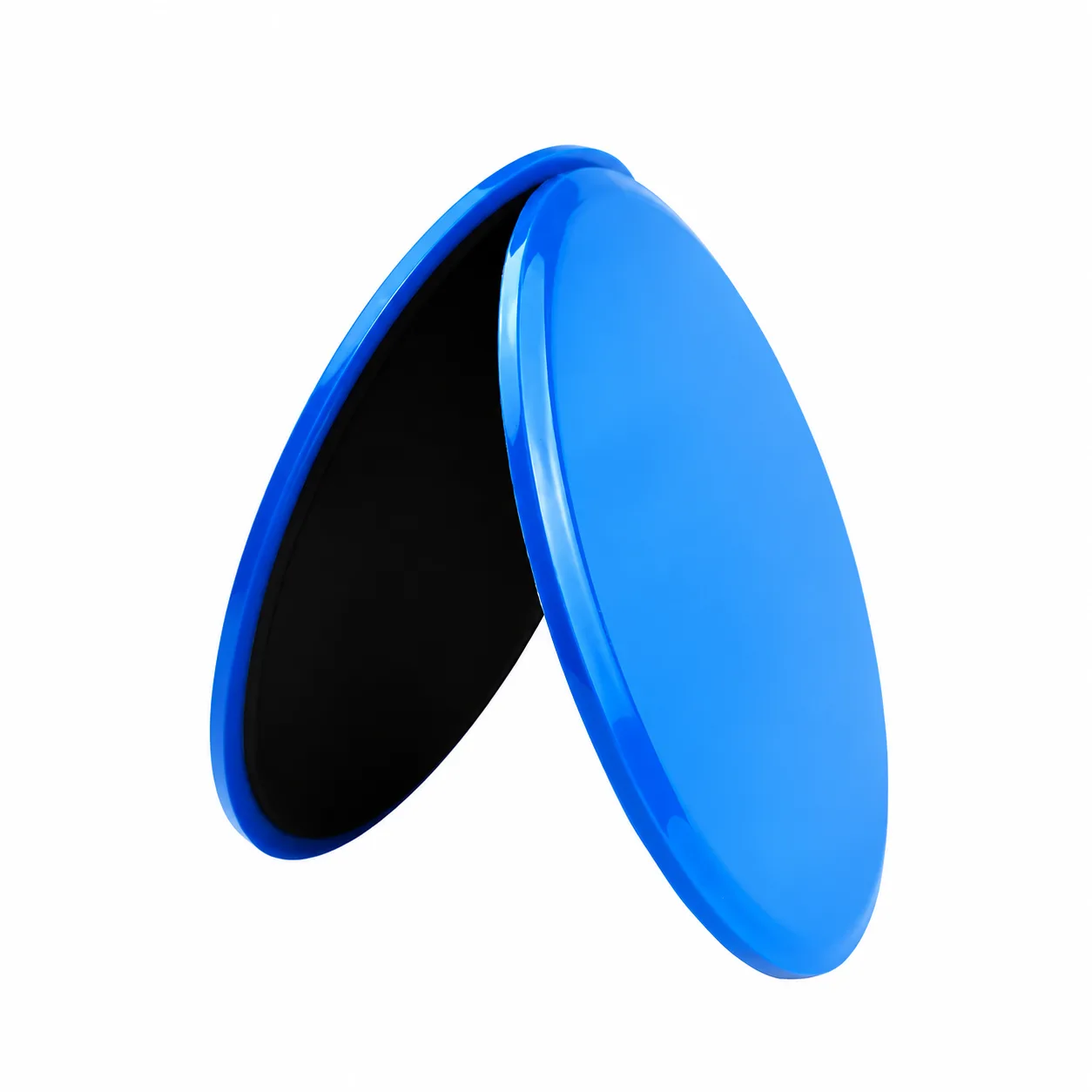
- Respect Product Specification Boundaries: Do not assume a specific slider SKU has dual-sided foam-and-plastic construction until its launch specifications are published; inspect the product’s listed dimensions and surface rating before use.
- Progress Lever Length Before Speed: Rushing slider exercises for abs uses momentum rather than abdominal contraction. Lengthen your excursion distance by a few inches at a time and slow your return phase before adding external band tension.
Frequently Asked Questions
How can you use Pilates sliders and resistance bands at home to replicate Reformer and Megaformer exercises?
Pilates sliders and exercise sliding discs are selected by floor surface compatibility and dimensions and are rated by home practitioners as effective tools for core and hamstring exercises, especially when paired with resistance bands. Combining the low-friction glide of the discs with the elastic pull of a resistance band recreates both the sliding carriage plane and progressive horizontal tension at home.
Can core sliders workout replace a studio Reformer workout at home?
A core sliders workout replicates the low-friction stability challenge and eccentric core control of many Reformer plank, pike, and bridge patterns, though floor sliders rely on body weight and gravity rather than mechanical springs unless paired with external resistance bands.
How do you structure a balanced slider exercises for abs routine for core and lower body?
Pair anterior abdominal exercises like plank body saws and controlled pikes with rotational oblique glides and supine hamstring bridge curls. This sequence balances anterior trunk flexion, anti-rotation stability, and posterior-chain hamstring endurance in a single session.
Make it part of your practice
Explore the purple round core exercise sliders and check its product details before choosing your studio essentials.
View this piece