


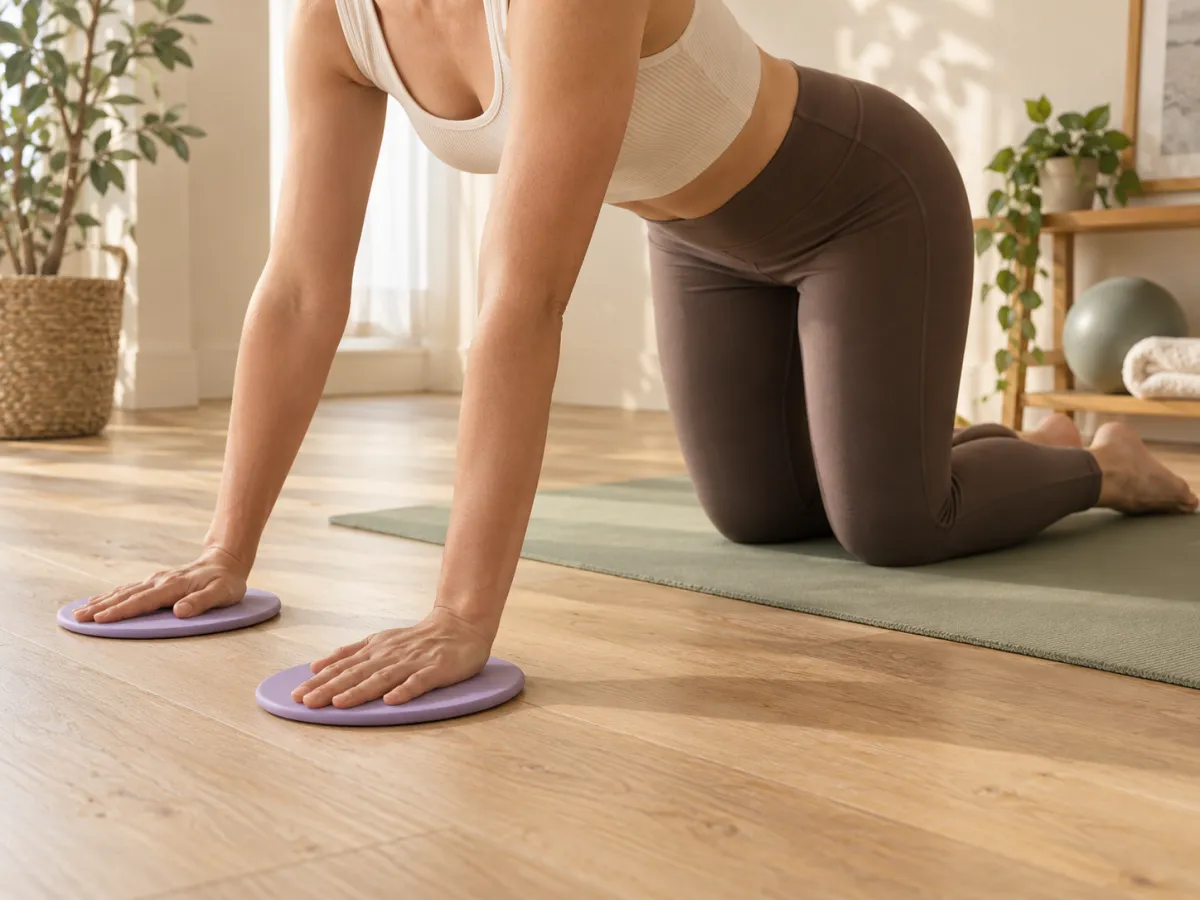
Selecting pilates sliders—including evaluating whether dual sided core sliders match your workout space—requires looking closely at floor surface compatibility, disc geometry, and under-load friction behavior. By reducing surface friction beneath your hands, heels, or metatarsals, gliding discs turn standard bodyweight mat movements into continuous eccentric challenges for your deep core stabilizers and posterior chain.
According to the PilatesFits catalog listing, the Pilates Sliders collection features Pilates sliders and exercise sliding discs with surface compatibility and dimensions listed at launch.
Key Specifications to Compare When Shopping for Pilates Sliders
Not all gliding discs behave identically once you load body weight through your palms or the balls of your feet. When comparing options in the PilatesFits Pilates Sliders collection or planning a home setup paired with the PilatesFits Pilates Resistance Bands collection, evaluate three primary construction variables:
- Floor Surface Compatibility: Smooth polymer bases are engineered to glide across carpet fibers without snagging, whereas soft fabric or padded faces are designed to slide quietly across sealed hardwood, laminate, or studio tile. Always verify surface compatibility per product before use.
- Foot and Hand Contact Geometry: Disc diameter and shape determine whether your entire palm or forefoot stays supported during pikes, lunges, and supine hamstring bridges without the rim digging into your arches or carpal tunnel.
- External Load Pairing: Because floor sliders reduce friction rather than generating mechanical spring tension on their own, pairing your discs with multi-level resistance bands adds progressive tensile load for Reformer-inspired home sequences.
Pilates Sliders vs Dual Sided Core Sliders: Side-by-Side Comparison Matrix
Use the specification matrix below to compare general single-surface pilates sliders against dual sided core sliders across floor environments, contact comfort, and movement mechanics.
| Specification Dimension | Single-Surface Pilates Sliders | Dual Sided Core Sliders (Category Design) | Biomechanical Impact on Alignment | Pre-Purchase Verification Step |
|---|---|---|---|---|
| Primary Floor Interface | Dedicated to a single floor category (either smooth hard floors or carpet) | Reversible faces designed to switch between hard flooring and low-pile carpet | Consistent coefficient of friction prevents sudden sticking that jars the lumbar spine | Check floor surface compatibility listed on the individual product page |
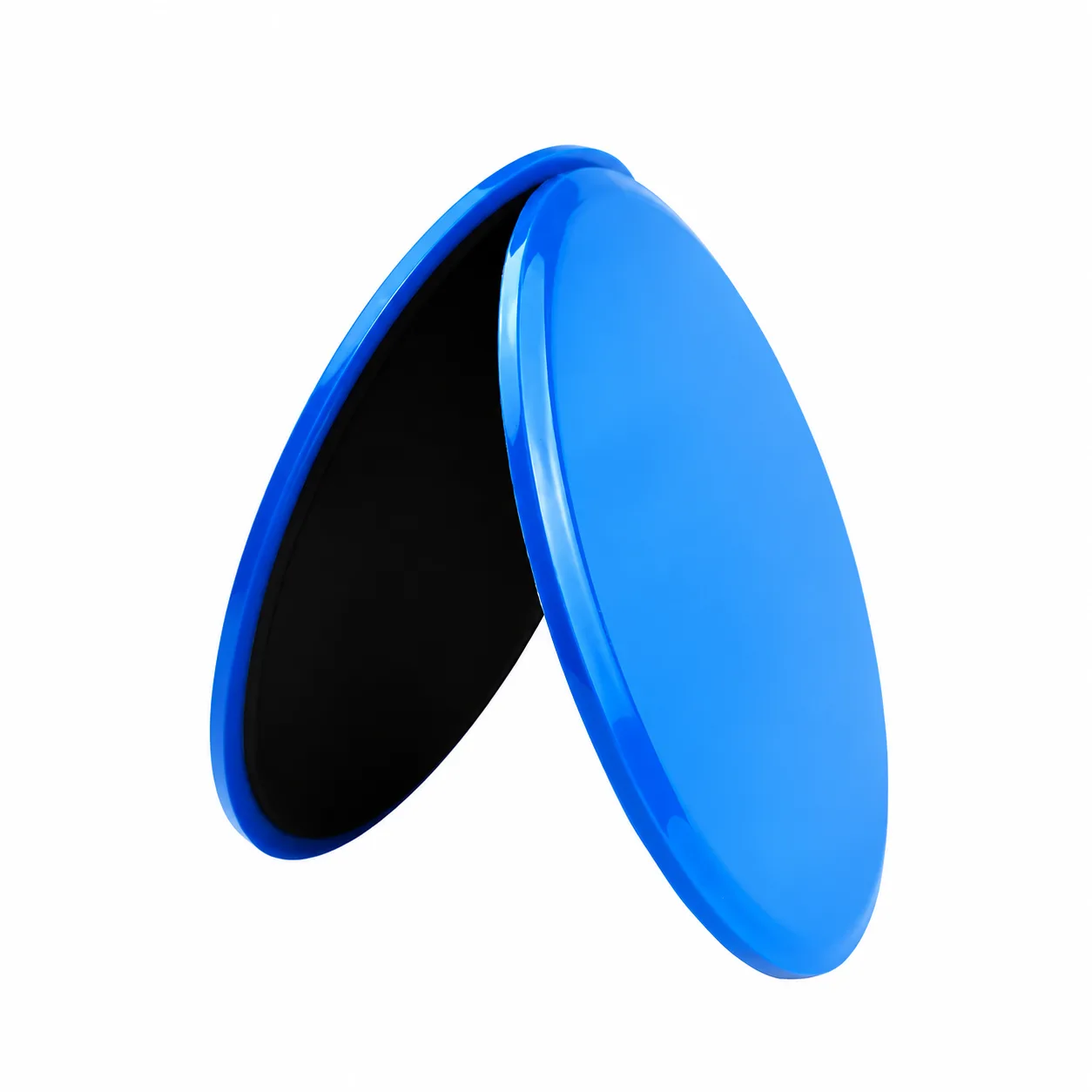
| Top-Surface Contact Feel | Uniform material across both sides or a fixed non-slip foot tread | Contrasting textures on opposite faces depending on which side faces up | Secure metatarsal and palmar traction stops the foot or hand from sliding off the disc mid-rep | Inspect product specs at launch to see whether dual-sided construction is included |
| Disc Footprint & Diameter | Compact circular or oval profiles tailored to portable mat bags | Slightly thicker composite profile to house two bonded material layers | Adequate surface area distributes wrist extension pressure during plank pikes and mountain climbers | Confirm exact disc dimensions and diameter per product listing |
| Eccentric Hamstring & Core Load | Relies on body weight and gravity-assisted lever changes | Relies on body weight and floor friction modulation across surfaces | Demands continuous isometric abdominal bracing and slow eccentric knee extension control | Pair with external resistance bands when horizontal tensile load is desired |
| Studio & Travel Portability | Lightweight, ultra-thin profile for single-surface studio rooms | Multi-environment versatility when moving between carpeted bedrooms and wood floors | Keeps home and travel programming consistent without altering movement range of motion | Wipe both disc faces clean of grit before switching floor surfaces |
Step-by-Step Selection Checklist for Studio and Home Practitioners
Before committing to a set of sliding discs for your weekly routine, run through this three-step fit and environment checklist:
1. Audit Your Primary Training Floor
Identify whether you train predominantly on hardwood, tile, studio vinyl, or carpet. Placing a hard polymer surface directly onto finished wood can cause scratching if floor grit is trapped underneath, whereas placing a fabric face onto carpet creates excessive drag that interrupts smooth eccentric control.
2. Match Disc Dimensions to Your Primary Exercises
For upper-body plank circles, alligator walks, and kneeling torso reaches, you want a disc wide enough to support the heel of your palm and spread fingers. For lower-body skating lunges, supine leg curls, and side splits, verify the listed dimensions so the ball of your foot remains centered without catching the floor edge.
3. Plan Your Resistance Progression
Remember that sliders reduce floor friction to challenge eccentric control in the core and hamstrings, relying on body weight unless paired with bands. If your goal is to replicate the horizontal pull of a studio carriage at home, combine your sliding discs with anchored or looped resistance bands for progressive overload.
Practical Scope and Product Boundaries
When evaluating slider specifications, keep two important boundaries in mind. First, floor sliders do not provide spring resistance on their own unless paired with external resistance bands. Second, do not assume every slider SKU features dual-sided foam-and-plastic construction until its specific launch specifications are published; floor surface compatibility and dimensions must always be checked per individual product.
Frequently Asked Questions
How can you use Pilates sliders and resistance bands at home to replicate Reformer and Megaformer exercises?
Pilates sliders and exercise sliding discs are selected by floor surface compatibility and dimensions and are rated by home practitioners as effective tools for core and hamstring exercises, especially when paired with resistance bands. The sliders create a low-friction glide under your feet or hands while the resistance band supplies continuous tension across the movement arc.
What specifications matter most when comparing pilates sliders?
Floor surface compatibility and disc dimensions are the two most important specifications. Checking that the contact material matches your hardwood, tile, or carpeted floor ensures a smooth glide, while verifying the diameter ensures stable palmar and forefoot placement.
How does pilates sliders compare to dual sided core sliders for regular Pilates sessions?
General Pilates sliders may be built for a single dedicated floor type or feature a reversible design, whereas dual-sided core sliders specifically combine two distinct surface materials so you can flip the disc between carpet and hard floors. Always verify each product’s published launch specifications to confirm its exact surface construction.
Make it part of your practice
Explore the purple round core exercise sliders and check its product details before choosing your studio essentials.
View this piece