


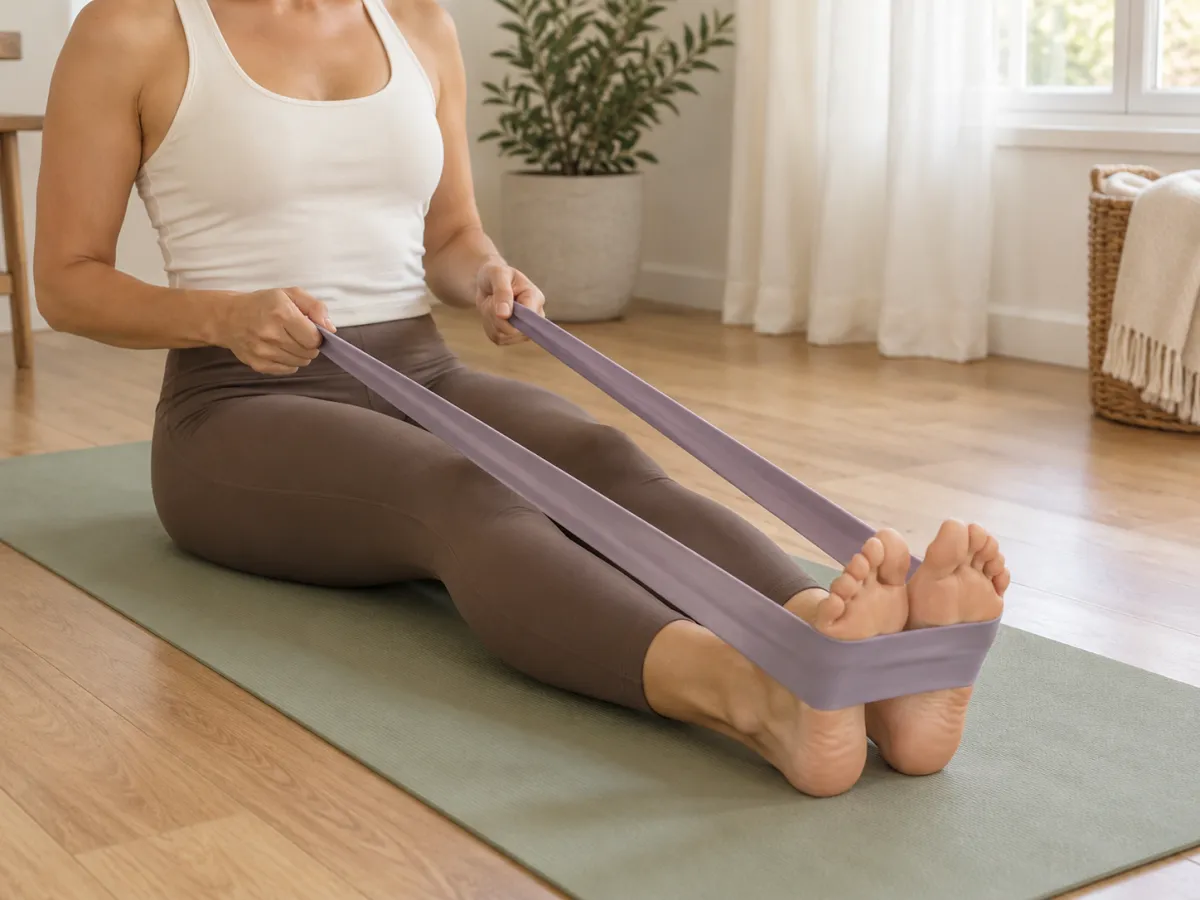
Evaluating fabric resistance bands vs latex and mastering fabric resistance bands in mat and Reformer-inspired Pilates comes down to how material weave, surface friction, and stretch elongation interact with your joint alignment. While wide woven fabric glute loops stay flat against the thighs during heavy hip-abduction work, their shorter elongation curve can trigger lumbar overarching or pelvic tipping if used for long-lever movements—whereas elastic latex or latex-free TPE bands deliver the extended stretch excursion required for full-range leg circles, rowing, and spinal articulation.
According to the PilatesFits catalog listing, the Pilates Resistance Bands collection includes portable loop and long-band formats organized by listed resistance level.
By matching each material and format to its ideal biomechanical lever—and correcting subtle hip, ribcage, and wrist compensations—you can protect your joints while building progressive strength. Browse portable loop and long-band options in the PilatesFits Pilates Resistance Bands collection and pair them with smooth floor discs from the PilatesFits Pilates Sliders collection.
The Biomechanics Behind Fabric Resistance Bands Vs Latex in Mat and Reformer Movements
Understanding fabric resistance bands vs latex starts with analyzing two mechanical variables: elongation ratio (how far a band stretches relative to its resting length) and skin-contact shear (whether the band stays anchored or rolls along the limb).
Elongation Curve vs Lever Arm Length
Woven fabric resistance bands combine polyester or cotton yarn with braided elastic threads. This textile structure produces high initial resistance over a short stroke and hits a firm stop much sooner than a flat elastomer ribbon. In short-lever coronal-plane movements—such as Clamshells, Side-Lying Leg Lifts, and Shoulder Bridge abduction pulses—that firm boundary cues the gluteus medius to fire without letting the knees collapse inward. However, if you attempt a long-lever sagittal-plane movement like supine Double-Leg Lowers with a stiff fabric loop, the abrupt tension ceiling often pulls the pelvis into anterior tilt before the legs reach forty-five degrees.
Surface Friction, Rolling, and Proprioceptive Feedback
Thin latex or TPE mini loops offer high elongation for ankle and wrist work, but can roll into a narrow cord against bare skin or slick leggings when placed above the knees. Wide fabric resistance bands distribute pressure across a broader surface area around the distal thighs, giving clear tactile feedback to keep the patella tracking directly over the second toe during squats, lunges, and bridged marches.
| Biomechanical & Form Criterion | Woven Fabric Resistance Bands (Mini Loops) | Flat Latex / Latex-Free TPE Long Bands | Elastic Latex / TPE Mini Loop Bands | Alignment & Joint Protection Rule |
|---|---|---|---|---|
| Stretch Elongation Curve | Short, firm elongation with a distinct end-range stop | Long, linear elongation across full-body arcs | Moderate-to-high elongation across short and medium levers | Never force a short-stretch fabric loop into long-arc leg circles |
| Skin & Legging Grip Behavior | Wide woven cuff resists rolling or pinching on bare thighs | Smooth ribbon wraps flat around foot arches and palms | Can roll if placed high on tapered thighs without tension control | Keep fabric cuffs two finger-widths above the knee joint line |
| Pelvic Neutrality Impact | Supports lateral hip stability during bridges and side-lying work | Assists or resists segmental spinal roll-downs and supine leg lowers | Challenges ankle and shin alignment in tabletop and Hundred | Anchor lower ribs and tailbone before stretching any band to peak load |
| Scapular & Wrist Mechanics | Too stiff for overhead or wide-arc shoulder external rotation | Ideal for seated rows, Chest Expansion, and Swan prep with neutral wrists | Suitable for short-range serratus wall slides and wrist pulses | Wrap long bands flat across the palm rather than death-gripping with fingers |
| Progressive Overload Role | Step up through light, medium, and heavy fabric weaves for glute strength | Combine with mini bands across listed resistance levels for full-body progression | Rotate tension levels to match smaller shoulder vs larger hip muscles | Increase listed resistance level only when three-second eccentric control is solid |
3 Common Mistakes With Fabric Resistance Bands and How to Fix Each One
Even experienced practitioners run into compensation patterns when switching between fabric resistance bands vs latex. Use these three form diagnostics and tactile fixes to clean up your alignment.
Mistake 1: Letting Heavy Fabric Resistance Bands Pull Knees Into Valgus on the Eccentric Return
During banded squats or Shoulder Bridge abduction pulses, many practitioners push out hard against fabric resistance bands on the concentric phase but allow the band to snap their knees inward on the return. This sudden medial collapse stresses the medial knee capsule and shuts off the deep hip external rotators.
- The Biomechanical Fix: Treat the inward return as a three-count eccentric hold. Keep pressure through the outer heels and fifth metatarsals so the femurs stay parallel to your hip sockets at the bottom of every pulse.
Mistake 2: Using a Short-Stretch Fabric Loop for Long-Lever Leg Lowers (Triggering Rib Flare)
Attempting supine leg extensions or wide leg circles with a stiff fabric loop forces the psoas and lumbar extensors to yank against an unyielding cuff, popping the lower ribs off the mat.
- The Biomechanical Fix: Match the format to the lever. Switch to a long flat or long loop latex/TPE band anchored across the foot arches for long-lever supine movements, and reserve woven fabric resistance bands for above-knee or mid-shin lateral stabilization.
Mistake 3: Over-Gripping Long Latex/TPE Bands With Flexed Wrists During Rowing and Roll-Downs
When transitioning from hands-free fabric thigh loops to handheld long bands, practitioners frequently curl their wrists inward and hike their upper traps toward their ears.
- The Biomechanical Fix: Thread the long band flat across your open palm and secure it between thumb and index finger while keeping a straight line from forearm knuckles to elbow. Glide your shoulder blades wide down your ribcage before initiating any pull.
Self-Check Alignment Protocol Before Your Next Session
Run through this 60-second setup checklist before starting your mat or Reformer-inspired flow with gear from the PilatesFits Pilates Resistance Bands collection:
- Verify Format-to-Movement Pairing: Confirm you have both mini bands (for lateral hip and scapular tracking) and a long loop or flat band (for full-lever pressing and rowing) laid out by listed resistance level.
- Check Cuff Placement Above the Joint Line: Position fabric resistance bands flat and untwisted just above the femoral condyles (never directly over the kneecap) or around the mid-shins.
- Test Eccentric Control Before Stepping Up Tension: Perform three slow test repetitions while checking that your anterior superior iliac spines (hip bones) stay level and your lower ribs remain heavy on the mat.
- Integrate Floor Glide Without Losing Pelvic Neutrality: When pairing bands with discs from the PilatesFits Pilates Sliders collection, keep your supporting knee aligned over the middle toe while the sliding leg extends.
- Respect Material and Progression Boundaries: Keep in mind that woven fabric glute loops do not share the stretch elongation ratio of long flat latex or TPE bands, not all bands are latex-free unless stated on the specific SKU, community advice reflects attributed user experience, and elastic bands require stepping up to higher tension ratings over time to maintain progressive overload.
Frequently Asked Questions
What is the most common mistake people make with fabric resistance bands vs latex?
The most common mistake when choosing between fabric resistance bands vs latex is mismatching the band’s elongation curve to the exercise lever—such as forcing a short-stretch woven fabric glute loop into long-arc movements, or letting a heavy fabric loop snap the knees inward during the eccentric return. Using woven fabric loops for short-range hip abduction and high-stretch latex or TPE long bands for full-body arcs keeps your spine and knees aligned.
How does fabric resistance bands affect alignment and muscle activation in Pilates?
Wide fabric resistance bands provide non-rolling lateral resistance around the thighs or shins, cueing the gluteus medius and deep external rotators to keep the femurs tracking in line with the hip and ankle joints during bridges, squats, and side-lying series. When paired with controlled eccentric tempo, they prevent knee valgus without pinching bare skin or rolling over leggings.
Why do home Pilates practitioners combine mini bands and long loop resistance bands across multiple tension levels?
Pilates resistance bands are selected across loop and long-band formats by listed resistance level, because combining mini bands and a challenging long loop band across multiple tension levels allows progressive overload as strength improves. This dual-format approach lets you stabilize short-lever joints with mini bands while loading full-body Reformer-inspired vectors with long bands.
Make it part of your practice
Explore the pink woven resistance loop band and check its product details before choosing your studio essentials.
View this piece