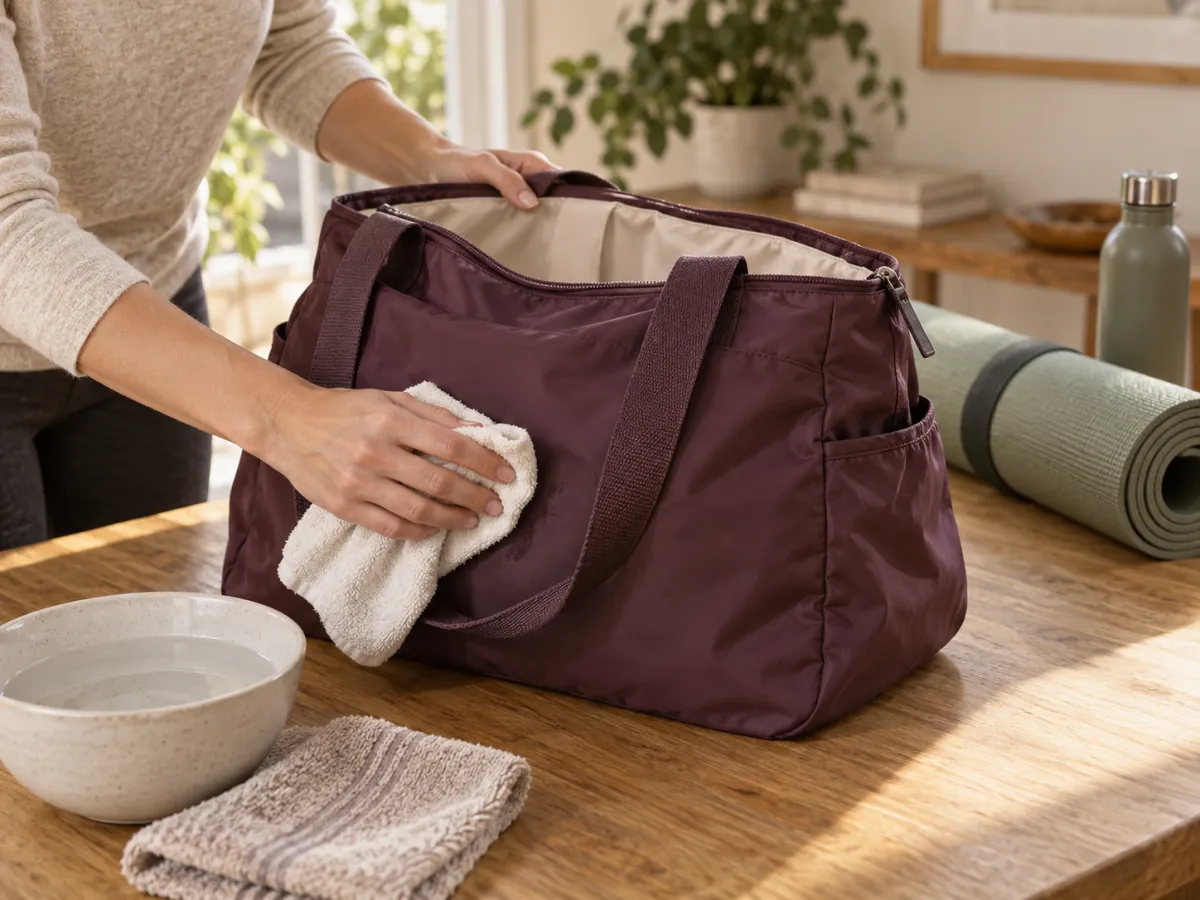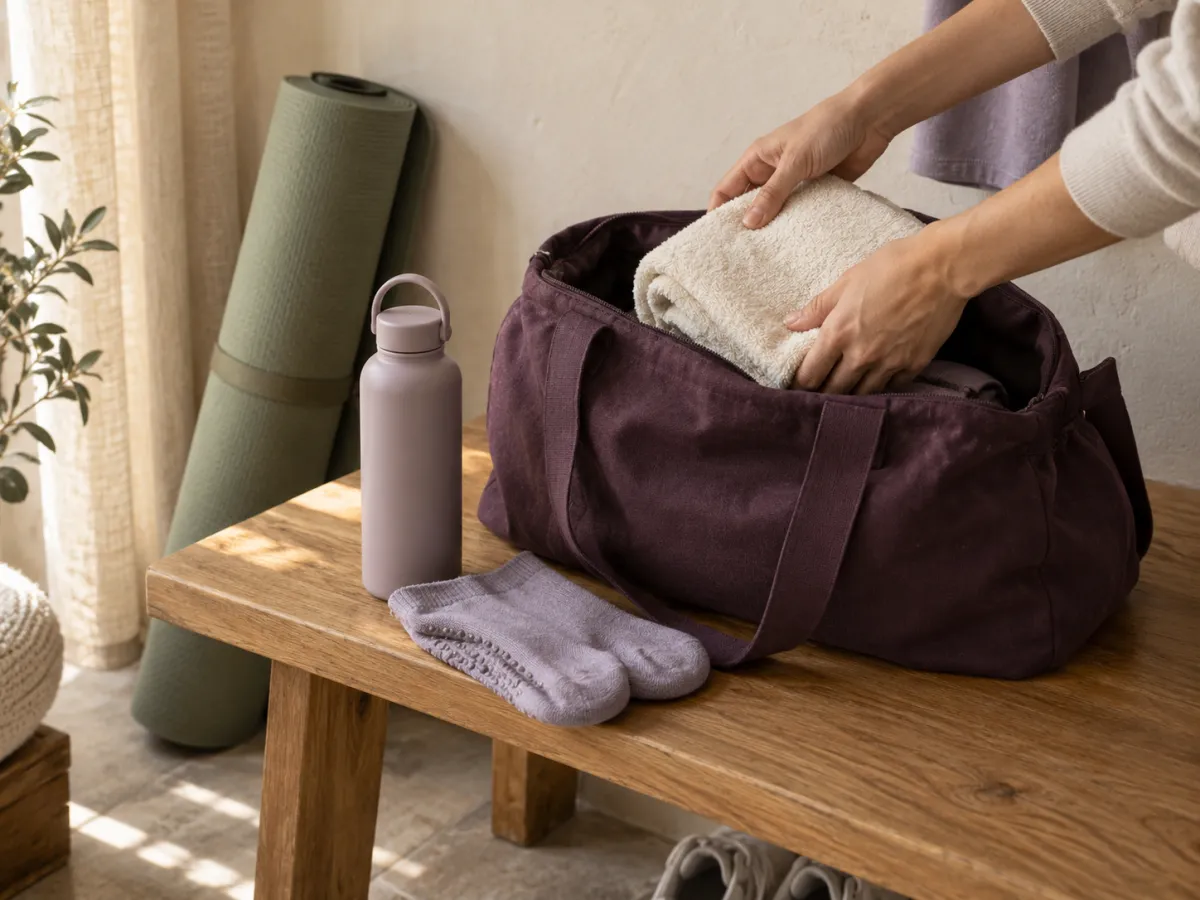
Transitioning between studio apparatus sessions and at-home floor practice works best when your carry setup holds your mat and portable resistance props in one organized kit. A well-packed gym bag with mat holder or yoga mat carrier bag lets you transport your mat alongside the small studio essentials—like ankle weights, a Pilates ring, a mini stability ball, grip socks, and a reformer towel—that recreate Reformer-inspired tension vectors on the floor. While no bag or floor prop kit duplicates the spring-loaded glide of a studio carriage, keeping a dedicated portable prop kit inside your mat carrier makes structured core, glute, and spinal articulation workouts effortless to set up anywhere.
According to the PilatesFits catalog listing, the Pilates Bags collection offers totes and studio bags designed to carry a Pilates outfit and small studio essentials.
How a Gym Bag With Mat Holder Translates Reformer Mechanics to the Floor
A gym bag with mat holder is not an exercise apparatus itself, but rather the mobile staging system that bridges studio Reformer habits and floor mat execution. On a Reformer, coil springs and a rolling carriage provide variable horizontal resistance and an unstable support surface. When you unroll your mat from a yoga mat carrier bag at home or in a hotel room, you replace those machine mechanics using the compact accessories packed inside your studio tote:
- Closed-Chain Traction via Grip Socks and Towel: Studio practitioners habitually pack grip socks and a reformer towel; on a home mat, grip socks stabilize the standing foot during lunges and bridges, while a folded towel can serve as a low-friction slide pad on hard floors or a cervical alignment cushion.
- Isometric Adduction via a Pilates Ring or Mini Ball: Packing a magic circle or inflatable mini ball in your studio bag lets you replicate the inner-thigh and pelvic-floor engagement of Reformer footwork and shoulder bridge sequences.
- Distal Limb Loading via Ankle Weights: Strapping on compact ankle or wrist weights carried in your bag increases lever torque during side-lying leg series and supine abdominal lowers, compensating for the absence of heavy Reformer springs.
| Studio Reformer Element | Portable Kit Equivalent Inside Your Bag | Primary Biomechanical Role on the Floor | Honest Mechanical Boundary | Setup & Packing Verification |
|---|---|---|---|---|
| Rolling Carriage & Footbar | Mat unrolled from carrier + folded towel or sliders | Supports spinal articulation and horizontal heel slides | Floor friction is constant rather than spring-assisted | Check mat strap loop circumference before packing extra-thick mats |
| Reformer Straps & Ropes | Long resistance band + compact ankle weights | Increases distal lever load during supine leg circles and lowers | Elastic and gravity vectors differ from pulley rope angles | Pack weights at the bottom gusset of your studio bag to balance load |
| Shoulder Blocks & Headrest | Rolled studio towel + grip socks | Maintains cervicothoracic alignment and foot traction | Does not provide fixed anterior shoulder blocks during planks | Store clean towel in an interior divider away from street shoes |
| Magic Circle / Ball Box Props | Pilates ring and deflated mini ball in main compartment | Creates isometric adduction and lumbopelvic instability | Requires manual breath-timed cueing without carriage feedback | Verify bag opening width if carrying a full-diameter Pilates ring |
| Studio Cubby & Change Kit | Pilates outfit, grip socks, and small personal essentials | Keeps transitions between office, studio, and home seamless | Pocket layout and zipper water resistance vary by specific SKU | Confirm individual SKU specifications before assuming built-in shoe tunnels |
To organize your studio outfit and portable prop kit for seamless studio-to-home sessions, browse the PilatesFits Pilates Bags collection and pair your carry setup with a soft PilatesFits reformer towel for mat cushioning and studio hygiene.
Step-by-Step Yoga Mat Carrier Bag Sequence: Core, Glutes & Spinal Articulation
Once you arrive at your training space and unpack your yoga mat carrier bag, lay out your mat, towel, grip socks, and small props in order of use so your flow moves continuously without breaks:
Phase 1: Supine Core & Pelvic Imprint (Mini Ball or Rolled Towel)
Lie supine on your unrolled mat with grip socks planted hip-width apart and a mini ball or folded reformer towel placed between your inner knees. Inhale to lengthen the back of the neck; exhale to draw the lower ribs together and float the legs to tabletop, squeezing the prop gently on a four-count exhale to recruit the deep transverse abdominis and adductors before performing toe taps and hundreds.
Phase 2: Articulated Shoulder Bridge & Posterior Chain (Ankle Weights or Ring)
Keep the prop between the knees—or place a Pilates ring outside the thighs for abduction resistance—and articulate the spine off the mat from tailbone to mid-thoracic ribs. Pause at the top of the bridge to verify that your ribcage stays integrated with the pelvis rather than flaring upward, then lower bone by bone over four slow counts to mimic the eccentric spring return of Reformer pelvic lift work.
Phase 3: Side-Lying Hip Series & Spinal Decompression
Strap on the ankle weights from your studio bag and align your torso along the back edge of the mat. Execute controlled forward-and-back leg sweeps and small heel-together circles while keeping the top waist long and the pelvis quiet. Finish seated tall on the mat for spine stretch forward, using your towel looped around the feet if hamstrings feel tight.
Setup Boundaries and Progression Rules Without a Studio Machine
To keep your portable mat-carrier kit safe and effective over months of training, respect both equipment and biomechanical boundaries:
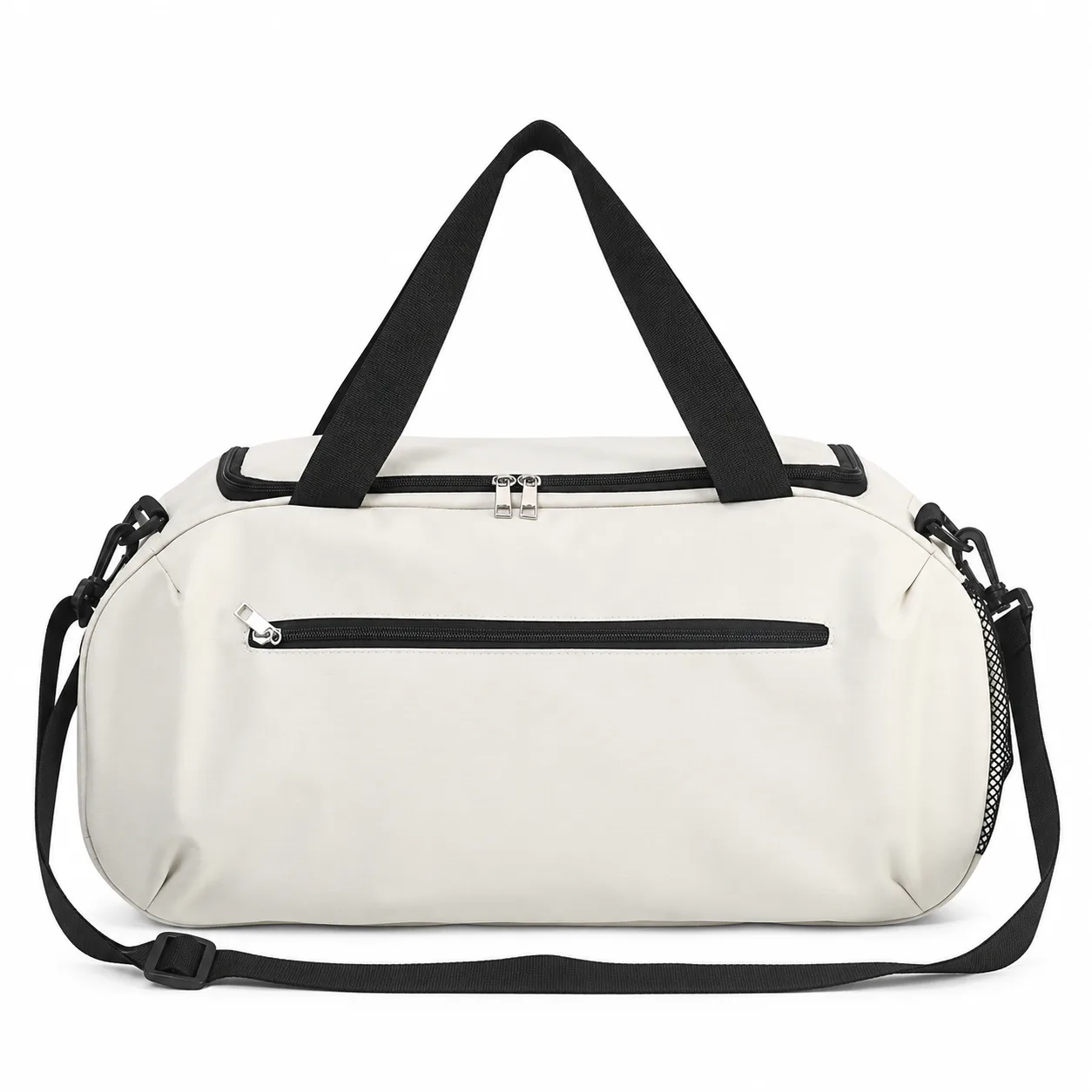
- Check Mat Strap Circumference Against Mat Thickness: High-density Pilates mats are thicker and wider than standard yoga mats. Never assume every gym bag with mat holder or standard yoga strap loop fits an extra-thick mat roll without checking the specific strap circumference and buckle adjustment range.
- Pack Heavy Props Low and Close to the Body: When carrying ankle weights and a full water bottle alongside a strapped mat, place dense weights flat against the bottom panel of the bag so the mat holder does not tip the bag forward off your shoulder.
- Progress via Tempo and Lever Length: Because portable props have fixed mass, advance your home routine by slowing the eccentric lowering phase to four seconds, extending bent knees to straight levers during supine abdominal work, and reducing base-of-support contact points.
Frequently Asked Questions
What essentials should you pack in a Pilates bag for studio classes, and how do practitioners carry grip socks, towels, and props?
A Pilates tote or studio bag carries your Pilates outfit and small essentials, with studio-goers typically packing grip socks, a reformer towel, and small props like ankle weights, a Pilates ring, or a mini ball. Placing heavier props at the base of the main compartment and tucking grip socks into interior slip pockets keeps your kit balanced whether you head to a studio class or unroll a mat at home.
Can a gym bag with mat holder replace a studio Reformer workout at home?
A gym bag with mat holder cannot replicate the mechanical spring tension and rolling carriage of a studio Reformer, but it allows you to carry the exact mat and small props—such as ankle weights, a mini ball, and a Pilates ring—needed to perform high-control Reformer-inspired floor sequences anywhere.
How do you structure a balanced yoga mat carrier bag routine for core and lower body?
Unpack your yoga mat carrier bag and organize your session into three progressive blocks: start with supine core activation using a mini ball or folded towel between the knees, move into articulated shoulder bridges with a Pilates ring, and finish with side-lying glute and hip series using ankle weights.
Make it part of your practice
Explore the mocha drawstring yoga mat bag and check its product details before choosing your studio essentials.
View this piece