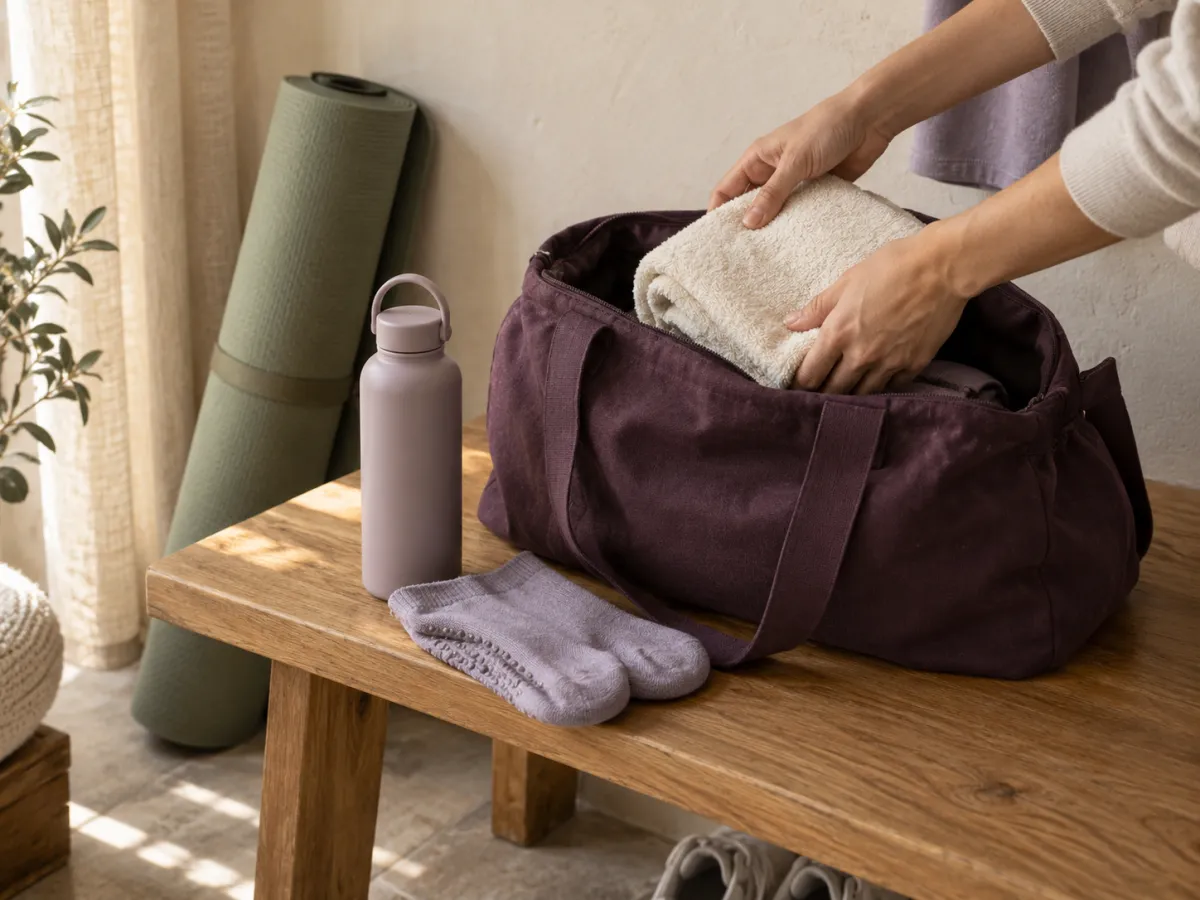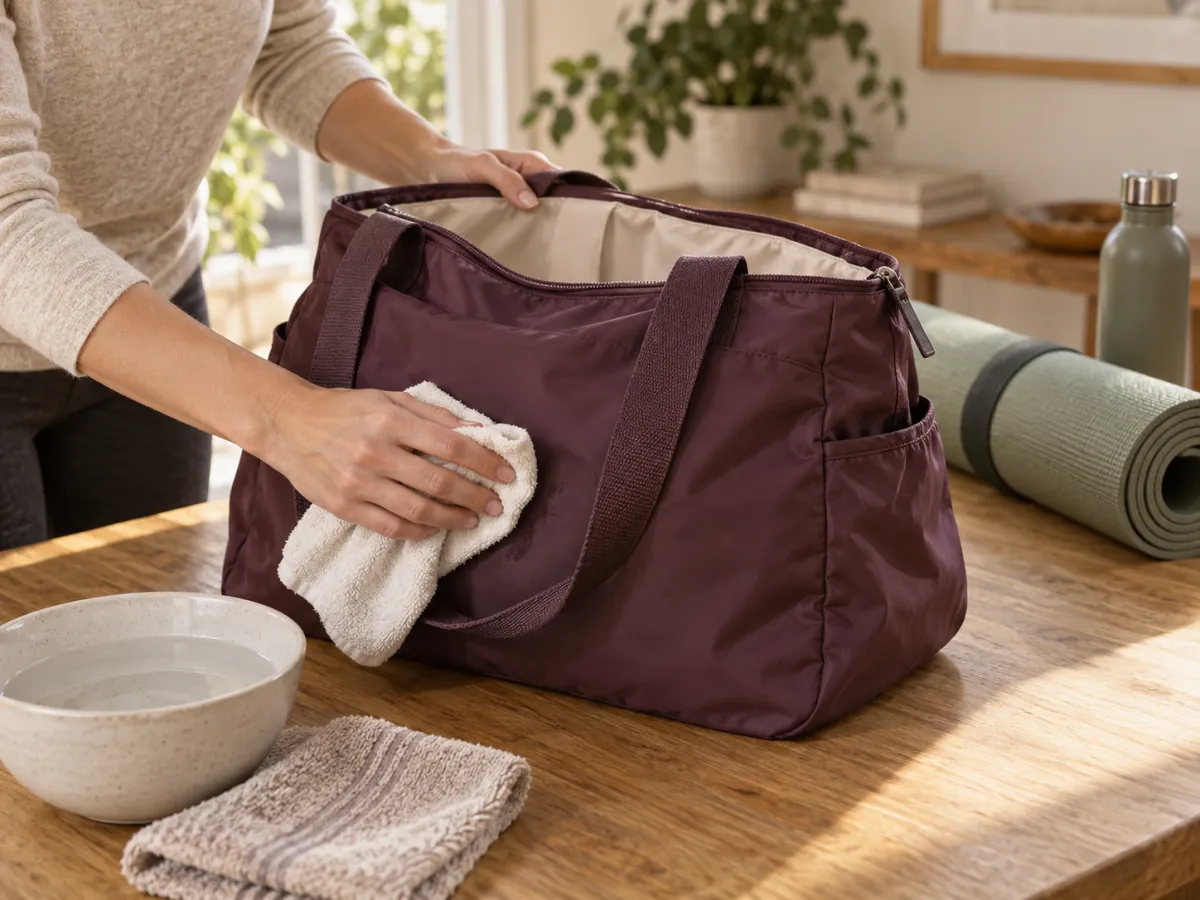
Knowing how to wash nylon gym tote bag fabrics and properly deodorize gym bag interiors keeps your Pilates studio carryall crisp, hygienic, and structurally supportive across hundreds of sessions. Because a Pilates bag routinely transports a post-class outfit, damp reformer towel, grip socks, and compact props like ankle weights, a mini ball, or a Pilates ring, trapped perspiration and skin oils can gradually break down water-repellent coatings and seam bindings if washed with harsh heat or alkaline detergents. Following a gentle, material-safe cleaning and airing protocol eliminates odor-causing bacteria while preserving the weave tension, zipper tracks, and strap integrity of your studio tote.
According to the PilatesFits catalog listing, the Pilates Bags collection offers totes and studio bags designed to carry a Pilates outfit and small studio essentials.
What Degrades Pilates Bag: Sweat, Heat, Detergents & UV Exposure
Understanding what weakens technical tote textiles helps you avoid common laundry mistakes when researching how to wash nylon gym tote bag care. Nylon and woven studio bag fabrics are resilient against abrasion, but four everyday stressors accelerate material fatigue:
- Trapped Perspiration and Damp Reformer Towels: Leaving a sweat-dampened reformer towel or studio outfit sealed inside an unventilated tote creates a warm microenvironment where odor compounds bind to synthetic fibers and interior pocket linings.
- High-Heat Washing and Tumble Drying: Hot water and heated dryer drums soften polyurethane backing layers, warp structured bottom gussets, and shrink cotton or nylon webbing straps, causing permanent seam puckering.
- Heavy Detergents, Bleach, and Fabric Softeners: Chlorine bleach weakens nylon polymer chains, while liquid fabric softeners coat fibers in a waxy film that traps studio odors and makes future spot-cleaning less effective.
- Prolonged Direct Sunlight and Crushed Storage: Drying a wet bag in harsh midday UV light fades dye pigments and embrittles synthetic trims, while stacking heavy props on top of an empty bag creases its structural panels.
| Care Phase or Stress Factor | Material Risk When Mishandled | Safe Material-Science Protocol | Recommended Frequency | Studio Bag Longevity Benefit |
|---|---|---|---|---|
| Daily Post-Class Unpacking | Damp reformer towel and outfit souring interior lining | Remove damp towel and grip socks immediately; leave top zipper open to air out | After every studio session | Prevents bacterial odor buildup before it sets into seams |
Routine Odor Neutralization (deodorize gym bag) | Perfumed sprays masking odor and leaving sticky residue | Wipe interior with diluted mild soap or dust dry interior with baking soda, then vacuum | Weekly for 3–5x/week studio regulars | Neutralizes acidic sweat compounds without coating fibers |
Deep Fabric Cleaning (how to wash nylon gym tote bag) | Hot spin cycles warping base panels and fraying straps | Hand-wash in cool water with mild pH-neutral detergent and a soft microfiber cloth | Every 4–6 weeks or after visible spills | Cleans woven nylon and pocket linings while preserving shape |
| Hardware & Zipper Track Care | Grit, lint, or salt corroding zipper teeth and sliders | Brush zipper tracks clean with a dry soft bristle brush before rinsing | Monthly inspection | Keeps top and interior pocket closures gliding smoothly |
| Drying & Reshaping | Tumble dryer heat delaminating backing or shrinking webbing | Blot with a dry towel, stuff loosely with clean paper or cloth, and air-dry in shade | After every wash or rain commute | Maintains crisp upright gusset geometry for studio cubbies |
To keep your class kit fresh and organized, browse the PilatesFits Pilates Bags collection and rotate a quick-drying PilatesFits reformer towel into your weekly wash schedule.
Step-by-Step Cleaning and Sanitization Protocol for How To Wash Nylon Gym Tote Bag
Follow this five-step protocol whenever you need to perform a full clean for how to wash nylon gym tote bag materials and deodorize gym bag compartments:
- Empty and Invert Every Pocket: Remove your Pilates outfit, grip socks, reformer towel, ankle weights, Pilates ring, mini ball, and small valuables like hair ties. Turn interior slip pockets inside out and shake out dust or studio lint, checking the specific bag SKU for any removable inserts or compartment care tags.
- Pre-Treat Deodorizing Pass: If lingering odor is present, sprinkle a light layer of plain baking soda inside the dry main compartment, let it sit for two hours to absorb volatile odor molecules, and shake or vacuum it out completely before wetting the fabric.
- Cool-Water Hand Wash With Mild Cleanser: Fill a clean basin with cool water and a few drops of gentle, bleach-free liquid detergent. Dip a soft microfiber cloth or sponge into the solution and wipe the exterior nylon, shoulder straps, base panel, and interior lining using light circular motions.
- Targeted Cold Rinse Without Wringing: Wipe away soap residue with a clean cloth dampened in cool plain water, or rinse briefly with cool running water. Never twist or wring the bag, as wringing distorts reinforced base panels and stitched handle anchors.
- Towel Blot and Shaded Air-Dry: Press a clean dry bath towel against the interior and exterior to absorb excess moisture, then hang or stand the tote fully open in a ventilated, shaded room until completely dry to the touch.
Storage, Inspection, and Replacement Signs for Deodorize Gym Bag
Between studio sessions, store your Pilates bag upright in a cool, breathable closet rather than a hot car trunk, where trapped heat degrades synthetic coatings and elastomer props like mini balls. Pack clean grip socks and folded reformer towels only after the interior is bone-dry. Inspect your bag monthly: if shoulder-strap stitching shows structural fraying, bottom panels have permanently collapsed, or interior linings retain persistent odor despite thorough deodorizing, retire the tote so your studio gear stays hygienic and properly supported.
Frequently Asked Questions
What essentials should you pack in a Pilates bag for studio classes, and how do practitioners carry grip socks, towels, and props?
A Pilates tote or studio bag carries your Pilates outfit and small essentials, with studio-goers typically packing grip socks, a reformer towel, and small props like ankle weights, a Pilates ring, or a mini ball. Separating damp post-class reformer towels and worn grip socks in a breathable laundry pouch inside the bag helps keep the main compartment clean and odor-free between washes.
What is the safest way to handle how to wash nylon gym tote bag without damaging the material?
The safest method for how to wash nylon gym tote bag fabrics is spot-cleaning or hand-washing in cool water with a mild, pH-neutral detergent, blotting excess moisture with a clean towel, and air-drying fully open in the shade—never using bleach, fabric softeners, or a hot tumble dryer.
How often should you perform maintenance for deodorize gym bag?
To effectively deodorize gym bag interiors, unpack damp reformer towels and grip socks immediately after every class, wipe down the interior lining once a week with a cool damp cloth, and perform a thorough hand-wash every four to six weeks depending on studio frequency.
Make it part of your practice
Explore the plum wide-handle studio carryall and check its product details before choosing your studio essentials.
View this piece