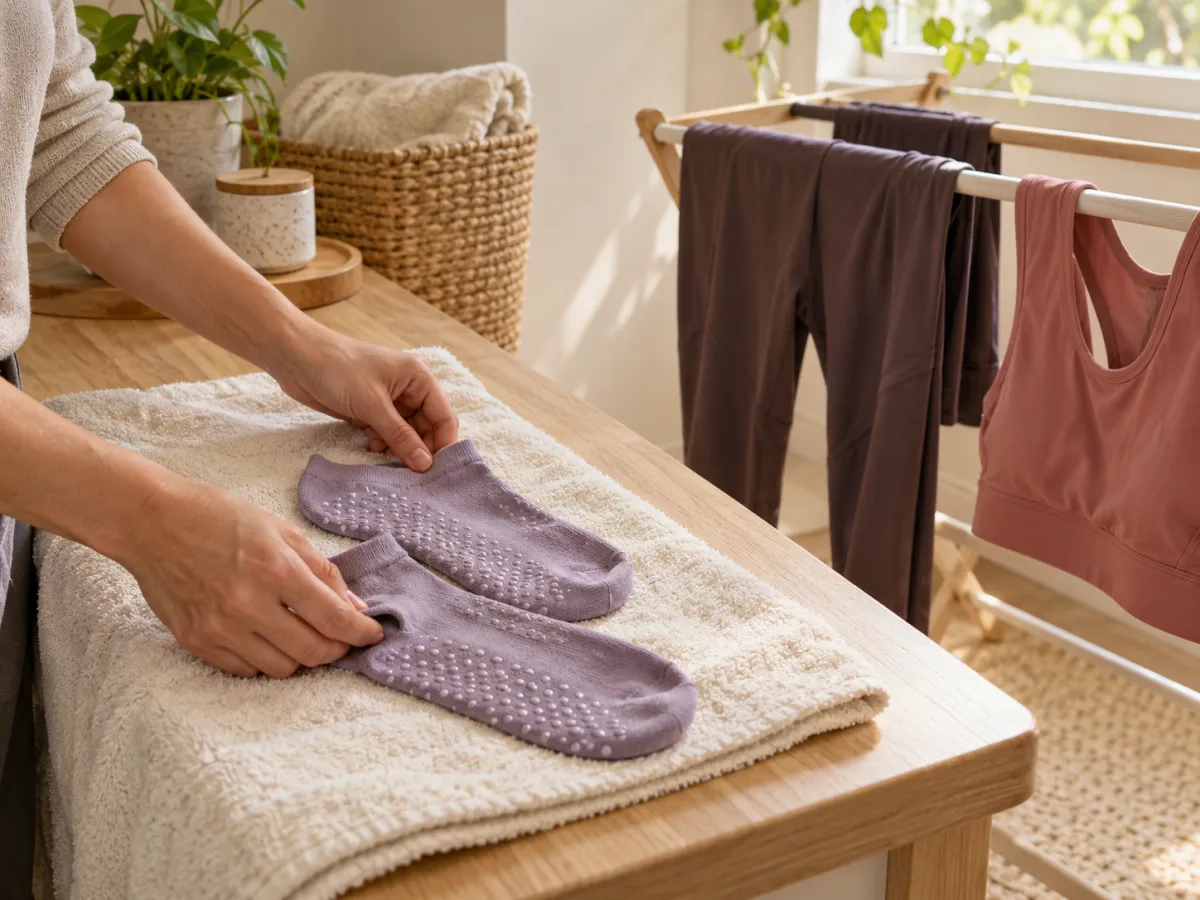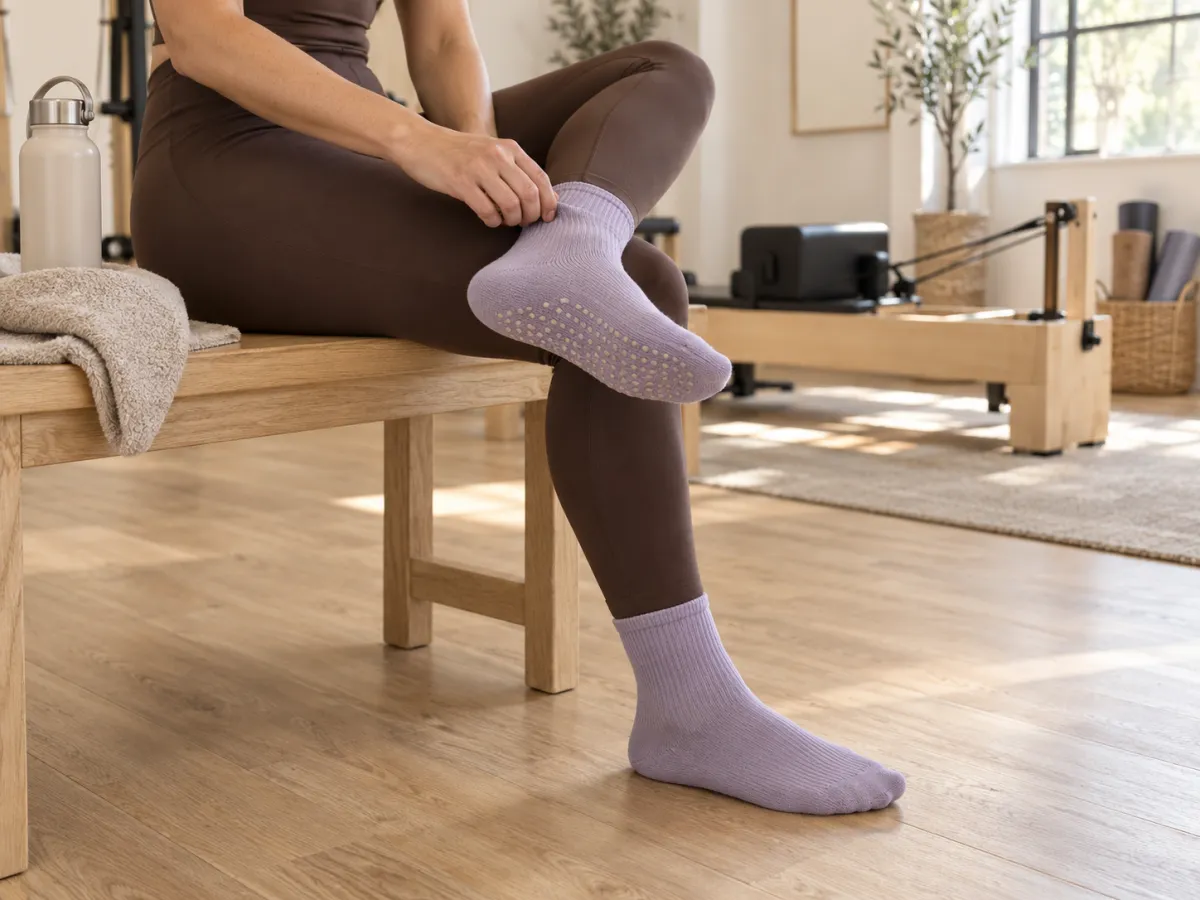
Choosing between toeless pilates socks and traditional closed-toe grip socks comes down to a mechanical trade-off between distal phalangeal prehension and full-foot skin barrier protection. When you step onto a Reformer carriage or set up for standing split series, open toe pilates socks expose all five toes so your skin can directly sense and wrap around the curved Reformer footbar or studio mat, while keeping high-density silicone tread anchored beneath the calcaneus (heel) and the first-through-fifth metatarsal heads. By contrast, full-toe grip socks enclose the entire forefoot inside a knit pocket or individual five-toe sleeves, trading direct skin-to-vinyl feedback for complete sweat containment and compliance with strict franchise studio dress codes.
According to the PilatesFits catalog listing, the Pilates Socks collection covers grip socks for mat, reformer, and barre sessions in full-toe, open-toe, and crew styles.
How Toeless Pilates Grip Socks Work: Metatarsal Pad Placement & Toe Loop Fit
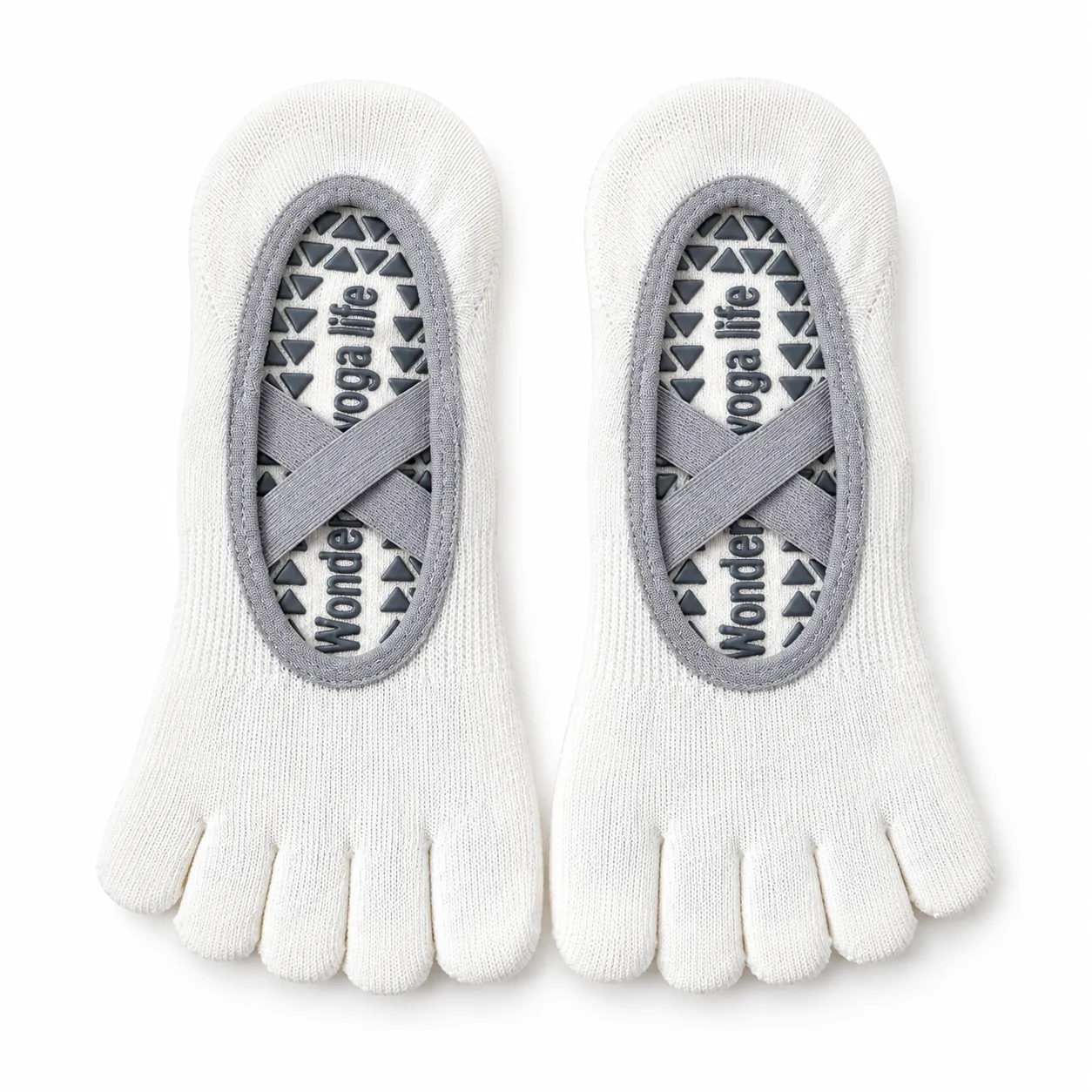
Unlike closed-toe silhouettes that rely on the toe box to hold the front of the sock in place during forward shear, half toe grip socks pilates designs depend on two structural anchors: a divided interdigital toe bridge (or five-slot separator) and an elasticized midfoot arch band. Because the fabric terminates just proximal to the proximal interphalangeal joints, the silicone grip matrix is concentrated directly under the weight-bearing ball of the foot and heel cup.
| Design Parameter | Toeless (Open-Toe) Grip Socks | Full-Toe (Closed-Toe) Grip Socks | Biomechanical & Studio Impact |
|---|---|---|---|
| Forefoot Termination | Ends behind toe knuckles with stitched toe loops | Encloses all toes in a unified or five-toe pocket | Open-toe allows direct skin contact for prehensile wrapping |
| Silicone Tread Concentration | Concentrated under metatarsal heads, arch & heel | Continuous heel-to-toe dot matrix including toe pads | Closed-toe extends synthetic friction to the tips of the phalanges |
| Intrinsic Foot Muscle Cueing | Unobstructed toe spreading and plantar flexion | Slight fabric tension across the metatarsal arch | Open-toe makes it easier for instructors to spot toe-clawing |
| Studio Hygiene Acceptance | Permitted in most mat, barre & boutique studios | Universally accepted across franchise Reformer studios | Always verify franchise Reformer rules before wearing open-toe cuts |
| Post-Class Footwear Transition | Slides easily into open-toe sandals or recovery slides | Requires roomy slip-ons so rubber dots do not catch | Both styles pair best with slip-on slides for the walk to class |
When evaluating toeless pilates socks for dynamic carriage work, inspect the thickness and seam finish of the interdigital divider between the hallux (big toe) and second toe. Flatlock or seamless knit dividers prevent chafing when your weight pitches forward during Reformer Pike, Long Stretch, or kneeling Arabesque. If the midfoot compression rib is too loose, forward plantar pressure during Running or Elephant will push the metatarsal silicone pad toward your arch, leaving the ball of your foot partially unpadded on the footbar.
Toeless vs Closed-Toe Grip Socks on the Reformer Footbar and Mat
Comparing toeless vs full toe grip socks across specific apparatus exercises reveals why many practitioners keep both cuts in their gym bag rather than treating one silhouette as a universal replacement.
- Reformer Footwork (Bird on a Perch / Prehensile Wrap): During high-half-toe and Bird on a Perch variations, wrapping naked toes over the padded footbar gives immediate proprioceptive feedback while the silicone dots under the metatarsal heads stop the midfoot from skidding backward against spring tension.
- Tendon Stretch & Long Stretch Series: In high-load plank and pike positions on the moving carriage, full-toe grip socks add extra silicone contact points right under the distal toe pads. Practitioners who push primarily through their toe tips rather than the ball of the foot often prefer closed-toe coverage here.
- Mat Pilates & Standing Barre Work: On high-density closed-cell mats or hardwood barre floors, barefoot feel pilates socks allow the hallux and lesser toes to splay wide during single-leg balance, Relevé, and Side Kick Kneeling without fabric bunching around the toenails.
- Franchise Studio Hygiene Rules: Many multi-carriage Reformer franchises enforce a strict closed-toe grip sock rule so bare toes never touch shared vinyl straps, jumpboards, or upholstered footbars. Independent classical studios and mat/barre spaces are far more likely to welcome open-toe styles.
To explore silhouettes organized by cut, sole tread layout, and arch band support, browse the Pilates Socks collection or pair your open-toe footwear with a dedicated personal surface from our Pilates Mat collection. If you are also comparing closed-toe dot density and cuff heights, read our companion guide on Pilates Grip Socks Spec Comparison & Buying Guide.
When to Choose Open-Toe Grip Socks (and How to Wash Them)
Use this three-point decision checklist before packing your studio bag:
- Choose toeless grip socks when: You practice mat Pilates, barre, or home Reformer sessions where wide toe splay, cooler forefoot ventilation, and barefoot-style floor awareness improve your balance and intrinsic foot engagement.
- Choose full-toe grip socks when: Your commercial Reformer studio mandates 100% skin coverage on shared equipment, your feet run cold during winter morning classes, or your toes tend to sweat heavily on vinyl surfaces.
- Commute & Care Protocol: Never force rubberized grip soles into tight lace-up sneakers before class, as friction against shoe insoles wears down the silicone edges; slip on open-back slides or clogs for the walk from your car to the studio. After class, turn your socks inside out, wash on a cold gentle cycle without liquid fabric softener or dryer sheets, and air-dry flat so the silicone tread retains its tackiness and the toe-loop elastane never slackens.
Frequently Asked Questions
Do you need grip socks for Pilates, and why do Reformer and mat practitioners choose patterned silicone grip soles over regular socks?
Yes—standard cotton athletic socks lack surface friction and slide dangerously on vinyl Reformer carriages, wooden footbars, and smooth studio floors. Patterned silicone grip soles across full-toe, open-toe, and crew styles lock your heel and metatarsal heads in place under spring resistance, and many practitioners wear slip-on slides over their grip socks when walking to and from class rather than stuffing rubberized soles into regular shoes.
Are toeless grip socks allowed in Reformer Pilates studios?
It depends on the studio’s equipment hygiene policy. Boutique mat, barre, and many private apparatus studios allow open-toe grip socks because the ball of the foot and heel remain covered by non-slip silicone, whereas several large national Reformer franchises require closed-toe grip socks for complete skin coverage on shared carriages and straps.
How do you keep toeless Pilates socks from sliding back on your foot?
Select a pair with a snug 360-degree elastic arch compression band and a flatlock-stitched toe divider that sits flush against the web space without gapping. Sizing down when you are between shoe sizes also keeps the metatarsal silicone pad aligned directly beneath the ball of your foot during lunges and planks.
Make it part of your practice
Explore the leopard cross-strap open-toe grip socks and check its product details before choosing your studio essentials.
View this piece