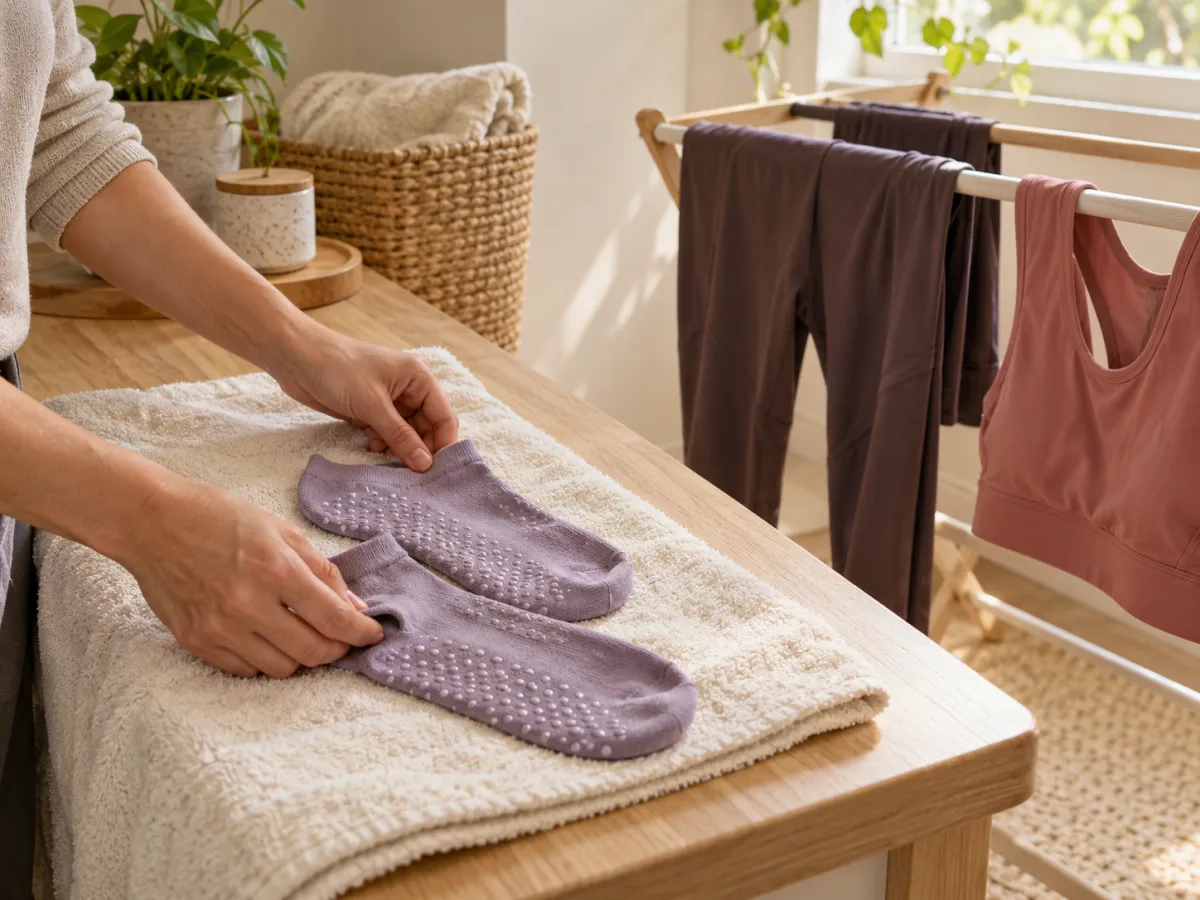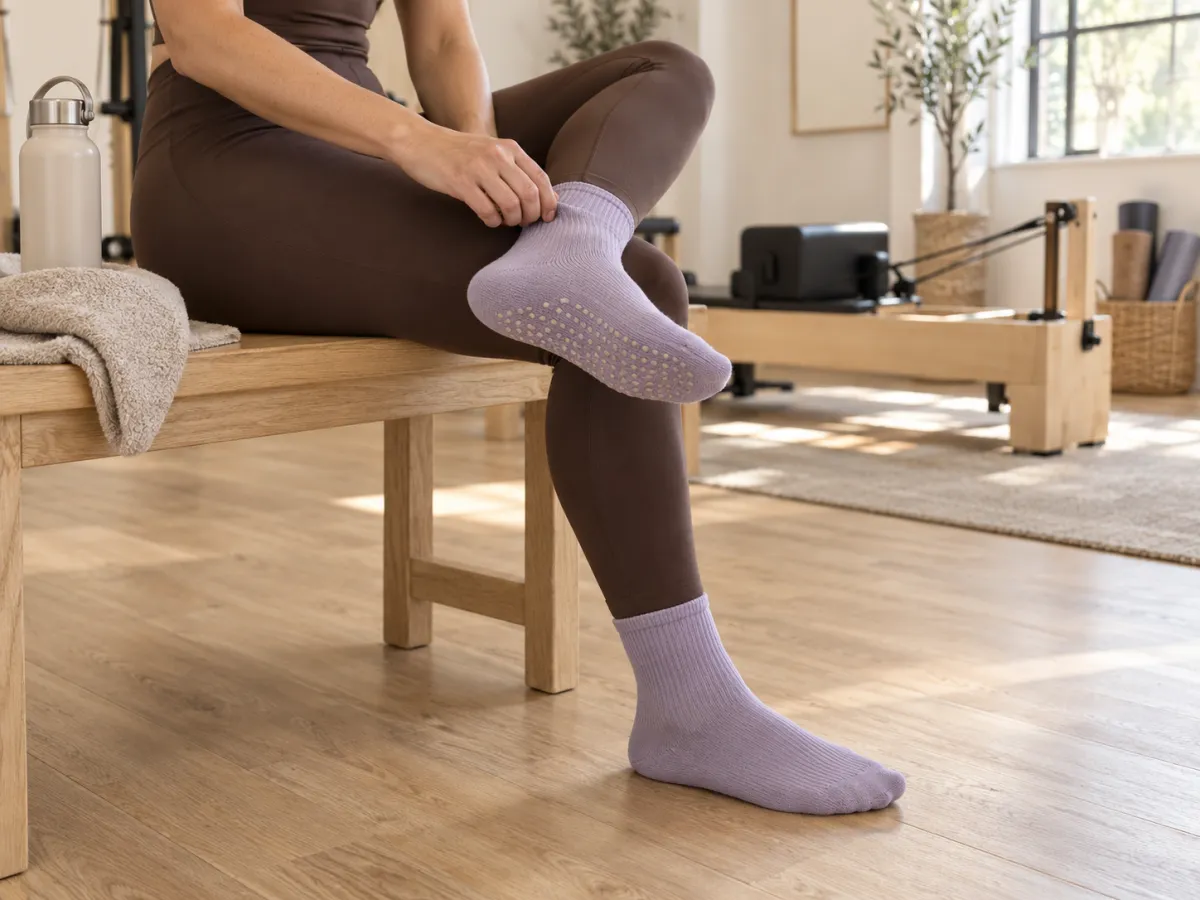
Selecting and positioning reformer pilates socks correctly determines whether force transfers cleanly from your hip extensors and deep abdominal stabilizers into the Reformer footbar, or leaks away through micro-slippage, toe clawing, and subtalar pronation.
When practitioners wear grip socks for reformer pilates on a moving carriage, the silicone tread interface acts as the mechanical bridge between the plantar fascia and the apparatus: if the heel cup rotates or the arch band slackens under heavy spring tension, your tibialis anterior and long toe flexors overfire to keep your foot from sliding off the bar.
According to the PilatesFits catalog listing, the Pilates Socks collection covers grip socks for mat, reformer, and barre sessions in full-toe, open-toe, and crew styles.
The Biomechanics Behind Reformer Pilates Socks in Mat and Reformer Movements
On a studio Reformer, your feet encounter two distinct friction environments: the curved, padded or bare metal footbar during closed-chain pushes, and the flat vinyl carriage bed or wooden standing platform during lunges, splits, and short-box variations.
High-performing reformer pilates socks stabilize the foot tripod—the calcaneal tuberosity, first metatarsal head, and fifth metatarsal head—so kinetic chains remain aligned from ankle to knee to hip.
| Footbar / Carriage Contact Zone | Biomechanical Role in Reformer Series | Common Grip Sock Failure Mode | Alignment Consequence & Fix |
|---|---|---|---|
| Calcaneal Heel Cup (Heel Position) | Transfers posterior-chain drive from glutes and hamstrings | Loose heel pocket rotates medially on the bar | Causes tibial internal rotation; choose Y-stitched anatomical heel pockets |
| Metatarsal Ball Pad (High Half-Toe) | Anchors plantar-flexed forefoot during Running & Tendon Stretch | Thin or sparse forefoot dots shear forward | Triggers hallux clawing and calf cramping; use dense forefoot silicone matrices |
| Midfoot Arch Rib (Prehensile Bird on a Perch) | Maintains longitudinal arch lift and keeps fabric flush | Unbanded knit bunches under the navicular bone | Creates uneven pressure points; require 360-degree elastic arch compression |
| Dorsal Instep & Ankle Cuff (Short Box Strap) | Buffers skin against heavy canvas foot straps | Low-cut heel tabs slip down under strap tension | Distracts core bracing during Short Box Round Back; select secure tab or crew cuts |
| Distal Toe Box (Standing Lunge & Scooter) | Stabilizes back-foot push against the shoulder blocks | Oversized toe box folds under the phalanges | Reduces push-off torque; match exact shoe size and avoid fabric overhang |
When following a structured pilates socks guide, pay close attention to how internal foot-to-sock friction matches external sock-to-carriage friction.
Even if the outer silicone dots stick firmly to the vinyl carriage, a slick interior yarn without midfoot compression allows your bare skin to slide inside the sock shell during standing Side Splits or Front Splits.
3 Common Mistakes With Grip Socks For Reformer Pilates and How to Fix Each One
Practitioners searching for the best pilates socks for reformer classes often blame ankle instability on weak calves when the culprit is actually how their socks interact with the apparatus.
- Over-Gripping the Footbar With Flexed Toes (Toe Clawing): When worn-out silicone tread loses tackiness on the footbar during Footwork Parallel Heels or High Half-Toe, your brain reflexively curls the distal phalanges to hang on. This shuts down intrinsic lumbrical support and overloads the flexor hallucis longus. Tactile Fix: Let the silicone pad under your metatarsal heads carry the horizontal shear load while floating all five toes long and uncurled across the curve of the bar.
- Allowing Medial Heel Drift on Single-Leg Presses: If your sock is half a size too long, the excess heel fabric twists inward when you press out on one leg, pulling the knee into valgus collapse. Tactile Fix: Pull the heel seam snug against the back of your calcaneus before lying down on the carriage, and verify that the center line of the sole tread tracks straight through your second toe.
- Wearing Grip Soles Inside Street Sneakers Before Class: Walking across parking lots or studio lobbies with rubberized grip soles crammed inside tight athletic shoes abrades the edges of the silicone dots and coats them with lint. Tactile Fix: Apply practical pilates socks tips used by instructors—wear slip-on slides or clogs over your grip socks on the walk to class so the silicone tread stays clean and sharp for the carriage.
To match your sock silhouette to your apparatus routine, browse our Pilates Socks collection and pair your footwear with a non-slip carriage barrier from our Pilates Towel collection.
You can also compare open-toe vs closed-toe mechanics in our Toeless vs Full-Toe Pilates Grip Socks Guide.
Self-Check Alignment Protocol Before Your Next Session
Run through this 60-second setup checklist before your instructor cues the first spring change:
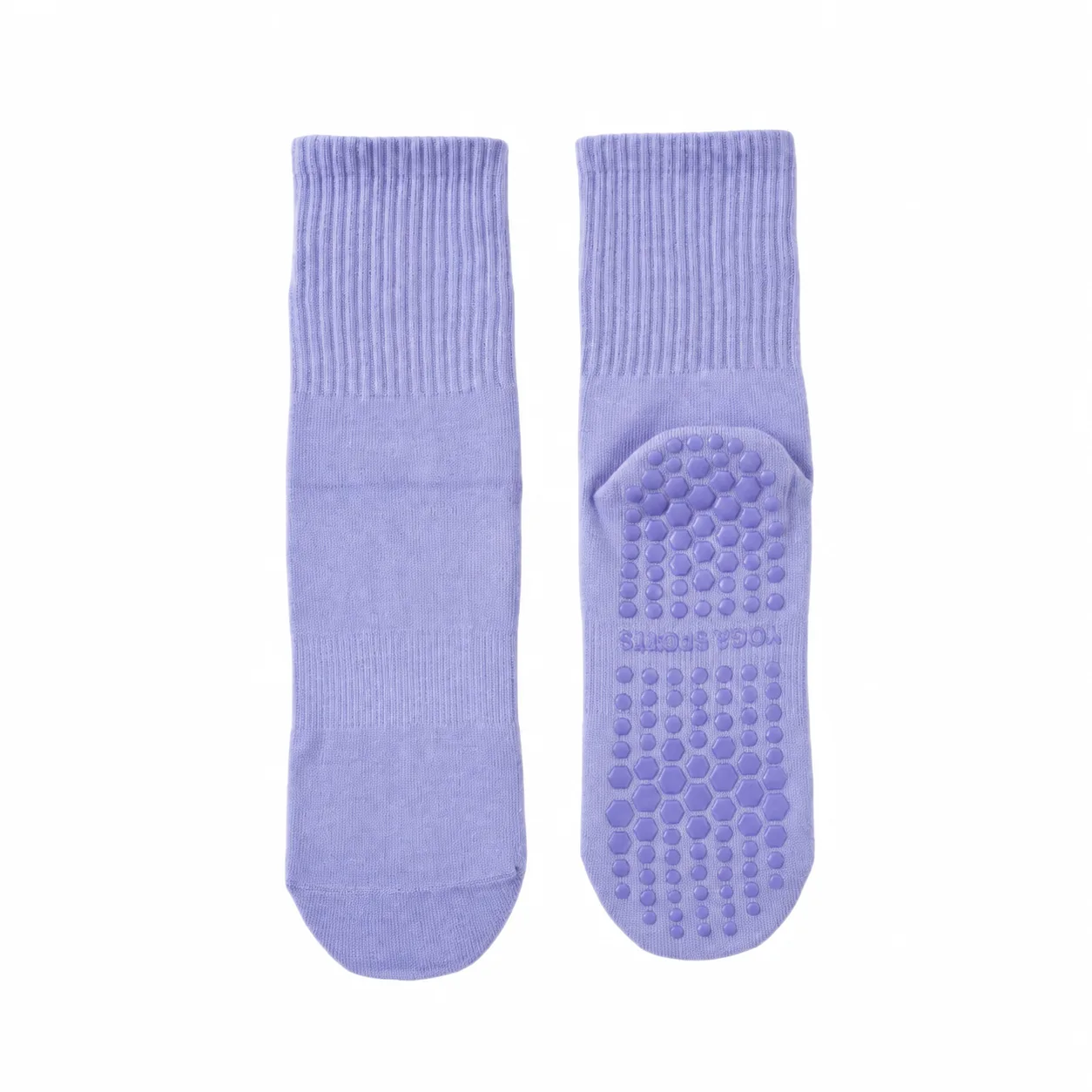
- Heel-Seam Alignment Check: Ensure the Y-heel pocket wraps the base of your heel with zero fabric bagging behind the Achilles tendon.
- Arch Band Tension Test: Slide one finger under your midfoot; the elastic rib band should hug the longitudinal arch without pinching the dorsal tendons.
- Tread Tackiness Inspection: Press the ball of your foot onto the wooden standing platform; if the silicone feels powdery or slick from dryer-sheet residue, wash the socks inside out in cold water without fabric softener before your next Reformer session.
Frequently Asked Questions
Do you need grip socks for Pilates, and why do Reformer and mat practitioners choose patterned silicone grip soles over regular socks?
Yes—patterned silicone grip soles provide essential shear traction on smooth Reformer carriages, rounded footbars, and studio mats across full-toe, open-toe, and crew styles, whereas standard socks slip under spring load. Practitioners also frequently wear slip-on slides over their grip socks when commuting to class rather than forcing rubberized soles into tight lace-up shoes.
What is the most common mistake people make with reformer pilates socks?
The most common mistake is wearing a pair that has lost its arch compression or is slightly too long in the toe box, which allows the foot to slide inside the sock during single-leg footwork and standing lunges, triggering compensatory toe clawing and knee valgus.
How does grip socks for reformer pilates affect alignment and muscle activation in Pilates?
Properly fitted grip socks for reformer pilates anchor the heel and metatarsal heads against the footbar and carriage, allowing you to drive through the posterior chain (glutes and hamstrings) and deep core stabilizers instead of wasting muscular effort tensing your calves and toes to prevent slipping.
Make it part of your practice
Explore the ivory cross-strap five-toe grip socks and check its product details before choosing your studio essentials.
View this piece