


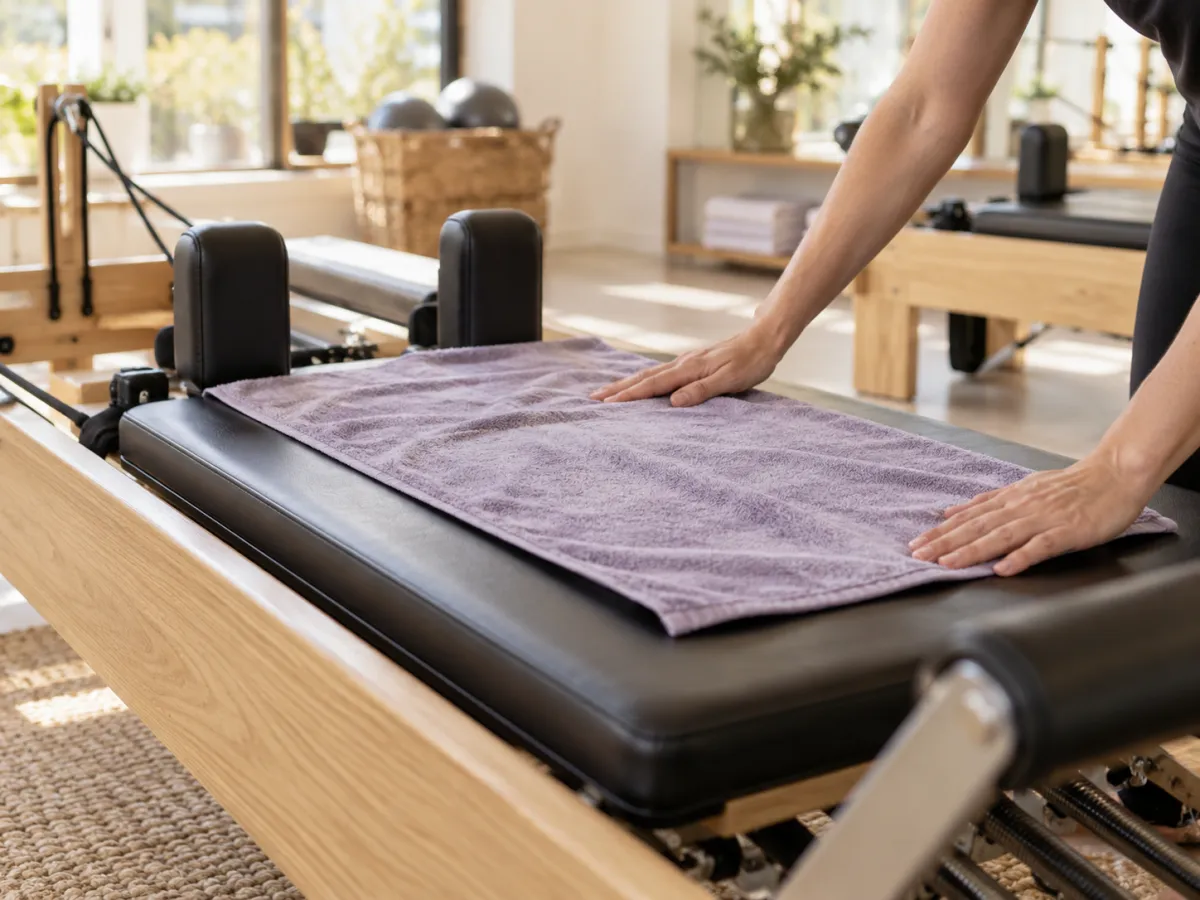
Learning how to wash microfiber gym towels properly—and how to wash microfiber towel without losing absorbency—is the difference between a Reformer or mat layer that wicks sweat on contact and a slick, water-repellent cloth that slides under your hands. Because split-conjugated microfiber relies on microscopic wedge-shaped channels rather than bulky cotton loops to trap moisture and create surface traction, standard household laundry habits like liquid fabric softener, heavy optical brighteners, and high-heat dryer cycles rapidly clog or fuse those fibers.
According to the PilatesFits catalog listing, the Pilates Towels collection provides towels for mat and studio sessions with per-style dimensions and care instructions: pack a towel for mat and studio sessions, and check dimensions and care instructions for each style.
What Degrades Pilates Towel: Sweat, Heat, Detergents & UV Exposure
Understanding how to wash microfiber gym towels begins with understanding how technical studio textiles function at the fiber level. Unlike traditional terry cotton, which absorbs liquid into a thick core and becomes heavy and sodden during a heated mat or intense Reformer session, studio microfiber uses finely split polyester-polyamide filaments. These micro-channels draw perspiration away from your palms, scapulae, and sacrum through capillary action while maintaining a flat, stable contact patch against the mat or vinyl carriage bed.
Four common laundry and post-class culprits sabotage this capillary structure:
- Cationic Surfactants in Fabric Softeners and Dryer Sheets: Liquid softeners and dryer sheets work by coating fibers in a thin, hydrophobic waxy film. When applied to a studio towel, that coating seals the microscopic wedge channels shut—destroying capillary wicking and making the towel feel slippery under closed-chain palmar or shoulder load.
- Excessive Thermal Stress: High water temperatures and hot tumble-dryer drums soften and curl synthetic polyamide tips. Once the split filament ends fuse together from heat exposure, the towel permanently loses both its soft tactile hand-feel and its moisture-holding capacity.
- Lint-Shedding Companion Loads: Washing a studio towel alongside cotton bath sheets, fleece hoodies, or terry robes forces loose cotton lint into the microfiber hooks, leaving the surface bumpy and less absorbent.
- Trapped Gym-Bag Moisture and Body Oils: Leaving a damp, sweat-soaked towel rolled inside a sealed tote bag allows sebum, studio vinyl cleaner residue, and skin salts to oxidize within the weave, creating persistent odor that mild cold rinses struggle to lift.
Before washing a new towel, always check the specific dimensions and care instructions for your style in the PilatesFits Pilates Towels collection so your cleaning routine aligns with that fabric’s exact weave and finish.
| Degradation Factor | Primary Fiber Impact | On-Mat / On-Carriage Symptom | Preventive Care Rule | Recovery Action (If Exposed) |
|---|---|---|---|---|
| Liquid Fabric Softener & Dryer Sheets | Coats split micro-channels with hydrophobic silicone or tallow film | Beads sweat on the surface; palms slip during plank and long stretch | Never use softeners, scent beads, or dryer sheets on studio towels | Run an extra warm rinse cycle with a splash of clear white vinegar |
| High-Heat Tumble Drying | Singes and fuses fine polyamide filament tips | Stiff, scratchy texture that slides on vinyl carriage pads | Air-dry flat or tumble dry on no-heat / air-fluff only | Cannot reverse melted fibers; prevent by air-drying in shade |
| Cotton Lint Cross-Contamination | Clogs micro-hooks with short natural lint fibers | Pill-covered surface and reduced capillary moisture uptake | Wash in a dedicated technical activewear load or large mesh laundry bag | Gently brush dry towel surface with a clean lint roller |
| Overdosing Heavy Liquid Detergent | Leaves un-rinsed surfactant buildup inside dense flat weaves | Sudsy or slick feel when hands begin to perspire mid-class | Use a small dose of clear, free-and-clear liquid detergent | Run a plain water rinse cycle without adding any soap |
| Damp Gym-Bag Storage After Class | Traps sebum, sweat salts, and bacteria inside warm folds | Musty odor returns immediately upon warming up in class | Hang towel open to air out immediately after leaving the studio | Pre-soak in cool water with diluted white vinegar before washing |
Step-by-Step Cleaning and Sanitization Protocol for How To Wash Microfiber Gym Towels
To wash microfiber towel without losing absorbency, treat your studio towel like technical activewear rather than household bath linen. Follow this four-stage protocol after your mat or Reformer sessions:
Step 1: Post-Session Air-Out and Load Separation
As soon as you return from the studio, unroll your towel and drape it over a breathable rack so moisture evaporates rather than fermenting in your gym bag. When you are ready to launder, separate your microfiber studio towels from cotton t-shirts, socks with exposed velcro, and terry bath towels. Placing your towel and your PilatesFits grip socks in separate mesh wash bags protects both the towel’s fine weave and your socks’ tread from abrasion.
Step 2: Water Temperature and Detergent Selection
Follow the care instructions specified for your towel style, selecting a cool or gentle warm wash cycle. Choose a mild, clear liquid detergent free of dyes, heavy perfumes, optical brighteners, and built-in fabric softeners. Powder detergents can leave undissolved granules trapped inside tight studio weaves, so liquid formulas in a conservative dose (roughly half the cap volume used for a heavy cotton load) rinse away far more cleanly.
Step 3: Deep-Clean Vinegar Rinse for Sweat and Oil Buildup
If you practice daily or attend heated mat sessions where body oils and studio equipment sprays accumulate on your towel, add a small splash of distilled white vinegar to the fabric-softener compartment during the rinse cycle. The mild acidity helps dissolve mineral salts, sebum, and residual detergent film without coating the synthetic filaments, restoring crisp capillary wicking. Avoid chlorine bleach and hydrogen peroxide, which weaken synthetic dye bonds and elastomer finishes.
Step 4: Low-Stress Drying to Preserve Flatness and Grip
Remove your towel promptly at the end of the spin cycle and shake it out from the corners so the perimeter seams lie straight. Hang it flat over a drying rack in a well-ventilated indoor space away from direct radiator heat or harsh midday sun, or use an air-fluff / no-heat dryer setting if permitted by the style’s care label. Because split microfiber holds very little water inside the polymer core itself, it dries rapidly without needing high thermal energy.
Storage, Inspection, and Replacement Signs for Wash Microfiber Towel Without Losing Absorbency
Consistent storage and periodic inspection keep your studio kit ready for every class:
- Fold Flat Rather Than Tightly Compressing: Store clean, bone-dry towels folded loosely on a shelf so sharp creases do not set permanently along the center line where your spine rests on the Reformer carriage.
- Perform the Water-Drop Absorption Test Monthly: Place a single drop of water on the dry towel surface. A clean, unclogged microfiber weave draws the droplet inward immediately; if the droplet sits beaded on top, run a stripping rinse with plain water and white vinegar to clear detergent residue.
- Inspect Perimeter Stitching and Surface Uniformity: Check that edges lie flat without curling and that the main torso and palm contact zones retain even texture. When a heavily used towel eventually shows thinned patches or permanent thermal stiffness that no longer responds to a stripping rinse, retire it to household cleaning and rotate in a fresh studio towel.
Frequently Asked Questions
What should you consider when choosing a Pilates or Reformer towel for carriage hygiene, grip, and fabric feel?
When packing a Pilates or reformer towel for mat and studio sessions, shoppers should check dimensions and care instructions for each style so the towel fits the mat or Reformer carriage and stays hygienic between classes. Following each style’s care instructions prevents detergent buildup and keeps the fabric soft and absorbent against the skin.
What is the safest way to handle how to wash microfiber gym towels without damaging the material?
Wash microfiber gym towels separately from lint-shedding cotton fabrics using cool or gentle warm water and a small amount of clear liquid detergent without fabric softener or bleach. Air-drying flat or using a no-heat setting prevents synthetic filaments from fusing and preserves full sweat absorption.
How often should you perform maintenance for wash microfiber towel without losing absorbency?
Wash your Pilates towel after every mat or Reformer session so sweat salts and body oils do not set into the weave, and let it air out immediately if you cannot run a wash right away. Every few weeks, a plain water rinse with a splash of white vinegar clears any residual detergent film to keep capillary absorption at peak performance.
Make it part of your practice
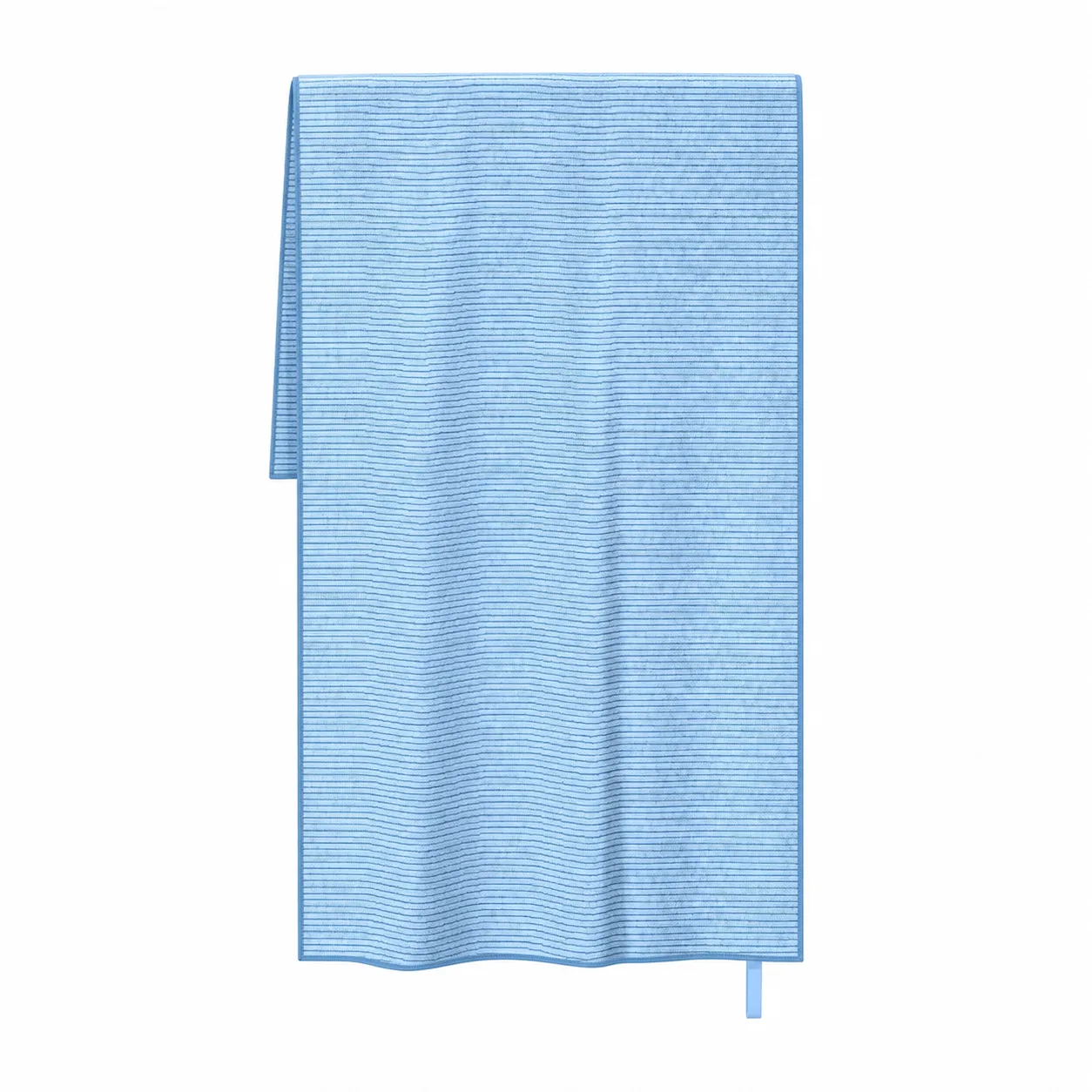
Explore the lavender ribbed roll-up studio towel and check its product details before choosing your studio essentials.
View this piece