


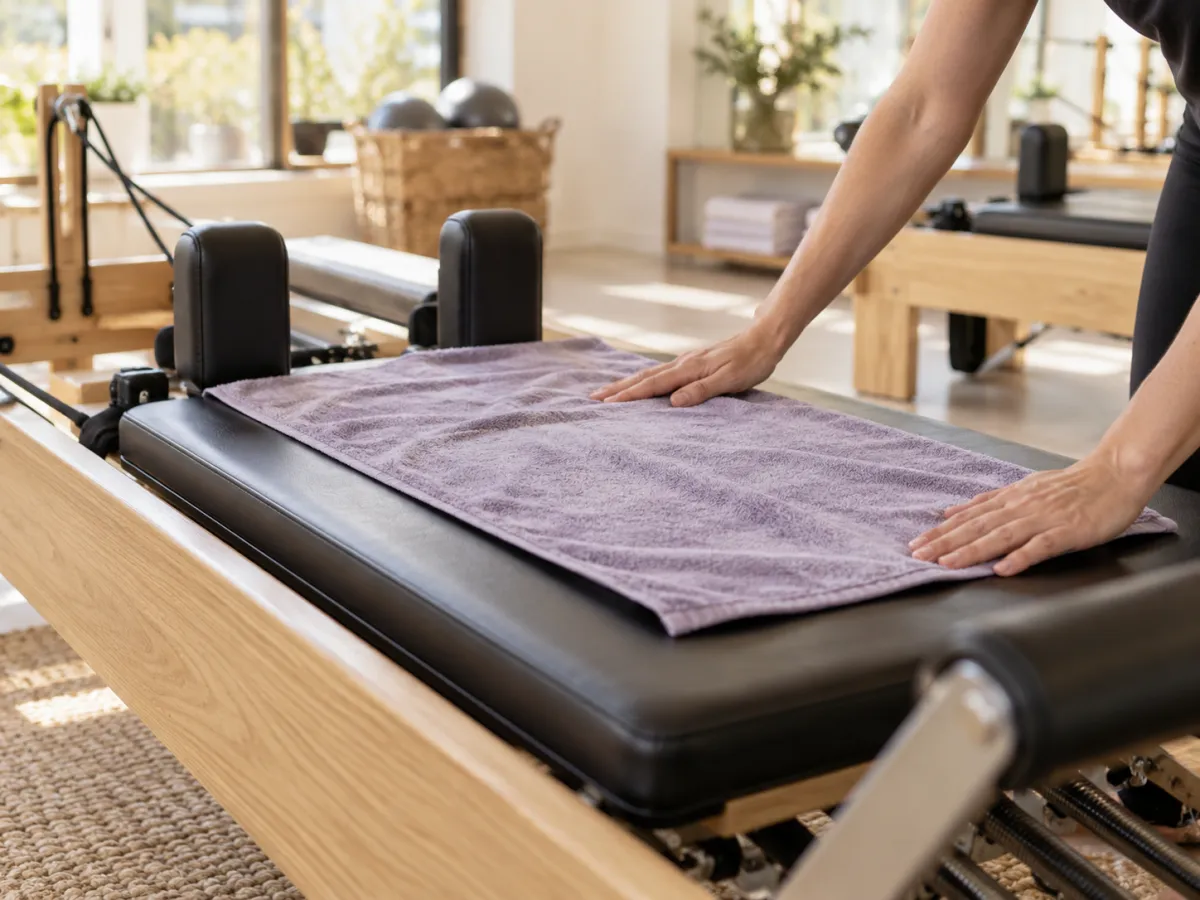
When you are moving through a high-tempo Reformer flow or a warm mat sequence, managing pilates studio hygiene tips alongside sweaty hands and back on pilates reformer comes down to pairing the right personal barrier with deliberate biomechanical setup. A dedicated towel layer prevents upper-back sliding on vinyl upholstery during supine work, absorbs palmar moisture before you transition to the footbar or straps, and keeps shared studio apparatus clean between classes without disrupting spinal articulation.
According to the PilatesFits catalog listing, the Pilates Towels collection provides towels for mat and studio sessions with per-style dimensions and care instructions.
How Pilates Studio Hygiene Tips Fits Into a Complete Pilates Training System
Shared Reformer carriages, headpieces, and studio mats accumulate skin oils, misted studio cleaners, and perspiration across back-to-back sessions. Building an effective personal hygiene system means layering three complementary pieces of gear that each govern a specific contact zone:
- Carriage and Mat Barrier: A dedicated towel from the PilatesFits Pilates Towels collection sits directly over the vinyl carriage pad or studio mat, creating a clean, sweat-wicking interface under your thoracic spine, sacrum, and forearms.
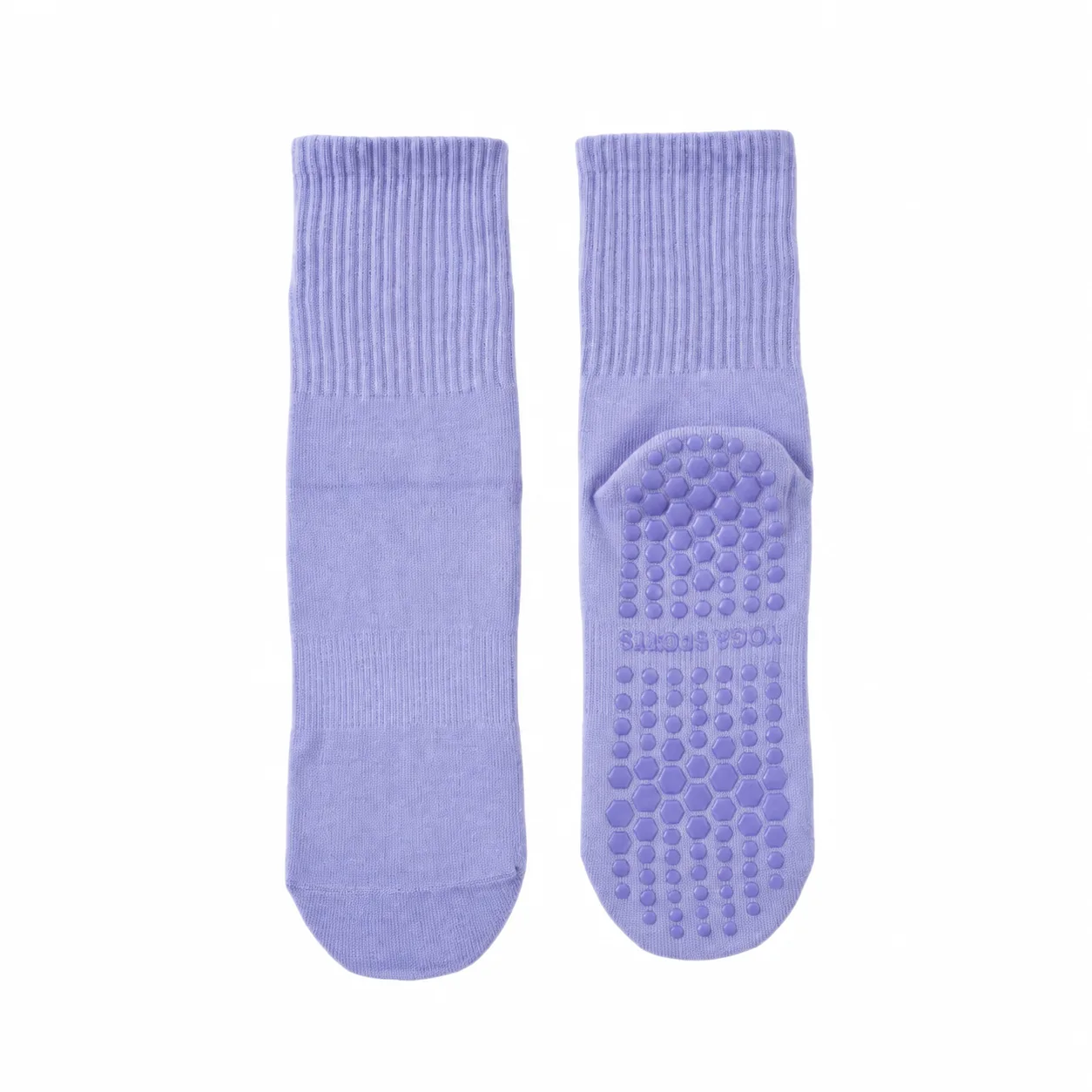
- Footbar and Carriage Traction: Pairing your towel with dedicated grip footwear from the PilatesFits Pilates Socks collection isolates foot moisture and secures metatarsal traction during standing lunges, elephant, and footwork series.
- Hand and Strap Control: Keeping a folded corner or secondary hand zone accessible at the front edge of the carriage lets you blot palmar moisture between supine abdominal sets and quadruped plank transitions so your wrists stay stacked rather than compensating for a slick grip.
| Studio Contact Zone | Common Hygiene & Sweat Challenge | Biomechanical Risk When Unmanaged | Smart Prop & Protocol Pairing | Verification Check Before Class |
|---|---|---|---|---|
| Supine Carriage Surface | Sweaty upper back sliding toward shoulder blocks during bridging or short spine | Cervical compression and loss of scapular anchor on the vinyl pad | Lay a flat, low-profile studio towel smoothly across the carriage torso zone | Confirm towel width and length match the carriage pad without bunching |
| Footbar & Standing Platform | Damp arches or heels slipping during single-leg footwork and standing splits | Knee valgus drift and involuntary plantarflexion under spring tension | Pair carriage towel placement with non-slip grip socks on the feet | Check sole tread cleanliness and follow per-style washing instructions |
| Hand Loops & Wooden Handles | Sweaty hands losing friction during long stretch, rowing, or chest expansion | Over-gripping with finger flexors and radial wrist deviation | Blot palms on the towel edge before loading heavy or light spring transitions | Keep a dry corner folded near the carriage frame for quick mid-set wiping |
| Headrest & Cervical Pad | Facial oil and hairline perspiration pooling between supine and prone sets | Chin jutting or neck tension when avoiding direct contact with damp vinyl | Extend the top edge of your towel or fold a clean upper border over the headrest | Verify whether your towel style is rectangular or shaped around shoulder blocks |
| Shared Studio Mat & Box | Forearm slipping during long-box swan, plank, or side-lying series | Serratus anterior fatigue and shoulder shrugging as elbows slide outward | Drape your studio towel flat across the sitting box top before prone extensions | Smooth out any folded seams under the ribcage or anterior pelvis |
Progressive Sequence Combining Pilates Studio Hygiene Tips and Sweaty Hands And Back On Pilates Reformer
Rather than stopping mid-workout to wipe down sliding vinyl or readjust bunched fabric, structure your Reformer and mat session into three progressive blocks that account for rising body temperature and perspiration.
Block 1: Warm-Up Activation and Dry-Surface Anchoring
During the opening footwork, pelvic curl, and hundred preparation, perspiration is minimal, making this the ideal window to set your tactile anchors. Smooth your towel flat from the base of the shoulder blocks to the lower edge of the carriage so your sacrum and inferior scapular angles rest on an even, crease-free surface. Focus on wide clavicles and neutral pelvic weight while your skin and fabric are still dry.
Block 2: Peak Control Under Rising Perspiration
As you move into unilateral leg work, stomach massage, long stretch, and short box abdominal series, core temperature rises and sweaty hands and back on pilates reformer become active mechanical variables. Before stepping onto the carriage for long stretch or kneeling quadruped work, press your palms briefly into the front edge of your towel to clear surface moisture. Maintain upward axillary engagement and active latissimus recruitment so you push through the heel of the palm into the footbar rather than relying on skin friction alone.
Block 3: Decompression, Articulation, and Post-Session Care
Finish with short spine massage, eve’s lunge, and mermaid side bends. Because articulated rolling exercises press the full length of your spine into the carriage, verify that your towel has not crept upward toward the headrest. Once class concludes, fold the used top surface inward so studio perspiration stays contained inside the bundle, wipe down any exposed apparatus surfaces with the studio’s disinfectant wipes, and launder your towel according to its individual care label before your next session.
How to Progress Challenge Week Over Week Without Buying Redundant Gear
You do not need an overflowing gym bag to advance your Reformer control or maintain studio cleanliness. Progress your sessions systematically using three mechanical variables while keeping your core towel-and-sock kit streamlined:
- Extend Tempo Under Tension: Slow your eccentric carriage return to a four-second count during footwork, scooter, and chest expansion. Slower eccentric phases demand deeper transverse abdominis and scapular stabilizer endurance, reducing the jerky momentum that causes sweaty backs to shift on the pad.
- Lengthen Lever Arms Safely: Once your palmar grip and thoracic anchor remain steady on a flat towel surface, progress from bent-knee coordination to extended-leg variations or hover transitions without adding extra bulky pads.
- Rotate Clean Studio Layers: Check the dimensions and care instructions for each towel style in your rotation so you always have a freshly laundered, residue-free towel ready for back-to-back training days, avoiding fabric softeners that coat fibers and reduce moisture absorption.
Limitations and Practical Studio Boundaries
Every studio apparatus layout is slightly different. Towel dimensions and carriage cutout shapes vary by brand and studio Reformer model, so a standard rectangular mat towel will not wrap around shoulder blocks the way a custom-cut carriage towel does. Likewise, you should not assume every towel features silicone backing unless specified on the individual style, and dimensions, fabric weave, and washing instructions must always be verified per towel style before use.
Frequently Asked Questions
What should you consider when choosing a Pilates or Reformer towel for carriage hygiene, grip, and fabric feel?
When packing a Pilates or reformer towel for mat and studio sessions, shoppers should check dimensions and care instructions for each style so the towel fits the mat or Reformer carriage and stays hygienic between classes. Verifying length and width upfront prevents excess overhang near the Reformer tracks or springs.
How do you combine pilates studio hygiene tips with other Pilates props or outfits?
Pair a flat, appropriately sized carriage towel with dedicated grip socks and form-fitting, moisture-wicking apparel. The towel establishes a clean, absorbent barrier for your back, forearms, and hands on shared vinyl pads, while grip socks secure your foot placement on the footbar and standing platform.
What is the best way to progress sweaty hands and back on pilates reformer once basic movements feel easy?
Once your foundational supine and kneeling exercises feel stable, progress by slowing your eccentric spring return, narrowing your base of support, and integrating brief palmar blotting into your setup transitions between blocks rather than relying on passive friction against the carriage.
Make it part of your practice
Explore the lavender ribbed roll-up studio towel and check its product details before choosing your studio essentials.
View this piece