


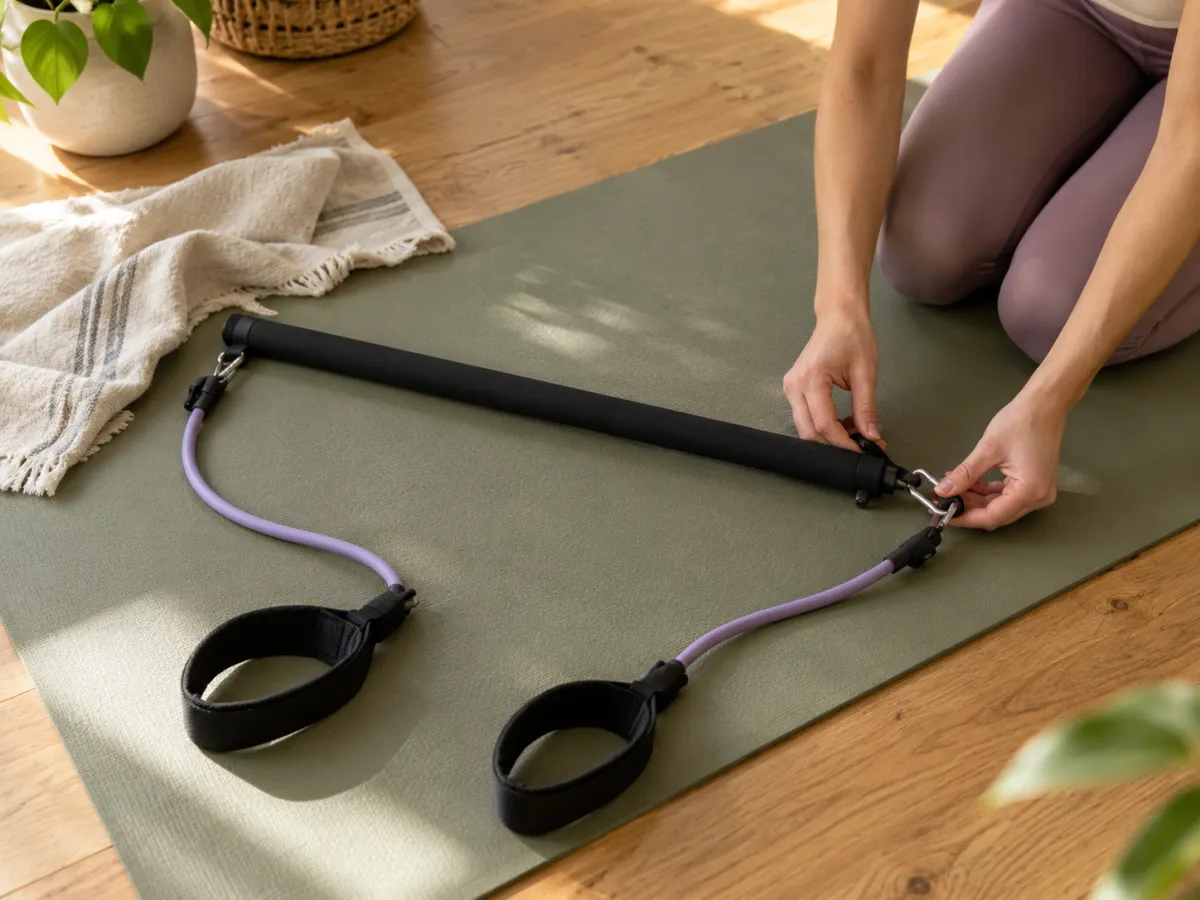
Completing a Pilates bar leg and glute workout exposes your portable apparatus to floor friction, foot-strap compression, and perspiration that upper-body flows rarely create, making post-session cleaning essential whenever you practice squats and lunges with Pilates bar setups. Because stepping onto foot loops and stretching elastic cords across a long lower-body excursion path presses nylon webbing, swivel eyelets, and foam grips against your shoes or mat, a structured maintenance routine prevents premature cord fatigue and hardware corrosion.
According to the PilatesFits catalog listing, the Pilates Bars & Kits collection covers detachable Pilates bars and kits with resistance bands, compared by assembled length, included accessories, and resistance options.
What Degrades Pilates Bar: Sweat, Heat, Detergents & UV Exposure
During a high-tension Pilates bar leg and glute workout, every part of a portable kit experiences simultaneous mechanical and chemical stress. Understanding how each material breaks down helps you protect your gear before surface wear turns into structural failure.
First, perspiration salts and skin oils accumulate rapidly on closed-cell foam grip sleeves during standing lower-body sets. If left uncleaned after squats and lunges with Pilates bar intervals, dried salt crystals stiffen the foam pores, cause flaking under hand pressure, and can migrate into the internal metal connector joints where moisture triggers oxidation.
Second, underfoot grit and abrasive shoe treads attack the nylon foot straps and elastic cord sleeves. Whenever you anchor foot loops beneath your arches for squats or split lunges, tiny floor particles trapped under your soles grind into the nylon stitching and rub against the latex or elastomer tubing where it exits the carabiner plug.
Third, harsh household detergents, bleach, high-proof alcohol wipes, heat, and direct UV sunlight chemically degrade both elastic bands and foam grips. Strong solvents strip protective plasticizers from resistance tubing—leaving the surface chalky, sticky, or brittle—while direct sunlight or hot car trunks accelerate ozone cracking along high-tension anchor zones.
Step-by-Step Cleaning and Sanitization Protocol for Pilates Bar Leg And Glute Workout
Use the five-row material care and cleaning matrix below to sanitize each component safely after a Pilates bar leg and glute workout:
| Kit Component | Primary Stress During Squats & Lunges | Safe Cleaning Agent & Tool | Drying & Post-Session Action | Products & Habits to Avoid |
|---|---|---|---|---|
| Foam Grip Sleeves | Hand sweat, body oils, and grip torsion during front-racked or back-racked holds | Soft microfiber cloth dampened with lukewarm water and a drop of mild dish soap | Wipe with a clean water-dampened cloth, blot with a dry towel, and air-dry in shade | Bleach sprays, high-proof rubbing alcohol, or abrasive scrubbing pads |
| Elastic Resistance Bands | High-excursion tensile stretch and contact against outer legs | Lint-free cloth dampened with plain lukewarm water only | Lay flat in a ventilated room away from heaters and direct window sunlight | Submerging fabric-sleeved cords in water or spraying chemical degreasers |
| Nylon Foot Straps & Buckles | Direct underfoot compression, arch sweat, and floor dust | Soft brush for dry grit followed by a mild soap-dampened cloth spot wipe | Blot webbing and buckle hardware dry before coiling into a storage bag | Performing standing lunges on bare concrete, asphalt, or rough outdoor decks |
| Detachable Metal Connectors | Moisture seepage at seam lines and bending load across the shaft | Dry microfiber towel around locking pins and internal ferrule collars | Leave segments unclipped or fully dried before reassembling or packing away | Packing damp bar segments inside a sealed non-breathable plastic pouch |
| Swivel Eyelets & Carabiners | Rotational friction as bar angles shift from squat bottom to standing | Dry lint-free cloth to clear dust from rotating end-cap rings and clip gates | Spin eyelets gently by hand to verify smooth, unobstructed rotation | Applying heavy grease or wet lubricants that trap floor grit inside bearings |
Storage, Inspection, and Replacement Signs for Squats And Lunges With Pilates Bar
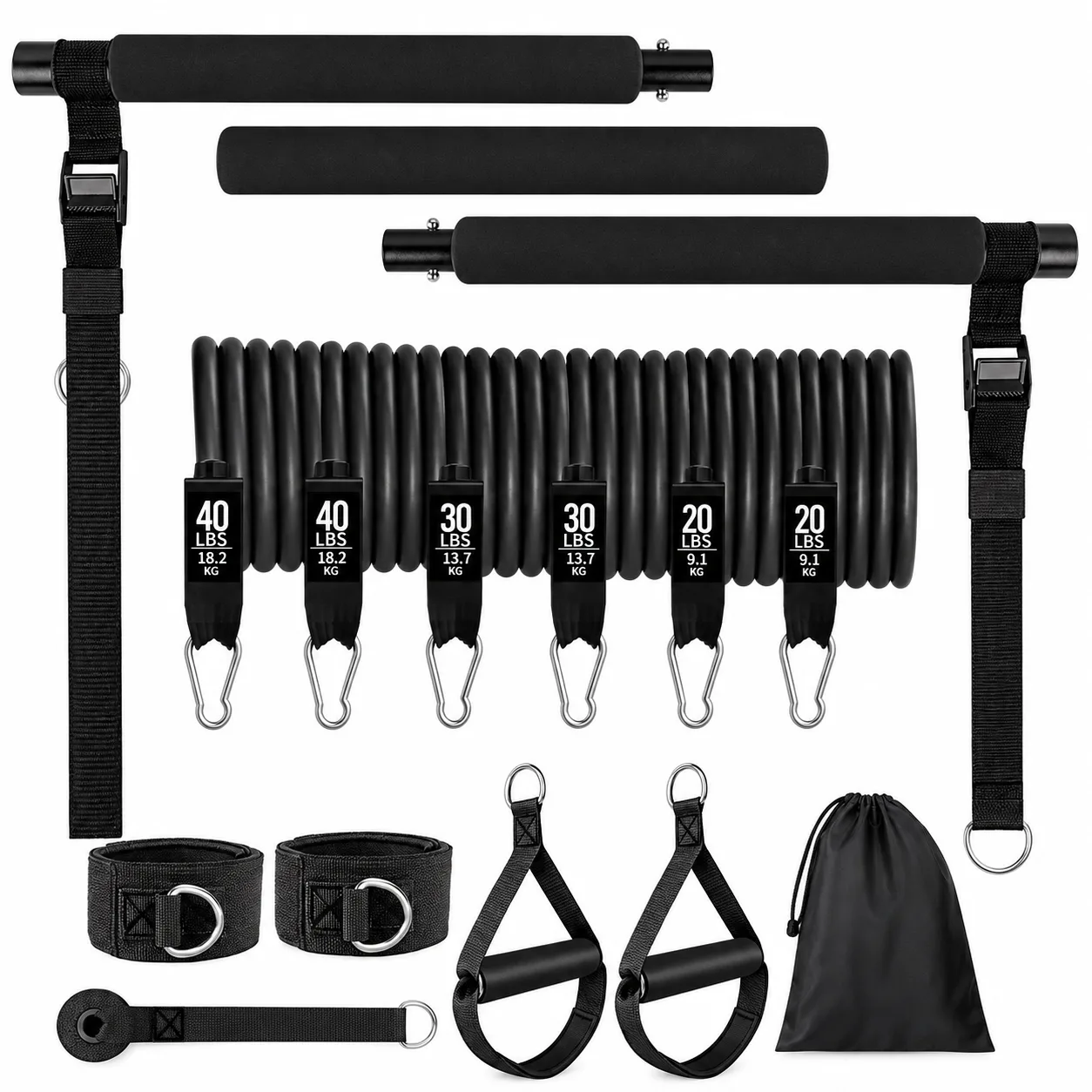
Before loading heavy lower-body tension from the PilatesFits Pilates Bar collection, perform this pre-session inspection and storage routine to keep squats and lunges with Pilates bar sets safe:
- Inspect cord anchor plugs under light hand stretch: Hold each resistance tube near its carabiner plug and stretch gently under bright indoor light. Retire any band that shows hairline surface splits, chalky white blooming, thinned walls, or frayed fabric sleeving near the connector.
- Verify connector lock seating and shaft alignment: Assemble the detachable shaft segments and check that every locking pin or thread sits completely flush without lateral clicking or rotational play before placing the bar across your shoulders or hips.
- Check foot-strap box stitching and buckle teeth: Examine the stitched fold where the nylon loop meets the metal ring and sliding buckle. Replace the strap if threads are pulled loose or if the webbing slips under arch pressure.
- Store unclipped at zero tension in a cool, dark closet: Unclip bands from the bar ends after drying, coil them in loose circles without knots, and store them alongside supplemental loops from the Pilates Resistance Bands collection so you can rotate fresh resistance levels during leg and glute blocks.
Frequently Asked Questions
How do portable 3-section Pilates bar kits work, and what resistance features prevent plateauing once the base band feels easy?
A portable multi-section Pilates bar connects into a padded shaft with rotating end-cap eyelets and foot straps that simulate spring-style tension on the floor. To prevent plateauing once the base band feels easy during a Pilates bar leg and glute workout, select a kit with carabiner-clipped stackable resistance bands and adjustable nylon straps so you can combine multiple cord weights rather than relying on a single fixed light tube.
What is the safest way to handle a Pilates bar leg and glute workout without damaging the material?
Always practice squats and lunges with Pilates bar setups on a clean exercise mat wearing smooth-soled indoor shoes, grip socks, or bare feet so rough tread patterns do not abrade the nylon foot loops, and allow the swivel end-caps to rotate freely so the elastic cords never twist around the shaft.
How often should you perform maintenance for squats and lunges with a Pilates bar?
Wipe the foam grips, resistance cords, and foot straps with a damp microfiber cloth after every workout to remove sweat and floor dust, air-dry all parts completely in the shade before storage, and inspect the band anchor plugs, strap stitching, and locking joints before each lower-body session.
Make it part of your practice
Explore the dusty pink pilates bar with end rings and check its product details before choosing your studio essentials.
View this piece