


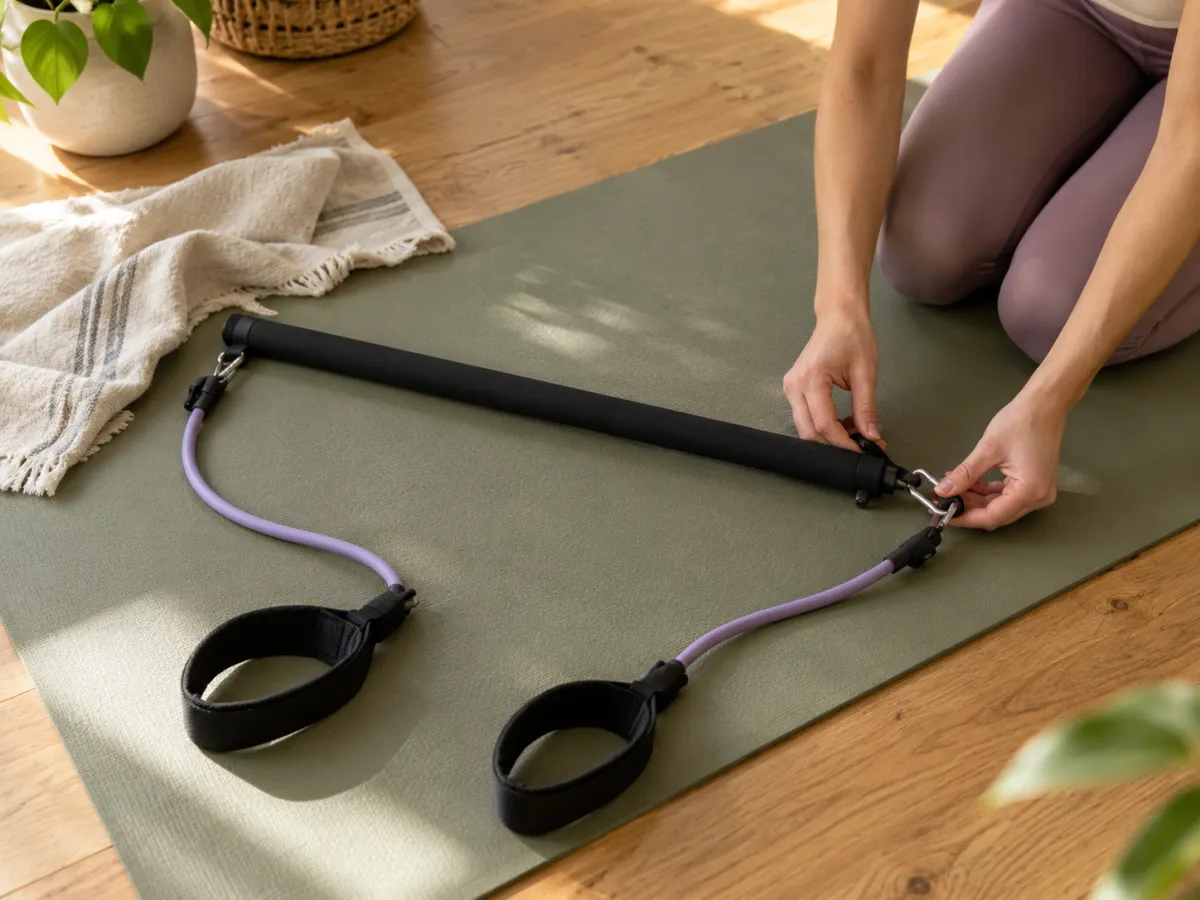
Deciding how to program a Pilates bar vs resistance bands—and understanding where a portable Pilates bar vs Reformer fits into your weekly schedule—unlocks progressive full-body sessions without filling your floor space with redundant equipment. While standalone flat bands excel at open-chain joint isolation and a studio Reformer provides a gliding carriage with mechanical spring tracks, a detachable Pilates bar kit bridges the two by linking both hands or feet to a rigid shaft under continuous elastic vector tension.
According to the PilatesFits catalog listing, the Pilates Bars & Kits collection covers detachable Pilates bars and kits with resistance bands, compared by assembled length, included accessories, and resistance options.
How Pilates Bar Vs Resistance Bands Fits Into a Complete Pilates Training System
To build a balanced mat and apparatus practice, it helps to examine the mechanical role of each tool rather than treating them as mutually exclusive substitutes.
First, compare pilates bar vs resistance bands for axial symmetry and closed-chain feedback. Loose elastic loops allow each arm or leg to move independently, which is ideal for rotator cuff warm-ups and unilateral hip abduction. However, when you press or row a rigid Pilates bar, the padded shaft acts as a tactile alignment guide—teaching your shoulders, ribs, and pelvis to stay square against asymmetrical core rotation.
Second, evaluate pilates bar vs reformer for anchor mechanics and progressive overload. On a studio Reformer, your body glides horizontally against steel springs while the footbar and shoulder blocks remain fixed to the frame. With a portable Pilates bar kit, your torso or feet act as the stationary anchor on the mat while the bar and attached cords move through space. As experienced Reddit practitioners note, a basic step-on bar with a single light cord will quickly feel easy once your neuromuscular coordination adapts; selecting a kit with carabiner-clipped stackable bands lets you scale load across lower- and upper-body blocks.
Third, layer complementary small props purposefully. Adding a mini stability ball beneath your sacrum or a magic circle between your inner thighs while holding the Pilates bar overhead recruits deep transverse abdominis and adductor co-contraction without requiring bulky machinery.
Progressive Sequence Combining Pilates Bar Vs Resistance Bands and Pilates Bar Vs Reformer
Use the five-row programming and prop-pairing blueprint below to structure progressive full-body blocks that translate seamlessly between home mat work and studio Reformer sessions:
| Training Block & Focus | Pilates Bar Vs Resistance Bands Setup | Pilates Bar Vs Reformer Biomechanical Translation | Complementary Prop Layer | Progression Lever (When Base Tension Feels Easy) |
|---|---|---|---|---|
| Warm-Up & Scapular Activation | Hold the assembled bar wide with foot loops anchored under arches in supine tabletop | Mirrors Reformer Footwork and Arm Work by linking core rib-to-hip connection with shoulder depression | Place a folded towel or thin pad beneath the neutral cervical spine | Slow the eccentric return and pause at peak cord tension before flexing knees |
| Supine Core & Pelvic Bridge Flow | Anchor the padded bar across the anterior hips with foot straps under midfoot arches | Replicates Reformer Pelvic Lift and Bottom Lift resistance against hip extension | Squeeze a Pilates ring or mini ball between the knees to engage adductors | Clip an additional stackable resistance cord to each swivel end-cap |
| Seated Spine Articulation & Rowing | Sit tall with legs extended and foot loops anchored as you roll down and row elbows wide | Translates Reformer Short Box Round Back and Long Box Pulling Straps to the floor | Loop a flat resistance band around the mid-back for tactile posterior rib feedback | Cinch the nylon foot-strap buckles shorter to increase baseline cord tension |
| Standing Lower-Body Sculpt | Step onto foot straps with the bar racked across upper traps or held at chest height for squats and lunges | Mirrors Reformer Standing Splits and Scooter knee-tracking and glute stabilization | Wear high-traction grip socks on a firm cushioned mat to prevent foot slip | Combine medium and heavy clip-on cords plus a flat loop above the knees |
| Decompression & Thoracic Extension | Lie prone with hands wide on the bar and cords anchored lightly for swan prep | Echoes Reformer Long Box Swan by guiding symmetrical scapular glide and thoracic lift | Rest forehead on a small mat pad during the bottom reset of each repetition | Extend lever arm overhead while keeping lower ribs anchored to the mat |
How to Progress Challenge Week Over Week Without Buying Redundant Gear
When combining a kit from the PilatesFits Pilates Bar collection with your existing mat gear, apply these four progressive overload levers week over week:
- Stack carabiner-clipped cords by movement pattern: Rather than using one fixed resistance level for your entire session, clip lighter tension for supine arm circles and swan prep, then clip multiple stackable bands together for standing squats, lunges, and hip bridges.
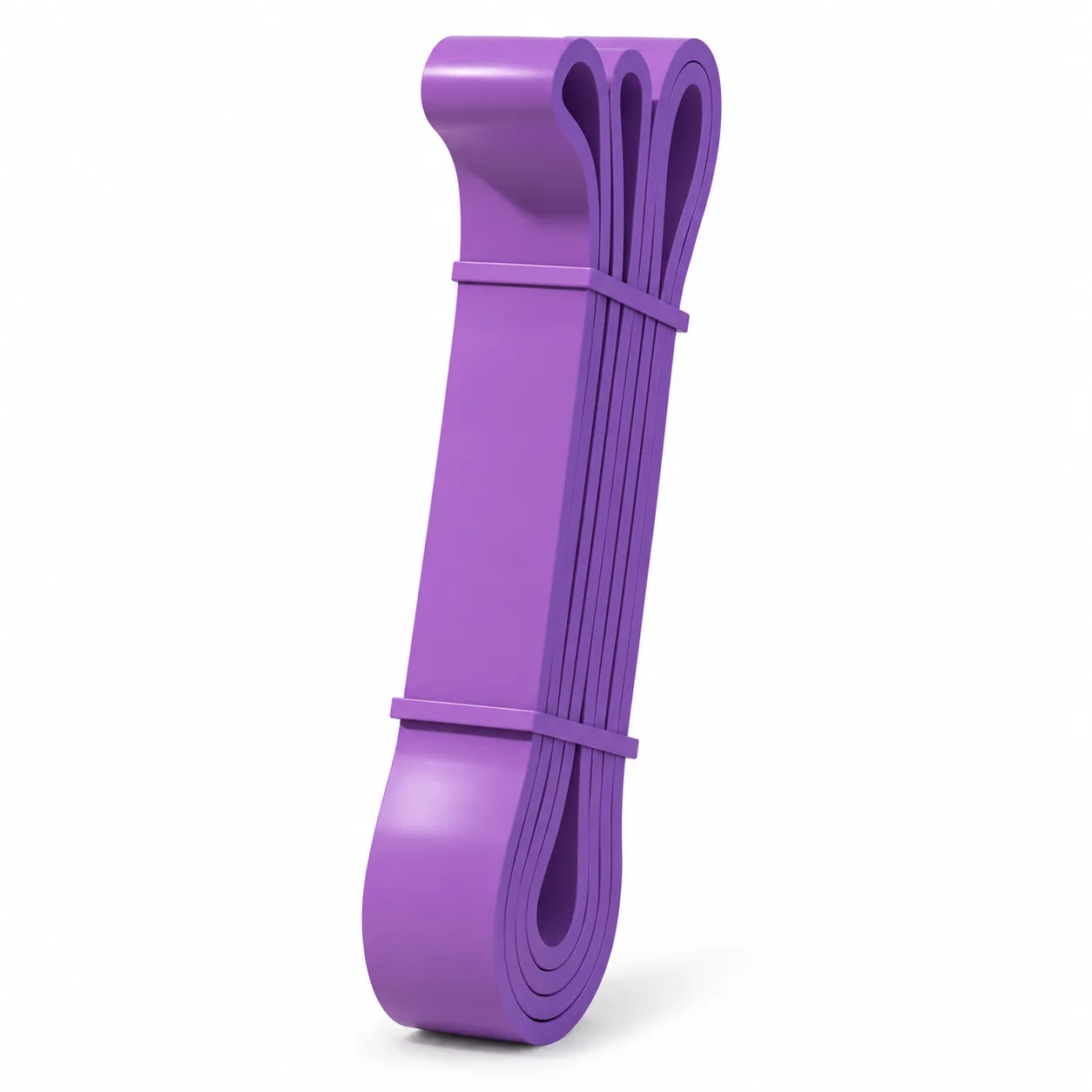
- Pair flat bands for multi-planar resistance: Combine your linear bar presses with lateral loop tension from the Pilates Resistance Bands collection placed around your thighs or forearms to challenge frontal-plane glute and scapular stabilizers simultaneously.
- Manipulate lever length and tempo: Moving the bar further from your center of mass—such as pressing overhead during a supine tabletop hold—and extending the eccentric lowering phase increases time under tension without adding hardware clutter.
- Use home bar sessions to sharpen studio Reformer form: Practice symmetrical wrist stacking and ribcage closure with your portable bar at home so your transitions on the moving studio Reformer carriage become smoother and more controlled.
Frequently Asked Questions
How do portable 3-section Pilates bar kits work, and what resistance features prevent plateauing once the base band feels easy?
A portable multi-section Pilates bar assembles into a rigid foam-padded shaft with rotating end-cap eyelets and adjustable foot loops that create spring-like elastic resistance on a mat. To prevent plateauing once the base band feels easy, look for kits with carabiner-clipped stackable resistance cords and adjustable nylon straps so you can combine multiple tension levels as your strength improves.
How do you combine pilates bar vs resistance bands with other Pilates props or outfits?
Use the Pilates bar for bilateral closed-chain movements like supine leg presses, roll-downs, and standing squats while layering a flat resistance band around the thighs or forearms for lateral abduction tension, and wear form-fitting apparel with non-slip grip socks so straps and cords never snag on loose fabric.
What is the best way to progress pilates bar vs reformer once basic movements feel easy?
Progress your portable Pilates bar routine by clipping stackable heavier bands to the swivel ends, shortening the nylon webbing buckles to eliminate bottom-range slack, slowing your eccentric tempo, and transferring those bilateral alignment habits directly to heavier spring settings on a studio Reformer.
Make it part of your practice
Explore the purple pilates bar with resistance cords and check its product details before choosing your studio essentials.
View this piece