


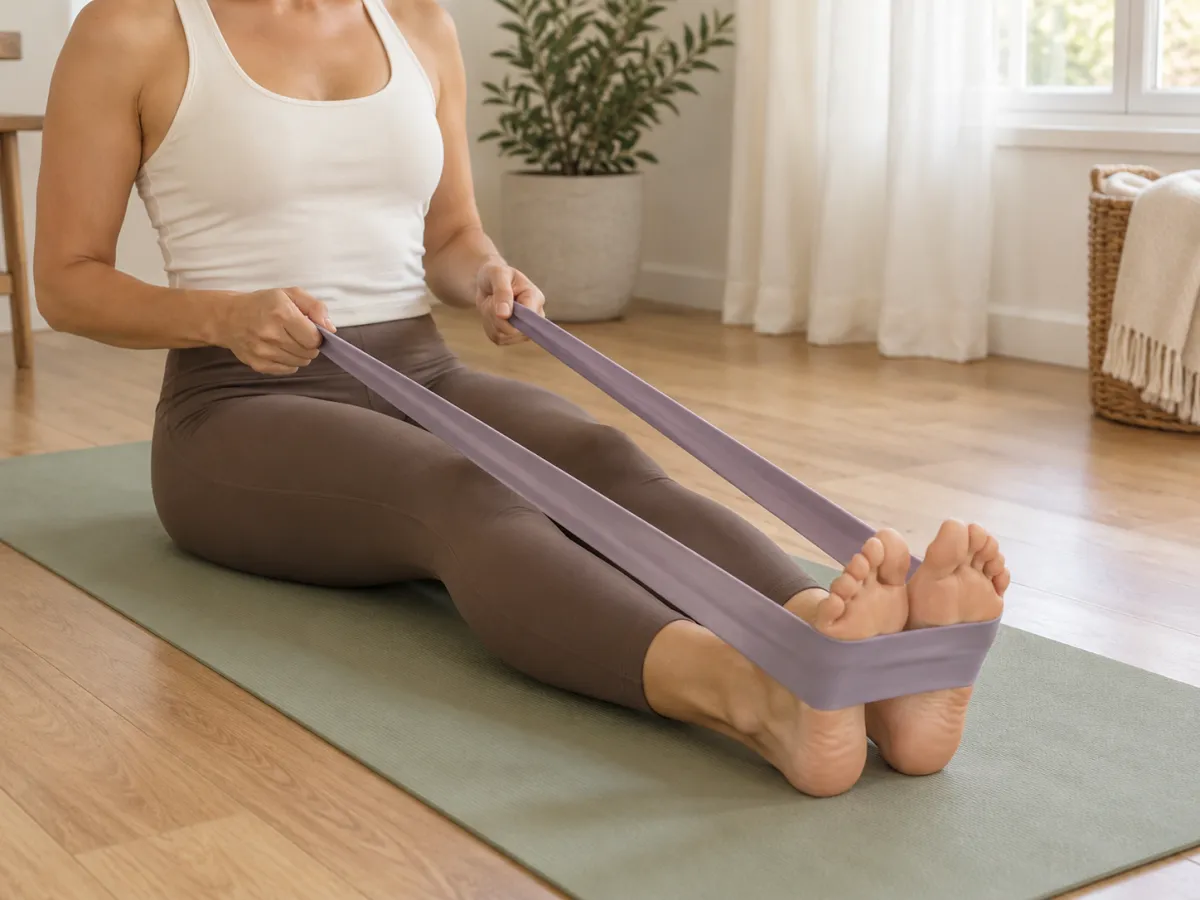
Comparing pilates resistance bands and evaluating long resistance bands for pilates requires looking beyond simple color labels to understand how band format, material elasticity, and progressive tension levels behave across mat and Reformer-inspired movements. While a short glute loop excels at lateral hip abduction and knee-tracking stability during bridged marches, it cannot replicate the extended lever length required for seated rowing, supine Leg Circles, or overhead Swan prep—movements that demand the smooth elongation curve of a full-length flat or continuous long loop band.
According to the PilatesFits catalog listing, the Pilates Resistance Bands collection includes portable loop and long-band formats organized by listed resistance level.
By matching loop and long-band formats to specific joint mechanics—and stepping up across multiple tension ratings as your neuromuscular control adapts—you can build a compact home setup that delivers genuine progressive overload. Browse portable loop and long-band options in the PilatesFits Pilates Resistance Bands collection and pair them with low-friction discs from the PilatesFits Pilates Sliders collection.
Key Specifications to Compare When Shopping for Pilates Resistance Bands
To separate purpose-built pilates resistance bands from one-note novelty props, evaluate three structural specifications that govern how a band loads your muscles through concentric and eccentric phases.
Format Architecture: Mini Loop Bands vs Long Resistance Bands For Pilates
A complete home Pilates band kit relies on two distinct geometries working together. Closed mini loop bands wrap around the thighs, shins, or ankles to create continuous lateral abduction tension against the gluteus medius and deep external rotators during Clamshells, Side-Lying Leg Lifts, and Shoulder Bridge pulses. In contrast, long resistance bands for pilates—available as open-ended flat ribbons or long continuous loops—anchor around the arches of your feet or shins while your hands grip the ends, simulating the cable-and-pulley trajectory of a studio Reformer or Cadillac tower.
Material Composition and Elongation Curve (Fabric vs Latex vs TPE)
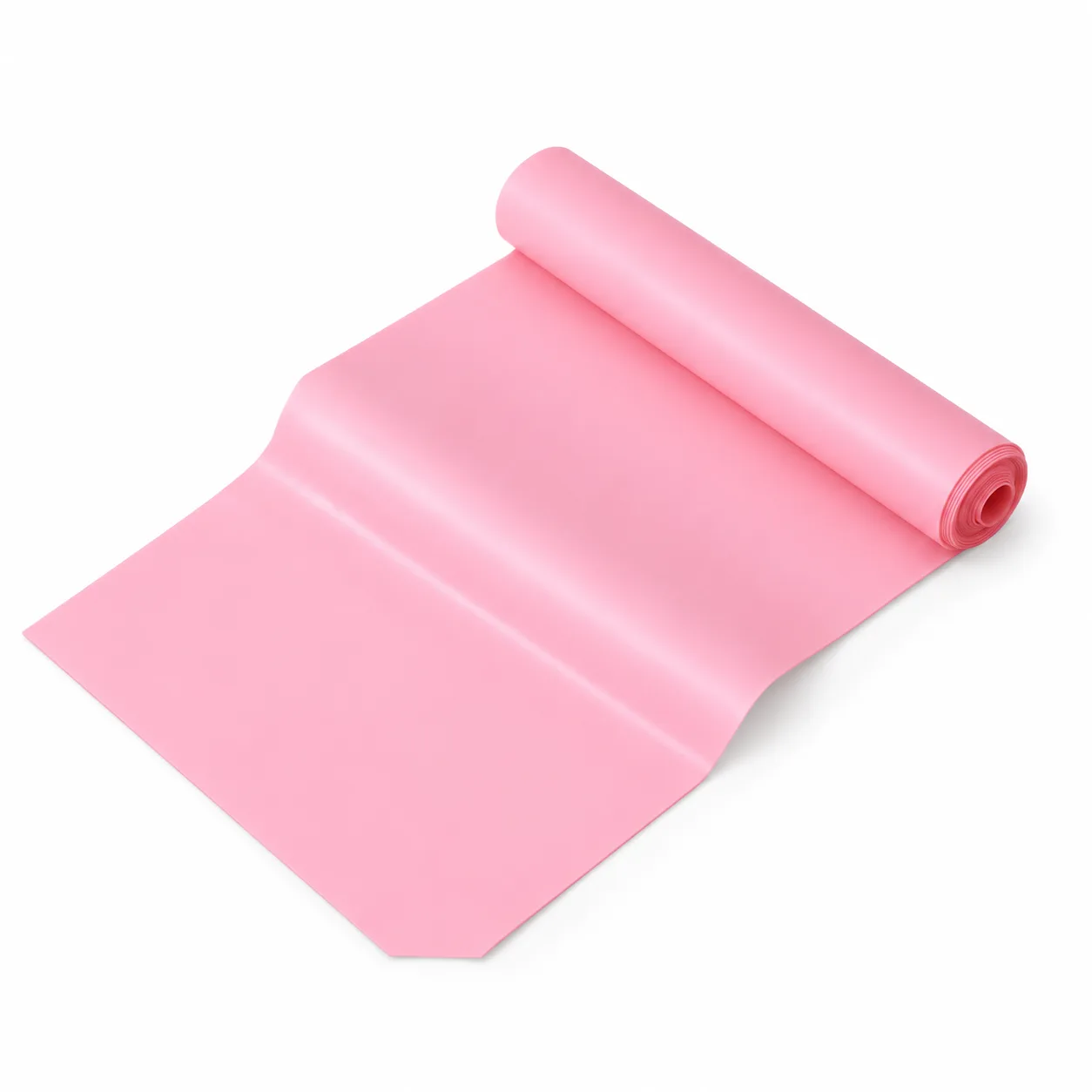
Material choice dictates both skin comfort and stretch elongation ratio. Woven fabric glute loops with internal grip strips resist rolling up the thighs during heavy lower-body work, but their braided textile structure has a shorter stretch elongation ratio—making them ideal for short-range hip abduction rather than long-lever arm arcs. Flat natural latex and latex-free thermoplastic elastomer (TPE) bands stretch smoothly across long excursions, allowing continuous eccentric control from full hip flexion to full extension without sudden hard stops.
Multi-Tension Progression and Resistance Grading
Elastic resistance follows a linear tension curve: the further you stretch the band, the greater the recoil force. However, as home Pilates practitioners frequently point out in community reviews, a single light band quickly becomes too easy once your core and postural stabilizers adapt. Selecting pilates resistance bands across multiple listed resistance levels—from light scapular-setting bands to heavy lower-body loops—lets you apply true progressive overload over time instead of merely adding endless repetitions.
Pilates Resistance Bands vs Long Resistance Bands For Pilates: Side-by-Side Comparison Matrix
Use this specification comparison matrix to evaluate pilates resistance bands and long resistance bands for pilates across format geometry, elongation behavior, movement application, and progression strategy.
| Band Format & Material Spec | Primary Lever & Anchor Geometry | Stretch Elongation & Recoil Behavior | Best Mat & Reformer-Style Applications | Progressive Overload Strategy |
|---|---|---|---|---|
| Long Flat Pilates Band (Latex or Latex-Free TPE) | Open-ended ribbon wrapped around foot arches or held at custom grip widths | High elongation ratio with smooth, linear eccentric return across long arcs | Supine Leg Circles, Seated Rowing, Roll Up assistance, and Chest Expansion | Choke up on the grip for micro-adjustments, then step up to the next listed resistance level |
| Long Continuous Loop Band | Closed full-body loop anchored under both feet or across the upper back | Dual-strand tension provides higher peak load than a single flat ribbon | Standing squats, Reformer-style Footwork presses, and heavy supine leg lowers | Combine with mini bands across multiple tension levels as lower-body strength improves |
| Woven Fabric Mini Loop Band | Wide closed cuff positioned above the knees or around the mid-shins | Short, firm elongation ratio that resists rolling or pinching bare skin | Glute bridges, Clamshells, quadruped fire hydrants, and lateral monster walks | Progress from light to medium and heavy fabric weave ratings as hip abductors adapt |
| Elastic Latex / TPE Mini Loop Band | Compact closed loop worn at the ankles, wrists, or forefeet | High stretch elasticity suitable for both lower-body and shoulder-cuff drills | Supine Hundred with ankle tension, prone swimming pulls, and serratus wall slides | Rotate through light, medium, and heavy mini loops to match joint lever length |
| Fixed Single-Tension Stick/Cord Prop (Baseline Comparison) | Pre-attached light elastic cord fixed to a bar or single-plane squeeze frame | Narrow tension ceiling that cannot be swapped once muscles adapt | Basic introductory movement activation | Outgrown quickly; replaceable loop and long bands offer superior multi-level progression |
Step-by-Step Selection Checklist for Studio and Home Practitioners
Follow this four-step pre-purchase checklist when selecting pilates resistance bands from the PilatesFits Pilates Resistance Bands collection:
- Pair Both Loop and Long-Band Formats: Rather than buying only short glute cuffs or only a single flat ribbon, follow the practitioner-tested formula of combining a set of mini loop bands (for hip and scapular stability) with long resistance bands for pilates (for full-body Reformer-style lever work).
- Select Multiple Listed Resistance Levels: Check the product listing to ensure your kit spans light, medium, and challenging tension ratings. Use lighter bands for rotator cuff, neck-neutral arm arcs, and thoracic mobility, and reserve heavier bands for supine Footwork presses and glute bridges.
- Verify Material Needs (Latex-Free TPE vs Woven Fabric): If you practice with bare legs and want zero rolling during bridges, include woven fabric mini loops; if you have a natural rubber sensitivity or want smooth foot-strap wrapping for Leg Circles, check individual product descriptions for latex-free TPE long bands.
- Coordinate With Complementary Floor Props: Pair your long loop and mini bands with gliding discs from the PilatesFits Pilates Sliders collection to combine elastic concentric resistance with smooth eccentric floor slides during lunges and hamstring curls.
Scope Boundaries and Fit Limitations
Keep two practical boundaries in mind when planning a band-based Pilates progression:
- Format-Specific Elongation Limits: Woven fabric glute loops do not share the long stretch elongation ratio of flat latex or TPE bands, and not every band is latex-free unless explicitly stated on the individual product listing.
- Attributed Community Experience and Tension Scaling: Practitioner recommendations on pairing mini loops with long loop bands reflect attributed community experience; because elastic bands lose peak challenge as your muscles strengthen, stepping up to higher listed resistance ratings over time is essential to maintain progressive overload.
Frequently Asked Questions
What specifications matter most when comparing pilates resistance bands?
The most important specifications when comparing pilates resistance bands are format geometry (closed mini loops vs full-length long bands), material elongation behavior (non-rolling woven fabric for short-range glute work vs high-stretch latex or TPE for full-lever arcs), and clearly graded resistance levels. Choosing a multi-tension set ensures you can match lighter tension to small shoulder stabilizers and heavier tension to lower-body presses.
How does pilates resistance bands compare to long resistance bands for pilates for regular Pilates sessions?
The broader pilates resistance bands category encompasses both short mini loops and full-length bands, whereas long resistance bands for pilates specifically provide the end-to-end reach needed to connect your hands to your feet. In regular sessions, mini loops target lateral hip and scapular stability, while long bands replicate Reformer-style Footwork, Rowing, and supine leg lowering.
Why do home Pilates practitioners combine mini bands and long loop resistance bands across multiple tension levels?
Pilates resistance bands are selected across loop and long-band formats by listed resistance level, because combining mini bands and a challenging long loop band across multiple tension levels allows progressive overload as strength improves. This two-format setup covers both short-lever joint stabilization and long-lever full-body movements without taking up studio floor space.
Make it part of your practice
Explore the purple long-loop resistance band and check its product details before choosing your studio essentials.
View this piece