


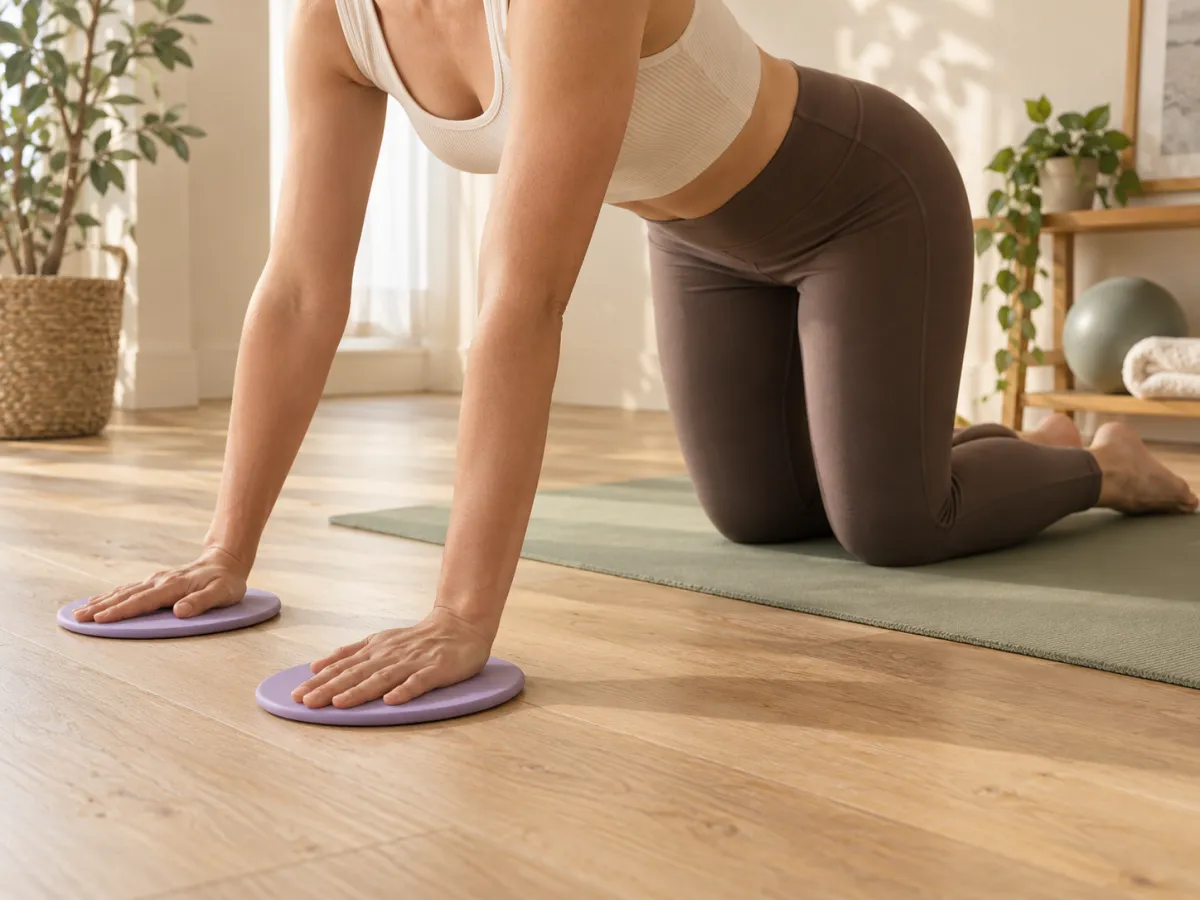
Practitioners translating reformer exercises with sliders to the mat—or bringing compact discs into hybrid studio sessions—quickly learn that disc diameter, footprint proportions, and floor clearance dictate how cleanly each repetition tracks. Mastering sliding lunge pilates variations requires matching your foot or hand contact area to the slider’s surface dimensions so your heel and metatarsals never overhang or catch against the floor. By following a structured pilates sliders guide and applying studio-tested pilates sliders tips, you can select the proper disc profile, respect studio floor policies, and maintain Reformer-caliber alignment across every lunge, pike, and carriage-style sweep.
According to the PilatesFits catalog listing, the Pilates Sliders collection features Pilates sliders and exercise sliding discs with surface compatibility and dimensions listed at launch.
When reviewing options in the Pilates Sliders collection, always check the published dimensions and floor surface compatibility for each individual product at launch. Because floor sliders reduce surface friction to challenge eccentric control in the core and hamstrings, they rely on body weight unless paired with elastic resistance from the Pilates Resistance Bands collection to replicate the directional spring pull of a studio Reformer.
Why Sizing and Proportions Matter for Reformer Exercises With Sliders in Motion
During reformer exercises with sliders, the disc functions as a miniature, independent carriage beneath your working limb. If the slider footprint is too narrow for your forefoot or palm, weight shifts past the outer rim during long-lever excursions, causing the edge to tip into carpet fibers or skid sideways on hardwood. Conversely, overly wide discs can collide at the midline during narrow-stance pikes, frog presses, or inner-thigh adduction pulls.
Proper proportioning keeps the ground reaction force centered directly beneath your joint axis:
- Metatarsal and Heel Coverage: In a sliding lunge pilates sequence, the ball of the back foot remains anchored to the center of the disc while the heel stays lifted. Sufficient disc diameter ensures all five metatarsal heads rest flat inside the beveled rim without crowding the toes.
- Midline Clearance in Bilateral Moves: When both feet glide simultaneously—such as in supine hamstring curls, straight-arm plank pikes, or kneeling carriage stretches—disc width determines how closely your inner ankles can track without the rims clipping each other.
- Palm and Forearm Accommodation: Upper-body Reformer simulations (like kneeling chest expansion reaches or plank circles) require enough surface area to spread the fingers wide and distribute load evenly across the base of the palm and wrist.
Reformer Exercises With Sliders vs Sliding Lunge Pilates: Measurement & Fit Chart by Body Type
Use this five-row sizing geometry and studio etiquette matrix to match your body proportions, movement focus, and training space when selecting the best pilates sliders for reformer cross-training:
| Practitioner Profile & Movement Focus | Footprint & Dimension Priority | Biomechanical Stance & Clearance Adjustments | Studio Etiquette & Floor Policy Standards |
|---|---|---|---|
| Petite Stature or Narrow Hip Width (Bilateral Pikes & Frog Pulls) | Compact circular or oval footprint that allows the inner ankles to zip together without rim collision | Keep feet hip-distance or narrower during bilateral pulls so the adductors and deep pelvic floor engage symmetrically | Confirm with the studio instructor before placing personal discs on shared hardwood or Marley studio floors |
| Tall Stature or Long Femur Proportions (Deep Sliding Lunge Pilates) | Generous surface area that supports a wide metatarsal base during long-excursion reverse and lateral lunges | Allow slightly wider lane spacing between the standing mat foot and the sliding disc track to accommodate hip and knee tracking | Ensure your sliding track stays within your designated mat lane and never encroaches on adjacent Reformer frames |
| Wide Forefoot or High-Arch Foot Structure (Standing Splits & Skaters) | Broad, flat central contact zone so the fifth metatarsal head stays supported inside the outer bevel | Press evenly through the big-toe mound and pinky-toe mound to prevent supination or lateral edge tipping | Wear clean grip socks on the standing foot while keeping the sliding foot centered securely on the disc upper face |
| Upper-Body & Plank-Focused Practitioners (Wheelbarrow & Scapular Reaches) | Stable, wide contact platform capable of supporting full palm width or forearm placement without wrist extension overload | Align the wrist crease directly over the center of the disc and maintain broad collarbones throughout the forward reach | Wipe both the top platform and bottom floor-contact surface with a studio-approved non-residue cloth after class |
| Hybrid Home-to-Studio Travelers (Reformer Plus Mat Circuit Classes) | Portable profile with verified surface compatibility for both home carpeting and studio hardwood or tile | Pair floor sliders with a loop or long band from the Pilates Resistance Bands collection when simulating weighted carriage return | Always inspect the bottom face of your sliders for embedded grit before stepping onto polished studio timber |
Studio Dress Code and Apparatus Clearance Rules
When bringing sliders into a group mat or Reformer hybrid class, studio safety policies prioritize traction control and floor protection:
- Standing Foot Traction vs. Sliding Foot Glide: Keep a high-traction grip sock or bare foot anchored on your standing leg (or on the studio mat) while your moving foot rests on the slider. Never step onto a smooth hardwood floor in regular cotton socks after using sliders.
- Reformer Frame Perimeter: In studio circuits that alternate between the Reformer apparatus and floor slider stations, maintain clear floor space around the Reformer rails and carriage stopper so sliding lunges never drift toward moving equipment.
First-Class Verification Test Before Stepping Onto the Carriage
Before committing to a full workout or bringing your discs from the Pilates Sliders collection into a fast-paced class, run through this five-step fit and mobility check:
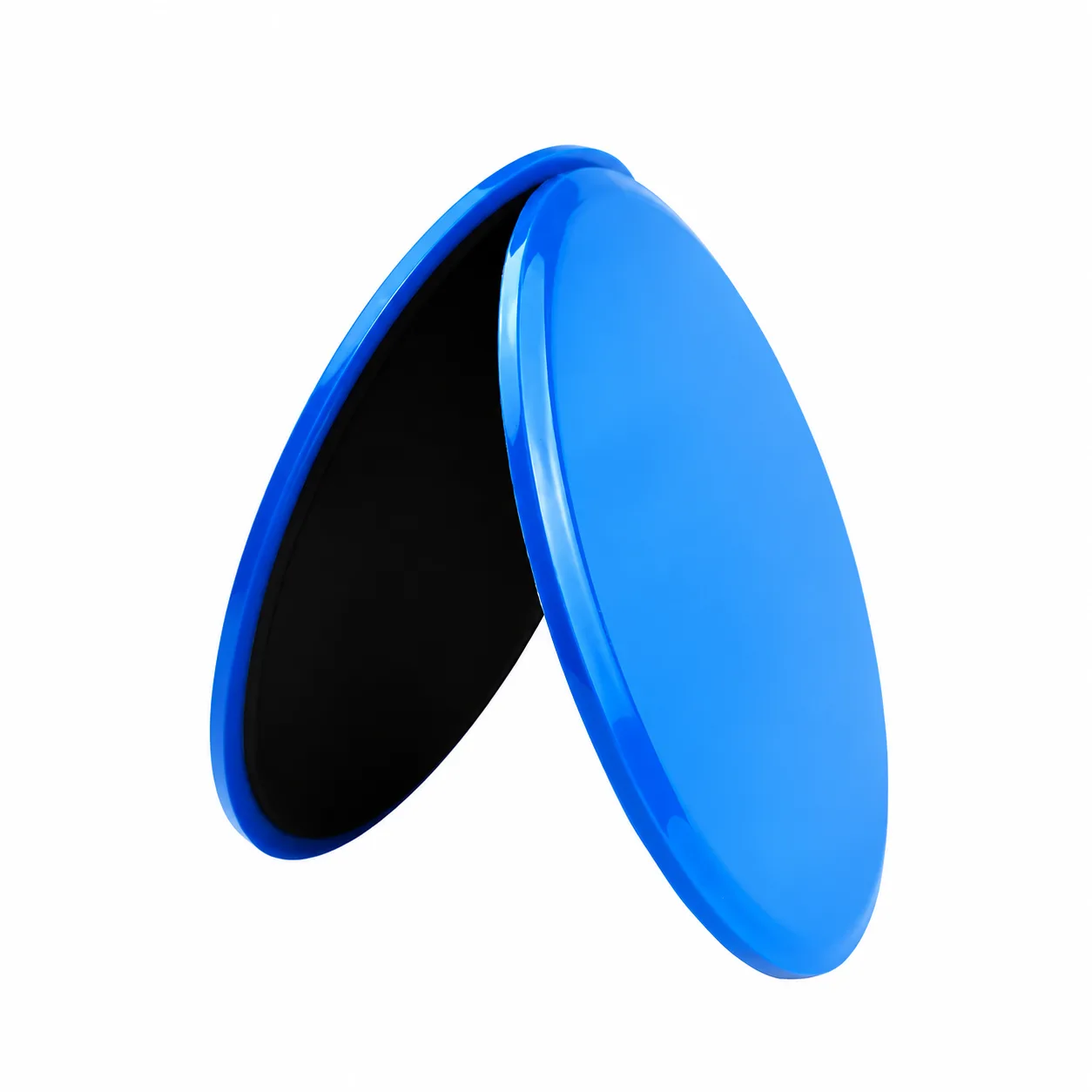
- Footprint Centering Check: Place the ball of your foot in the center of the slider with your heel raised. Confirm that your toes and outer foot edge sit comfortably inside the perimeter without hanging over the rim.
- Bilateral Midline Pass Test: Place both feet on sliders in a plank or supine bridge position and draw your legs together. Verify that your inner thighs can connect cleanly without the disc edges overlapping or jamming.
- Full-Excursion Sliding Lunge Test: Stand tall with one foot on a firm mat and the other on the slider. Inhale to glide into a controlled sliding lunge pilates descent, checking that the disc tracks straight back without fishtailing and that your front knee stays stacked over your ankle.
- Palm Spread & Wrist Neutrality Check: Kneel on a mat with both hands on the sliders. Slide forward a few inches while pressing through the finger pads to verify that your palms fit comfortably inside the disc surface without pinching the heel of the hand.
- Band-Assisted Return Calibration: Loop a band from the Pilates Resistance Bands collection around your ankle or foot and perform three slow reformer exercises with sliders repetitions to verify smooth, consistent eccentric and concentric tension across your floor surface.
Frequently Asked Questions
How can you use Pilates sliders and resistance bands at home to replicate Reformer and Megaformer exercises?
Pilates sliders and exercise sliding discs are selected by floor surface compatibility and dimensions and are rated by home practitioners as effective tools for core and hamstring exercises, especially when paired with resistance bands. Combining low-friction sliding discs with elastic resistance bands recreates both the moving carriage instability and the directional spring tension of studio Reformer and Megaformer routines.
How do I choose the right size or dimension for reformer exercises with sliders?
Choose your slider dimensions by matching the disc footprint to your forefoot width, palm spread, and primary exercise selection—ensuring enough surface area to keep your metatarsals centered during single-leg lunges while remaining compact enough for bilateral pikes and hamstring curls without midline collision. Always check the published dimensions and surface compatibility for each product in the catalog at launch.
What should I know about sliding lunge pilates before attending a studio Pilates class?
Before performing sliding lunges in a studio setting, verify that your sliders match the studio floor surface (hardwood, Marley, or low-pile carpet), inspect the bottom surface to ensure it is clean and free of abrasive grit, and keep your standing foot anchored on a non-slip mat or in grip socks so your stationary leg remains completely stable throughout the lunge excursion.
Make it part of your practice
Explore the purple round core exercise sliders and check its product details before choosing your studio essentials.
View this piece