


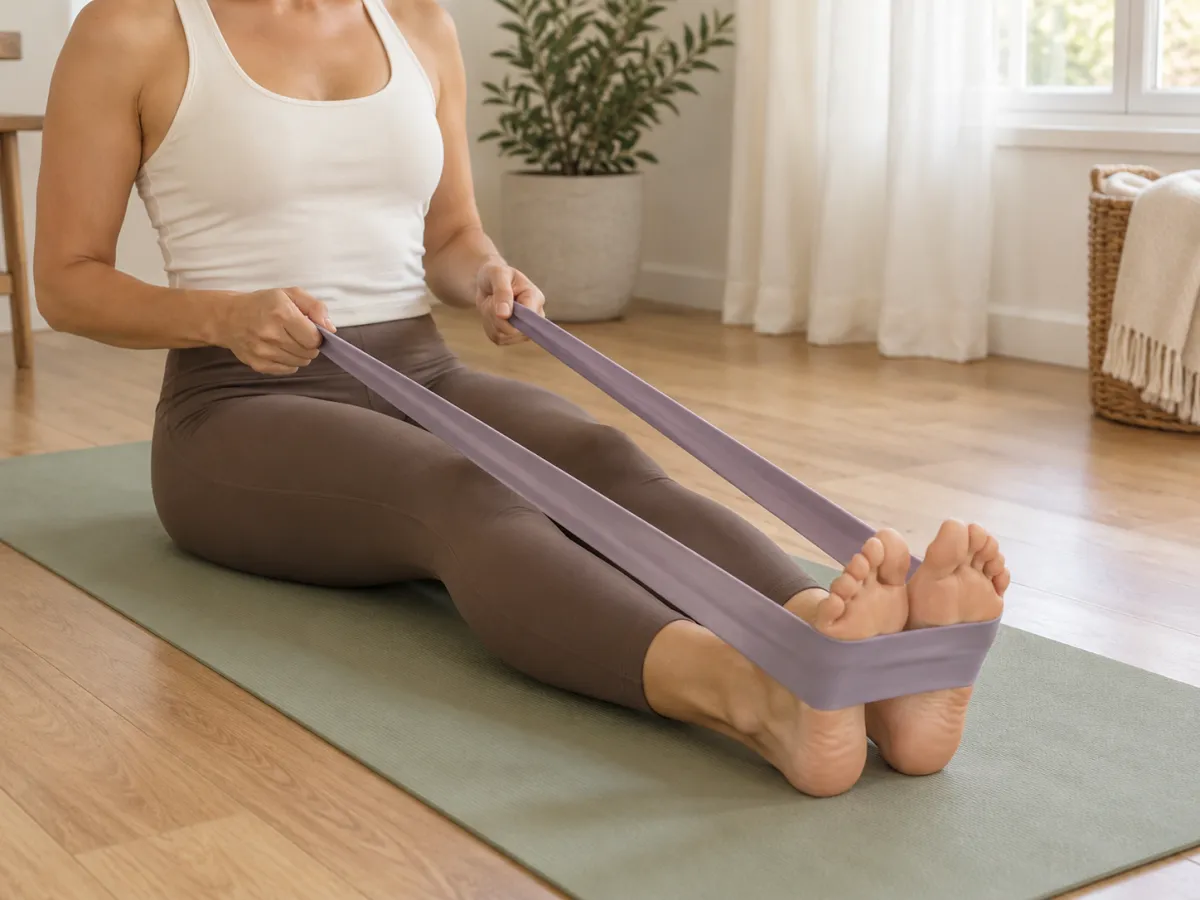
Designing an effective resistance band pilates workout or structured at home reformer workout with bands starts with translating studio spring vectors into floor-based elastic tension. On a studio Reformer, coiled springs resist your movement as you press the carriage out and demand slow eccentric control as the carriage returns to the stopper; on a floor mat, anchoring a long resistance band around the arches of your feet while placing a closed mini loop band around your thighs or shins recreates both the long-lever pulling angles and the lateral joint-tracking challenge without bulky machinery.
According to the PilatesFits catalog listing, the Pilates Resistance Bands collection includes portable loop and long-band formats organized by listed resistance level.
By pairing both band formats across progressive tension ratings—and eliminating dead slack before every repetition—you can sequence a complete core, glute, and spinal articulation session in any living space. Explore portable loop and long-band options in the PilatesFits Pilates Resistance Bands collection and add low-friction floor glide with the PilatesFits Pilates Sliders collection.
How Resistance Band Pilates Workout Translates Reformer Mechanics to the Floor
A studio Reformer relies on three mechanical elements: spring resistance that increases as the carriage travels, long straps that load the arms and legs through extended arcs, and a gliding platform that challenges core stability. When you build a resistance band pilates workout on a mat, you replicate these mechanics through intentional anchor geometry and tempo control.
Pre-Stretch Tension vs Studio Spring Pre-Load
Reformer springs engage the instant the carriage leaves the bumper. An elastic band, by contrast, only generates force once stretched past its resting length. To replicate Reformer spring engagement during an at home reformer workout with bands, choke up on your long band so that slight tautness exists at the starting position of every exercise—whether your knees are in tabletop for the Hundred or your spine is tall at the top of a seated Roll-Down.
Dual-Vector Loading: Combining Long Bands and Mini Loop Bands
In studio classes, exercises like Feet in Straps or Scooter simultaneously challenge long-lever hip extension and lateral hip stability. Home practitioners can mirror this dual-vector load by combining a long band anchored under the foot arches (for sagittal-plane pressing and pulling) with a closed mini loop band positioned above the knees or ankles (for continuous coronal-plane glute medius engagement).
Step-by-Step At Home Reformer Workout With Bands Sequence: Core, Glutes & Spinal Articulation
Use this Reformer-to-Band translation matrix and five-move sequence to structure a balanced resistance band pilates workout covering anterior core endurance, posterior chain strength, and segmental spinal mobility.
| Studio Reformer Exercise | At Home Reformer Workout With Bands Equivalent | Band Format & Anchor Setup | Primary Muscle & Alignment Focus | Tempo & Eccentric Control Cue |
|---|---|---|---|---|
| The Hundred (Hands in Straps) | Supine Band-Resisted Hundred | Long band wrapped securely around mid-shins or foot arches; hands gripping ends at hip height | Deep transverse abdominis, lower-rib closure, and lat-assisted scapular depression | Pump arms with taut band tension for five inhale counts and five exhale counts |
| Feet in Straps (Leg Lowers & Circles) | Supine Long-Band Leg Lowers & Circles | Long band looped flat across both foot arches; elbows anchored heavy into the mat | Eccentric hip flexor control, pelvic stability, and hamstring lengthening | Press legs away for three counts; resist band recoil for three counts on the return |
| Shoulder Bridge on the Carriage | Articulated Glute Bridge With Mini Loop Abduction | Closed mini loop band positioned just above the knees; optional floor sliders under heels | Gluteus maximus, gluteus medius knee tracking, and segmental lumbar articulation | Peel spine up vertebra by vertebra, pulse knees outward against the loop, and roll down slowly |
| Rowing Back / Roll-Down Series | Seated Long-Band Roll-Down & High Row | Long band wrapped around plantar arches with legs extended; hands gripping near knees | Segmental spinal flexion, rhomboid retraction, and eccentric abdominal braking | Scoop the pelvis back over four counts, pause with ribs knitted, and articulate forward |
| Long Box Pulling Straps (Swan Prep) | Prone Banded Swan Pulls | Long band held slightly wider than shoulder width behind the hips or overhead | Thoracic extension, posterior deltoids, and lower-trapezius engagement | Lengthen the crown forward before lifting; pull band wide toward hips without lumbar crunching |
Step-by-Step Execution Cues for the 5-Move Flow
- Supine Band-Resisted Hundred: Lie supine with knees in tabletop and your long band looped across the shins or arches. Press your arms straight down to hover beside your hips so the band pulls your hands toward your feet; curl head, neck, and shoulders up while maintaining a heavy sacrum.
- Supine Long-Band Leg Lowers & Circles: Keep the long band flat across the center of both foot arches and pin your upper arms to the mat so your wrists stay neutral. Extend both legs toward a forty-five-degree angle, circle wide without letting the pelvis rock, and draw the legs back up with slow abdominal control.
- Articulated Glute Bridge With Mini Loop Abduction: Place a medium or heavy mini loop band just above the knees. Press evenly through your heels, curl the tailbone up to a diagonal bridge line, and hold outward tension against the mini band to fire the outer glutes before melting the spine down.
- Seated Long-Band Roll-Down & High Row: Sit tall on your sit bones with legs extended and the long band looped around the arches. Exhale to tuck the tailbone and roll halfway back against the band’s assist, add an elbows-wide row to challenge thoracic stability, and return tall.
- Prone Banded Swan Pulls: Lie prone with pubic bone anchored and legs long. Hold the band taut behind your hips with palms facing up; inhale to glide shoulder blades down your back and lift the sternum into a long thoracic arc while pulsing the band gently outward.
Setup Boundaries and Progression Rules Without a Studio Machine
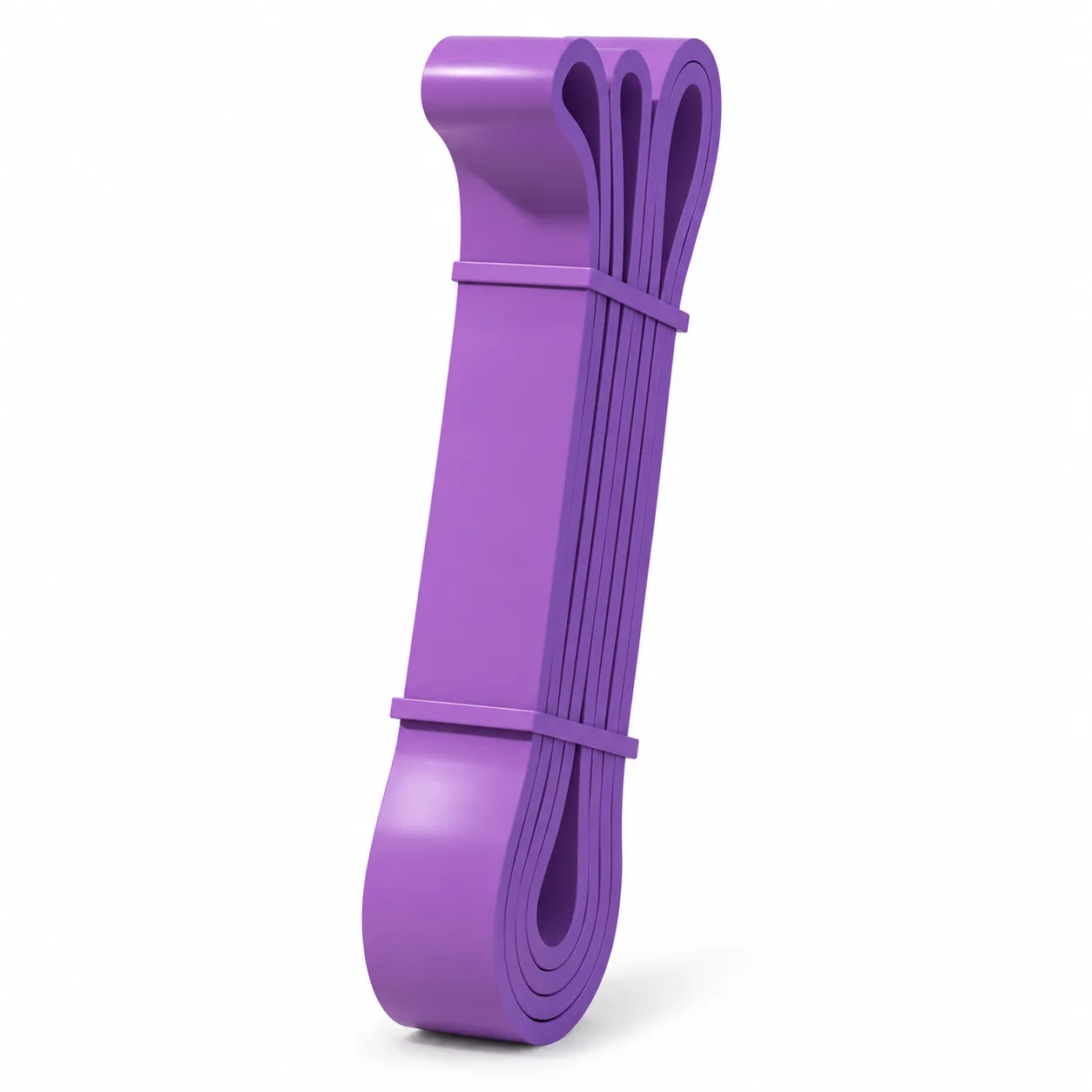
To keep your resistance band pilates workout safe and effective over months of training, follow three setup and progression rules using gear from the PilatesFits Pilates Resistance Bands collection:
- Secure Foot-Arch Wrapping: Always spread a flat or long loop band wide across the middle of the shoe or bare arch—never near the toes—so the band cannot slip upward during supine leg circles or overhead roll-ups.
- Step Up Across Listed Resistance Levels: As community Pilates practitioners emphasize, progressive overload is what drives long-term strength adaptation. Once you can complete every repetition of your at home reformer workout with bands with a three-second eccentric return and zero rib flare, move up to the next listed resistance level rather than simply adding endless repetitions with a light band.
- Add Gliding Discs for Carriage Simulation: Elastic bands replicate Reformer spring tension, while floor sliders from the PilatesFits Pilates Sliders collection replicate the low-friction glide of a moving carriage during lunges, pikes, and hamstring curls.
- Honest Scope Boundaries: Community advice on prop combinations reflects attributed user experience, and elastic bands require stepping up to higher tension ratings over time to maintain progressive overload.
Frequently Asked Questions
Can resistance band pilates workout replace a studio Reformer workout at home?
A structured resistance band pilates workout replicates the elastic spring vectors, variable tension curve, and eccentric control of many classic Reformer exercises—including the Hundred, Feet in Straps, and Seated Rowing—right on a floor mat. While a band alone does not provide a rolling carriage platform, pairing multi-tension loop and long bands with floor sliders closes much of the mechanical gap for home practitioners.
How do you structure a balanced at home reformer workout with bands routine for core and lower body?
To structure a balanced at home reformer workout with bands, sequence five movement patterns from supine to prone: start with Supine Band-Resisted Hundreds for deep core activation, transition to Long-Band Leg Lowers and Circles for hip-flexor and hamstring control, add Articulated Glute Bridges with a mini loop band for posterior-chain strength, perform Seated Roll-Downs with rows for spinal articulation, and finish with Prone Banded Swan Pulls for thoracic extension.
Why do home Pilates practitioners combine mini bands and long loop resistance bands across multiple tension levels?
Pilates resistance bands are selected across loop and long-band formats by listed resistance level, because combining mini bands and a challenging long loop band across multiple tension levels allows progressive overload as strength improves. Mini loop bands target short-lever lateral hip and scapular stability, while long bands provide the full-body reach needed for Reformer-style pressing and pulling flows.
Make it part of your practice
Explore the pink flat resistance band roll and check its product details before choosing your studio essentials.
View this piece