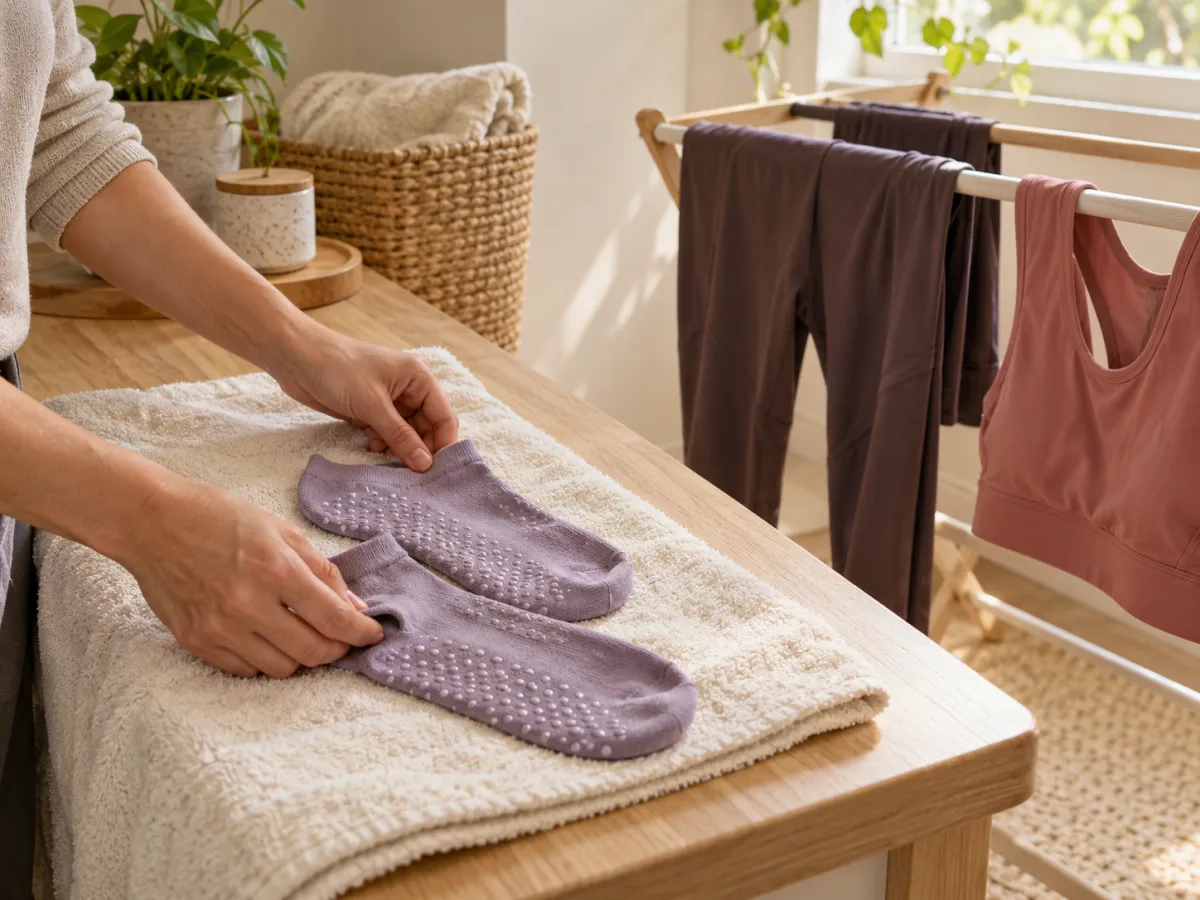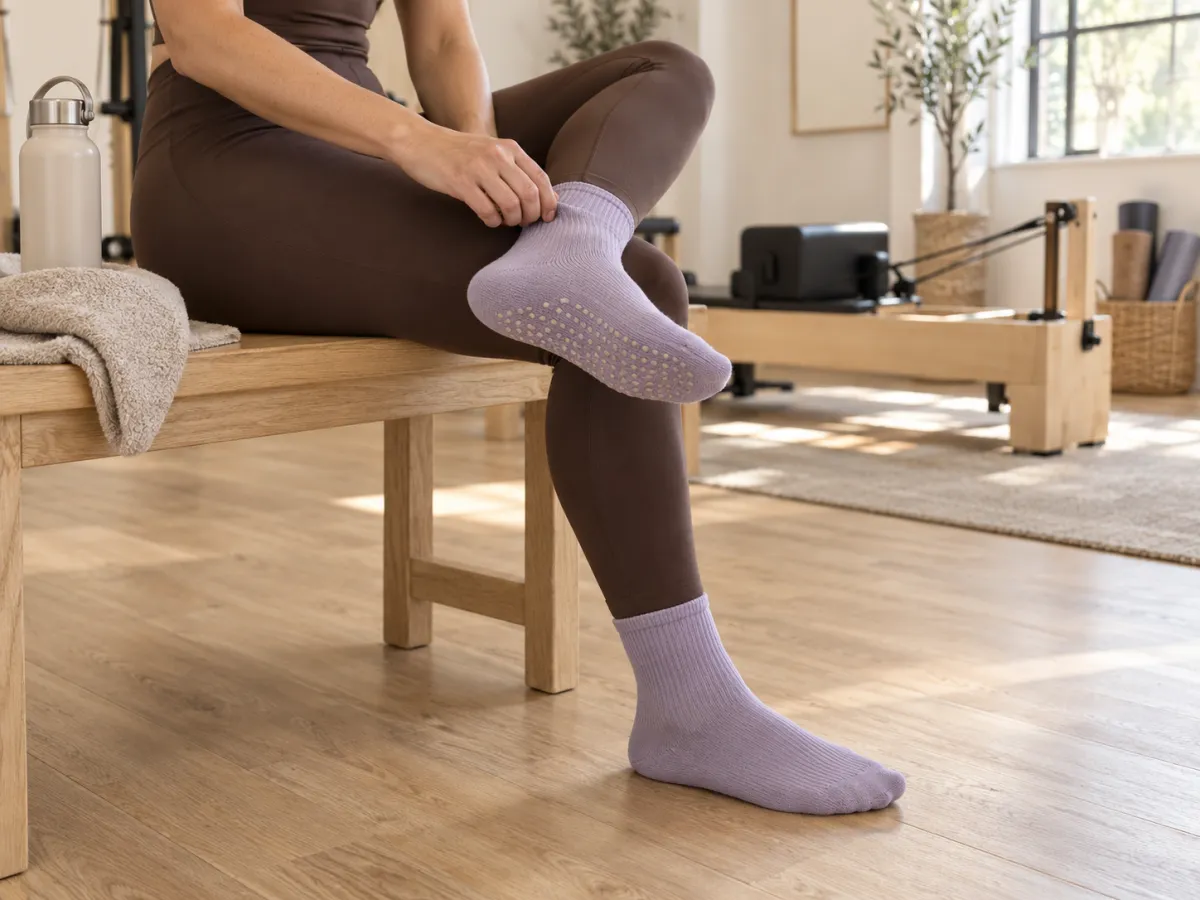
Understanding why do you need grip socks for pilates—and answering the first-timer question do you wear socks to pilates—starts with two studio realities: apparatus traction safety and shared-surface hygiene. On a spring-loaded Reformer, Wunda Chair, or Cadillac, bare feet lose friction as soon as plantar sweat meets vinyl upholstery or polished wood, while ordinary cotton athletic socks act like ice skates on a moving carriage. Properly sized grip socks lock your heel and metatarsal heads onto the footbar via high-friction silicone tread while creating a breathable, washable barrier between your skin and studio equipment.
According to the PilatesFits catalog listing, the Pilates Socks collection covers grip socks for mat, reformer, and barre sessions in full-toe, open-toe, and crew styles.
Why Sizing and Proportions Matter for Why Do You Need Grip Socks For Pilates in Motion
When new students research why do you need grip socks for pilates, they often assume any non-slip hospital sock or one-size novelty sock will work. In dynamic Pilates flows, however, even a 5–8 mm length mismatch between your foot and the sock shell undermines the entire purpose of the silicone sole: if the sock is too long, the knit fabric slides over your skin while the silicone dots stay stuck to the carriage, causing your heel to roll off the footbar edge during single-leg presses.
| Foot Proportion & Class Variable | Ideal Grip Sock Cut & Fit Spec | What Happens When Sizing Is Off | Studio Policy & Fit Solution |
|---|---|---|---|
| Narrow Heel / Low Instep Volume | Crew or Ankle Cut With Y-Stitched Heel & Arch Band | Heel tab slips into the shoe/strap during Short Box | Choose anatomical Y-heel pockets with 360-degree midfoot compression |
| Wide Forefoot / Bunion-Prone Metatarsals | Open-Toe or Stretch-Knit Full-Toe Box | Tight toe seams pinch first and fifth metatarsal heads | Select seamless toe closures or toeless styles where studio rules allow |
| Between Shoe Sizes (e.g., US Women’s 7.5–8) | Size Down for Snug Second-Skin Tension | Excess toe fabric folds under phalanges on the footbar | Always size down so silicone dots align directly beneath weight-bearing bones |
| Commercial Reformer Franchise Class | Full-Toe Closed-Box Crew or Low-Cut With Heel Tab | Exposed toes may violate studio equipment hygiene rules | Pack closed-toe grip socks as your default for multi-carriage studios |
| Mat Pilates & Barre Floor Work | Open-Toe, Ballet Mary Jane, or Classic Crew | Thick loose socks bunch during Relevé and lunges | Match thin, high-density silicone tread to your personal exercise mat |
Why Do You Need Grip Socks For Pilates vs Do You Wear Socks To Pilates: Measurement & Fit Chart by Body Type
If you are asking do you wear socks to pilates before booking your intro session, use these four sizing and studio etiquette rules derived from our pilates socks guide to walk in prepared:
- Reformer & Apparatus Studios Require Grip Socks: Virtually all contemporary Reformer franchises and boutique apparatus studios mandate grip socks (and prohibit both bare feet and regular non-grip athletic socks) to prevent footbar slips during Standing Splits, Scooter, and Elephant, and to keep shared vinyl straps sanitary.
- Classical Mat Classes Vary by Studio: Some classical mat rooms permit bare feet on personal mats, but wearing the best pilates socks for reformer and mat transitions keeps your feet warm during supine warm-ups and prevents toe sliding when plantar sweat builds during Plank to Pike.
- Measure Foot Length and Arch Circumference: Instead of guessing by street sneaker size (which includes a half-inch running toe allowance), match your bare heel-to-longest-toe measurement so the sock fits like a compression glove with zero overhang at the hallux.
- Protect the Tread on Your Walk Into the Studio: Among the most practical pilates socks tips from instructors is never shoving rubberized grip soles into tight lace-up running shoes before class; wear slip-on slides or clogs from your car to the studio door so street grit and shoe-liner friction do not dull the silicone dots.
To compare cuts by foot shape and studio dress code, explore our Pilates Socks collection and pair your studio bag with a hygienic carriage barrier from our Pilates Towel collection. For a deeper look at how sock traction shapes knee and ankle tracking, read our Reformer Pilates Socks Biomechanics & Alignment Guide.
First-Class Verification Test Before Stepping Onto the Carriage
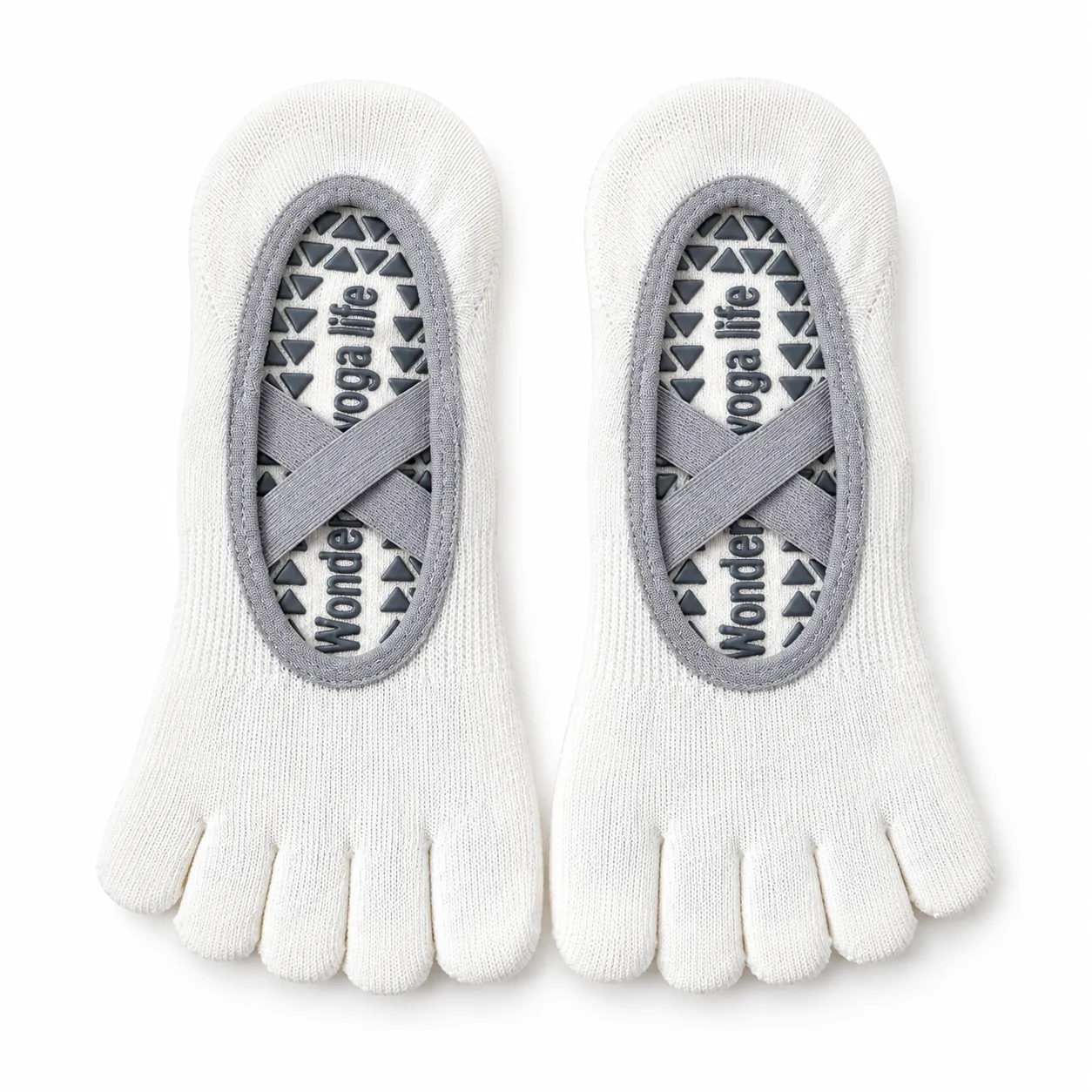
Perform this 60-second home fit check before cutting the tags off your new pair:
- The Lunge Shear Test: Step into a deep split lunge on hardwood or a mat with your back heel lifted; the silicone pad under your back metatarsal heads should stay planted without the sock twisting around your midfoot.
- The Heel-Tab Clearance Check: Flex and point your ankle ten times; the rear heel tab should sit 1–2 cm above the Achilles insertion so Reformer foot straps never rub bare skin.
- The Toe-Splay Check: Spread all five toes wide; the forefoot knit should stretch smoothly without forcing your big toe inward.
Frequently Asked Questions
Do you need grip socks for Pilates, and why do Reformer and mat practitioners choose patterned silicone grip soles over regular socks?
Yes—patterned silicone grip soles across full-toe, open-toe, and crew styles provide critical traction on smooth Reformer carriages, footbars, and studio mats where regular cotton socks slip dangerously. Practitioners also commonly wear slip-on slides over their grip socks on the walk to and from class rather than stuffing rubberized soles into closed athletic shoes.
How do I choose the right size or dimension for why do you need grip socks for pilates?
Choose a size that matches your exact bare foot length with zero extra fabric at the toe tips, and size down if you fall between two shoe sizes. Look for a 360-degree elastic arch band and a Y-stitched heel pocket so the silicone tread stays locked beneath your heel and ball of the foot during dynamic carriage movements.
What should I know about do you wear socks to pilates before attending a studio Pilates class?
Most Reformer and apparatus Pilates studios require non-slip grip socks for both safety and hygiene, and many commercial franchises specifically require closed-toe grip socks. Always bring a clean pair in your studio bag and slip them on with slides right before class starts.
Make it part of your practice
Explore the lavender crew pilates grip socks and check its product details before choosing your studio essentials.
View this piece