Deciding between a 10mm vs 15mm pilates mat comes down to how your spinous processes interact with hard subfloors during dynamic spinal articulation versus how your ankles respond during standing or kneeling balance transitions. While standard thin yoga mats focus on barefoot floor grip, a dedicated 15mm pilates mat or dense 10mm mat acts as a shock-absorbing interface between your vertebrae, pelvis, and the floor. Choosing the right profile—and verifying how its length, width, and roll diameter fit your home workout footprint or studio locker—prevents tailbone tenderness without turning single-leg work into an unstable wobble test.
According to the PilatesFits catalog listing, the Pilates Mats collection covers mats for floor exercises and studio sessions, compared by thickness, dimensions, material, and care instructions.
Why Sizing and Proportions Matter for 10mm vs 15mm Pilates Mat in Motion
When you move through classic Pilates mat sequences—such as Rolling Like a Ball, the Spine Stretch Forward, the Open Leg Rocker, or the Side Kick Series—your body weight concentrates over narrow bony landmarks. Unlike static stretching, supine and side-lying Pilates work shifts load rapidly across the thoracic and lumbar spinous processes, the posterior superior iliac spines (PSIS), and the greater trochanter of the femur.
If a mat is too thin or its closed-cell foam compresses completely (“bottoms out”) under point loading, your body instinctively guards against floor contact by flattening the lumbar curve or hiking the shoulders. Conversely, if a mat is overly plush and spongy without sufficient rebound resilience, your wrists sink unevenly during quadruped plank transitions and your calcaneus (heel bone) tilts laterally during standing footwork warmups.
Proportions beyond vertical thickness are equally decisive in motion:
- Total Length and Overhead Clearance: Supine exercises like the Roll Up and Jackknife require full extension of the arms overhead while the legs reach long. If your skull or heels drop off the tapered edges of the mat mid-roll, cervical alignment shifts immediately.
- Lateral Width for Abduction Work: During the Saw, Corkscrew, and Side-Lying Leg Circles, a narrow mat forces your supporting elbow or bottom hip onto the bare studio floor, breaking kinetic chain tension.
- Roll Diameter and Studio Etiquette: A plush 15mm pilates mat rolls into a substantially wider cylinder than a trimmer profile. In boutique studio mat classes where stations are marked closely on hardwood floors, bringing an oversized mat that encroaches on neighboring floor space or refuses to lie flat at the corners creates a tripping hazard during circuit transitions.
10mm vs 15mm Pilates Mat: Measurement & Fit Chart by Body Type
Selecting between the two primary cushioned Pilates profiles requires matching vertical loft and horizontal dimensions to your skeletal build, subfloor hardness, and class environment. Use the five-part comparison matrix below before selecting a specific mat from the PilatesFits Pilates Mats collection.
| Sizing & Fit Dimension | 10mm Pilates Mat Profile | 15mm Pilates Mat Profile | Biomechanical Impact on Spine & Joints | Studio & Home Space Fit |
|---|---|---|---|---|
| Spinal Articulation & Rolling Cushion | Firm, responsive rebound for controlled segmental rolling | Maximum vertical buffer for prominent spinous processes and sensitive tailbones | Higher loft distributes peak pressure across more foam cells during Rolling Like a Ball and Seal | 10mm suits padded studio floors; 15mm excels over bare hardwood, tile, or concrete |
| Standing & Kneeling Proprioception | Closer-to-floor center of mass with crisp ankle and wrist feedback | Deeper compression zone that requires active intrinsic foot stabilization | Firmer 10mm profiles limit lateral subtalar tilt during standing lunges and kneeling side kicks | Mixed standing-and-mat fusion classes favor 10mm; pure supine/side-lying mat sessions favor 15mm |
| Prone Hip & Trochanter Support | Moderate dampening under pubic symphysis and anterior hip bones | Plush relief for side-lying series and prone Swan prep | Extra cushioning prevents lateral hip bruising without needing a folded towel under the pelvis | Home practitioners pairing mat work with props gain all-in-one comfort on 15mm |
| Rolled Cylinder Bulk & Portability | Compact roll diameter that fits standard tote straps and studio cubbies | Larger cylinder diameter requiring a wide carry strap or dedicated home corner | Lighter carry weight reduces unilateral shoulder strain when commuting on foot to class | Commuters prefer 10mm; dedicated home mat setups easily accommodate 15mm storage |
| Reformer & Prop Pairing Compatibility | Lies flush beside apparatus frames or under a magic circle base | High-loft floor base for full mat + mini ball + ring home circuits | Consistent surface compression keeps a Pilates ring or stability ball from rolling unexpectedly | Pairs seamlessly with a Pilates Ring (Magic Circle) for resistance work |
How to Measure Your Body Proportions Before Choosing Dimensions
Rather than guessing whether a standard or extended mat fits your frame, run three quick baseline measurements at home:
- Supine Crown-to-Heel Reach: Lie flat on your floor in neutral spine with toes pointed (plantarflexed). Have a partner mark the spot just above the crown of your head and the tip of your hallux (big toe), then add a buffer zone at both ends so rolling momentum never carries your cervical spine off the cushioned edge.
- Scapular-to-Elbow Span: Lie on your back with elbows bent wide at shoulder height (chest expansion position). Your mat width should support the entire posterior shoulder girdle and upper arm without your elbows dropping onto the colder floor surface.
- Spinous Process Sensitivity Check: Sit tall on your floor with knees bent and perform a slow pelvic curl partway back onto your sacrum. If you feel immediate sharp pressure over the coccyx or lower lumbar vertebrae despite scooping the abdominals, prioritize a high-loft 15mm pilates mat or verify higher foam density on the product specification sheet.
Studio Rulebook & Etiquette Checklist for Mat and Reformer Classes
Whether you attend boutique mat classes or hybrid Reformer-and-mat tower sessions, studios enforce practical gear standards to keep transitions smooth and hygienic:
- Check Adjacent Station Clearance: Most group mat studios space floor markers tightly. Unroll your mat so the front edge aligns exactly with the instructor’s sightline stagger—never overlap the mat border of the practitioner beside you.
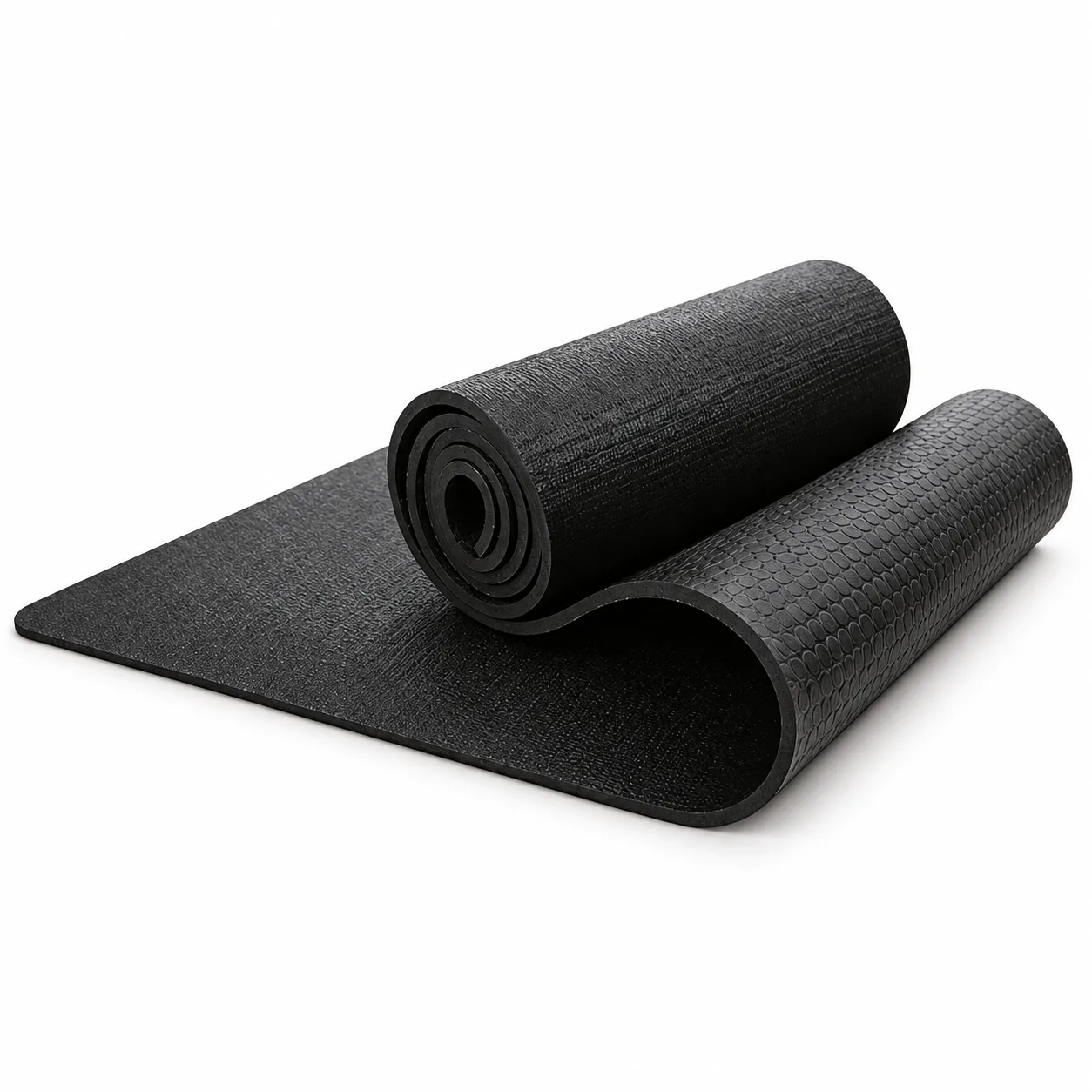
- Manage Corner Curl Immediately: Thick closed-cell and NBR/TPE foam mats stored tightly rolled can retain curl memory at the ends. Unroll your mat five minutes before class starts, or reverse-roll the ends briefly so the edges sit completely flush against the floor.
- Keep Reformer Carriage Tracks Clear: In hybrid classes that alternate between floor mat work and apparatus sets, never slide the edge of a thick 10mm or 15mm pilates mat underneath the Reformer frame rails or standing platform where it could interfere with carriage travel or spring hooks.
- Pair Props Cleanly: Many home practitioners build a complete studio-style workout around a cushioned mat paired with a Pilates Ring and a mini ball rather than investing in a full Reformer. Keep hard plastic ring pads and textured grip socks clean of street grit so they do not abrade the mat’s surface skin during adductor squeezes.
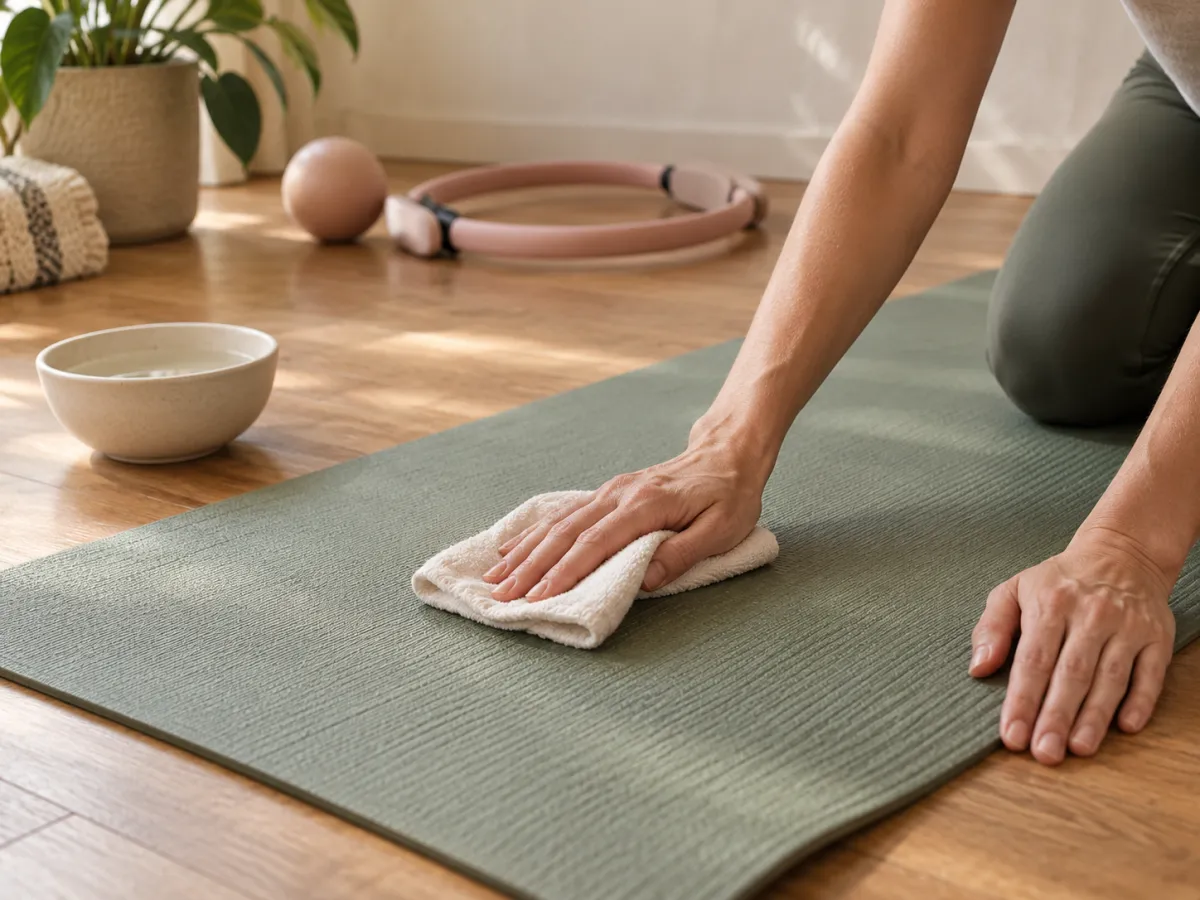
- Follow Material-Specific Care Rules: Always check the care instructions on the individual product listing before wiping down your mat after class. Avoid harsh alcohol or essential-oil sprays on closed-cell foams that require mild soap and water, and allow the surface to dry completely flat before re-rolling.
First-Class Verification Test Before Stepping Onto the Floor or Carriage
Before taking a new mat into a packed group session or committing to a long home training block, run this three-step verification sequence in your living room:
- The Slow Pelvic Curl & Roll-Back Test: Sit near the front third of the mat, inhale to prepare, and exhale as you articulate vertebra by vertebra down to the mat and back up. Notice whether your lumbar spine imprints smoothly into the foam without feeling the floorboards underneath, and verify that the mat stays anchored without sliding across the floor.
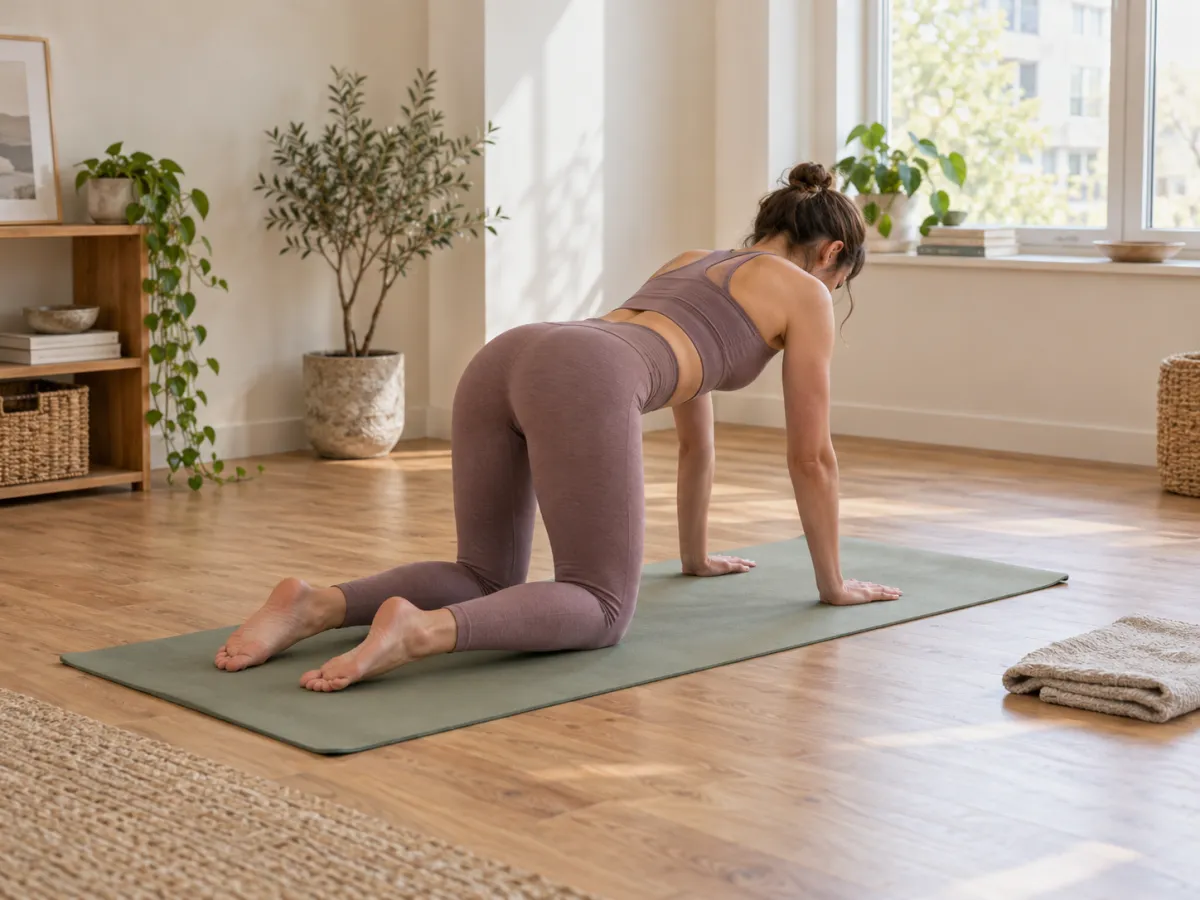
- The Quadruped Wrist & Knee Load Test: Set up on all fours (hands under shoulders, knees under hips) and hover the knees slightly off the surface, then lower them with control. Check that your kneecaps feel fully buffered on the 10mm vs 15mm pilates mat while your wrists remain neutral rather than hyperextending into overly soft foam.
- The Standing Footwork & Balance Transition: Step onto the center of the mat in Pilates V (heels together, toes slightly apart) and rise onto the balls of your feet. Confirm that the foam rebounds evenly under the metatarsal heads so you can transition smoothly between floor mat work and standing resistance exercises using tools from the PilatesFits Pilates Mats collection.
Frequently Asked Questions
How thick should a Pilates mat be compared to a standard yoga mat for protecting the spine during rolling mat exercises?
Pilates mats are compared by thickness, dimensions, material, and care instructions for floor and studio exercises, with home Pilates practitioners recommending a thick mat paired with a magic circle and mini ball to cushion the spine during mat work. While thin yoga mats prioritize rigid floor contact for standing poses, a 10mm or 15mm Pilates mat provides the vertical shock absorption needed for Rolling Like a Ball, the Hundred, and supine spinal articulation.
How do I choose the right size or dimension for 10mm vs 15mm pilates mat?
Choose between a 10mm and 15mm profile by matching the thickness to your floor hardness and exercise mix, while checking the exact length, width, and foam density on each individual listing. A 10mm mat offers a firmer, more portable balance between spinal cushioning and standing stability, whereas a 15mm mat delivers deeper vertebral and hip protection on hard residential floors during supine and side-lying mat series.
What should I know about 15mm pilates mat before attending a studio Pilates class?
Before bringing a 15mm mat to a group studio class, verify that its unrolled width and length fit comfortably within the studio’s floor markers, unroll it early so the corners lie flat, and remember that ultra-thick foam can increase ankle instability during single-leg standing balance segments. Always review the specific dimensions, material composition, and care instructions on the product page so your mat matches both studio hygiene policies and your class format.
Make it part of your practice
Explore the lavender wave-texture exercise mat and check its product details before choosing your studio essentials.
View this piece