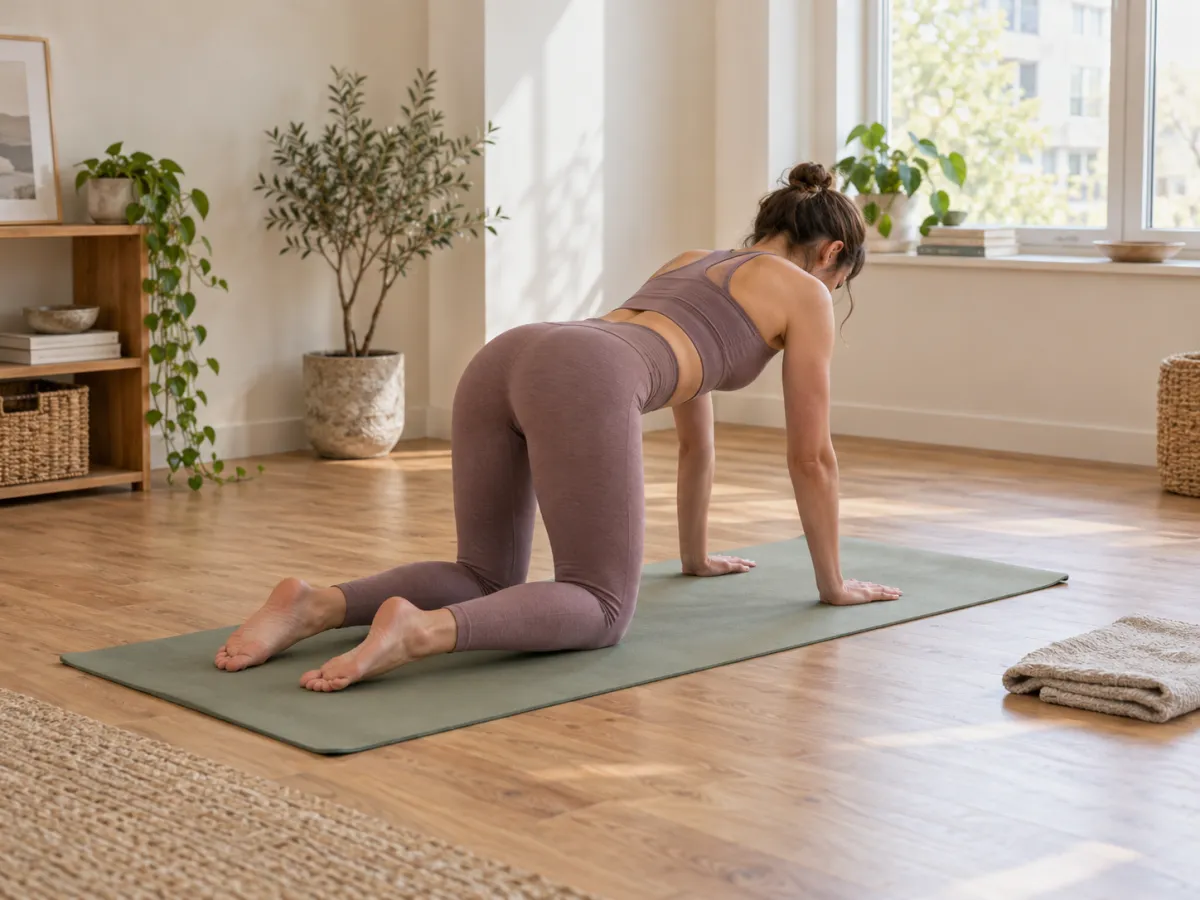
Learning how to clean a thick pilates mat properly protects both the internal elastomer cell walls that cushion your spine and the surface traction that anchors your hands and heels. When practitioners set out to clean nbr foam exercise mat surfaces after floor routines, harsh solvents, hot water, or soaking baths can strip plasticizers from nitrile butadiene rubber (NBR) or warp closed-cell thermoplastic elastomer (TPE) layers. A structured, material-safe hygiene protocol removes sweat salts and skin oils while preserving the predictable compression rebound required for segmental spinal articulation.
According to the PilatesFits catalog listing, the Pilates Mats collection covers mats for floor exercises and studio sessions, compared by thickness, dimensions, material, and care instructions.
What Degrades Pilates Mat: Sweat, Heat, Detergents & UV Exposure
Thick Pilates floor mats rely on sealed microscopic gas pockets within synthetic elastomers to absorb vertical load during Rolling Like a Ball, Open Leg Rocker, and the supine Abdominal Series. Unlike thin woven textiles, foam elastomers degrade through chemical plasticizer migration, thermal cell expansion, and oxidative surface cross-linking whenever exposed to aggressive cleaning agents or improper drying environments.
| Degradation Factor | Closed-Cell NBR Foam Mat | Closed-Cell TPE Exercise Mat | Open-Cell / Porous Foam Mat | Impact on Pilates Biomechanics & Grip |
|---|---|---|---|---|
| Sweat Salts & Sebum | Accumulates inside surface ribs if left un-wiped | Forms a slick surface film over textured traction zones | Penetrates interconnected pores and breeds odor inside the core | Causes heel slip in Shoulder Bridge and palm slide in Long Stretch |
| Bleach, Alcohol & Strong Solvents | Extracts elastomer plasticizers, leading to brittle surface cracks | Degrades thermo-elastic bonding and dulls micro-grip texture | Breaks down cell walls and causes flaking or crumbling | Creates uneven surface friction and flaking debris under the back |
| Direct Sunlight & High Heat | Expands trapped gas pockets and warps flat edge geometry | Triggers thermal curling and permanent surface stiffening | Accelerates UV oxidation and rapid foam compression fatigue | Prevents the mat from lying flat during Roll Up and Spine Stretch |
| Submersion & Machine Washing | Traps moisture along edge seams and stretches heavy wet foam | Delaminates dual-layer thermal bonds under mechanical agitation | Waterlogs the internal sponge matrix and promotes mildew growth | Destroys vertical shock absorption under lumbar spinous processes |
| Tight Creased Folding or Crushing | Leaves permanent compression troughs across ribbed foam | Induces memory creases if rolled tightly while still damp | Collapses porous cell structure under sustained heavy weight | Disrupts sacral neutrality and pelvic stability in supine mat work |
When evaluating how to clean a thick pilates mat, understanding whether your mat uses closed-cell NBR or closed-cell TPE is essential. Closed-cell elastomers prevent sweat from soaking into the interior core, meaning routine maintenance only needs to lift surface sebum, floor dust, and salt residue from the embossed texture. However, if you use essential oil sprays—such as undiluted tea tree, citrus, or eucalyptus oils—or alcohol-heavy gym wipes to clean nbr foam exercise mat ribbing, the oils slowly dissolve or swell the rubber surface, turning a supportive non-slip mat into either a sticky dust magnet or a brittle, cracking pad.
Step-by-Step Cleaning and Sanitization Protocol for How To Clean A Thick Pilates Mat
Follow this material-safe cleaning sequence after home or studio sessions to sanitize thick cushioned mats without compromising foam rebound or surface shear resistance:
Step 1: Dry Brush Debris from Surface Ribs Before Wet Wiping
Thick NBR and cushioned Pilates mats often feature horizontal surface ribbing that provides tactile traction during kneeling and supine transitions. Before applying any liquid, use a soft, dry microfiber cloth to wipe along the direction of the ribs, lifting loose dust, lint, and dry salt crystals so they do not turn into a muddy paste inside the grooves.
Step 2: Wipe With Lukewarm Water and a Drop of Mild pH-Neutral Soap
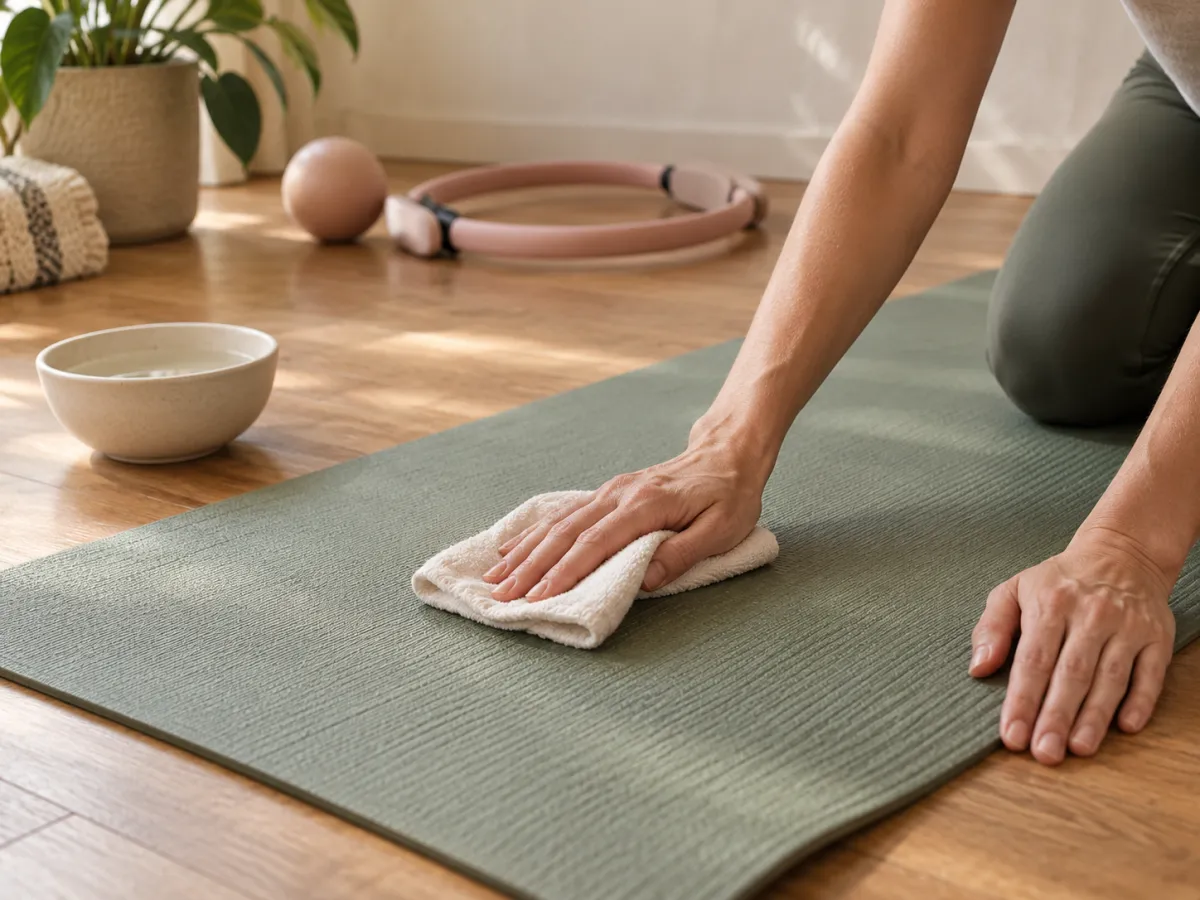
Dampen a clean microfiber cloth in lukewarm water mixed with a tiny amount of mild, fragrance-free, pH-neutral dish or castile soap. Wring the cloth until it is barely damp—never dripping—and wipe the working surface from top to bottom using gentle, even strokes. When you clean nbr foam exercise mat surfaces, avoid abrasive scrubbing pads or stiff bristles that score the closed-cell skin and create micro-tears where sweat can pool.
Step 3: Perform a Clear-Water Rinse Wipe to Remove Surfactant Film
Soap residue left drying on an elastomer mat creates an invisible film that becomes slippery the moment your palms or heels perspire during your next session. Take a second microfiber cloth dampened only with clean, cool water and wipe the entire surface a second time to lift all remaining surfactant traces. You can use the same damp-rinse method to wipe down your Pilates ring pads and handles after inner-thigh and chest-press series.
Step 4: Towel Blot and Air-Dry Flat or Draped Over a Wide Bar
Press a dry cotton or microfiber bath towel across the mat surface to blot away standing moisture, then flip the mat to repeat on the underside. Let the mat air-dry completely in a shaded, well-ventilated indoor space—either laid flat on a clean floor or draped loosely over a wide, rounded drying rail—before rolling it up.
Storage, Inspection, and Replacement Signs for Clean Nbr Foam Exercise Mat
How you store a cushioned mat between workouts affects its dimensional stability just as much as how you wash it. Apply this three-point storage and inspection protocol to maximize lifespan across the Pilates Mats collection:
- Roll Loosely With the Ribbed Working Side Facing Outward: Always wait until both sides are completely dry to the touch before rolling. Rolling loosely with the top traction surface facing outward prevents the corners from curling upward the next time you unroll the mat for Hundred or Roll Up.
- Keep Straps Snug but Uncinched and Avoid Heavy Stacking: Elastic carrier straps are designed for transport rather than long-term tight compression. Loosen tight straps during closet storage and never stack heavy dumbbells, kettlebells, or Reformer boxes on top of a rolled foam mat, which crushes the closed-cell gas pockets into permanent flat spots.
- Run the Monthly Thumb-Rebound and Heel-Traction Check: Press your thumb firmly into the sacral and kneeling zones of the mat and release; a healthy closed-cell NBR or TPE mat rebounds smoothly within seconds. If the indentation stays sunken, if the surface ribs flake onto your clothing, or if your heels slide outward during Shoulder Bridge despite a clean, soap-free surface, material fatigue has set in and the mat should be replaced.
Frequently Asked Questions
How thick should a Pilates mat be compared to a standard yoga mat for protecting the spine during rolling mat exercises?
Pilates mats are compared by thickness, dimensions, material, and care instructions for floor and studio exercises, with home Pilates practitioners recommending a thick mat paired with a magic circle and mini ball to cushion the spine during mat work. Because thicker cushioned mats absorb repeated spinal rolling loads on hard subfloors, keeping their closed-cell foam clean and uncompressed is essential for preserving vertebral comfort over time.
What is the safest way to handle how to clean a thick pilates mat without damaging the material?
The safest method is a two-cloth wipe using lukewarm water and a small amount of mild, pH-neutral soap, followed immediately by a clean damp-water rinse wipe and indoor air-drying away from sunlight. Avoid submerging the mat, putting it in a washing machine, or using bleach, rubbing alcohol, or undiluted essential oils that degrade NBR and TPE elastomers.
How often should you perform maintenance for clean nbr foam exercise mat?
Perform a quick damp microfiber wipe after every sweaty mat session to prevent salt and skin oils from settling into the surface ribs, and conduct a thorough mild-soap wipe and underside cleaning once a week for regular home practice. Always let the mat dry completely before rolling it loosely for storage.
Make it part of your practice
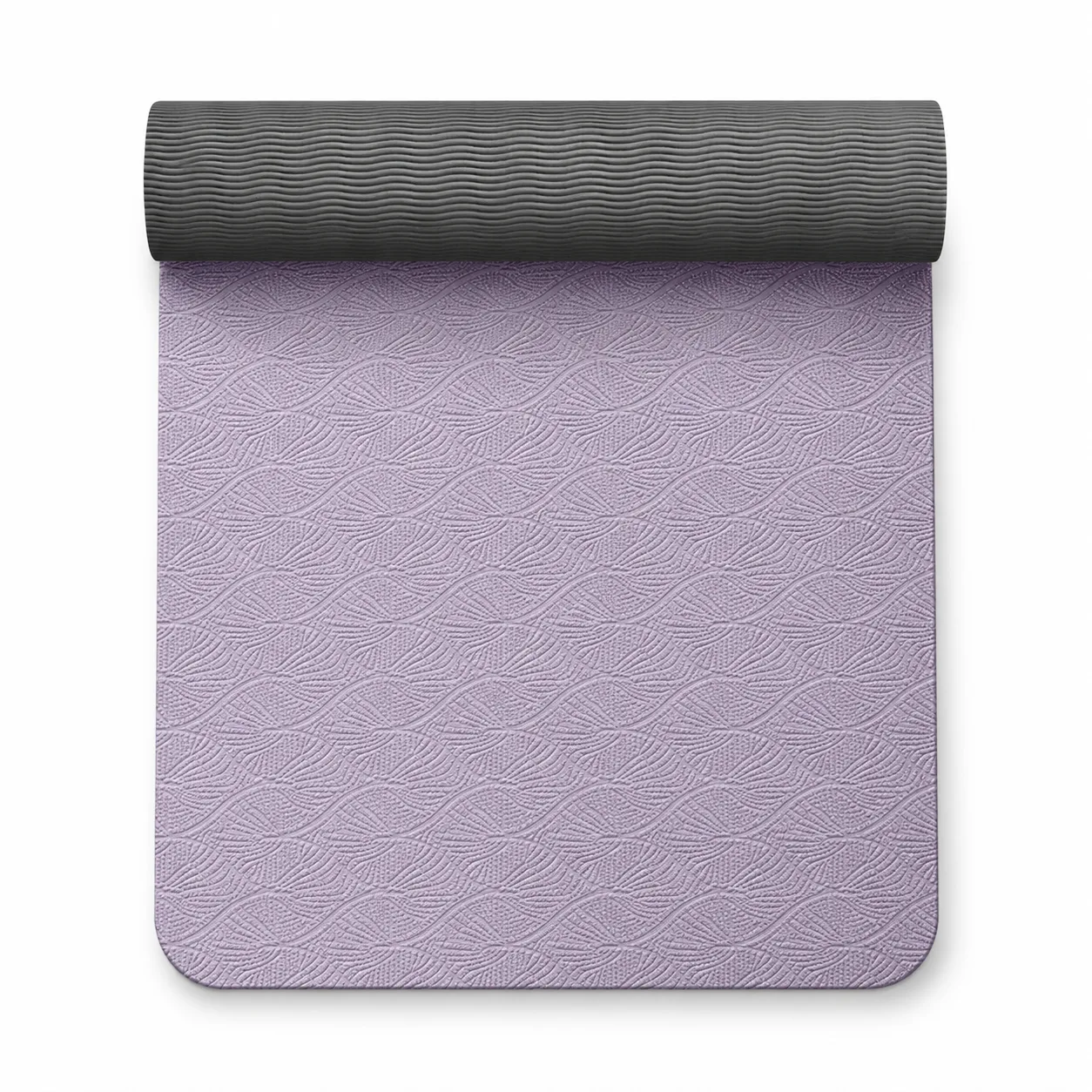
Explore the black roll-up exercise mat and check its product details before choosing your studio essentials.
View this piece