


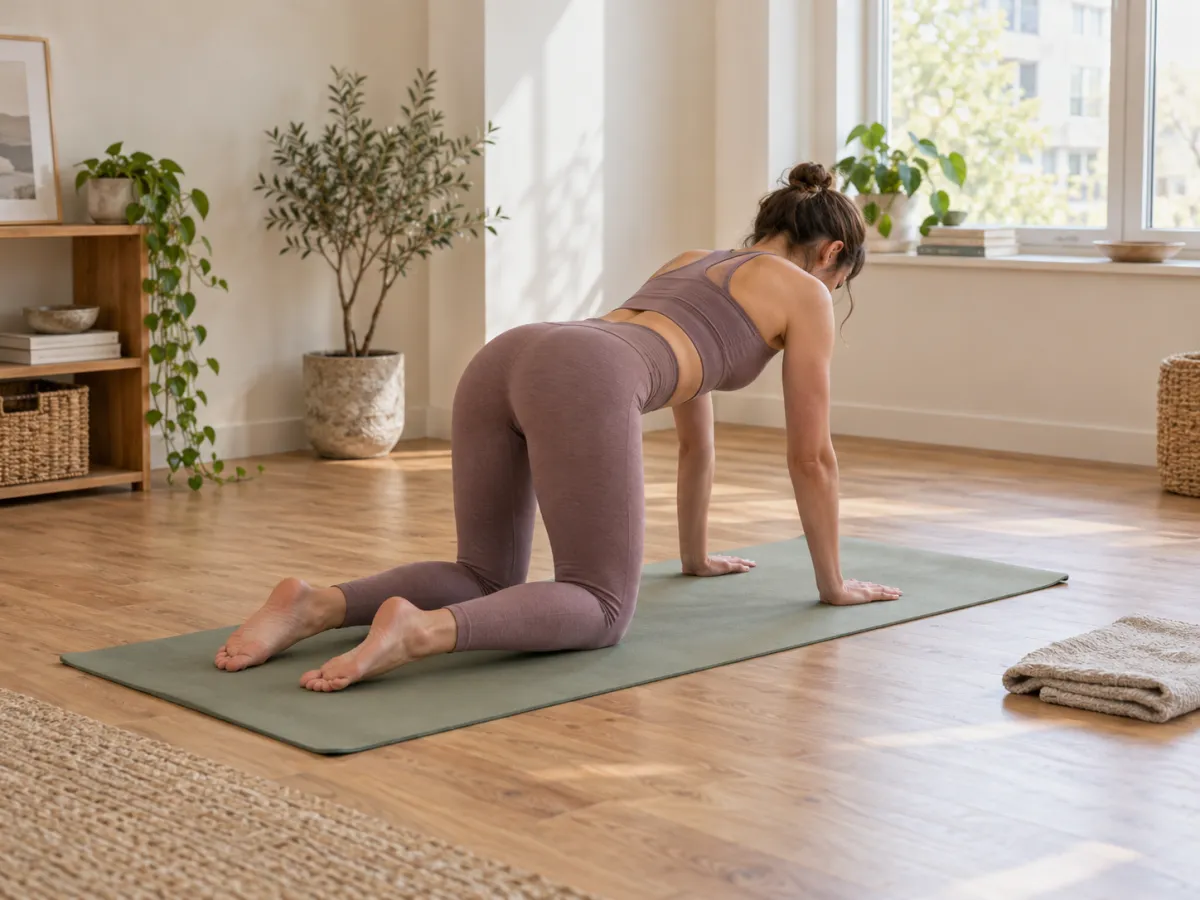
Deciding between a folding pilates mat vs roll up mat depends on whether your priority is crease-free spinal rolling continuity, compact closet storage, or lateral limb clearance on an extra wide pilates mat for home floor routines. While accordion-style folding mats pack flat into travel bags and eliminate edge curling, hinge seams can interrupt segmental vertebral contact if placed directly beneath the lumbar spine. Traditional roll-up mats and extra-wide home mats provide an uninterrupted closed-cell elastomer surface that supports full-range supine sweeps, side-lying leg series, and multi-prop transitions.
According to the PilatesFits catalog listing, the Pilates Mats collection covers mats for floor exercises and studio sessions, compared by thickness, dimensions, material, and care instructions.
Key Specifications to Compare When Shopping for Folding Pilates Mat Vs Roll Up Mat
When evaluating a folding pilates mat vs roll up mat, four structural specifications govern how the mat performs under real Pilates loading:
1. Surface Continuity vs Accordion Hinge Geometry
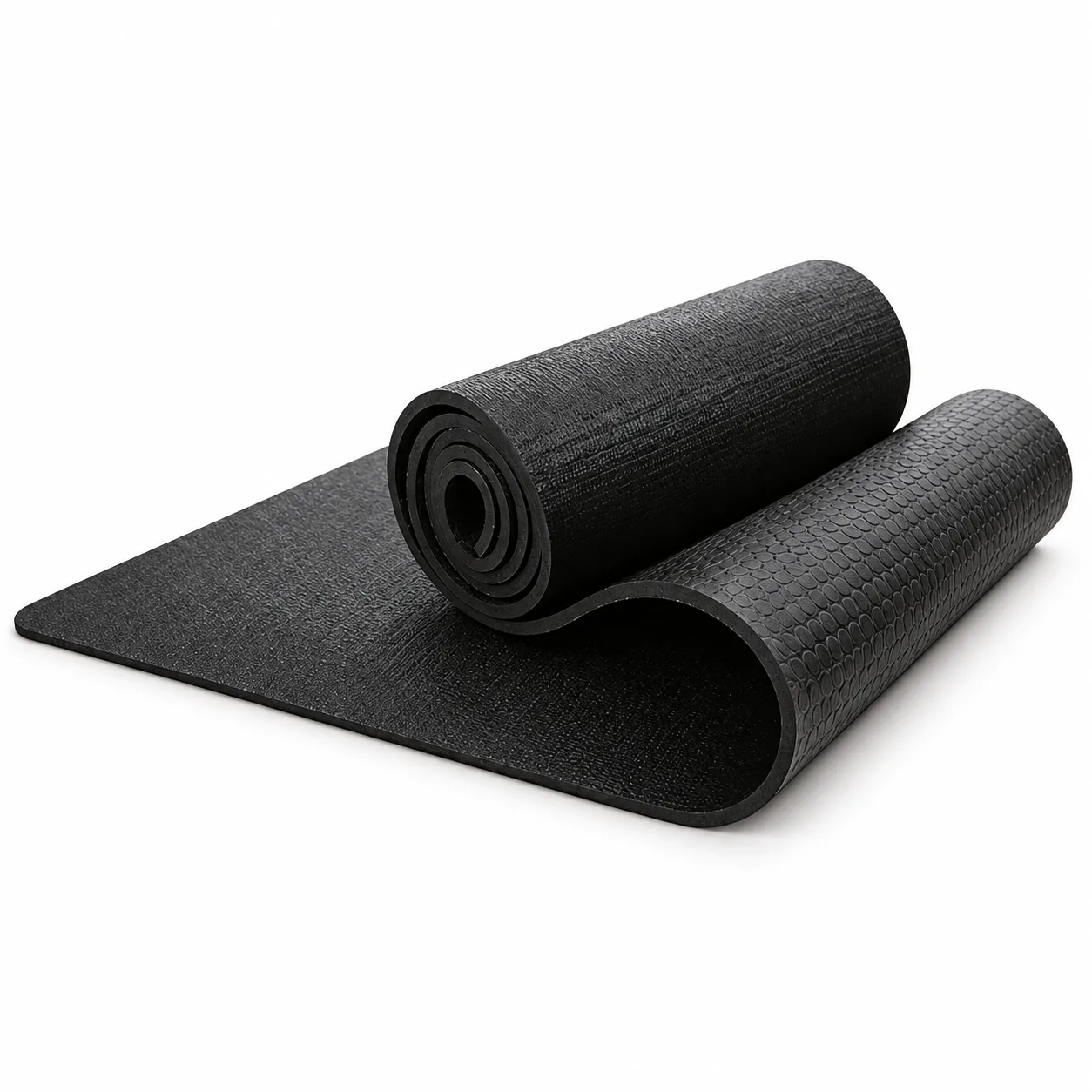
Roll-up mats consist of a continuous sheet of closed-cell NBR or TPE foam, ensuring uniform vertical damping from the crown of the head to the tailbone. Folding mats are scored with alternating transverse hinges so the panels stack neatly like an accordion. During static planks or kneeling work, those hinge lines can act as helpful visual alignment markers for hand and knee spacing, but during Rolling Like a Ball or Roll Up, a wide hinge groove under the lumbar spinous processes can create a brief gap in foam support.
2. Edge Memory and Unrolling Flatness
Thick roll-up mats stored tightly wound can develop inward curl at the leading and trailing edges if rolled with the top surface facing inward. Folding mats lie dead-flat on hardwood or tile the instant they are unfolded because their panel segments counteract rotational memory.
3. Lateral Width and Limb Sweep Footprint
Standard studio mats are sized to fit neatly side by side in group classes, which means exercises with wide horizontal abduction—such as Saw, Corkscrew, Side Kick Series, and supine arm circles—often carry the wrists or heels off the mat edge onto cold flooring. Choosing an extra wide pilates mat for home expands the lateral footprint so your scapulae, elbows, and calcanei remain on cushioned elastomer throughout wide-stance movements.
4. Closed-Cell Compression Recovery and Bottom Traction
Whether you select a folding panel mat, a standard roll-up mat, or an extra-wide format from the Pilates Mats collection, closed-cell foam density determines whether the mat rebounds smoothly between repetitions and resists sliding across smooth residential flooring during Shoulder Bridge and Leg Pull Front.
Folding Pilates Mat Vs Roll Up Mat vs Extra Wide Pilates Mat For Home: Side-by-Side Comparison Matrix
Use this specification matrix to compare the three primary mat architectures across spinal rolling comfort, footprint geometry, and storage behavior:
| Specification & Performance Criterion | Accordion Folding Pilates Mat | Classic Roll-Up Pilates Mat | Extra Wide Pilates Mat for Home | Practical Impact on Pilates Sessions |
|---|---|---|---|---|
| Spinal Rolling Continuity | Segmented panels with transverse hinge seams | Seamless, uninterrupted cushioning head to toe | Seamless, uninterrupted full-body cushioning | Governs smoothness during Roll Up, Seal, and Open Leg Rocker |
| Unfolding Flatness & Setup Speed | Lies flat immediately with zero corner curl | Requires outward rolling care to keep ends flat | Lies flat with substantial floor-hugging weight | Determines how quickly you can start supine warm-ups |
| Lateral Limb & Prop Clearance | Standard width; wide leg sweeps cross the edge | Standard studio footprint for linear mat flows | Extended width supports Saw, Swan, and side-kicks | Keeps elbows, heels, and props on the padded surface |
| Hygiene & Floor Contact Hygiene | Bottom side never touches top side when folded | Bottom touches top unless rolled with a barrier | Stored rolled in a dedicated home workout zone | Affects how often both sides must be wiped down |
| Closet Storage & Portability | Stacks flat on a shelf or fits inside a tote bag | Stores vertically or horizontally as a cylinder | Best suited to dedicated home floor or corner storage | Matches equipment footprint to apartment vs home gym space |
Step-by-Step Selection Checklist for Studio and Home Practitioners
Run through this three-step pre-purchase checklist to match your mat architecture to your space, body mechanics, and prop setup:
- Map Your Primary Exercise Repertoire: If your sessions emphasize classical spinal rolling (Rolling Like a Ball, Boomerang, Jackknife), prioritize a continuous roll-up mat or an extra wide pilates mat for home so no hinge seam sits beneath your vertebrae. If your travel or apartment routine focuses on planks, quadruped stability, and side-lying glute series, a folding mat offers instant flat setup and shelf-friendly storage.
- Measure Your Supine Arm-Circle and Straddle Clearance: Lie on your floor space with arms in a T-shape and legs straddled for Spine Stretch Forward. If your elbows or heels rest on bare hardwood, step up to an extra-wide mat format so your joints stay cushioned while working with a Pilates ring or mini ball.
- Verify Storage Orientation and Cleaning Routine: For roll-up and extra-wide mats, confirm you have closet or corner space to store the cylinder loosely rolled with the ribbed surface facing outward. For folding mats, wipe along the hinge creases after sweaty sessions so dust does not collect inside the fold lines.
Frequently Asked Questions
How thick should a Pilates mat be compared to a standard yoga mat for protecting the spine during rolling mat exercises?
Pilates mats are compared by thickness, dimensions, material, and care instructions for floor and studio exercises, with home Pilates practitioners recommending a thick mat paired with a magic circle and mini ball to cushion the spine during mat work. Unlike thin yoga mats built for standing traction, a thicker closed-cell Pilates mat cushions the spinous processes and sacrum against hard subfloors.
What specifications matter most when comparing folding pilates mat vs roll up mat?
The most important specifications are surface continuity under the spine, closed-cell elastomer rebound density, unfolded flatness, and hygienic folding geometry. Roll-up mats provide a seamless cushion for spinal rolling exercises, while folding mats eliminate corner curling and stack flat on closet shelves.
How does folding pilates mat vs roll up mat compare to extra wide pilates mat for home for regular Pilates sessions?
While folding and standard roll-up mats focus on compact storage and linear floor exercises, an extra wide Pilates mat for home adds lateral surface area so your elbows, knees, and heels stay fully cushioned during wide-stance movements like Saw, Swan prep, and side-lying leg series.
Make it part of your practice
Explore the green fold-out exercise mat and check its product details before choosing your studio essentials.
View this piece