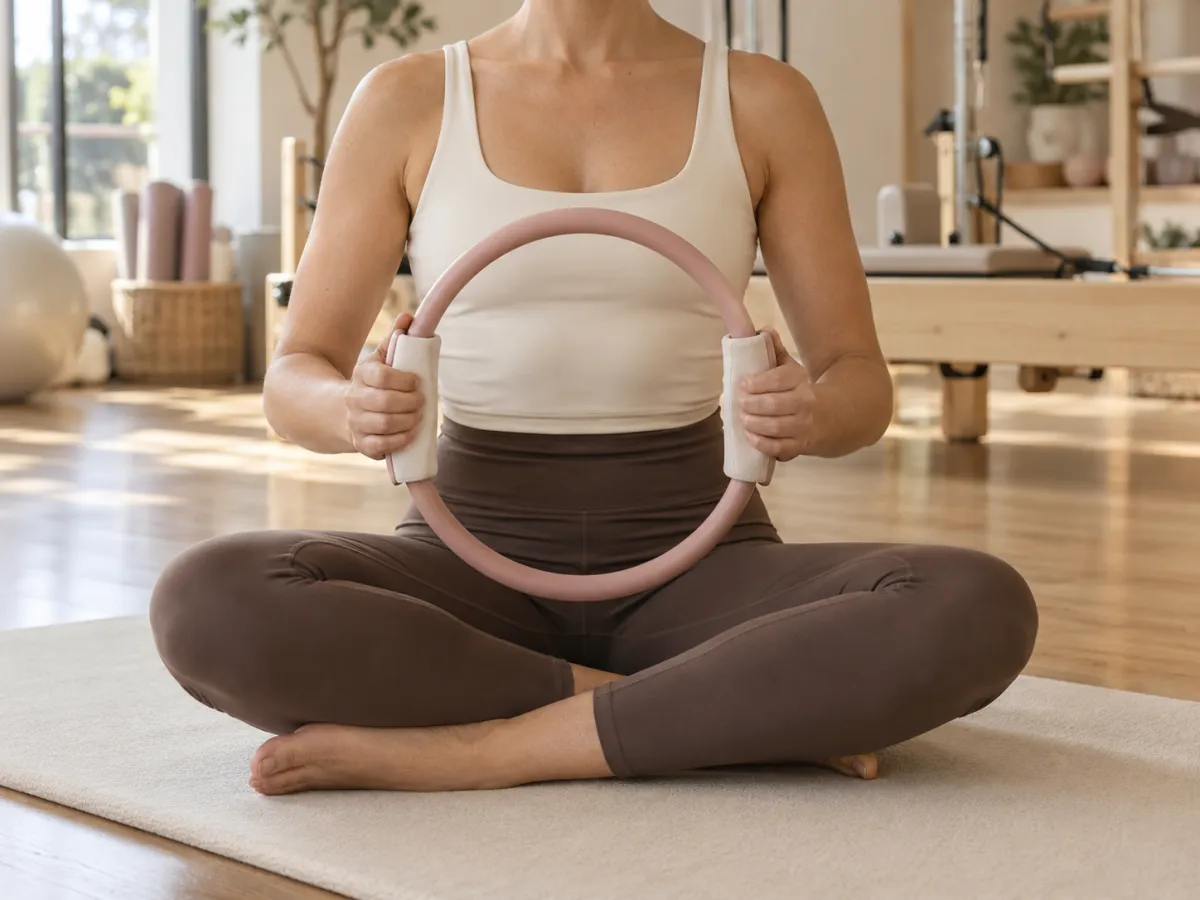
Designing an effective pilates ring arm workout requires understanding how isometric spring compression travels from the heel of your palm through the wrist, elbow, and glenohumeral joint into the serratus anterior and deep core stabilizers. When practitioners rush through upper body pilates ring exercises by squeezing with their fingers or shrugging their upper trapezius toward their ears, the magic circle tilts off-axis, straining the wrists and disconnecting the ribcage from the pelvis. By calibrating pad contact, elbow angle, and costal breathing, you turn every press and outward pull on the ring into balanced shoulder-girdle integration.
According to the PilatesFits catalog listing, the Pilates Rings collection covers Pilates rings (magic circles) compared by diameter and handle style for targeted exercises.
The Biomechanics Behind Pilates Ring Arm Workout in Mat and Reformer Movements
Unlike free weights that load muscles primarily against gravity, a pilates ring arm workout creates closed-chain isometric and eccentric tension in any plane of motion. Whether you are seated tall on a mat, kneeling on a Reformer carriage, or lying supine in tabletop, pressing inward on the dual pads recruits the pectoralis major, anterior deltoid, and serratus anterior while demanding anti-rotation stability from the obliques. Conversely, placing the forearms or wrists inside the padded handles and pressing outward targets the posterior deltoids, infraspinatus, and middle trapezius to counterbalance rounded studio posture.
| Upper-Body Ring Exercise | Pad Contact & Grip Setup | Primary Muscle Recruitment | Scapular & Ribcage Cue | Common Compensation to Avoid |
|---|---|---|---|---|
| Sternum-Height Chest Press | Heel of the palm centered on outer foam pads; fingers long and relaxed | Pectoralis major, serratus anterior, and transverse abdominis | Widen the collarbones and draw the front ribs together on the exhale press | Gripping the pads with white-knuckled fingers or hunching the upper traps |
| Overhead Halo & Crown Press | Palms on outer pads held slightly forward of the forehead in the scapular plane | Serratus anterior, lower trapezius, and deep cervical flexors | Slide the shoulder blades down toward the back pockets as the ring rises | Arching the thoracolumbar junction or flaring the bottom ribs forward |
| Internal-Pad Abduction Pull | Outer forearms or wrists resting against the inner foam pads at chest height | Posterior deltoids, rhomboids, and external shoulder rotators | Press outward from the backs of the shoulders rather than bending the wrists | Hyperextending the wrists or squeezing the shoulder blades into a rigid pinch |
| Single-Arm Hip-to-Thigh Press | Bottom pad anchored against the lateral hip; top palm pressing downward | Latissimus dorsi, triceps brachii, and ipsilateral internal oblique | Lengthen the crown of the head upward while depressing the working scapula | Leaning the torso sideways to force the ring inward with body weight |
| Supine Tabletop Pullover Press | Ring held above the chest with elbows softly micro-bent during overhead reach | Latissimus dorsi, serratus anterior, and upper rectus abdominis | Keep the posterior ribcage anchored to the mat as the ring arcs overhead | Locking the elbow joints or letting the lower back lift off the mat |
3 Common Mistakes With Upper Body Pilates Ring Exercises and How to Fix Each One
Even experienced students encounter pad slippage or neck fatigue during upper body pilates ring exercises when small mechanical details slip. Use these three targeted form fixes to restore clean joint tracking:
- Flexing the Wrists Instead of Pressing Through the Heel of the Palm: When your fingers wrap around the edge of the foam pad, compressive load shifts into the carpal tunnel and forearm flexors, causing the ring to twist sideways. Fix this by extending all five fingers long across the outside of the pad and driving force straight through the pisiform and heel of the palm aligned with your radius and ulna.
- Locking the Elbows and Elevating the Scapulae: Straightening the arms completely during a chest or overhead press jams the humeral head upward into the acromion and shifts tension straight into the neck. Maintain a soft, wide curve through the elbows—imagining you are wrapping your arms around a wide tree trunk—so the serratus anterior wraps smoothly around the ribcage.
- Treating the Magic Circle Like a Single-Plane Squeezer: Unlike basic plastic thigh squeezers that only hinge along one track, dual-pad Pilates magic circles respond to 360-degree torque. Pairing a circle from the PilatesFits Pilates Rings collection with a supportive sacral or thoracic prop from the PilatesFits Pilates Balls collection helps you maintain neutral pelvic and ribcage alignment during multi-planar arm series.
Self-Check Alignment Protocol Before Your Next Session
Before beginning your next pilates ring arm workout on the mat or Reformer, run through this 60-second setup checklist:
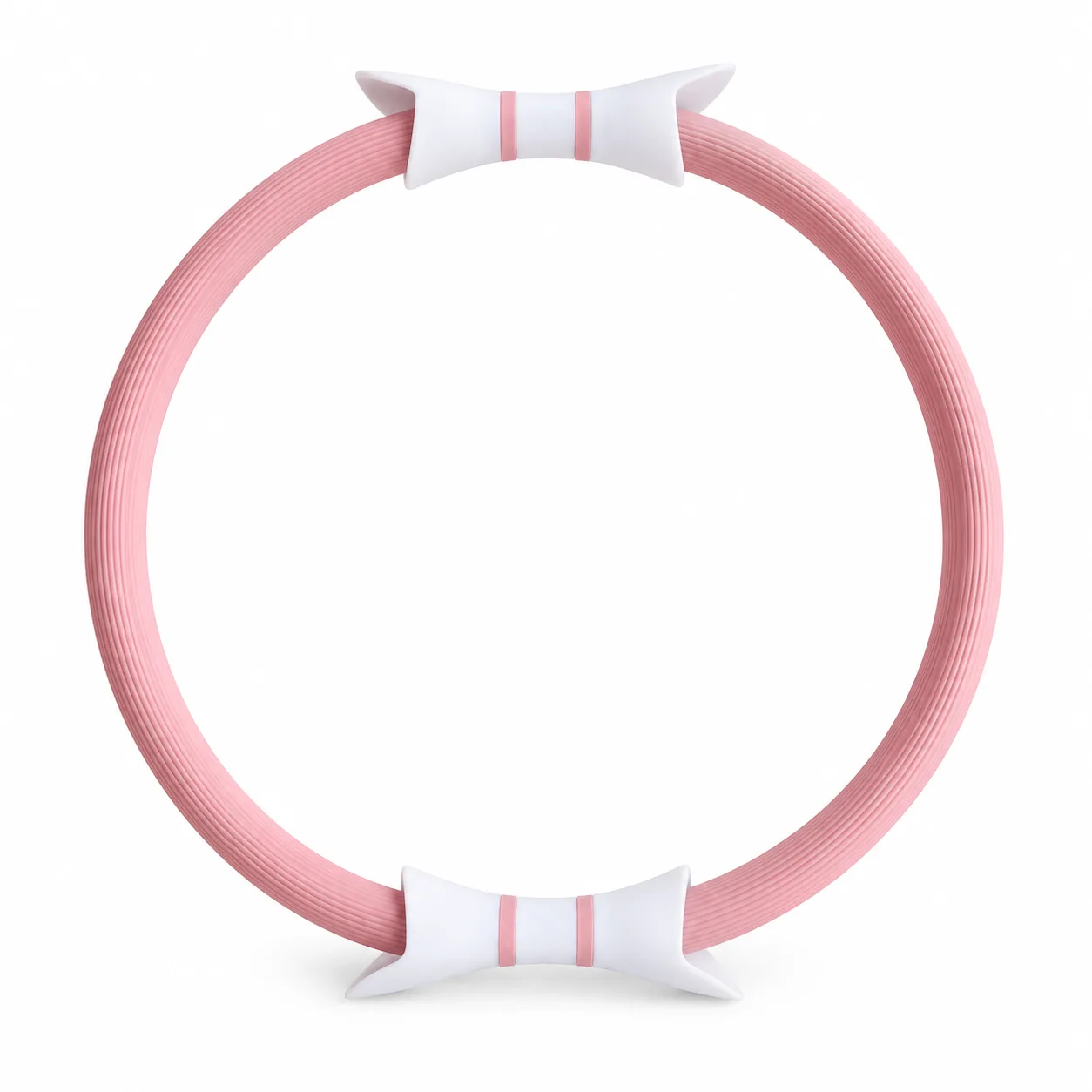
- Check Pad Symmetry and Handle Alignment: Hold the ring at sternum level and verify that both dual pads sit parallel to your breastbone rather than tilted diagonal.
- Set the Scapular Plane: Bring your elbows slightly forward of your torso line so you can see both elbows in your peripheral vision without turning your head.
- Synchronize Exhale With Isometric Compression: Begin your exhale a split second before pressing the pads inward so your pelvic floor and deep transverse abdominis engage before shoulder load peaks.
- Control the Spring Return: Resist the ring’s outward rebound for a slow three-count inhale instead of letting the flexible loop snap your hands apart.
Frequently Asked Questions
How does a Pilates magic circle ring compare to basic thigh squeezers for inner-thigh and full-body Pilates exercises?
Pilates magic circles feature a continuous flexible ring with dual inner and outer pads compared by diameter and handle style, enabling both inward compression and outward abduction across upper-body, core, and lower-body routines rather than single-hinge squeezing.
What is the most common mistake people make with pilates ring arm workout?
The most frequent error in a pilates ring arm workout is gripping the handles with bent wrists and locked elbows, which transfers tension into the forearms and upper neck instead of recruiting the chest, lats, and serratus anterior.
How does upper body pilates ring exercises affect alignment and muscle activation in Pilates?
Practicing upper body pilates ring exercises with soft elbows and heel-of-palm pressure creates closed-chain feedback that anchors the shoulder blades flat against the ribcage and prevents rib flare during mat and Reformer sequences.
Make it part of your practice
Explore the ivory ribbed pilates ring and check its product details before choosing your studio essentials.
View this piece