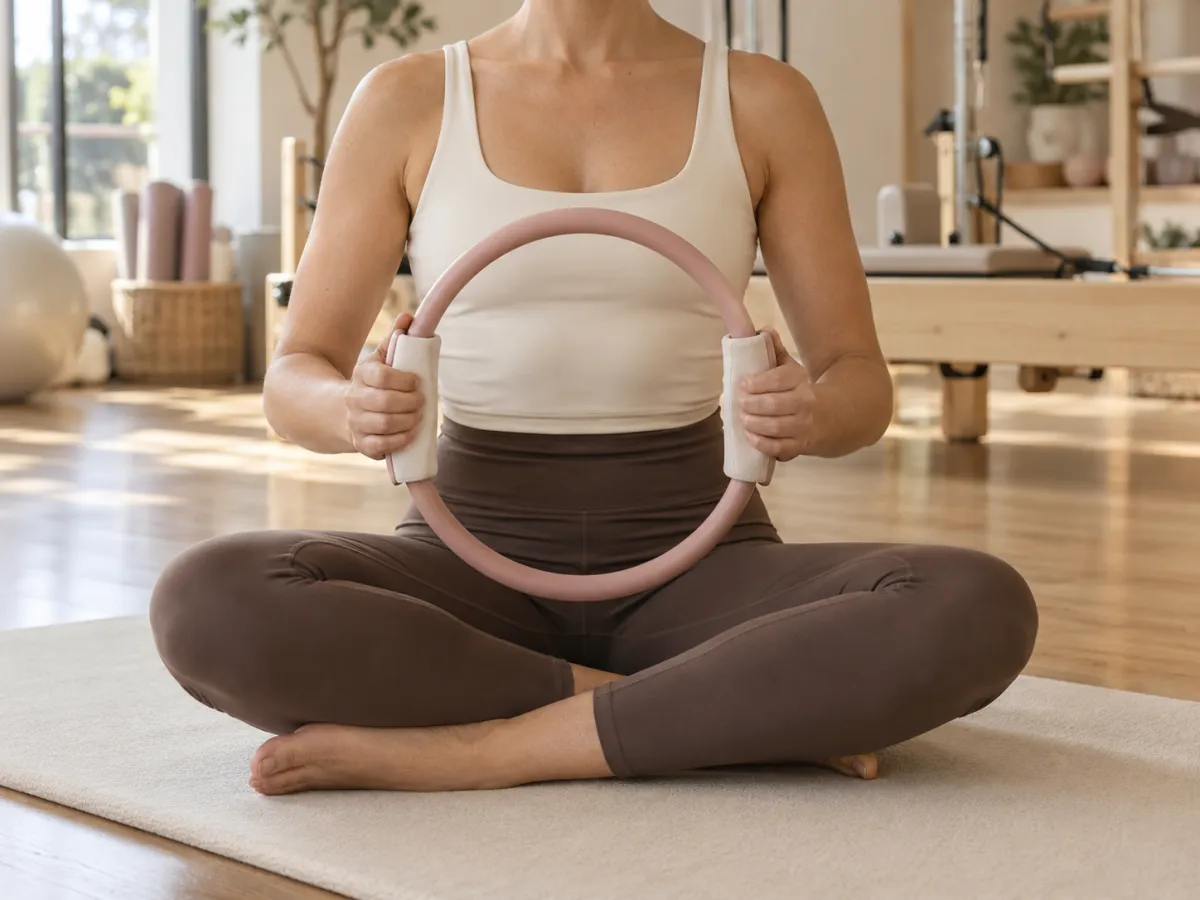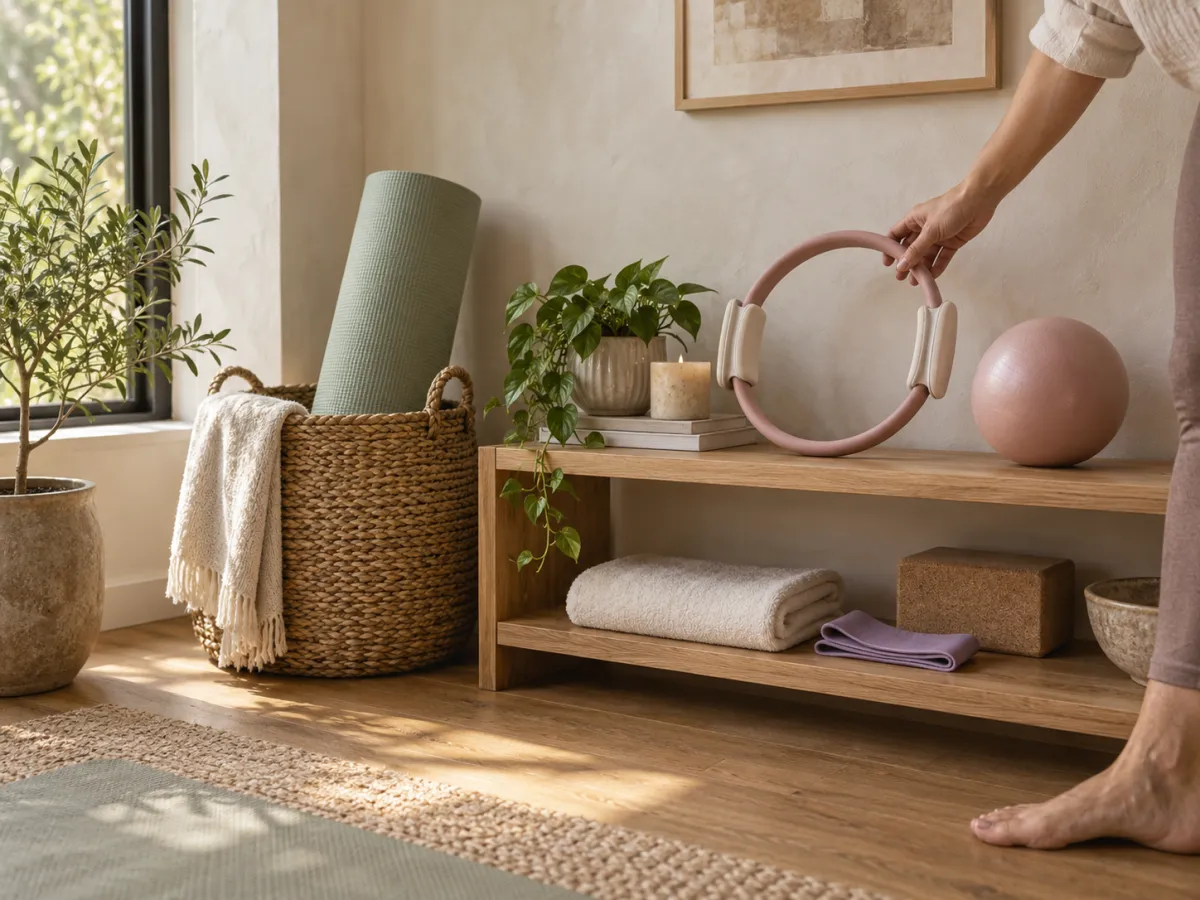
Deciding between a pilates ring vs ball comes down to whether your training session requires rigid, two-directional spring resistance across a wider limb span or compliant, three-dimensional air cushion feedback for spinal articulation and deep pelvic stability. When comparing a magic circle vs mini ball, experienced instructors rarely treat them as mutually exclusive substitutes; instead, they pair both props across warm-up, peak control, and decompression blocks so the ring’s dual crescent handles challenge limb alignment while the inflatable mini ball supports lumbopelvic positioning and proprioceptive balance.
According to the PilatesFits catalog listing, the Pilates Rings collection covers Pilates rings (magic circles) compared by diameter and handle style for targeted exercises.
How Pilates Ring vs Ball Fits Into a Complete Pilates Training System
While both props generate isometric muscular recruitment through inward compression, their mechanical response curves and contact surfaces behave differently under load. In a structured pilates ring guide, understanding how spring tension contrasts with pneumatic cushioning helps you pick the right tool—or layer both—for every movement block:
| Biomechanical & Programming Dimension | Pilates Ring (Magic Circle) | Inflatable Mini Pilates Ball | Combined Multi-Prop Layering Benefit |
|---|---|---|---|
| Primary Resistance Vector | Linear inward adduction and outward abduction along a flat plane | Multi-directional, compliant inward compression with unstable surface shear | Pairs upper-body ring presses with lower-body ball squeezing for full-chain core co-contraction |
| Contact Geometry & Width | Wide diameter with contoured inner and outer crescent handle pads | Compact spherical cushion that conforms to narrow joint spaces and spinal curves | Allows wide-stance ankle or palm work with the ring while keeping knees aligned over a ball |
| Spinal & Pelvic Support | Not used underneath the spine or sacrum due to rigid loop construction | Ideal under the sacrum, mid-thoracic spine, or cervical curve for supported articulation | Elevates the pelvis on a mini ball during supine tabletop ring squeezes to challenge rotary stability |
| Abduction (Outward Press) Capability | Dual-sided pads allow stepping inside the loop to target outer hips and deltoids | Offers inward squeeze only; cannot resist outward abduction without an external strap | Uses the ring at the outer thighs for abduction while holding the ball overhead for scapular control |
| Feedback for Limb Symmetry | Immediately tips or twists out of plane if one limb pushes harder than the other | Shifts or rolls slightly when adductor or palm pressure becomes uneven | Combines visual plane feedback from the ring with tactile roll feedback from the ball |
When selecting the best pilates ring for reformer and mat cross-training, notice how the ring’s dual handle pads bridge wider anatomical spans—such as shoulder-width palms or hip-width ankles—where a compact mini ball would force your limbs into narrow internal rotation.
Progressive Sequence Combining Pilates Ring vs Ball and Magic Circle vs Mini Ball
Rather than choosing only one prop for an entire workout, apply these pilates ring tips to sequence both tools across three progressive training blocks without cluttering your mat space:
- Warm-Up Block — Thoracic Extension & Adductor Wake-Up: Place a partially deflated mini ball beneath your mid-thoracic spine (between the shoulder blades) with knees bent and feet planted. Hold the magic circle between your palms at chest height with elbows wide. Inhale to drape your upper back over the ball into gentle thoracic extension, then exhale to curl your ribs toward your pelvis while applying a smooth inward press on the ring’s outer pads to connect serratus anterior and deep abdominal engagement.
- Peak Control Block — Dual-Prop Supine Tabletop & Bridge Co-Contraction: Lie supine with the mini ball wedged between your inner knees to maintain neutral hip width, and hold the magic circle vertically between your hands directly above your shoulders. Exhale to articulate into a shoulder bridge or lift both legs to tabletop; simultaneously squeeze the mini ball with your inner thighs while pressing the magic circle handles inward with your palms to link pelvic floor recruitment with scapular stabilization.
- Decompression & Outer-Hip Block — Seated Spine Twist & Abduction Reset: Sit tall on your mat (or slightly elevated on a folded towel) with your legs extended and ankles stepped inside the magic circle so your outer shins rest against the inner crescent pads. Hold the mini ball lightly between your palms in front of your sternum. Press your shins outward against the ring to fire the lateral hip stabilizers while rotating your ribcage smoothly left and right around a vertical spinal axis.
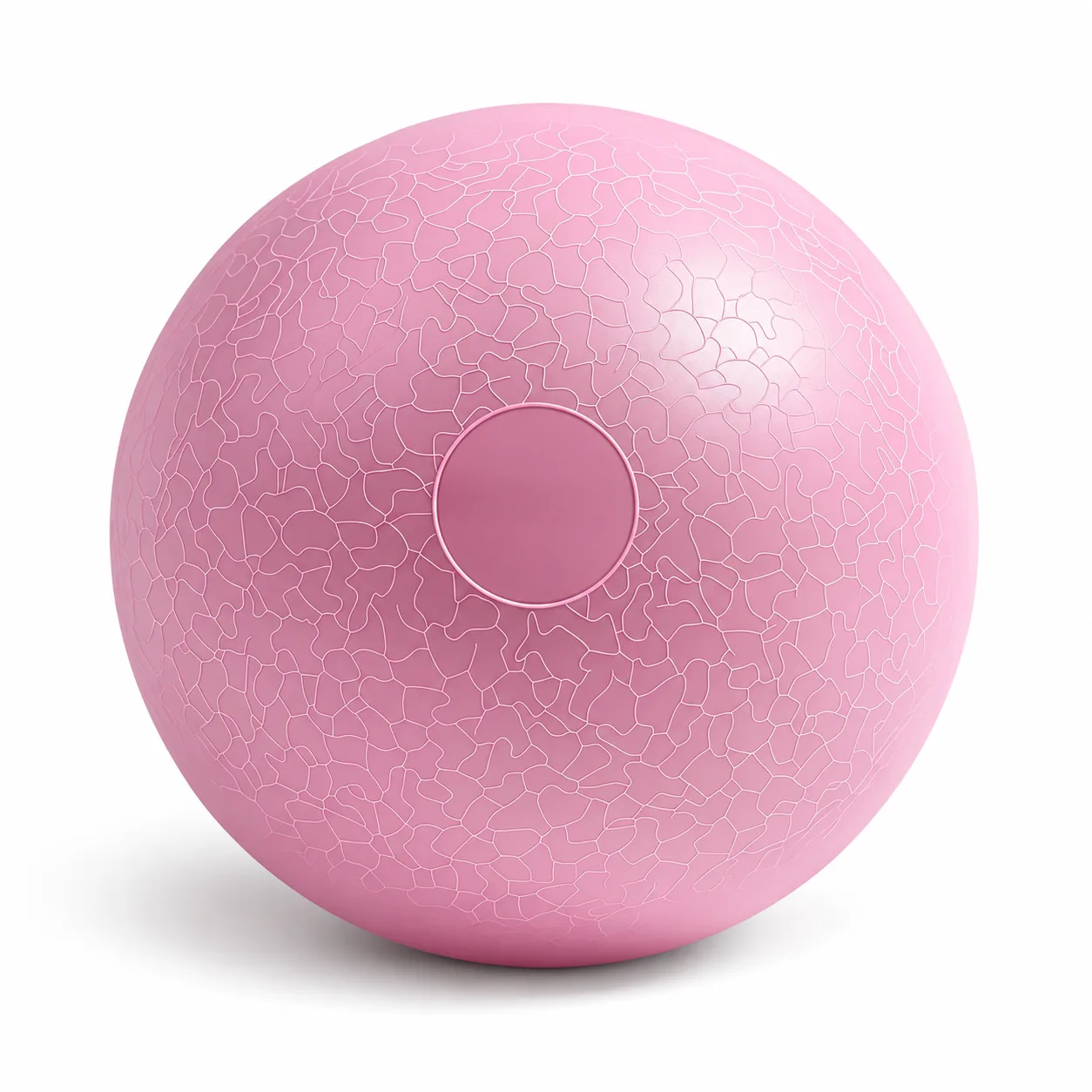
To build your own dual-prop home or studio setup, browse our Pilates Rings collection to compare handle contours and pair your circle with a soft, burst-resistant prop from our Pilates Balls collection.
How to Progress Challenge Week Over Week Without Buying Redundant Gear
Once basic single-prop exercises feel effortless, use these three biomechanical variables to scale your magic circle vs mini ball sessions before adding heavier equipment:
- Shift the Ring from Proximal to Distal Levers: Moving the magic circle from above the knees down to the inner ankles—or from bent-elbow chest presses to long-arm overhead reaches—multiplies rotational torque on your core without changing the ring itself.
- Combine Unstable Sacral Support with Ring Lever Work: Placing the mini ball beneath your sacrum during supine leg lowers while holding steady palm compression on the magic circle removes floor contact stability and forces your transverse abdominis and multifidus to control pelvic tilt.
- Use Asymmetric Tempo Holds: Replace rapid pulses with slow isometric holds at peak compression, maintaining quiet, lateral ribcage breathing while keeping both the magic circle level and the mini ball centered.
Frequently Asked Questions
How does a Pilates magic circle ring compare to basic thigh squeezers for inner-thigh and full-body Pilates exercises?
A dual-pad Pilates magic circle delivers balanced spring resistance for both inward adduction and outward abduction across upper-body, core, and lower-body positions, whereas single-hinge plastic thigh squeezers only provide one-way inward compression and lack the symmetrical loop geometry needed for ankle or overhead work.
How do you combine a Pilates ring vs ball in a single workout without cluttering your mat?
Use the mini ball near your center of mass—under the sacrum, between the shoulder blades, or between the knees—to guide spinal articulation and narrow-stance alignment, while using the magic circle at your distal limbs (palms or ankles) to add two-way isometric resistance.
What is the best way to progress magic circle vs mini ball exercises once basic movements feel easy?
Lengthen the lever arm by moving the magic circle farther from your torso, slow down the eccentric release phase of each squeeze, or elevate your pelvis on the mini ball while pressing the ring overhead to challenge anti-rotation core stability.
Make it part of your practice
Explore the blush pilates ring with white pads and check its product details before choosing your studio essentials.
View this piece