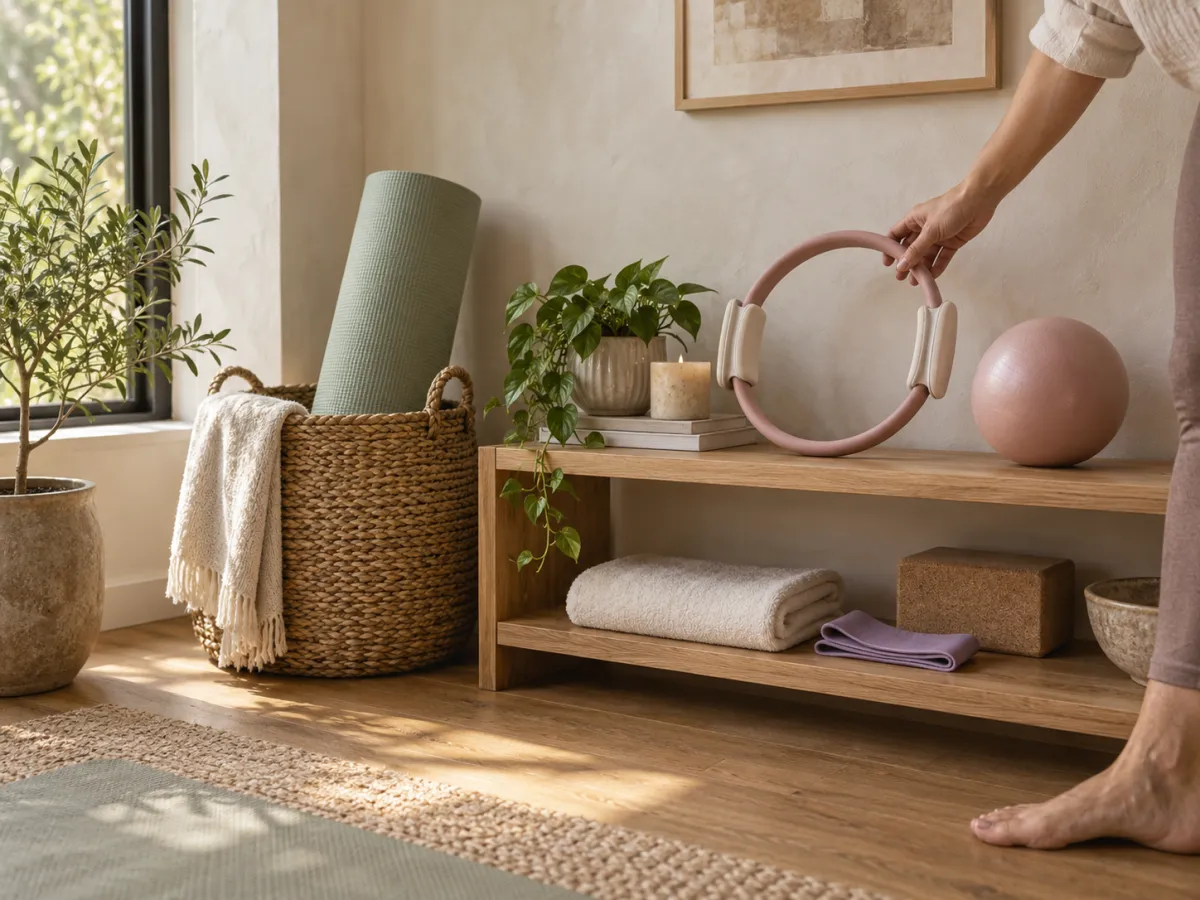
Building an effective home pilates equipment setup does not require dedicating an entire room to a commercial metal carriage. When comparing pilates equipment for home sessions, experienced instructors and practitioners consistently advise prioritizing tools that deliver measurable progressive overload—such as a dense spine-protecting mat, multi-level mini loop bands, a long resistance band, a spring-steel or fiberglass magic circle, an anti-burst mini stability ball, and dual-sided floor sliders—rather than buying oversized, low-tension filler bundles. Understanding the material construction, resistance curves, and footprint tradeoffs across these core props ensures every piece in your home setup actively advances your strength, pelvic stability, and control.
According to the PilatesFits catalog listing, the Pilates Accessories collection spans balls, rings, resistance bands, sliders, detachable bars, mats, boards, bags, and towels.
Key Specifications to Compare When Shopping for Home Pilates Equipment
Not all home pilates equipment is engineered to the same mechanical tolerances. Many entry-level multi-piece kits bundle thin 3 mm yoga mats with uncalibrated elastic cords that lose tension after a few weeks of use. When evaluating individual props or modular sets, compare these five material and structural specifications:
- Mat thickness and closed-cell foam density (8 mm–15 mm): Unlike standing yoga flows, classical and contemporary mat Pilates involves repeated spinal articulation (Rolling Like a Ball, Seal, Open Leg Rocker, and supine leg series) that loads the spinous processes directly against the floor. Look for high-density closed-cell NBR or TPE cushioning that resists bottoming out under your sacrum while preventing moisture absorption.
- Resistance band modulus and material profile (fabric vs. latex/TPE): Heavy woven fabric mini loop bands resist rolling up the femur during Clamshells, Side-Lying Leg Lifts, and Glute Bridges, whereas long flat latex or latex-free TPE bands offer the high elongation ratio (250%–300% stretch) needed for seated rowing, supine Feet in Straps simulations, and overhead shoulder mobility.
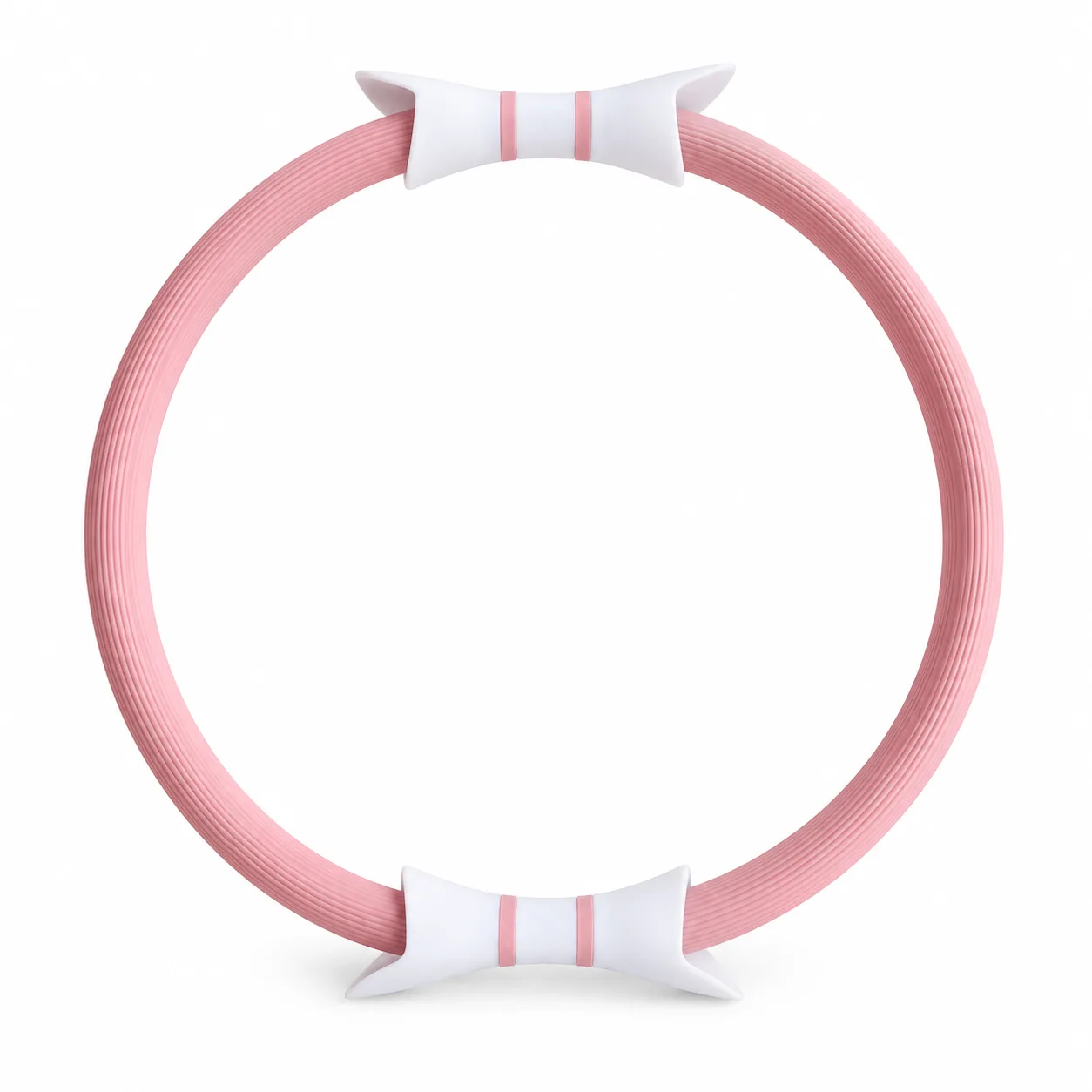
- Pilates ring (Magic Circle) core material and diameter (14 in vs. 15 in): A quality ring uses either tempered spring steel or high-memory fiberglass encased in a sweat-resistant rubberized shell with dual-sided crescent foam pads. Fiberglass cores resist permanent oval deformation over thousands of adductor and pectoral squeezes.
- Mini stability ball anti-burst wall thickness (7 in–9 in PVC): The inflatable mini ball must feature a textured, non-slip cellular PVC skin that stays tacky against activewear fabric when wedged under the sacrum for unstable dead bugs or between the inner thighs for pelvic floor activation.
- Core slider dual-surface friction: Look for two-sided discs pairing a smooth, convex HDPE polymer face (for high-pile or low-pile carpet) with a dense EVA foam or felt backing (for sealed hardwood, laminate, or tile floors).
Home Pilates Equipment vs. Pilates Equipment for Home: Side-by-Side Comparison Matrix
Whether you search for home pilates equipment or pilates equipment for home, your primary decision comes down to selecting the right combination of progressive props and compact stations for your training goals and floor space. Use this six-row specification matrix to compare the core equipment categories:
| Equipment Category | Primary Biomechanical Role | Key Material & Resistance Spec | Active & Storage Footprint | Best Exercises Supported | Main Limitation to Account For |
|---|---|---|---|---|---|
| High-Density Pilates Mat (8 mm–15 mm) | Spinal cushioning, joint protection, and traction foundation | Closed-cell NBR or dual-layer TPE with ribbed non-slip surface | Standard 72 in × 24 in active area; rolls or folds for closet storage | Roll-ups, Rolling Like a Ball, Hundred, Spine Stretch, and kneeling sequences | Thicker 15 mm mats slightly increase ankle instability during standing single-leg balance |
| Multi-Level Mini Bands & Long Loop Bands | Progressive isotonic tension across hip abductors, extensors, and upper back | Woven non-roll fabric loops (light/medium/heavy) + long flat TPE/latex strips | Fits inside a small pouch or gym tote pocket | Supine leg circles, monster walks, seated rows, chest expansion, and arm arcs | Elastic tension peaks at end-range elongation rather than maintaining constant studio spring load |
| Pilates Ring (Magic Circle) | Isometric adductor, abductor, and pectoral compression with midline feedback | 14 in–15 in fiberglass or spring-steel ring with dual padded crescent handles | Hangs flat on a closet hook or slides behind a bookshelf | Inner thigh squeezes, supine bridge pulses, overhead chest presses, and swan prep | Fixed ring diameter delivers compression resistance (plus outer-pad abduction) rather than long-excursion pulls |
| Inflatable Mini Pilates Ball (7 in–9 in) | Unstable lumbo-pelvic support, thoracic extension, and adductor co-contraction | Anti-burst cellular PVC inflated to 60%–80% firmness via plug valve | Deflates flat for travel or stores in a small bin when inflated | Sacral-elevated toe taps, curl-ups over the thoracic spine, and heel-squeeze hamstring curls | Over-inflating turns the ball into a rigid fulcrum; requires periodic pressure adjustment |
| Dual-Sided Core Sliders | Low-friction planar glide to replicate carriage-style eccentric control | Smooth polymer disc base + cushioned EVA/fabric top face | Stacks to less than 1 inch high in any drawer | Sliding reverse lunges, supine hamstring bridge slides, plank pikes, and kneeling saws | Requires clean floors and active core stabilization since discs move in 360 degrees without rails |
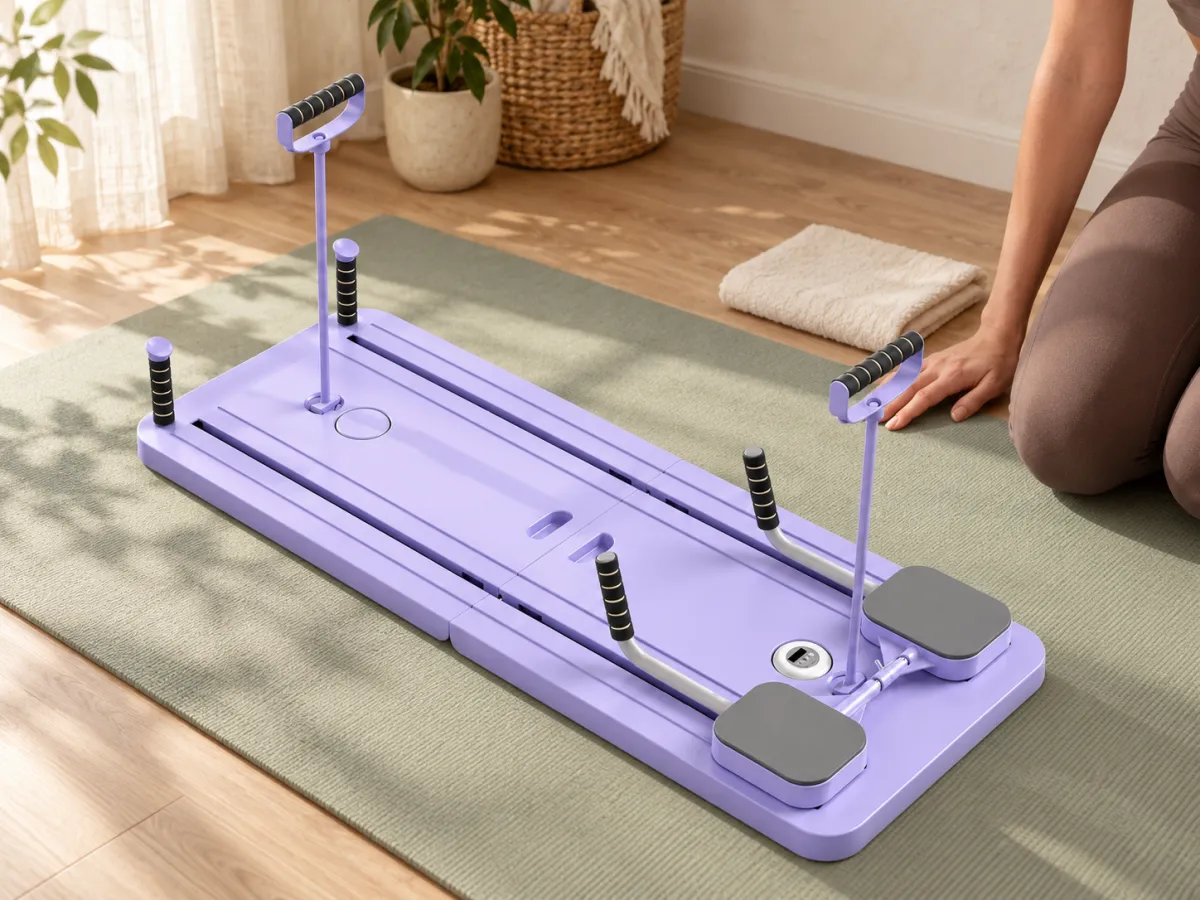
| Foldable Pilates Board & Detachable Bar | Guided linear sliding track or bar-anchored band vector for structured home flows | Polymer roller track or multi-section steel bar with clip-on elastic cords | Unfolds on a mat footprint; folds in half or disassembles into a carry bag | Kneeling core pikes, rollouts, bar squats, rotational torso presses, and push-ups | Shorter track travel and elastic cords do not replace full-length supine Reformer metal spring carriages |
Step-by-Step Selection Checklist for Studio and Home Practitioners
Rather than purchasing a generic 15-piece bundle filled with ultra-light tubes and thin foam blocks you will outgrow in two weeks, build your pilates equipment for home kit in four deliberate stages:
1. Anchor Your Floor Surface with a Spine-Safe Mat and Grip Layer
Start by testing how your spine feels during a slow roll-down on your actual training floor. Over hardwood or tile, prioritize a dense closed-cell mat from the PilatesFits Pilates Mats collection so your vertebrae never bruise during rolling transitions. If your hands or back perspire during fast-paced flows, pair your mat with a non-slip microfiber towel to maintain consistent traction.
2. Prioritize Progressive Overload Props Over Low-Tension Bundle Fillers
Experienced practitioners consistently recommend building your core accessory stack around tools that scale in resistance as your deep stabilizers get stronger. Browse the PilatesFits Pilates Accessories collection and prioritize:
- A graded set of mini bands plus a heavy long resistance band: Gives you immediate load progression for both short-lever hip work and long-lever leg circles.
- A fiberglass or spring-steel Pilates ring and a 9-inch mini ball: Together, these two props unlock isometric midline connection, thoracic extension support, and unstable pelvic challenges that bodyweight alone cannot replicate.
- Dual-sided sliders: Add eccentric sliding challenges to lunges, planks, and bridges on either carpet or hardwood.
3. Add Guided Track or Bar Stations Only When They Match Your Routine
If you enjoy structured kneeling ab rollouts, core pikes, or standing bar-assisted squats, adding a foldable Pilates board or detachable resistance bar provides guided hand and foot placement without occupying permanent floor space. Just verify that the elastic cord attachments allow you to swap or double up bands as your strength progresses.
4. Audit Your Storage and Travel Workflow
The best home pilates equipment setup is the one you can deploy in under 60 seconds. Dedicate a breathable tote bag or a single closet bin to your ring, deflated or semi-inflated mini ball, resistance bands, and sliders so your props stay protected from direct sunlight and sharp edges between sessions.
Frequently Asked Questions
Which home Pilates accessories and props are worth buying first for an effective at-home Pilates setup?
For an effective at-home Pilates setup across accessories like balls, rings, resistance bands, sliders, bars, and mats, experienced practitioners recommend focusing on tools that allow progressive overload—such as multi-level mini bands, a challenging long loop band, sliders, a magic circle, a mini ball, and a thick mat—rather than low-resistance filler pieces. Starting with these six high-utility items covers spinal cushioning, isometric midline compression, eccentric floor glide, and scalable pull resistance.
What specifications matter most when comparing home pilates equipment?
Focus on closed-cell foam density and thickness (8 mm to 15 mm) for mats, fiberglass or tempered spring-steel tension cores for Pilates rings, multi-weight resistance ratings for fabric and latex bands, anti-burst cellular PVC grip for mini balls, and dual-sided polymer/foam construction for core sliders. Evaluating these material specs prevents the premature stretching, rolling, or bottoming-out common in bargain multi-item bundles.
How does home pilates equipment compare to pilates equipment for home for regular Pilates sessions?
Both search terms refer to the same ecosystem of at-home Pilates props and compact training stations, though some shoppers use pilates equipment for home when comparing modular accessory kits against full-sized home Reformers. For regular 30-to-45-minute sessions in an apartment or multipurpose room, a progressive accessory kit (thick mat, ring, mini ball, multi-level bands, and sliders) delivers full-body resistance and instability training with zero permanent floor footprint.
Make it part of your practice
Explore the lavender pilates training board with handles and check its product details before choosing your studio essentials.
View this piece