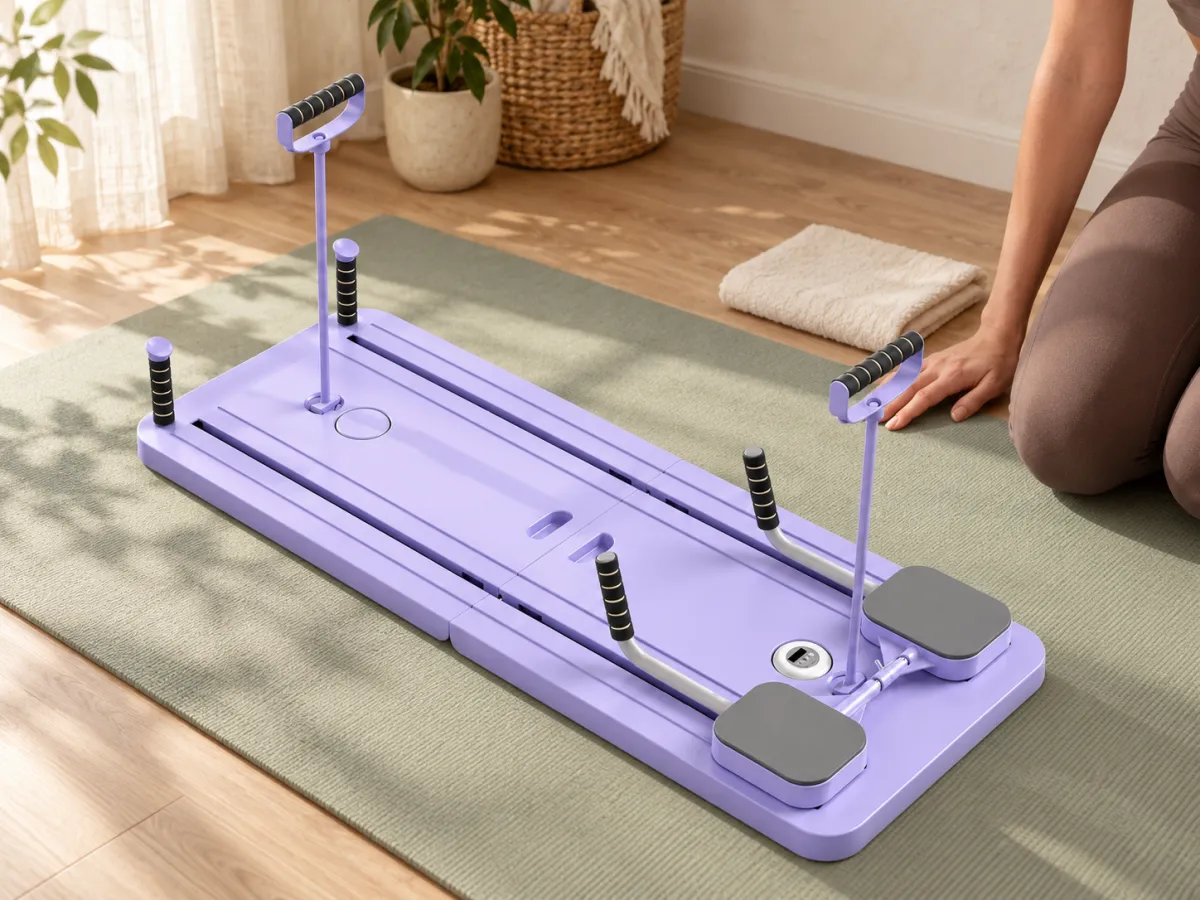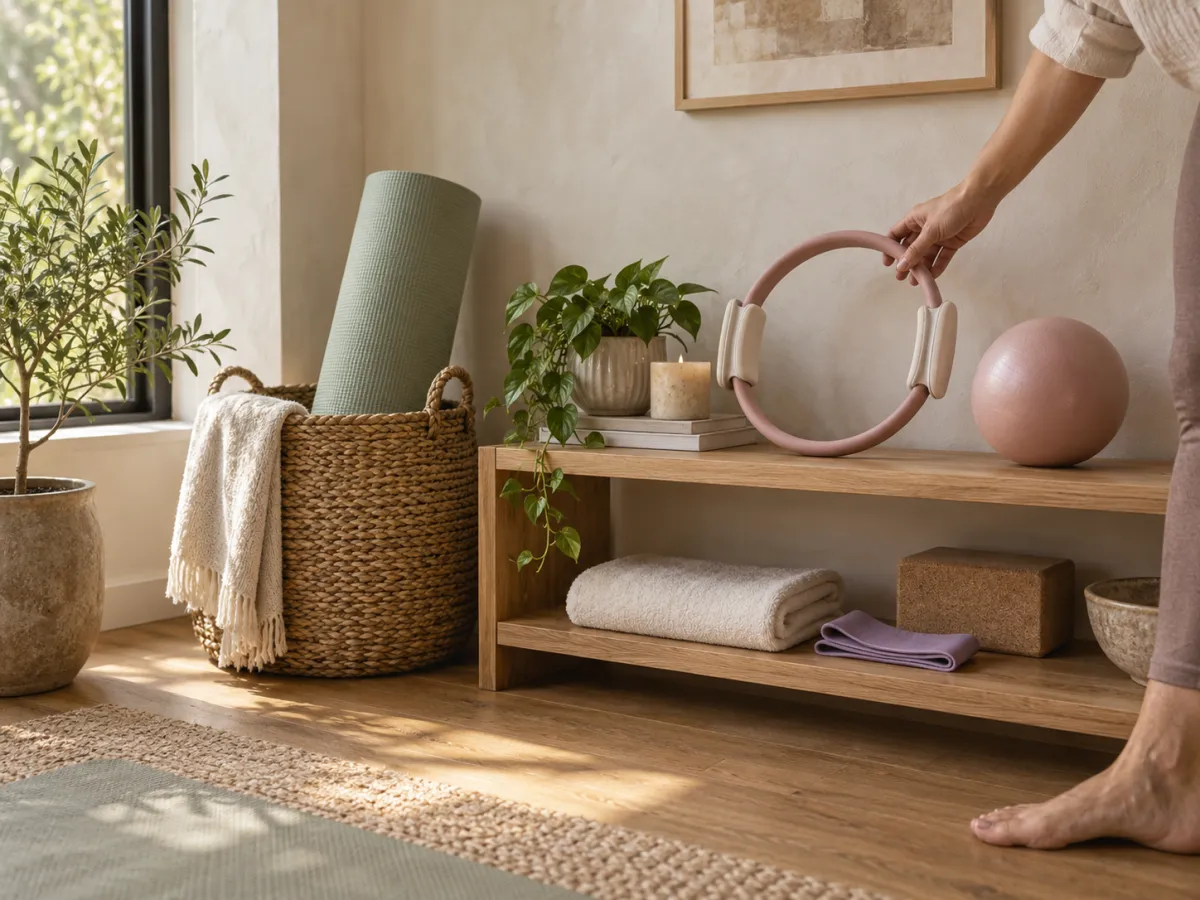
Learning how to store home pilates equipment properly is the difference between a clutter-free small apartment pilates setup that lasts for years and a pile of warped rings, sticky mats, and brittle resistance bands. When you work out in a compact living room or studio apartment, your gear is often tucked into closets, slid under sofas, or stacked near windows immediately after a session—conditions that can quietly accelerate material breakdown if moisture, heat, and compression are not managed first.
According to the PilatesFits catalog listing, the Pilates Accessories collection spans balls, rings, resistance bands, sliders, detachable bars, mats, boards, bags, and towels.
Below, we break down what actually degrades foam, elastomer, fiberglass, and fabric props, followed by a step-by-step sanitization routine and space-saving storage rules tailored to tight apartments.
| Prop Category | Primary Degradation Triggers | Safe Cleaning Agent | Ideal Small-Apartment Storage Method |
|---|---|---|---|
| Resistance Bands & Tubing | UV light, radiators, harsh alcohol/bleach, sharp closet hooks | Lukewarm water + mild dish soap | Coiled loosely in a breathable pouch inside a dark drawer |
| Pilates Rings (Magic Circles) | Heavy vertical stacking, trapped sweat on foam pads | Damp microfiber cloth + mild soap | Hung horizontally on a flat wall peg or laid flat on a top shelf |
| Mini Stability Balls | Direct sunlight, over-inflation near heat vents, rough floors | Water + gentle castile soap | Partially deflated or cradled in a mesh bag or closet bin |
| Mats, Sliders & Boards | Creased folding, damp rolling, abrasive scrubbers | Water + diluted mild cleanser | Mats rolled loosely mat-side out; boards and sliders laid flat under a bed |
| Detachable Bars, Bags & Towels | Trapped moisture inside closed gym bags, salt buildup | Machine wash (towels/bags) or damp wipe (bars) | Disassembled bars in padded sleeve; fully air-dried textiles |
What Degrades Pilates Accessories: Sweat, Heat, Detergents & UV Exposure
Before deciding where to tuck your gear in a small apartment, it helps to understand why home Pilates props fail prematurely. Unlike solid cast-iron weights, Pilates accessories rely on elastic polymers, closed-cell foams, composite fiberglass rings, and low-friction sliding surfaces. Four everyday household hazards cause almost all premature wear:
- Residual sweat and skin oils: Sweat contains salt and lactic acid, while natural skin oils slowly break down latex, thermoplastic elastomer (TPE), and open-cell foam. When you finish a session and immediately roll up a damp mat or toss resistance bands into a closed storage bin, trapped moisture breeds odor-causing bacteria and makes elastomer surfaces tacky. Over time, salt crystals also act as micro-abrasives inside detachable bar joints and slider fabrics.
- Radiant heat and temperature swings: In small apartments, storage space near radiators, baseboard heaters, sunny balcony doors, or laundry closets is tempting. However, sustained heat softens PVC and TPE mats, causes inflatable mini balls to expand and stress their seams, and dries out natural latex bands so they develop micro-fissures at the anchor points.
- Harsh household detergents and alcohol sprays: Disinfectant wipes, bleach solutions, undiluted vinegar, and high-concentration isopropyl alcohol strip the protective plasticizers from mats and stability balls. Instead of keeping gear fresh, harsh solvents leave foam pads brittle, fade surface markings, and ruin the smooth glide coating on floor sliders and Pilates boards.
- Direct UV exposure and compression creep: Leaving a Pilates mat or resistance band draped over a balcony chair or sunlit windowsill exposes polymers to ultraviolet oxidation, leading to chalkiness and snapping. Meanwhile, wedging a Pilates ring under a heavy storage box—or folding a thick mat into tight squares to fit a narrow shelf—creates permanent compression creases that throw off spring symmetry and cushioning.
Step-by-Step Cleaning and Sanitization Protocol for How to Store Home Pilates Equipment
A disciplined post-workout routine takes only a few minutes and ensures you never seal moisture into a cramped apartment closet. Follow this four-step sanitization protocol as part of mastering how to store home pilates equipment:
- Dry wipe immediately after your session: Use a clean microfiber workout towel to blot away surface sweat from your mat, ring pads, detachable bar grips, and stability ball before putting anything away. Removing surface moisture right away cuts drying time significantly.
- Apply a material-safe mild wash: Mix a few drops of mild, fragrance-free dish soap or castile soap into a spray bottle filled with lukewarm water. Mist a microfiber cloth rather than soaking the prop directly, and wipe down mats, boards, sliders, ring pads, and detachable bar joints. Draw resistance bands through a damp soapy cloth, then follow immediately with a clean water wipe so no soapy film remains.
- Allow open-air drying in compact spaces: Never roll a mat or bag up props while they are still damp. In a studio or one-bedroom apartment, drape your mat and bands over a drying rack, shower curtain rod with the fan running, or the back of two dining chairs until completely bone-dry to the touch.
- Wash textiles without fabric softeners: Wash grip towels and canvas or mesh storage bags in cold water on a gentle cycle without fabric softeners. Fabric softeners coat microfiber threads in waxy residue, reducing both sweat absorption and non-slip grip during plank and reformer-style board flows.
Storage, Inspection, and Replacement Signs for Small Apartment Pilates Setup
Designing a small apartment pilates setup means using vertical wall clearances, under-furniture gaps, and modular containers without crushing delicate props. Pair these space-saving storage zones with a simple monthly inspection checklist:
- Under-bed and under-sofa clearance for flat rigid gear: Slide compact Pilates boards, disassembled detachable bars, and flat sliders into a low-profile breathable canvas bag under the bed frame, keeping them flat and away from caster wheels.
- Closet door and vertical wall hooks for rings and rolled mats: Mount wide, rounded hooks or a horizontal towel bar inside a hallway closet door to hang your Pilates ring without pinching its foam pads. Store mats rolled loosely—never folded—standing upright in a corner basket or strapped horizontally on a wall cradle.
- Breathable drawer pouches for bands, balls, and towels: Coil resistance bands loosely and place them in a breathable cotton pouch inside a dresser drawer, completely shielded from sunlight. Store mini stability balls slightly deflated in an open closet cubby so ambient temperature shifts do not stress the valve.
- Pre-workout inspection and replacement signs: Before loading tension, stretch resistance bands toward the light to check for tiny white stress marks, nicked edges, or sticky patches; press Pilates ring pads together to verify symmetrical rebound; check that mat undersides still grip the floor; and click detachable bar sections together to confirm the locking pin engages flush without play.
Frequently Asked Questions
Which home Pilates accessories and props are worth buying first for an effective at-home Pilates setup?
For an effective at-home Pilates setup across accessories like balls, rings, resistance bands, sliders, bars, and mats, experienced practitioners recommend focusing on tools that allow progressive overload—such as multi-level mini bands, a challenging long loop band, sliders, a magic circle, a mini ball, and a thick mat—rather than low-resistance filler pieces.
What is the safest way to handle how to store home pilates equipment without damaging the material?
Wipe away sweat with lukewarm water and mild soap, let every piece air-dry completely before putting it away, and store props in a cool, shaded spot away from radiators and sunny windows. Roll mats loosely rather than folding them, hang or lay Pilates rings flat without stacking heavy items on top, and keep resistance bands coiled in a breathable pouch.
How often should you perform maintenance for small apartment pilates setup?
Wipe down high-contact surfaces like mats, ring pads, and bar grips after every workout and let them dry completely before storing them in a closet or under a bed. Perform a regular pre-workout inspection of resistance bands, detachable bar joints, and ball valves to catch edge wear or material fatigue early.
Make it part of your practice
Explore the charcoal folding pilates board and check its product details before choosing your studio essentials.
View this piece