


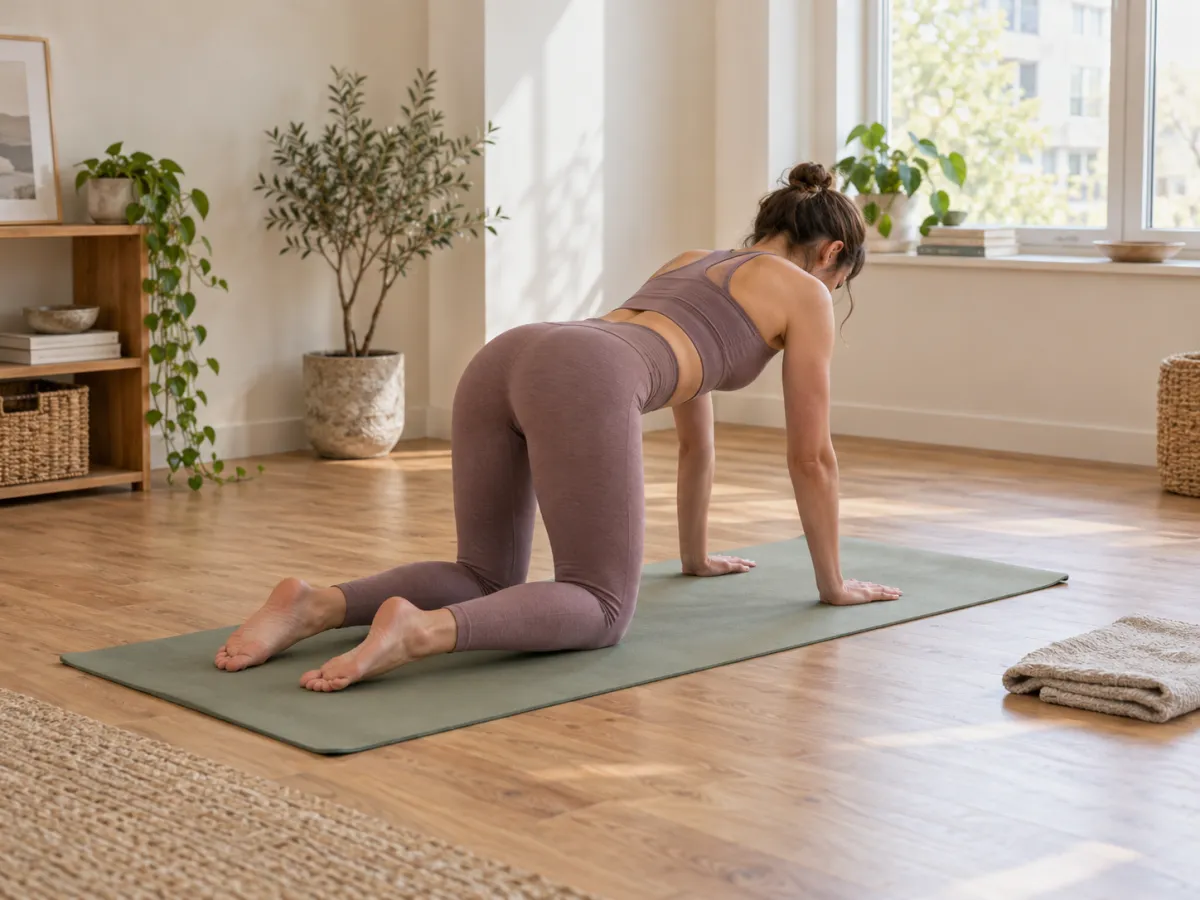
Comparing mat pilates vs reformer pilates at home starts with understanding how floor clearance, torso-to-femur proportions, and prop dimensions shape every movement. When practitioners learn how to replicate reformer pilates at home, experienced instructors recommend building around progressive-overload tools—specifically multi-level mini bands, a challenging long loop band, dual-sided sliders, a fiberglass or spring-steel magic circle, an anti-burst mini ball, and a thick spine-support mat—rather than low-tension filler bundles or oversized equipment that crowds your room. Matching your mat length, ring diameter, and band excursion to your body geometry ensures smooth transitions between your home floor setup and studio Reformer classes.
According to the PilatesFits catalog listing, the Pilates Accessories collection spans balls, rings, resistance bands, sliders, detachable bars, mats, boards, bags, and towels.
Why Sizing and Proportions Matter for Mat Pilates vs. Reformer Pilates at Home in Motion
In a commercial studio, a Reformer adjusts to your height via gear-bar stops, footbar angles, and rope riser clamps. When evaluating mat pilates vs reformer pilates at home, your props and floor footprint must accommodate those same anatomical levers without mechanical slack or cramped limb excursion:
- Torso and leg excursion envelope: Exercises like The Hundred, Double Leg Stretch, and Jackknife require full supine extension from fingertips to pointed toes, plus lateral clearance for Leg Circles and Side Kicks. If your active floor space is too narrow, you will instinctively shorten your hip abduction arc and recruit superficial hip flexors instead of your deep lateral stabilizers.
- Femur length vs. long loop band tension: When using a long resistance band to simulate Feet in Straps, taller practitioners with longer femurs pre-stretch a standard band earlier in the arc, whereas petite practitioners must grip higher up the band or wrap the ends around their hands to eliminate dead slack at tabletop.
- Pelvic width vs. Pilates ring diameter: A Magic Circle that is too wide for a narrow pelvis forces the knees into external rotation during supine shoulder bridges; conversely, placing an under-inflated mini ball between wider-set knees can fail to register adductor midline engagement until the femur heads drift inward.
Mat Pilates vs. Reformer Pilates at Home vs. How to Replicate Reformer Pilates at Home: Measurement & Fit Chart by Body Type
Use this five-row sizing and proportion matrix to match your height, limb geometry, and training space when weighing mat pilates vs reformer pilates at home and selecting props for how to replicate reformer pilates at home:
| Practitioner Profile / Dimension | Mat Pilates Floor & Cushion Spec | Home Reformer Replication Prop Spec | Studio Reformer Equivalent Setting | Common Fit Mistake to Avoid |
|---|---|---|---|---|
| Petite Frame (Under 5’4” / Shorter Femur & Torso) | Standard length mat with 8 mm–10 mm high-density closed-cell foam | 14 in Pilates ring, 7 in mini ball (65% inflated), and choked-up grip on long loop bands | Gear bar set in (closest to footbar) so knees hold an acute 80°–90° flexion angle at rest | Leaving long resistance bands unshortened, resulting in zero tension during the top half of supine leg lowers |
| Average Frame (5’4”–5’9” / Balanced Proportions) | Full-length cushioned mat (10 mm–12 mm) with 18 in lateral floor clearance per side | 14 in–15 in fiberglass ring, 8 in–9 in mini ball, and medium-to-heavy woven fabric mini bands | Middle gear-bar position with standard loop strap length and headrest set flat for roll-overs | Using thin yoga mats on hardwood, which causes sacral bruising during Rolling Like a Ball and Teaser prep |
| Tall Frame (Over 5’9” / Long Femur or Long Torso) | Extended length mat plus 24 in overhead and foot-end floor clearance for slider lunges | High-elongation long loop band, 15 in spring-steel or fiberglass ring, and dual-sided core sliders | Gear bar moved out (second or third stop) or carriage stopper extended to prevent bottoming out | Placing core sliders too close to walls or furniture, cutting short the eccentric slide on reverse lunges and pikes |
| Sensitive Knees, Wrists, or Spinous Processes | 12 mm–15 mm high-density NBR/TPE mat paired with a folded microfiber grip towel | Soft-inflated (60%) mini ball under the thoracic spine and wide padded crescent handles on the ring | Padded jumpboard, box pad, or sticky carriage mat placed over the shoulder blocks and bed | Over-inflating the mini stability ball to 100%, turning a compliant bolster into a hard lumbar fulcrum |
| Studio-to-Home Hybrid Practitioner (Etiquette & Hygiene) | Dedicated home mat plus breathable storage bag for portable props | Personal non-roll fabric mini bands, grip towel, and wipeable closed-cell ring pads | Form-fitting apparel (no zippers that snag vinyl), grip socks, and a personal carriage towel | Wearing loose drawstring shorts or zippered hoodies that catch on resistance bands, sliders, or Reformer springs |
First-Class Verification Test Before Stepping Onto the Carriage
Before committing to a full workout—or bringing your personal props and apparel from home into a studio Reformer class—run this four-step mobility and proportion verification test using a spine-safe mat from the PilatesFits Pilates Mats collection and progressive tools from the PilatesFits Pilates Accessories collection:
1. The Supine Snow-Angel & Overhead Reach Clearance Test
Lie supine in the center of your mat with arms extended overhead and legs lengthened along the floor. Sweep your arms and legs outward in a slow snow-angel arc. If your fingertips or heels brush a wall, sofa base, or table leg, shift your mat position before beginning long-band leg circles or lateral slider lunges.
2. The Tabletop Band Pre-Stretch Check
Loop your long resistance band across the arches of both feet and float your knees to a 90-degree tabletop position with elbows anchored by your ribs. The band should already hold light, even tautness at 90 degrees. If the band sags, walk your hands three to four inches closer to your feet so the eccentric resistance engages the moment you press toward 45 degrees.
3. The Bridge Adductor Alignment Check
Place your Pilates ring or 70%-inflated mini ball between your inner thighs just above the knee joint line and articulate into a shoulder bridge. Look down your torso: your kneecaps should point straight over your second toes, aligned with your hip sockets. If the ring pushes your knees wider than your hips, reposition the foam pads slightly higher on the distal thighs or switch to the mini ball for a narrower stance.
4. The Studio Apparel & Grip Check
Perform five slow Knee Hovers and a Downstretch plank on your mat or sliders. Confirm your waistband stays flat without rolling under the resistance band, your top contains zero metal zippers or back pockets that could press into your spine or scratch a studio carriage, and your hands or feet maintain slip-free traction on the mat surface.
Frequently Asked Questions
Which home Pilates accessories and props are worth buying first for an effective at-home Pilates setup?
For an effective at-home Pilates setup across accessories like balls, rings, resistance bands, sliders, bars, and mats, experienced practitioners recommend focusing on tools that allow progressive overload—such as multi-level mini bands, a challenging long loop band, sliders, a magic circle, a mini ball, and a thick mat—rather than low-resistance filler pieces.
How do I choose the right size or dimension for mat pilates vs reformer pilates at home?
Match your equipment dimensions to your height, femur length, and floor clearance: choose a 10 mm to 15 mm closed-cell mat that supports your full supine reach, allow 18 to 24 inches of unobstructed floor space around the mat for slider lunges and leg circles, and adjust your grip distance on long resistance bands so tension begins at tabletop rather than mid-extension.
What should I know about how to replicate reformer pilates at home before attending a studio Pilates class?
Mastering how to replicate reformer pilates at home with sliders, multi-level bands, a Pilates ring, and a mini ball builds the exact eccentric core braking and pelvic stability required on a studio carriage. When transitioning to an in-person studio class, remember that studios require form-fitting zipper-free attire (to protect vinyl upholstery and prevent spring snags), grip socks, and a personal microfiber towel, and your instructor will translate your home band pre-stretch into specific gear-bar and spring settings.
Make it part of your practice
Explore the lavender wave-texture exercise mat and check its product details before choosing your studio essentials.
View this piece