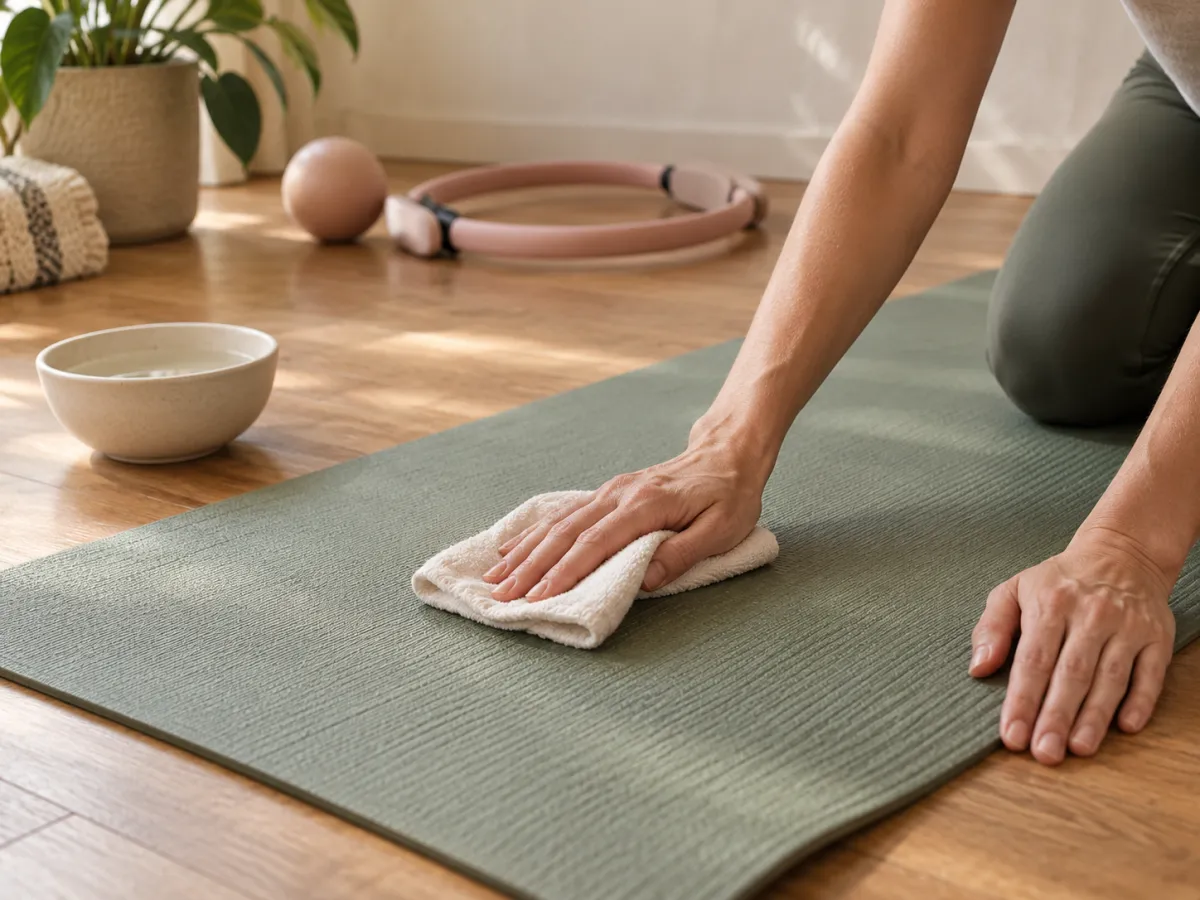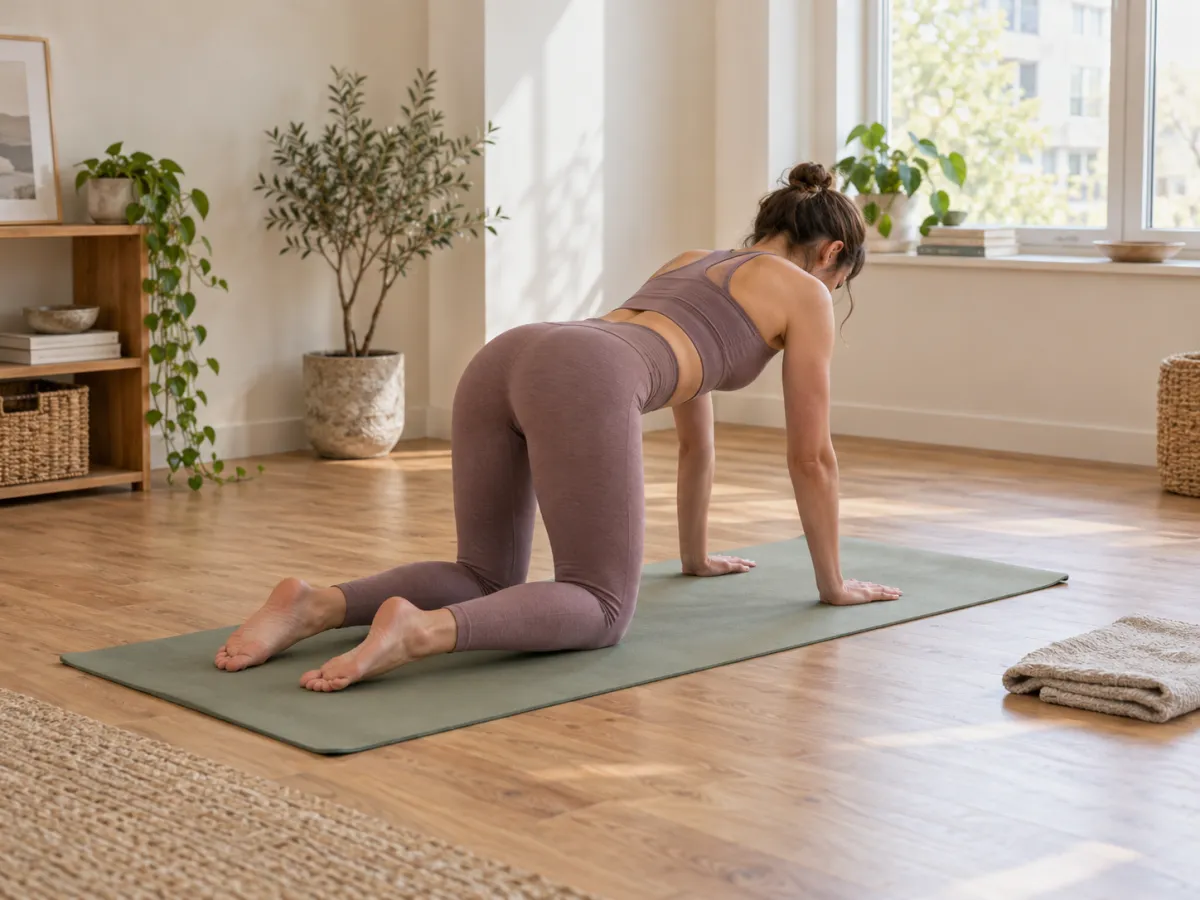
Choosing between an nbr vs tpe yoga pilates mat comes down to how elastomer cell structure and compression recovery behave under spinal rolling loads versus static standing or Reformer grip tasks. When evaluating a closed cell vs open cell exercise mat, mat Pilates practitioners must balance sacral and spinous process cushioning during segmental flexion against wrist, heel, and ankle proprioception during plank and bridge transitions. A foam compound that sinks too slowly or absorbs moisture shifts pelvic alignment mid-set, while a firmer closed-cell elastomer rebounds immediately and seals out sweat.
According to the PilatesFits catalog listing, the Pilates Mats collection covers mats for floor exercises and studio sessions, compared by thickness, dimensions, material, and care instructions.
The Biomechanics Behind NBR vs TPE Yoga Pilates Mat in Mat and Reformer Movements
In classical and contemporary mat Pilates, the floor surface acts as a tactile feedback reference for the posterior ribcage, scapulae, and sacrum. During segmental articulation exercises—such as Roll Up, Rolling Like a Ball, Open Leg Rocker, and Shoulder Bridge—load travels sequentially from the base of the sacrum through the lumbar and thoracic spinous processes. How the mat compresses and rebounds directly dictates whether the deep abdominal wall (transversus abdominis and internal obliques) stays connected or whether the superficial hip flexors take over to brace against floor impact.
| Elastomer & Cell Property | Closed-Cell NBR Foam Mat | Closed-Cell TPE Exercise Mat | Open-Cell Foam / Porous Mat | Biomechanical Impact on Pilates Form |
|---|---|---|---|---|
| Compression Recovery | Plush, cushioned sink with moderate rebound speed | Firm, elastic micro-rebound with high shape memory | Rapid initial sink that bottoms out under focal bony load | Determines whether spinous processes hit hard flooring during rolling work |
| Surface Shear Resistance | Ribbed surface texture that cushions knees and forearms | Dual-layer traction grip that resists lateral hand and heel slide | High dry friction when new, but shifts as pores compress | Governs wrist stability in Long Stretch and heel anchor in Shoulder Bridge |
| Moisture & Sweat Barrier | Sealed cell walls prevent sweat absorption | Sealed thermo-elastic cells wipe clean without soaking | Porous matrix traps perspiration and skin oils inside the core | Affects hygiene and surface tackiness across transitions |
| Proprioceptive Feedback | Soft vertical damping suited to supine spinal work | Balanced floor feedback for kneeling,plank, and standing prep | Uneven damping once localized compression sets in | Influences ankle and wrist co-contraction during single-leg or quadruped sets |
| Apparatus Overlay Use | Too thick and compressible for studio carriage surfaces | Thin variants lay flat over Reformer carriages or studio floors | Compresses unevenly under spring-loaded footbar push | Dictates whether a mat can double as a studio Reformer grip layer |
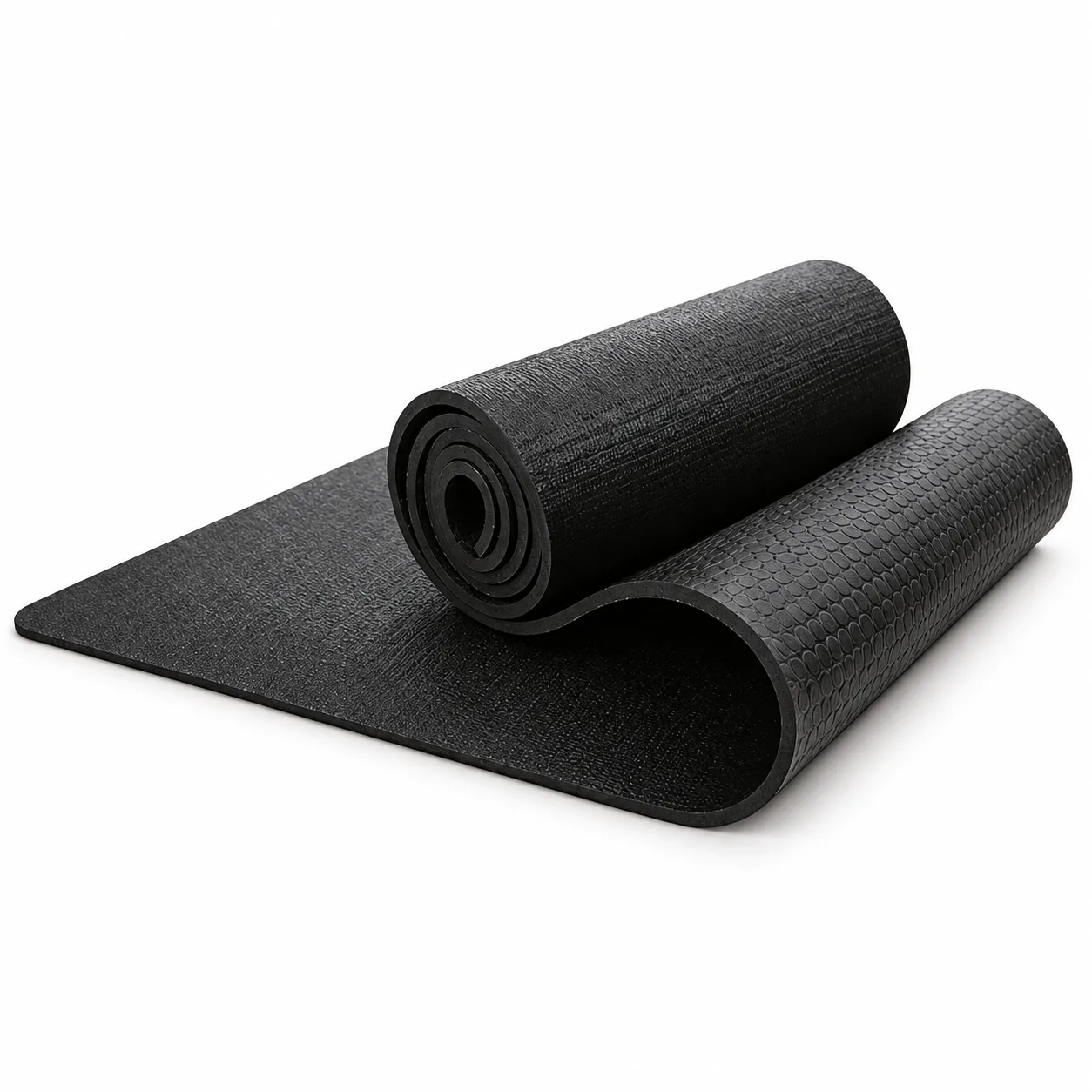
When comparing an nbr vs tpe yoga pilates mat, synthetic nitrile butadiene rubber (NBR) is engineered for plush shock absorption on unforgiving hardwood, tile, or concrete floors. Because thick NBR foams prioritize vertical cushioning, they excel at protecting sensitive vertebrae and kneeling patellae during mat-only routines. Thermoplastic elastomer (TPE), by contrast, delivers a denser, higher-rebound closed-cell matrix. It compresses less under focal load, preserving clearer joint-position sense at the radiocarpal joint and subtalar joint when transitioning from supine core series into quadruped or standing balance sequences.
3 Common Mistakes With Closed Cell vs Open Cell Exercise Mat Selection and How to Fix Each One
Understanding the difference between a closed cell vs open cell exercise mat prevents three recurring compensation patterns that disrupt spinal organization and joint tracking.
Mistake 1: Bottoming Out on Degraded Open-Cell Foam During Segmental Rolling
Many practitioners assume any thick foam pad protects the spine, overlooking whether the internal bubbles are sealed (closed-cell) or interconnected (open-cell). Because open-cell foam allows air to escape laterally when loaded by a narrow bony prominence like the coccyx or a prominent lumbar vertebra, the mat flattens right where protection is needed most. In response, the practitioner unconsciously flattens the lumbar curve or hikes the shoulders to skip over the tender segment during Rolling Like a Ball.
The Biomechanical Fix: Choose a sealed closed-cell mat whose trapped gas pockets resist sudden air displacement under focal load. When practicing on a plush mat, initiate every roll by drawing the low belly inward to lengthen the lumbar spine before the sacrum tips backward, and pair your mat setup with a Pilates ring or mini ball between the inner thighs to maintain steady adductor-to-pelvic-floor engagement.
Mistake 2: Wrist Hyperextension on Ultra-Soft NBR Mats in Quadruped and Plank Work
While plush NBR cushioning feels forgiving under the spine, placing the hands flat on a deeply compressible foam pad allows the heel of the palm (carpal bones) to sink lower than the metacarpophalangeal knuckles. That subtle dorsiflexion angle increases passive strain on the volar wrist capsule during Leg Pull Front, Side Bend, and Kneeling Side Kicks.
The Biomechanical Fix: If you prefer a thick NBR mat for supine spine work on hard home floors, spread the fingers wide and press actively through the first knuckle of the index finger and thumb pad to engage the palmar arches. Alternatively, fold the front edge or shift your hands onto a firmer TPE surface during high-load plank progressions so the forearm bones stack cleanly over a level wrist crease.
Mistake 3: Using a Thick Cushion Mat on a Studio Reformer Carriage or Standing Balance Flow
Practitioners searching for the best pilates mat for reformer overlay or hybrid standing flows sometimes bring a thick cushioned floor mat onto a moving carriage or use it for single-leg standing footwork. Thick, compliant foam introduces multi-directional ankle wobble during standing lunges and alters shoulder-block spacing on a Reformer bed.
The Biomechanical Fix: Match mat thickness and elastomer density to the surface underneath you. Reserve thick cushioned NBR or high-density closed-cell mats from the Pilates Mats collection for floor work on rigid residential subfloors, and switch to a firmer, low-profile closed-cell TPE layer whenever standing ankle stability or direct apparatus contact is required.
Self-Check Alignment Protocol Before Your Next Session
Use this rapid three-step diagnostic before starting your mat routine to verify that your mat material and cell structure support clean alignment:
- The Sacral Rock Test (Supine): Lie supine with knees bent and feet flat, then rock the pelvis gently between anterior tilt, neutral, and posterior imprint. Your sacrum should glide smoothly without sinking into a permanent divot or hitting the subfloor beneath the mat.
- The Heel-Anchor Shear Test (Bridge Prep): Set your heels hip-width apart for Shoulder Bridge and press down and slightly forward through the calcaneus. A quality closed-cell NBR or TPE surface should hold your heels firmly in place without stretching lengthwise or sliding across the floor.
- The Quadruped Wrist Stack Check: Come onto hands and knees with shoulders stacked over wrists and hips over knees. Check that the base of your palm and your knuckles remain on the same horizontal plane; if the heel of the hand sinks deeply, engage your serratus anterior and finger flexors or transition to a firmer TPE surface for weight-bearing arm series.
Frequently Asked Questions
How thick should a Pilates mat be compared to a standard yoga mat for protecting the spine during rolling mat exercises?
Pilates mats are compared by thickness, dimensions, material, and care instructions for floor and studio exercises, with home Pilates practitioners recommending a thick mat paired with a magic circle and mini ball to cushion the spine during mat work. While thin yoga mats prioritize direct floor contact for standing poses, a thicker closed-cell Pilates mat absorbs vertical impact along the spinous processes during rolling sequences.
What is the most common mistake people make with nbr vs tpe yoga pilates mat?
The most common mistake is choosing a mat based solely on thickness without checking elastomer rebound and wrist stability. Ultra-plush NBR mats excel at cushioning the spine and knees on hard floors, whereas denser TPE mats provide firmer rebound and higher lateral shear resistance for planks, side-lying transitions, and standing balance work.
How does closed cell vs open cell exercise mat affect alignment and muscle activation in Pilates?
Closed-cell mats seal air within individual micro-pockets so the surface rebounds consistently under your sacrum and heels, allowing predictable deep core recruitment and moisture-resistant wiping after class. Open-cell mats allow air and moisture to pass through interconnected pores, which can cause localized bottoming out under bony landmarks and require deeper drying care.
Make it part of your practice
Explore the lavender wave-texture exercise mat and check its product details before choosing your studio essentials.
View this piece