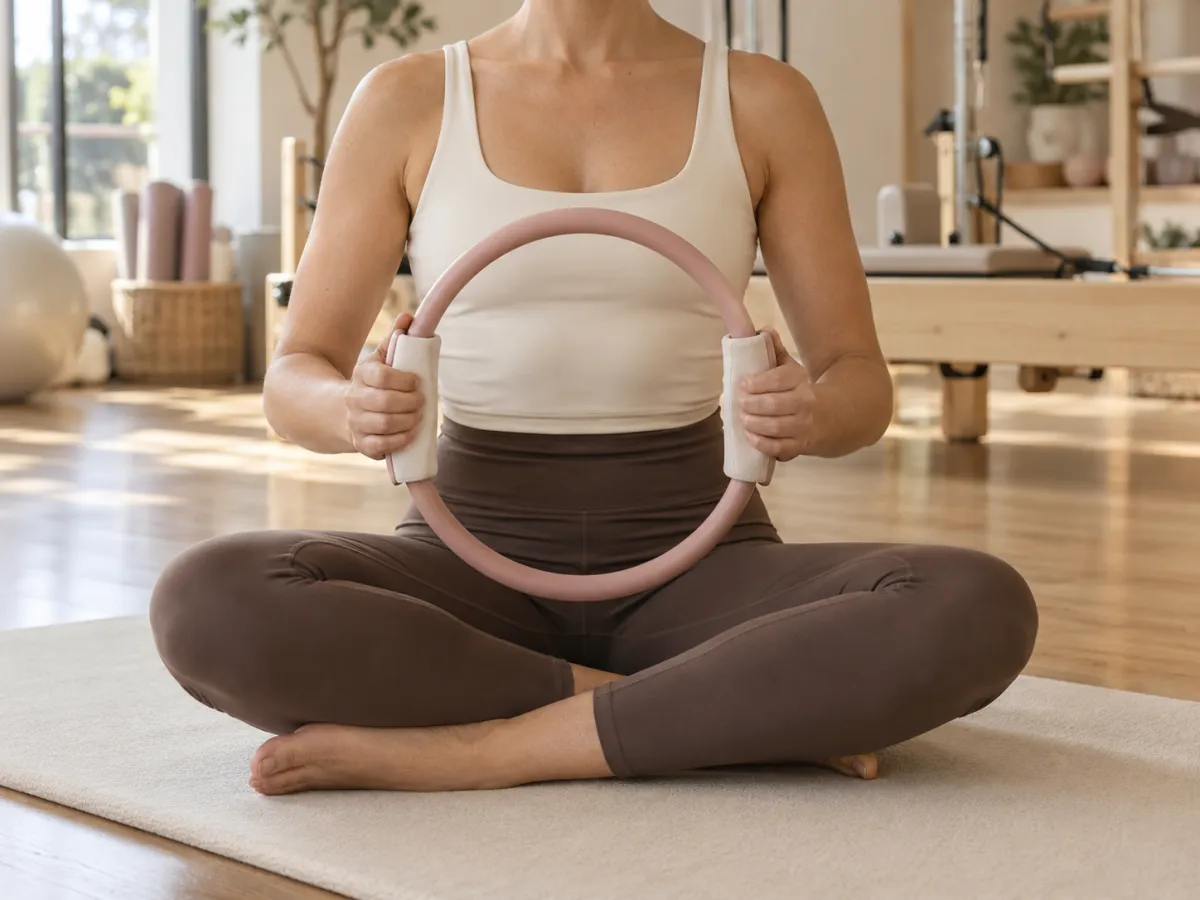
Executing an effective pilates ring inner thigh workout requires pairing precise hip-adductor alignment with post-session pad sanitization so high-friction skin contact never degrades your magic circle’s crescent handles or spring recoil. When you position a pilates ring for thighs between the distal medial femurs or ankles, isometric inward compression recruits the adductor longus, adductor magnus, gracilis, and deep pelvic floor—while simultaneously exposing the molded foam or elastomer pads to concentrated perspiration, body oils, and lateral shear. Understanding both the exercise mechanics and the material care protocol keeps the pads grippy against bare skin or leggings and prevents permanent oval deformation over months of training.
According to the PilatesFits catalog listing, the Pilates Rings collection covers Pilates rings (magic circles) compared by diameter and handle style for targeted exercises.
What Degrades a Pilates Ring During Inner-Thigh Workouts: Sweat, Shear & Compression
Unlike upper-body chest presses where open palms apply light, dry pressure against the outer handles, lower-body adduction and abduction sequences subject the ring to higher peak torque and trapped moisture. In a comprehensive pilates ring guide, four mechanical and chemical stressors determine how long a magic circle retains its symmetrical roundness and non-slip pad texture:
| Stress Factor & Workout Context | Effect on Crescent Handle Pads | Effect on Ring Loop & Sleeve | Prevention & Care Protocol |
|---|---|---|---|
| Perspiration & Sebum Accumulation | Sweat salts and skin oils slicken closed-cell foam and soften adhesive seams | Moisture trapped under rubberized sleeves encourages odor and surface tackiness | Wipe inner and outer pads immediately after class with a mild soap-and-water cloth |
| Off-Axis Rotational Knee Shear | Twisting femurs torque the handle pivots and wear down pad edges | Uneven lateral loading bends the loop out of a flat plane | Keep patellae facing ceiling or straight ahead so compression travels straight across the diameter |
| Harsh Alcohol, Bleach & Solvent Sprays | Strips plasticizers from foam and elastomer surfaces, causing surface cracking | Dries out protective outer elastomer or rubber coatings | Use pH-neutral diluted dish soap or alcohol-free studio equipment wipes |
| Sustained Weighted Storage Compression | Flattens crescent foam contours if wedged under heavy gear | Creates permanent oval memory if stored compressed inside a tight drawer | Store flat or hang vertically on a wide rounded peg away from radiators and direct sun |
| UV Sunlight & Hot Car Trunks | Accelerates oxidative stiffening and surface chalking on foam pads | Weakens polymer sleeve flexibility and alters spring return consistency | Keep your ring in a shaded closet or breathable gym bag at room temperature |
When selecting the best pilates ring for reformer and mat inner-thigh conditioning, inspect how the contoured crescent pads cradle the rounded curve of the inner leg. Dual-sided handles allow you to transition directly from inner-thigh adduction (squeezing the outer pads together) to outer-hip abduction (stepping inside the loop and pressing the inner pads outward) without flipping or re-rigging the prop.
Targeted Pilates Ring Inner Thigh Workout & Post-Session Cleaning Protocol
Combine these targeted lower-body exercises with practical pilates ring tips for pad placement and post-workout hygiene so every repetition strengthens your hip stabilizers without stressing your knee joints or equipment.
- Supine Shoulder Bridge Adductor Pulses: Lie supine with knees bent and feet hip-width apart. Place the outer crescent pads just above your medial knee joints on the fleshy lower section of your inner thighs. Exhale to articulate your spine into a bridge, hold neutral hip extension, and perform controlled inward squeezes followed by slow releases without letting the ring drop.
- Side-Lying Inner-Thigh Lift & Press: Lie on your side with your bottom leg extended long and your top ankle resting on the top inner pad while the bottom ankle sits inside the lower rim, or place the top leg on top of the upper outer pad with your bottom leg pressing up from inside. Engage your deep abdominals and press the top thigh downward toward the bottom leg, keeping your pelvis stacked vertically so the ring does not twist forward.
- Supine Tabletop & Hundred Ankle Squeeze: Bring both legs to tabletop (knees over hips, shins parallel to the mat) and position the outer pads just above the medial malleoli (inner ankle bones). Lengthening the lever arm to the ankles increases core and adductor demand; maintain a gentle, moderate inward press rather than trying to crush the sides of the circle together.
- Post-Session Wipe & Dry Routine: Immediately after finishing your pilates ring inner thigh workout, dampen a microfiber towel with cool water and a drop of mild, bleach-free soap. Wipe the concave surfaces of both inner and outer handle pads where skin or leggings made contact, run the cloth along the outer loop, wipe dry with a clean towel, and let the ring air-dry flat before placing it in a bag.
To compare magic circles by diameter and dual-pad handle contour, explore the Pilates Rings collection or alternate your high-tension ring days with softer isometric adduction using our Pilates Balls collection.
Storage, Alignment Inspection, and Replacement Signs for Your Magic Circle
Run this quick monthly inspection to verify your pilates ring for thighs remains safe and symmetrical:
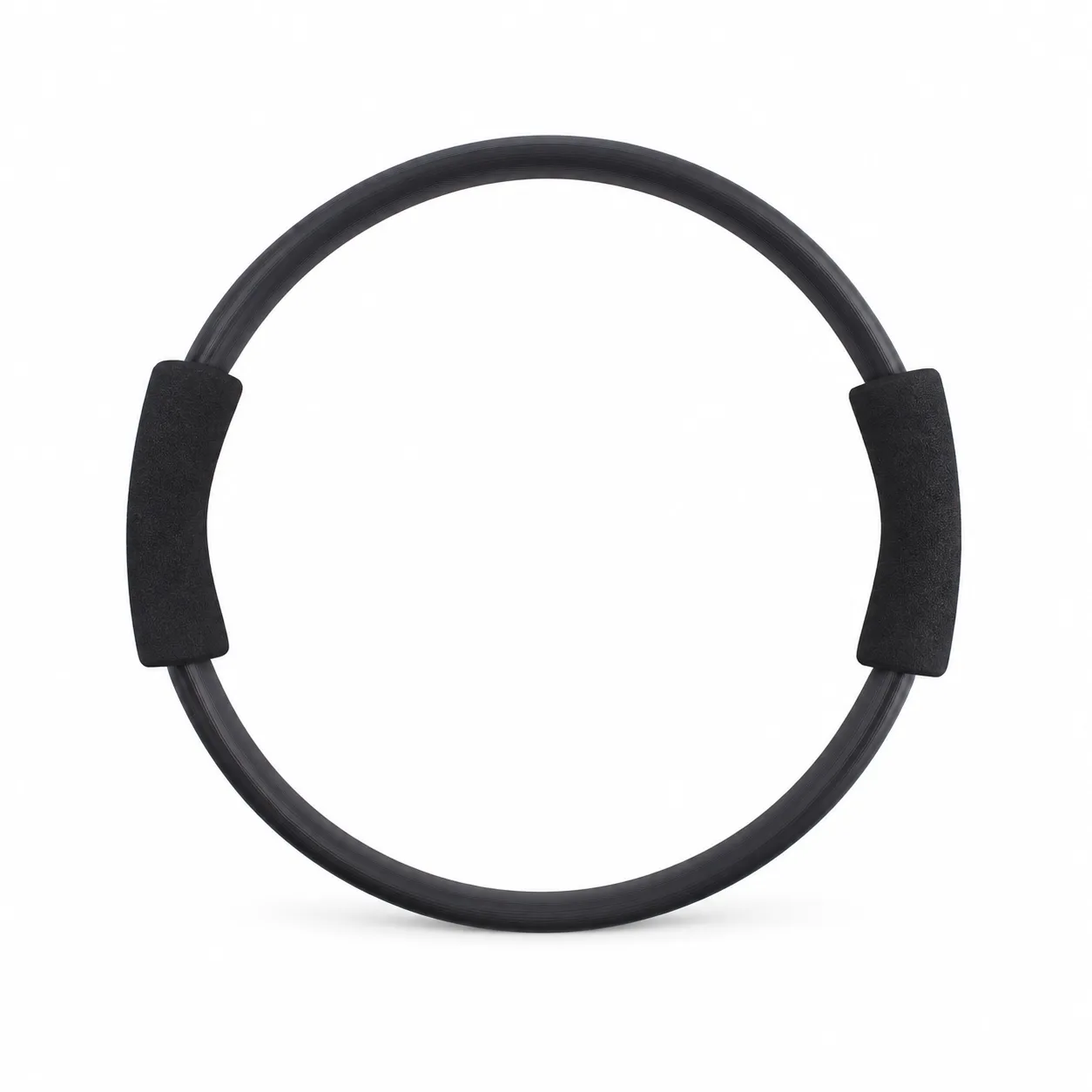
- The Flat-Floor Trueness Check: Lay the uncompressed ring flat on a hardwood or studio floor. Both handle pads and the entire circumference of the loop should rest evenly on the floor without rocking or warping upward.
- The Crescent Pad Seam & Grip Check: Press your thumb into the center and edges of all four pad surfaces (both inner and outer pads). The foam should rebound smoothly without sticky residue, crumbling edges, or rotational play around the rim.
- The Unloaded Diameter Check: Compare the resting distance across the ring perpendicular to the handles against the measurement across the handles. If repeated heavy inner-thigh squeezing or cramped storage has permanently compressed the resting diameter into a pronounced oval, retire the ring for a fresh circle.
Frequently Asked Questions
How does a Pilates magic circle ring compare to basic thigh squeezers for inner-thigh and full-body Pilates exercises?
A dual-pad Pilates magic circle delivers balanced spring resistance for both inward inner-thigh adduction and outward outer-thigh abduction across supine, side-lying, and seated positions, whereas single-hinge plastic thigh squeezers only offer one-way inward compression and cannot be used at the ankles or overhead.
What is the safest way to clean a Pilates ring after a sweaty inner thigh workout?
Wipe the crescent handle pads and outer loop with a soft microfiber cloth dampened with cool water and a drop of mild, pH-neutral soap, then dry with a clean towel and air-dry flat away from direct sunlight. Avoid bleach, harsh alcohol sprays, or submerging the ring underwater, which can trap moisture beneath the handle mounts.
How hard should you squeeze a Pilates ring for thighs during mat exercises?
Aim for a controlled, steady inward compression that bends the circle slightly into an oval while exhaling and drawing your pelvic floor and deep abdominals inward. Over-squeezing to maximum deflection recruits superficial hip flexors and stresses both your medial knee joints and the ring’s handle mounts.
Make it part of your practice
Explore the ivory ribbed pilates ring and check its product details before choosing your studio essentials.
View this piece