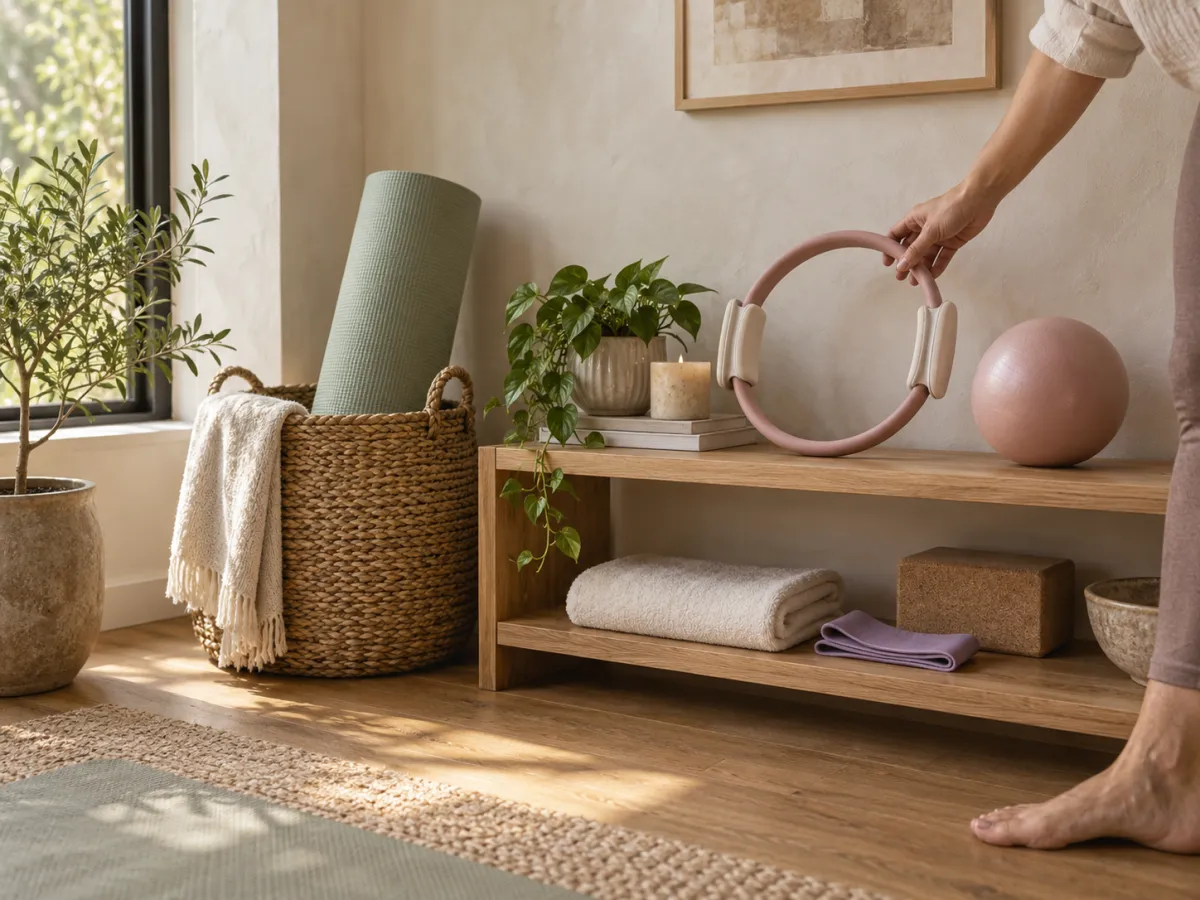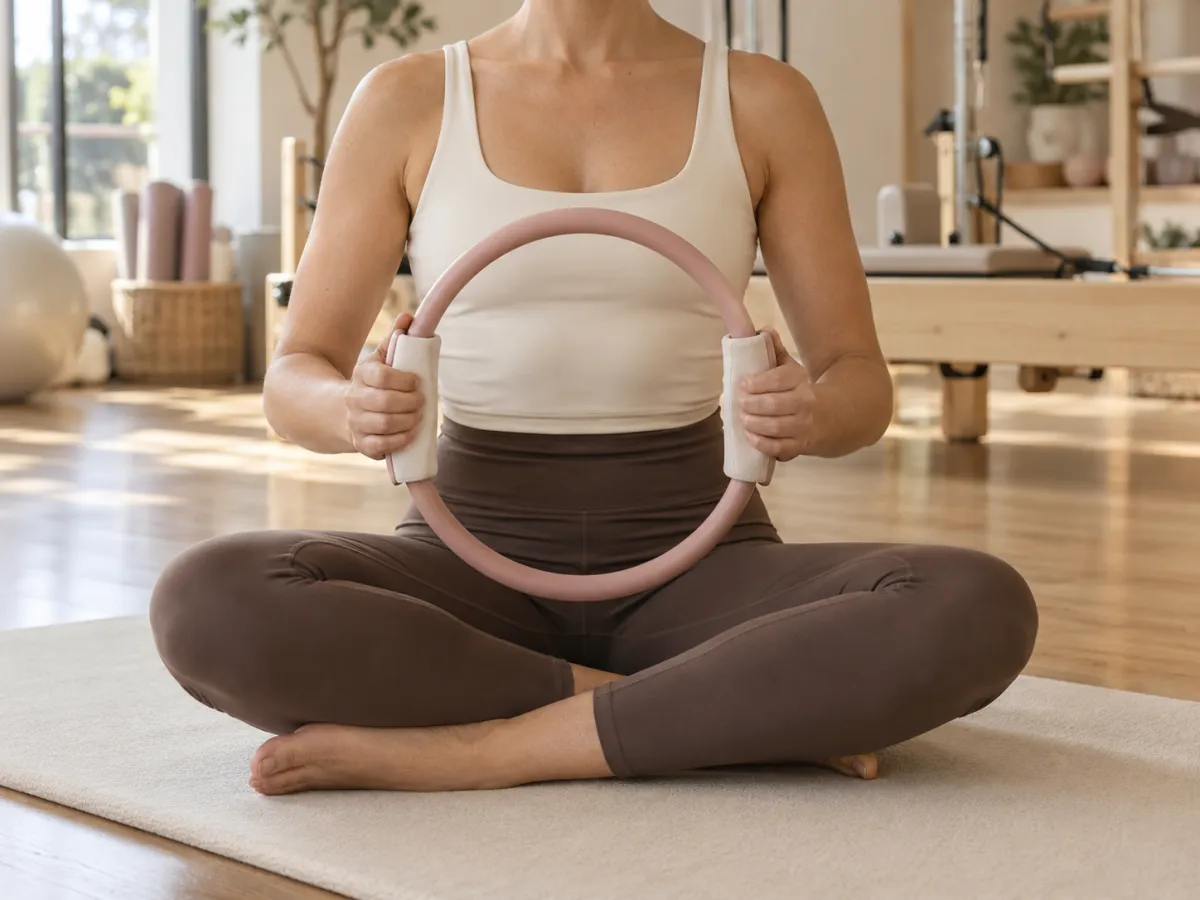
Choosing the right pilates ring for magic circle pilates comes down to matching ring diameter, fiberglass or spring-steel tension, and dual-pad handle contour to your body proportions and target exercises. Whether you are compressing the ring between your inner thighs during supine shoulder bridges, pressing it overhead in a reformer teaser, or pulsing at sternum height for serratus anterior engagement, an ill-fitting circle can roll off the knee condyles or pinch the palms. Understanding how structural specifications govern rebound behavior helps you invest in a prop that delivers consistent isometric resistance session after session.
According to the PilatesFits catalog listing, the Pilates Rings collection covers Pilates rings (magic circles) compared by diameter and handle style for targeted exercises.
Key Specifications to Compare When Shopping for Pilates Ring
When evaluating a pilates ring for magic circle pilates routines, focus on four physical specifications that determine comfort, joint alignment, and resistance feel:
- Ring Diameter and Limb Alignment: Standard studio rings are sized so that when placed between the thighs or ankles, your femurs remain parallel to your hip sockets rather than splayed wide or forced into excessive knock-kneed valgus.
- Flex Band Material and Rebound Memory: High-memory fiberglass cores enclosed in a protective elastomer sleeve offer smooth, progressive inward compression and snap back to a true circle without developing permanent oval warping over time.
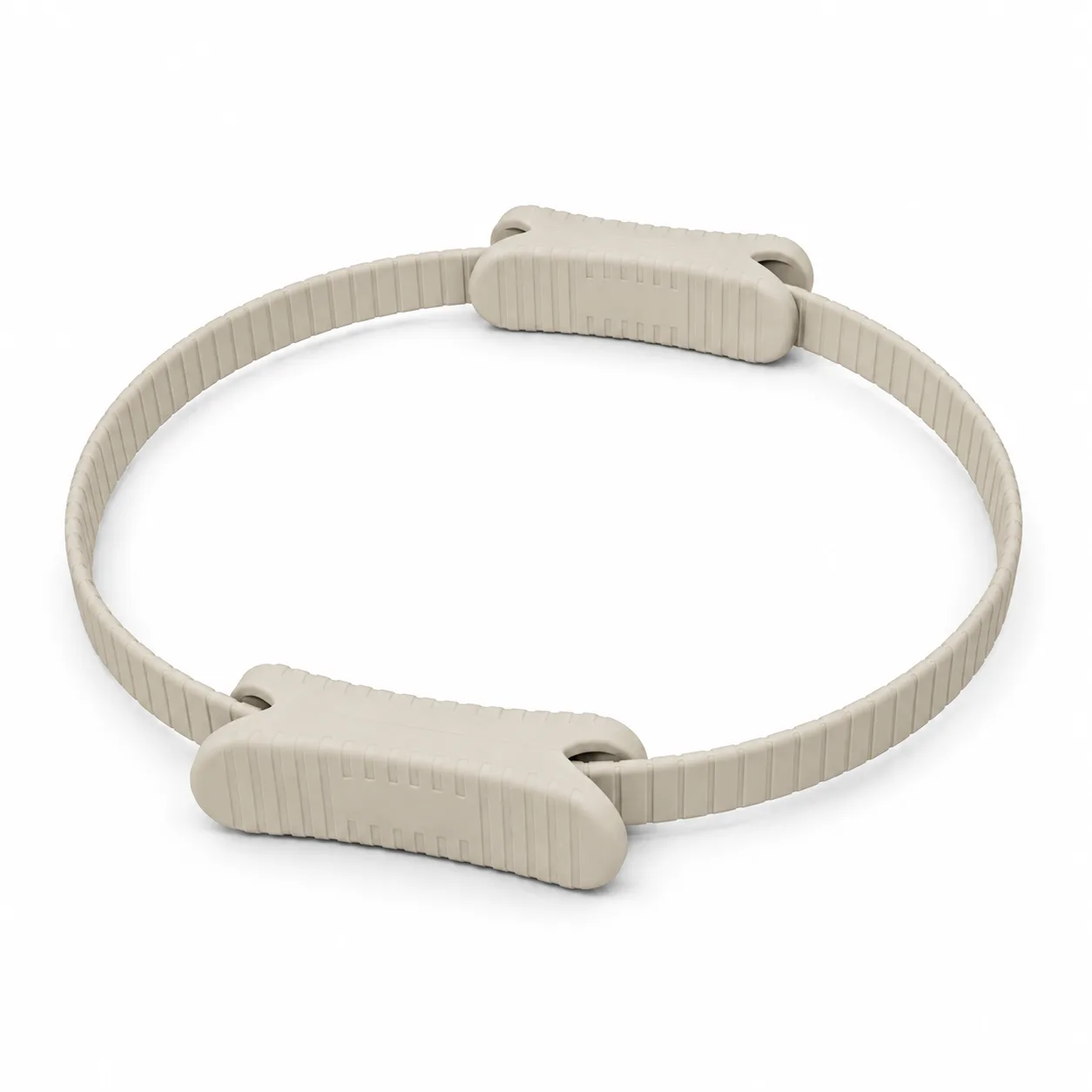
- Dual-Sided Crescent Handle Padding: Contoured inner and outer foam pads allow you to switch seamlessly between inward adduction squeezes (pressing the outer pads together) and outward abduction pushes (pressing the legs apart against the inner pads).
- Sweat-Resistant Outer Sleeve Texture: A matte, non-slip rubberized coating prevents the ring from sliding against bare skin or smooth studio leggings when perspiration builds during high-repetition pulse sets.
Pilates Ring vs Magic Circle Pilates: Side-by-Side Comparison Matrix
Use this side-by-side matrix to compare how pilates ring and magic circle pilates design variations perform across common studio and home applications:
| Specification / Design Feature | Standard All-Round Pilates Ring | High-Tension Studio Magic Circle | Padded Dual-Grip Comfort Ring | Practical Impact on Your Practice |
|---|---|---|---|---|
| Primary Core Construction | Flexible fiberglass band with soft outer sleeve | Stiffer composite or spring-tempered band | Medium-flex band with extra-thick crescent pads | Determines how much inward force is required to initiate flex |
| Handle Pad Geometry | Symmetrical inner and outer crescent foam pads | Compact, firmer contoured studio pads | Wide, ergonomic dual-curve sweat-resistant pads | Governs stability against medial knees, ankles, and palms |
| Inward Adduction Feel | Smooth, progressive resistance for controlled holds | Brisk, high-feedback resistance for athletic pulses | Cushioned contact for sensitive knee or ankle joints | Matches tension level to inner-thigh and pectoral strength |
| Outward Abduction Support | Balanced inner-pad cradle for outer-hip presses | Firm stop for isometric glute medius activation | Gentle inner-pad contour for comfortable leg presses | Allows bilateral hip abduction without needing a separate band |
| Portability & Storage | Lightweight flat profile for studio tote bags | Rigid frame best stored flat on wall hooks | Slightly bulkier pads; stores flat on closet shelves | Keeps the ring circular and prevents pad indentation in transit |
To compare current ring styles and build a balanced home or studio kit, browse the PilatesFits Pilates Rings collection and pair your circle with a soft PilatesFits mini Pilates ball for complementary core and inner-thigh progressions.
Step-by-Step Selection Checklist for Studio and Home Practitioners
Follow this four-step buying checklist to select a pilates ring that fits your body mechanics and magic circle pilates goals:
- Step 1: Match Diameter to Your Hip-to-Shoulder Frame: Check the diameter specification so that holding the ring at chest height keeps your elbows softly bent and your scapulae resting flat against your ribcage, while placing it between your thighs keeps your knees aligned with your second toes.
- Step 2: Select Handle Style for Dual-Direction Exercises: Choose a handle style with supportive pads on both the inside and outside of the rim if your routine includes both inner-thigh squeezes and outer-thigh abduction presses.
- Step 3: Choose Resistance Level for Activation vs Strength: Opt for moderate flex tension if you prioritize long isometric holds, pelvic floor coordination, and spinal articulation, or firmer tension if you want stronger upper-body and adductor loading.
- Step 4: Verify Surface Grip Against Your Workout Apparel: Ensure the handle pads have a lightly textured, closed-cell surface that stays anchored against studio leggings and wipes clean easily with a damp cloth after class.
Frequently Asked Questions
How does a 14-inch Pilates magic circle ring compare to basic thigh squeezers for inner-thigh and full-body Pilates exercises?
Pilates rings (magic circles) are compared by diameter and handle style for the exercises you practice, offering dual-pad symmetry for both inward compression and outward expansion across upper-body, core, and lower-body positions. Basic hinged thigh squeezers only move in one plane and lack the circular rebound and dual-pad geometry needed for overhead, chest, and ankle placements.
What specifications matter most when comparing pilates ring?
When comparing a pilates ring, the most important specifications are ring diameter, band rebound tension, dual-sided crescent handle padding, and non-slip sleeve texture so the circle stays aligned on your knees, ankles, or palms during exercise.
How does pilates ring compare to magic circle pilates for regular Pilates sessions?
In regular Pilates sessions, a pilates ring and magic circle pilates refer to the same circular isometric resistance prop originally inspired by Joseph Pilates, with modern versions compared by diameter, flex tension, and handle style to suit mat or reformer routines.
Make it part of your practice
Explore the blush pilates ring with white pads and check its product details before choosing your studio essentials.
View this piece