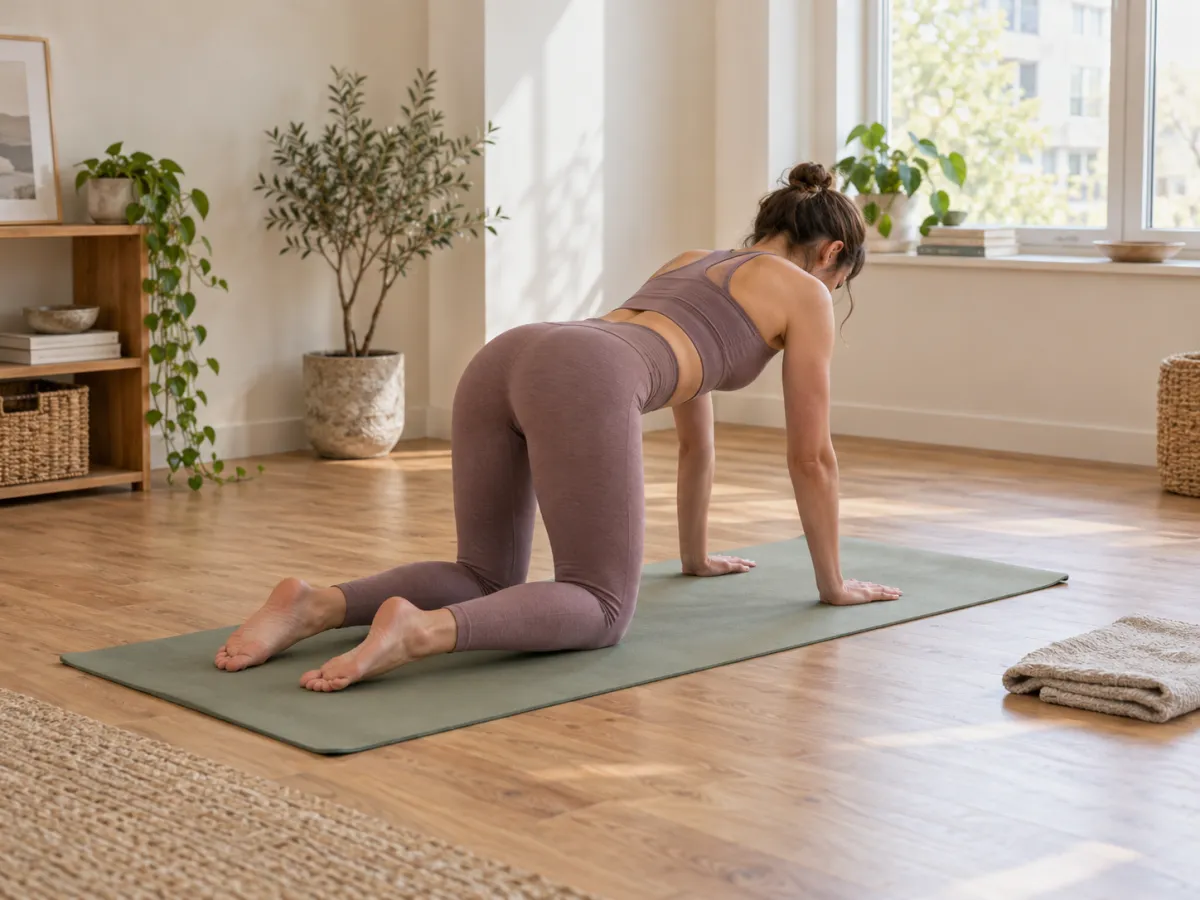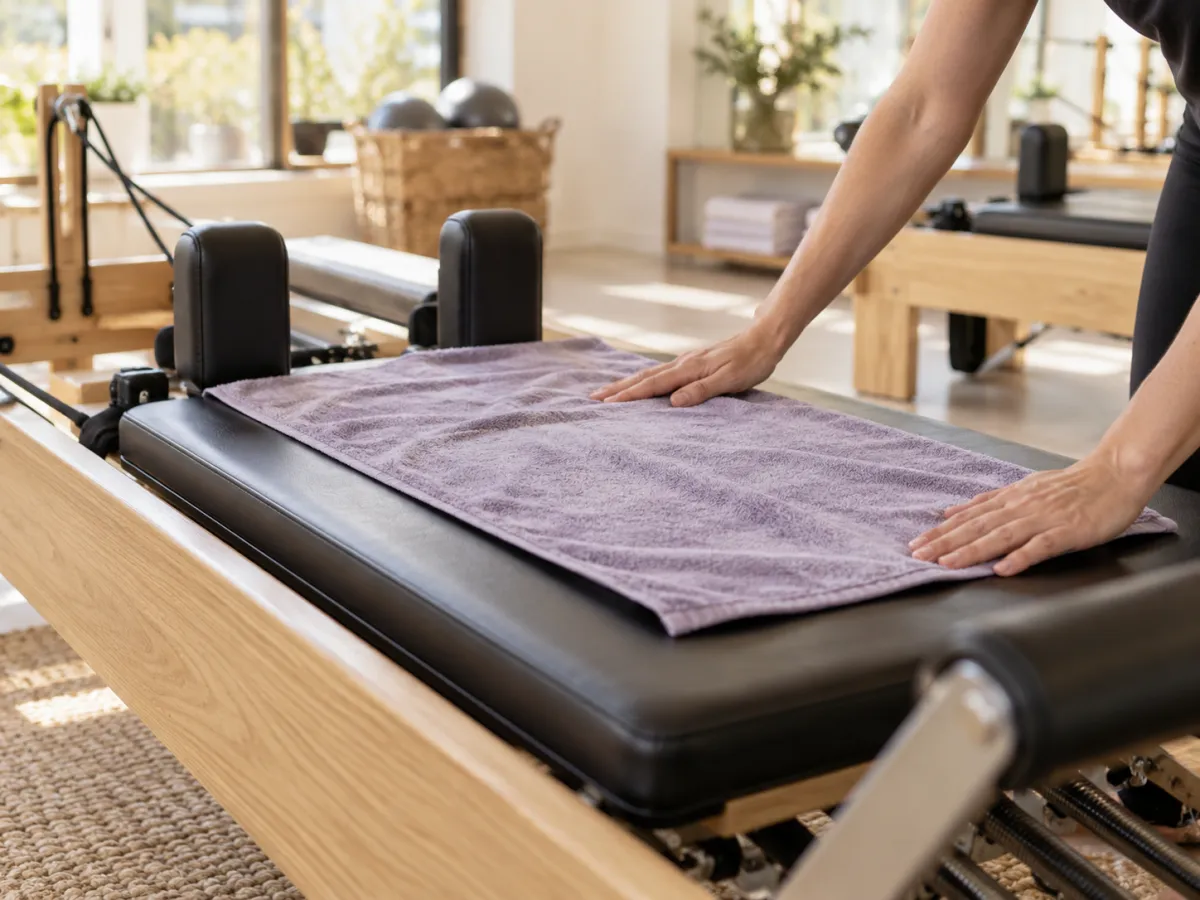
Choosing between a reformer carriage cover vs towel—and matching the right pilates reformer mat towel size to your body proportions and apparatus—determines whether your personal layer stays anchored under load or bunches beneath your spine mid-series. Because Reformer carriages, studio mats, and tower beds have distinct surface widths and hardware clearances, a towel that works well for floor work can easily overhang carriage tracks or interfere with shoulder blocks if not sized and positioned deliberately.
According to the PilatesFits catalog listing, the Pilates Towels collection provides towels for mat and studio sessions with per-style dimensions and care instructions: pack a towel for mat and studio sessions, and check dimensions and care instructions for each style.
Why Sizing and Proportions Matter for Reformer Carriage Cover Vs Towel in Motion
When evaluating a reformer carriage cover vs towel, the core mechanical distinction comes down to footprint geometry and hardware clearance. A studio floor mat presents an uninterrupted rectangular surface where extra perimeter width simply rests on the floor. A Reformer carriage, by contrast, is a suspended moving platform bordered by aluminum or wood frame rails, spring attachment bars, pulley ropes, a hinged headrest, and fixed or removable shoulder blocks.
If your towel is wider than the padded carriage bed, the excess edges drape downward toward the wheel tracks and spring well. During dynamic transitions—such as moving from supine footwork into kneeling arm series or long box pulling straps—draped fabric can drag along the side rails or get pinched beneath the Reformer box. Conversely, if a towel is too narrow or too short for your torso length, your C7/T1 upper-back contact point or your sacrum will straddle the fabric seam, creating an uneven ridge that disrupts neutral spinal imprinting.
Shoppers comparing a fitted reformer carriage cover vs towel should also account for studio equipment diversity. Different studio Reformer brands place shoulder blocks at varying widths and use different headrest shapes, meaning a cutout pattern shaped for one machine model may not align cleanly with another. Rectangular studio and mat towels offer versatile multi-surface compatibility across floor mats, Reformer beds, and Cadillac tables, provided you check the per-style dimensions and fold any excess margin inward before lying down. You can compare individual style dimensions in the PilatesFits Pilates Towels collection to match your primary class format.
| Apparatus & Class Format | Primary Contact Zones | Sizing & Proportion Requirement | Overhang or Mismatch Risk | Studio Setup & Etiquette Rule |
|---|---|---|---|---|
| Standard Reformer Carriage (Supine & Bridging) | Upper thoracic spine (T1–T6) down to the base of the sacrum | Width must sit flush inside the carriage pad borders; length covers torso from shoulder blocks to tailbone | Side overhang can brush carriage tracks or catch under the sitting box | Lay flat behind the shoulder blocks; never wrap fabric around spring hooks or under the carriage frame |
| Reformer Headrest & Cervical Zone | Occiput and upper cervical curve during footwork and hundred | Separate small fold or flat top edge that respects the three-position headrest hinge | Thick bunched folds artificially elevate chin-to-chest angle during supine work | Keep the headrest zone thin and smooth; never force a bulky towel roll under the neck during high-hip inversions |
| Floor Mat Pilates & Tower Mat | Full body length from crown of head through heels or knees | Full rectangular mat coverage matching your height and shoulder span | Undersized towels slide diagonally during saw, corkscrew, and side kicks | Align edges parallel to the mat perimeter so hands and heels remain on a uniform surface |
| Reformer Long & Short Box Series | Prone anterior pelvis, ribcage, or seated sit bones on the vinyl box | Compact footprint that covers the top pad of the box without covering side handles | Long dangling tails can interfere with foot strap tension or pulley ropes | Fold rectangular studio towels in half lengthwise or widthwise to match the box top cleanly |
| Kneeling & Quadruped Apparatus Sequences | Both patellae, shins, and palmar heels on the carriage bed | Even lateral width spanning both knees at hip-distance apart | Narrow coverage forces knees too close together, reducing hip abductor stability | Center the towel across the carriage width and pair with PilatesFits grip socks for secure footbar contact |
Reformer Carriage Cover Vs Towel vs Pilates Reformer Mat Towel Size: Measurement & Fit Chart by Body Type
Selecting the right pilates reformer mat towel size starts with mapping your own anatomical landmarks rather than guessing from a generic label. Because torso-to-leg ratios vary widely across practitioners, two people of the same overall height may require different carriage placement strategies.
Measuring Your Torso Contact Patch for the Carriage Bed
On a Reformer, your lower extremities work on the footbar or in the straps while your trunk rests on the padded bed. Measure the distance from the prominence of your seventh cervical vertebra (the base of your neck, which sits just in front of the shoulder blocks) down to the tip of your coccyx. For most practitioners, this trunk contact zone is the critical span that must remain continuously covered during supine abdominal series, frog, and leg circles.
If you have a long torso, position the top edge of your towel flush against the base of the shoulder blocks so your sacrum remains fully supported on the fabric near the bottom edge of the carriage. If you have a shorter torso and longer legs, avoid letting excess towel length hang off the footbar end of the carriage where it can touch the moving springs; instead, fold the bottom margin neatly underneath the flat main body of the towel on top of the vinyl pad.
Width Proportions Across Broad Shoulders and Wide Hip Stances
Broad-shouldered practitioners and individuals working in wider external-rotation hip stances during kneeling stretches need full lateral coverage across the carriage pad. When checking pilates reformer mat towel size on a product listing, compare the stated width against your biacromial (shoulder-to-shoulder) width plus a small margin for scapular protraction. On a floor mat, extra width gives your palms a dry landing zone during push-ups and side bends; on a Reformer, any width exceeding the vinyl pad should be tucked cleanly on top of the cushion rather than left hanging over the metal rails.
Studio Policy and Hygiene Compliance Across Class Formats
Boutique Pilates studios enforce strict transition times between classes and require personal barriers that can be deployed and removed in seconds. While some practitioners prefer specialized covers for a single home machine, many multi-studio attendees favor a flat, lightweight studio towel that packs compactly and adapts immediately to Reformer beds, Wunda chairs, and floor mats alike. Always check the care instructions for your specific towel style so you can launder it properly between sessions without degrading fabric feel or hygiene performance.
First-Class Verification Test Before Stepping Onto the Carriage
Before taking a new towel into a fast-paced studio Reformer class, perform this three-step fit and proportion check:
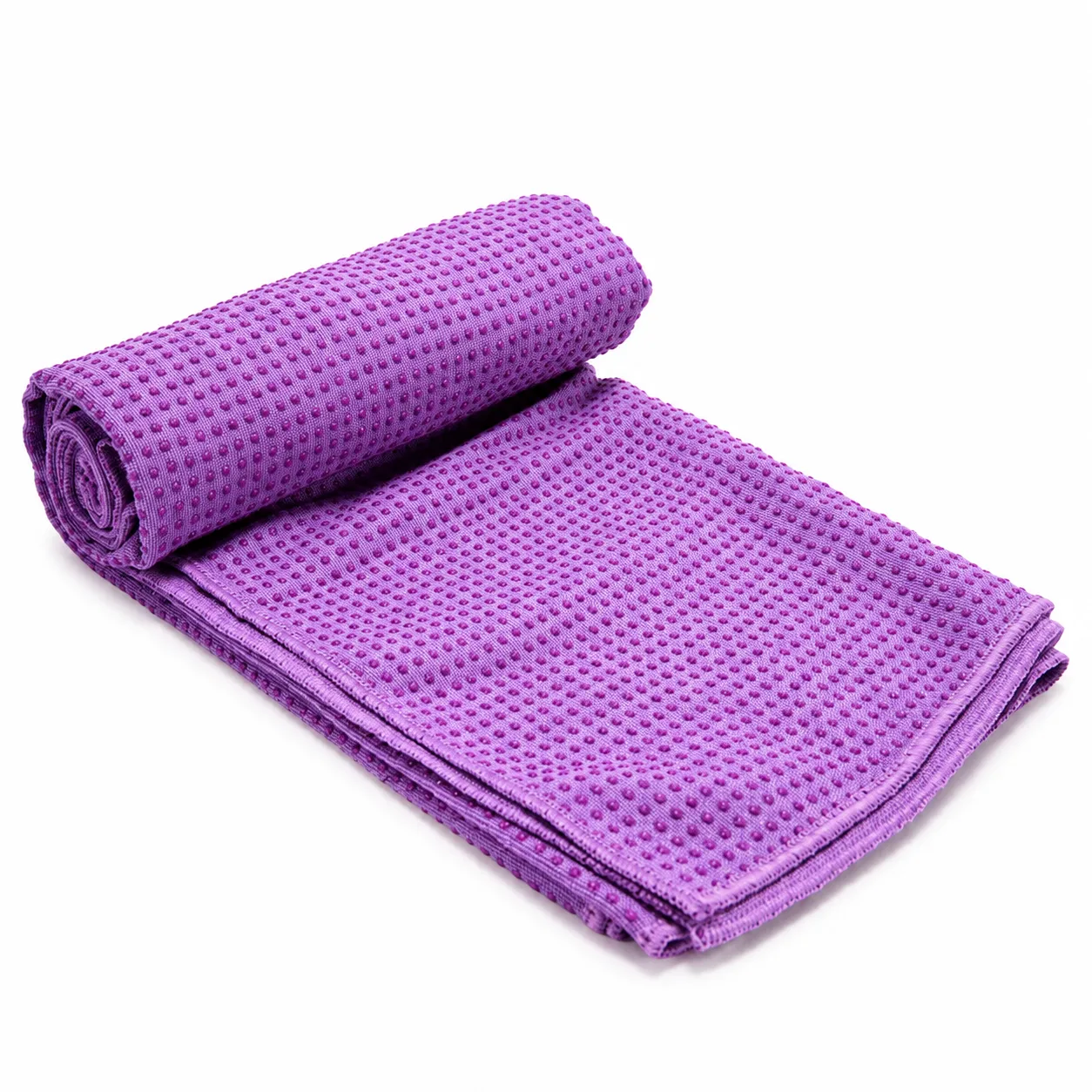
- Check the Product Dimensions Against Your Primary Apparatus: Review the exact length and width listed for your specific style and decide in advance whether you will lay it full-length (for floor mat classes) or folded at the bottom edge (for Reformer carriage beds).
- Perform the Supine Shoulder-to-Sacrum Test: Lie supine on your towel with your shoulders aligned where the Reformer shoulder blocks sit. Sweep your arms into a T-position and perform three pelvic curls to confirm your sacrum, scapulae, and ribcage stay entirely on smooth, unwrinkled fabric.
- Verify Box and Transition Speed: Practice folding the towel into a clean half-rectangle in under five seconds. In a studio class, quickly adapting your towel’s footprint for short box abdominal work or kneeling stretches keeps you synchronized with the instructor’s pacing while maintaining a hygienic barrier on every surface.
Frequently Asked Questions
What should you consider when choosing a Pilates or Reformer towel for carriage hygiene, grip, and fabric feel?
When packing a Pilates or reformer towel for mat and studio sessions, shoppers should check dimensions and care instructions for each style so the towel fits the mat or Reformer carriage and stays hygienic between classes. Verifying dimensions ahead of time ensures your torso and hips stay covered without fabric overhanging onto moving Reformer tracks.
How do I choose the right size or dimension for reformer carriage cover vs towel?
Start by matching the towel’s width and length to your primary apparatus and torso length from the base of your neck to your tailbone. Because towel dimensions and carriage shapes vary across brands and studio machines, check the per-style dimensions on the product listing and fold any excess length neatly on top of the carriage pad away from springs and wheels.
What should I know about pilates reformer mat towel size before attending a studio Pilates class?
A full-size mat towel offers complete head-to-toe coverage for floor mat workouts, whereas a Reformer carriage bed only requires coverage from the shoulder blocks to the bottom edge of the vinyl pad. If you bring a longer mat towel to a Reformer class, fold the extra length flat on the carriage surface so it never drapes over the side rails or spring bar.
Make it part of your practice
Explore the black textured alignment reformer mat and check its product details before choosing your studio essentials.
View this piece