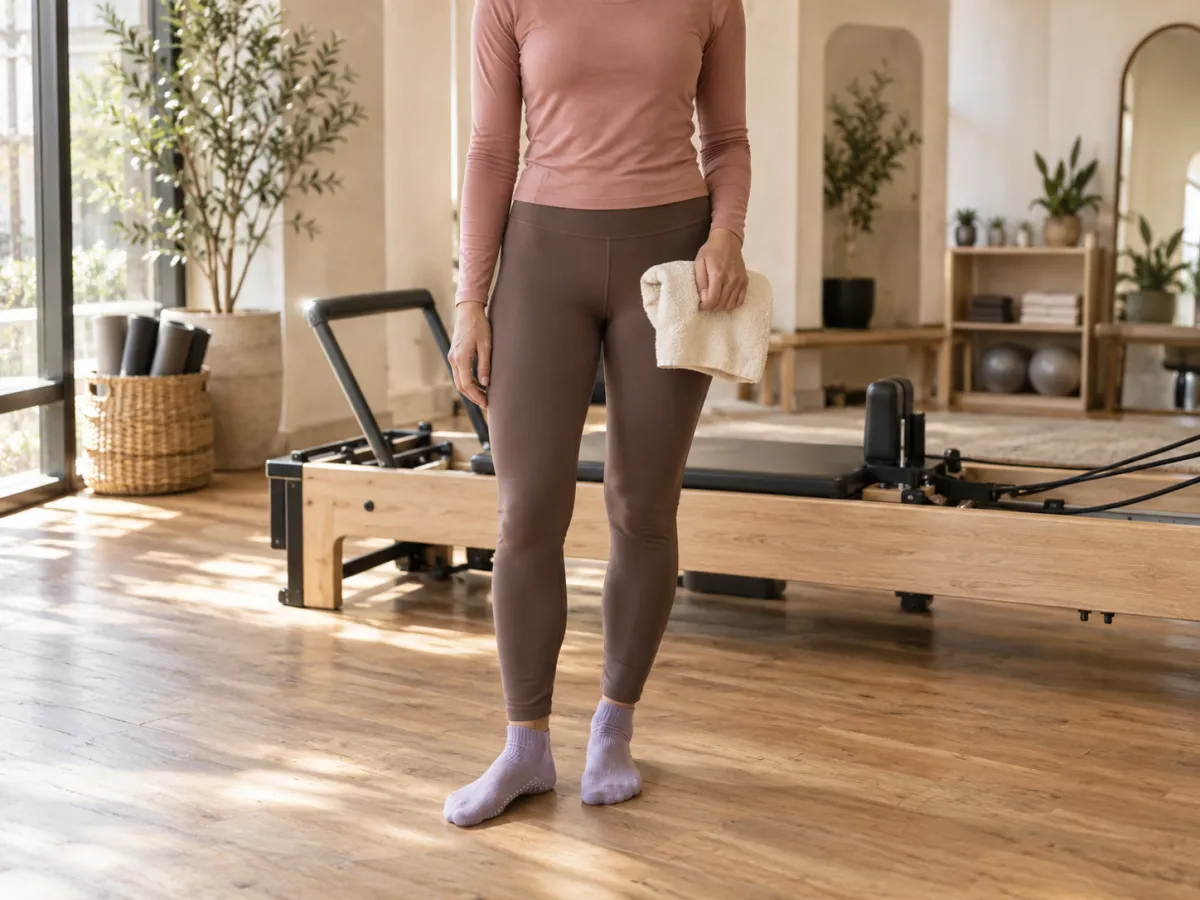
Building a winter pilates outfit requires balancing cold-morning commute insulation with Reformer carriage safety, and keeping those multi-layer technical knits performing over multiple winters depends on strict elastomer care. When you layer brushed leggings, second-skin tanks, and wrap boleros or cropped zip tops—core pilates layering pieces—each garment experiences a combination of trapped warm-up sweat, vinyl carriage friction, and repeated mechanical stretch. Washing cold-weather pilates outfits with high heat or cationic fabric softeners rapidly breaks down spandex filaments and mats brushed fleece interiors, causing waistbands to slip and cuffs to bag out during dynamic Reformer work.
According to the PilatesFits catalog listing, the Pilates Outfits collection features coordinated tops, leggings, and studio layers for assembling a Pilates look.
What Degrades Winter Pilates Outfits and Layering Pieces Over Time
Cold-weather studio activewear faces distinct material stresses compared with lightweight summer sets. Because a winter pilates outfit typically layers a warm-up top over a fitted base tank and high-rise leggings, moisture and skin oils accumulate at high-friction zones—specifically the underarms, thoracic band, and lumbar waistband—before you shed your outer layer after Footwork and the Hundred.
| Degradation Factor | Primary Material Impact | Visible Failure Sign on the Reformer | Prevention Protocol |
|---|---|---|---|
| Dryer Heat & Hot Wash Water | Thermal relaxation of elastane/spandex polymer chains | Waistband rolls down during Teaser and Short Box | Wash strictly in cold water and flat-dry away from radiators |
| Liquid Fabric Softeners & Dryer Sheets | Silicone/waxy coating clogs hydrophobic micro-channels | Base layers trap clammy sweat during mid-class transitions | Use a small dose of residue-free sport detergent only |
| Coarse Outer-Coat Friction (Velcro/Zippers) | Surface pilling and snagging on brushed second-skin knits | Fuzzy abrasion patches along outer thighs and forearm cuffs | Zip outer street parkas fully and cover exposed hook-and-loop tabs |
| Prolonged Damp Gym-Bag Storage | Bacterial lipid oxidation and persistent odor binding | Musty odor returns immediately as body heat rises in class | Hang damp base and mid-layers to air out within two hours of class |
| Hanging Heavy Knit Layers by the Shoulders | Gravitational creep stretching out shoulder seams | Wrap tops and boleros slip off shoulders during Arm Work | Fold studio layers flat in drawers rather than hanging on thin wire hangers |
When selecting best pilates outfits for reformer sessions in winter, choose close-fitting pilates layering pieces such as thumbhole boleros, ballet wrap cardigans, or collarless cropped zip jackets that sit cleanly above the hip bone. Avoid bulky fleece hoodies with dangling neck cords or oversized dolman sleeves that can dip into the Reformer spring well during Kneeling Arm Series or Long Stretch.
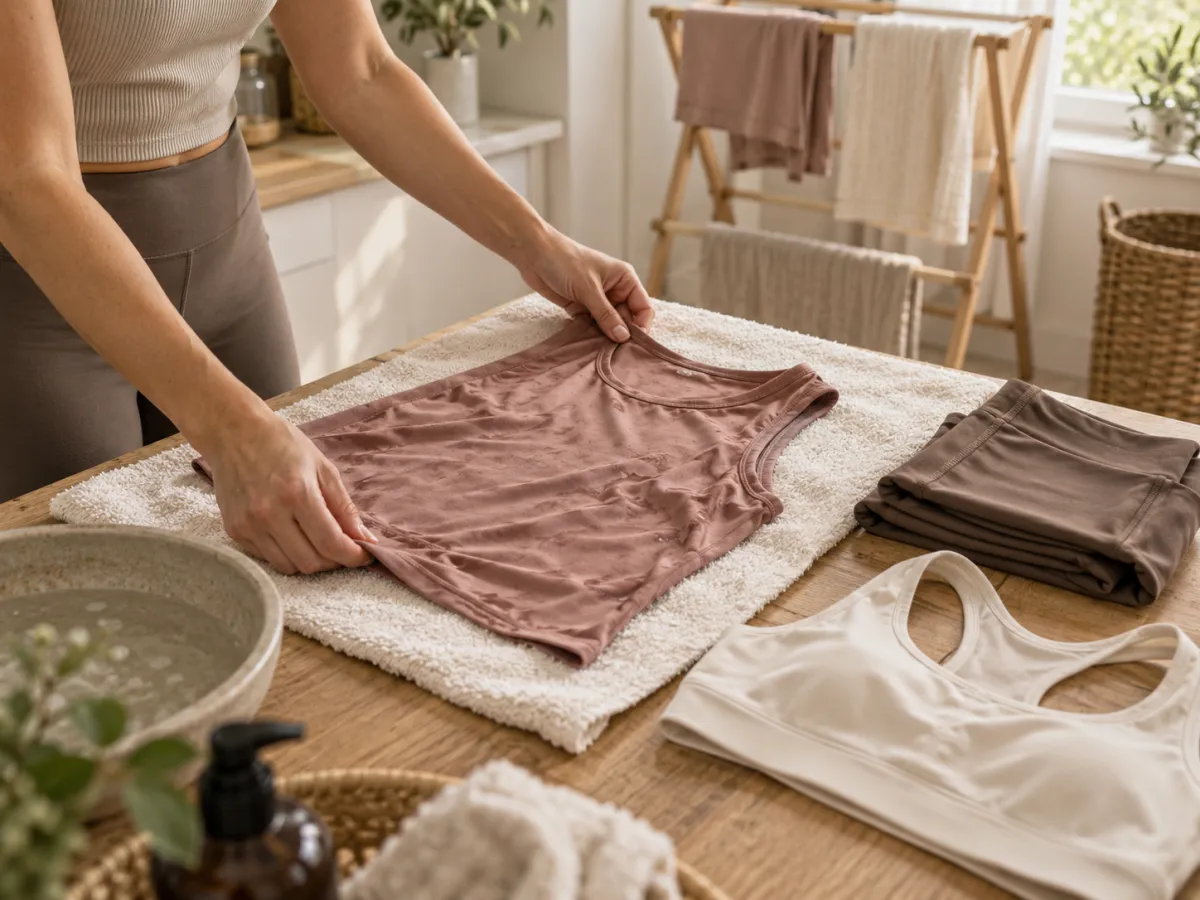
Step-by-Step Cleaning and Sanitization Protocol for Cold-Weather Studio Layers
Follow this structured pilates outfits guide wash protocol to preserve four-way recovery, surface softness, and color fastness across base leggings, tops, and warm-up layers:
- Separate by Surface Texture and Hardware: Turn coordinated leggings, fitted tanks, and soft wrap layers inside out and place them in individual fine-mesh laundry bags. Keep any street-commute jackets with metal zippers, snaps, or rough canvas trims in a completely separate wash load so hardware never tumbles against second-skin knits.
- Cold Delicates Cycle with Sport-Specific Cleanser: Select a cold water wash cycle with low spin agitation. Use a sparing amount of liquid detergent formulated for synthetic performance fibers; excess detergent leaves surfactant residue in dense winter knits that stiffens the handfeel.
- Eliminate Fabric Conditioners and Bleach: Never add liquid fabric conditioner, scent boosters, or chlorine bleach. Softeners coat synthetic fibers in a water-repellent film that locks sebaceous oils inside the yarn and accelerates elastane fatigue.
- Flat Reshape and Shade Drying: Press excess moisture out gently without wringing the fabric, then lay ribbed or brushed pilates layering pieces flat on a mesh drying rack. Never drape wet winter layers directly over household radiators or heated towel rails, as localized conductive heat brittle-hardens elastane threads.
To build or refresh your cold-season rotation with pieces designed for smooth studio transitions, explore our Pilates Outfits collection or pair your warm-up wraps with matching base pieces from our Pilates Sets collection. For studio safety rules on zippers and proportions, see our Club Pilates Dress Code & Studio Attire Guide.
Storage, Commute Protection & Replacement Signs for Pilates Layering Pieces
Applying smart pilates outfits tips between classes prevents premature wear from winter coats, studio cubbies, and snow boots:
- Protect Leggings From Winter Boot & Coat Hardware: Exposed Velcro storm flaps on winter parkas and metal eyelets on snow boots are the number-one cause of localized snags on soft Pilates leggings. Fasten all outer coat flaps before commuting, and slip on smooth crew warm-up socks over your grip socks inside winter boots so boot linings do not abrade ankle hems.
- Flat-Fold Storage for Knit Wraps and Boleros: Store rib-knit and brushed studio layers folded horizontally in a breathable drawer rather than suspended on hangers, keeping shoulder seams and wrap ties true to size.
- When to Retire Fatigued Layers: Inspect your winter rotation at the start of each season. If a legging waistband requires constant upward tugging during Footwork, if elbow or knee panels stay bagged out after washing, or if underarm odor persists immediately after a cold wash, the elastomer recovery has reached end-of-life and the piece should be rotated out of studio duty.
Frequently Asked Questions
What should you wear to Pilates and Reformer Pilates classes so clothing stays in place without catching on equipment?
For Pilates and Reformer classes, practitioners pair coordinated tops and leggings with easy warm-up layers, favoring soft second-skin fabrics built for low-impact mat, Reformer, and Lagree movement. In winter, wearing a close-fitting long-sleeve bolero or wrap top over your fitted tank and high-rise leggings keeps muscles warm during Footwork without loose sleeves or drawstrings catching on Reformer springs.
What is the safest way to handle winter pilates outfit without damaging the material?
Turn each garment inside out, place it in a mesh laundry pouch away from zippers or Velcro, wash on a cold gentle cycle with a small amount of sport detergent, skip all fabric softeners, and lay the pieces flat to air-dry away from direct heat sources or radiators.
How often should you perform maintenance for pilates layering pieces?
Wash next-to-skin base tanks and leggings after every single studio class so sweat salts and skin oils do not oxidize inside the elastane fibers, and wash removable outer warm-up wraps or boleros every two to three wears—always airing them out completely on a flat surface immediately after each session.
Make it part of your practice
Explore the blush zip jacket and charcoal wrap-legging set and check its product details before choosing your studio essentials.
View this piece